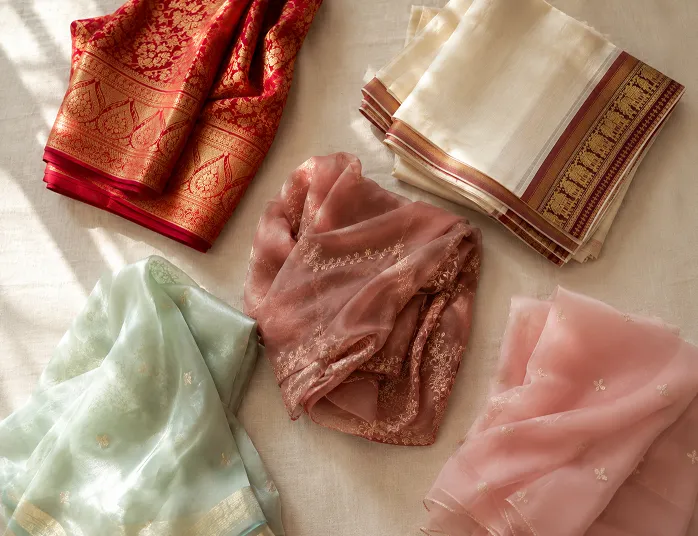
You have probably stood in front of a shop counter, or scrolled through ten tabs online, looking at linen sarees that all claim to be “100% pure linen” at prices that do not match up with each other. One seller says 1200 rupees. Another says 4500 for what looks like the same saree in the photo.
You cannot feel the fabric through a screen, and even in a shop, most salespeople will tell you whatever gets the sale done. That confusion is the real starting point of this guide, not flax fibre history or breathability statistics you have already read on five other websites.
This is a linen saree guide written by people who actually handle these fabrics on the floor, not just style them for photoshoots. We will cover the basics quickly because you deserve to know them, but the real value here is in the parts nobody else tells you before you spend your money.

Table of Contents
Why Linen Sarees Actually Work for Indian Weather
Linen comes from the flax plant, and its fibre structure is naturally more open than cotton. That open weave is what lets air move through the fabric instead of trapping heat against your skin. A comfort study by the Alliance for European Flax-Linen & Hemp tested linen against cotton, viscose and polyester and found linen allowed the most airflow and moisture vapour permeability of the four, which lines up with what anyone who has worn it through a real Indian summer already knows by feel.
If you have worn a linen saree in Mumbai humidity or on a Rajasthan afternoon, you already know the difference. Cotton starts sticking to you by 2 pm. Linen takes longer to reach that point, and even when it does, it does not cling the same way.
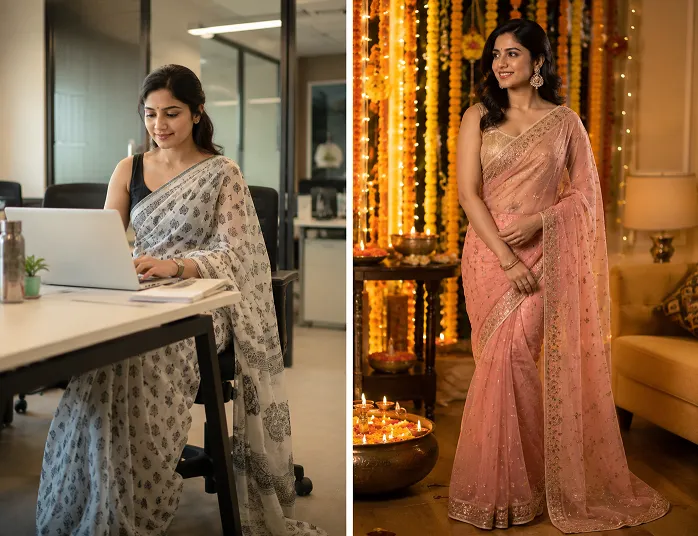
There is also a textural honesty to linen that most fabrics do not have. It creases the moment you sit down, and instead of hiding this, linen makes the crease part of its personality. A linen saree looks slightly undone in a way that reads as effortless rather than careless, which is exactly why it has become a favourite for office wear and daytime festive occasions alike.
But here is where most articles stop, right after telling you it breathes well and looks elegant. That is not enough information to actually buy one confidently.
How to Tell Real Linen From a Blend Before You Buy
This is the part that gets skipped everywhere else, and it is the part that actually saves your money.
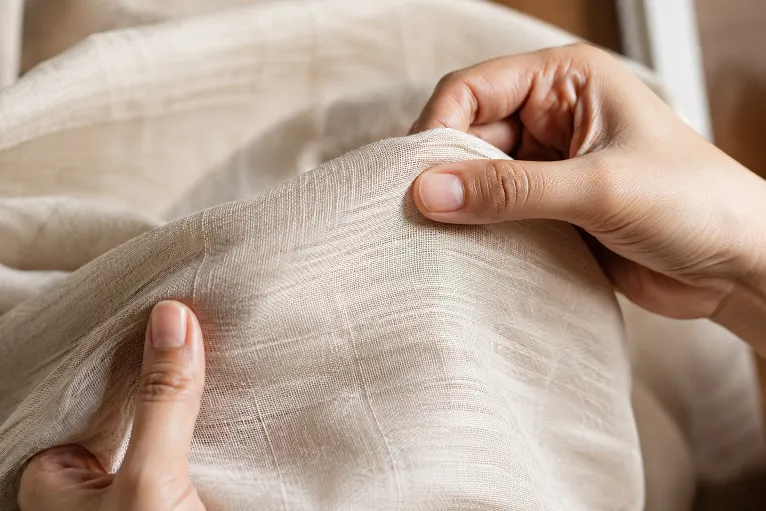
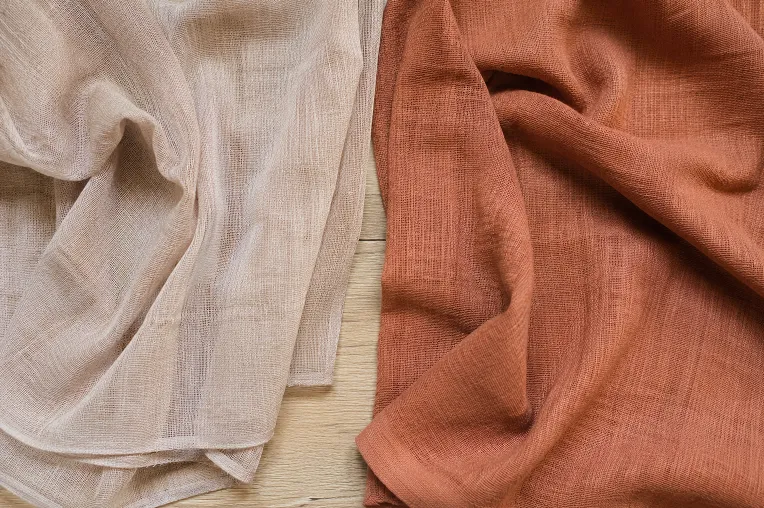
Pure linen has slubs, those slightly thicker, irregular threads running through the weave. On real linen, you can feel these slubs with your fingers before you even see them. They are raised, uneven, and they do not repeat in a pattern. On a linen polyester blend that is marketed as pure linen, the slub is often printed on or woven in a way that repeats every few inches in an oddly perfect rhythm. If the “slub texture” looks too consistent to be natural, it usually is not natural.
Here is a test you can do at the counter, and honestly, most shopkeepers will not stop you from doing it. Take a small section of the fabric and crumple it tightly in your fist for about ten seconds. Real linen creases sharply and those creases stay visible even after you smooth the fabric out with your hand. A blend with polyester or viscose mixed in will spring back closer to flat, because synthetic fibres resist creasing. If the fabric bounces back too easily, you are not holding pure linen.
The feel between your fingers matters too. Pure linen has a slightly dry, almost papery coolness to the touch. A blend feels smoother and a little more slippery, closer to how a linen shirt from a fast fashion store feels compared to one from a proper linen manufacturer. Once you have felt both side by side even once, you will never confuse them again.
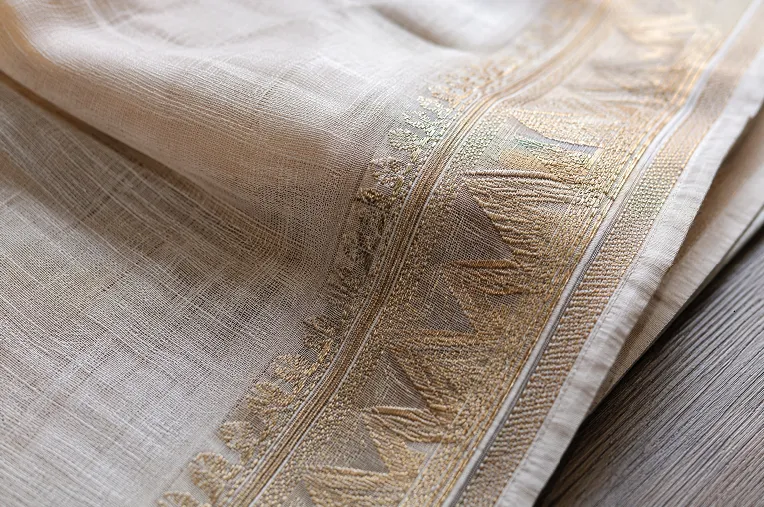
The border is often the first place a weaver’s quality shows up, so it is worth a second look even after you have checked the slub texture on the body of the fabric.
Why the Weight of the Linen Changes What You Need Underneath
Nobody tells you this before you order online, and it causes more return requests than any other single issue with linen sarees.
Linen comes in different weights, measured in GSM, grams per square metre. A lightweight linen, usually under 100 GSM, is airy and can genuinely be sheer enough that your petticoat colour shows through, especially in lighter shades like white, pale pink or ivory.
If you order a low GSM linen saree and pair it with a mismatched or bright petticoat underneath, it will show, and it will look like a mistake rather than a style choice. You need a proper fall stitched into the border so the saree hangs correctly, and a petticoat that matches or complements the saree colour closely.
Heavier linen, above 120 GSM or so, behaves much closer to cotton. It has more body, drapes closer to the skin without being sheer, and does not need the same level of care underneath. This is the version that works better for beginners or for anyone who wants a saree that does not need extra styling thought every time they wear it.
The mistake most women make is assuming all linen behaves the same way just because it says “linen” on the label. It does not. Ask about the weight before you buy, especially when ordering online where you cannot check this yourself.
Why the Pallu Keeps Slipping and Pleats Do Not Hold
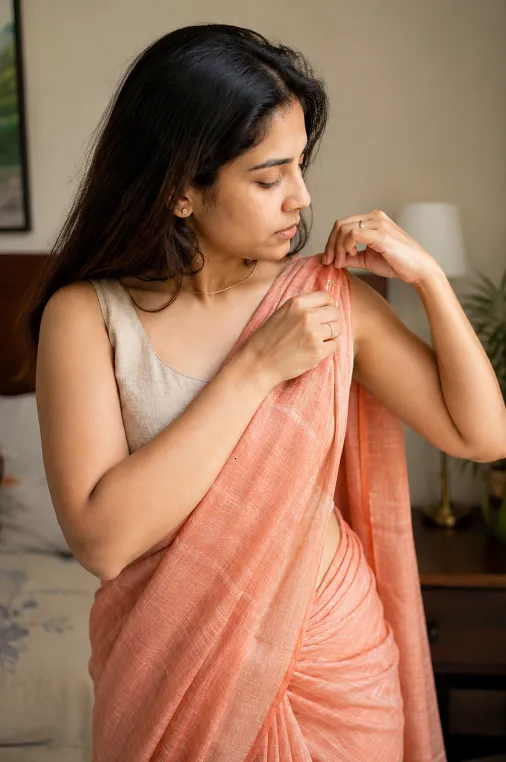
If you have worn a linen saree through a full day and found your pallu sliding off your shoulder every twenty minutes, you are not doing anything wrong. This is a genuine quirk of the fabric, and it is one that almost no article talks about because most fashion writers have styled linen for a photo, not worn it through an actual work day.
Linen has a natural crispness combined with a slightly slippery surface finish, especially once it has been ironed. That combination means it does not grip itself the way cotton or georgette does. Georgette has more body than chiffon so it holds the pleat better when you are walking, and cotton has enough friction in its weave to keep pleats tucked in place. Linen has neither of these advantages working in its favour.
The fix is not complicated, but almost nobody mentions it. Pin your pallu at the shoulder, not just tuck it. A single safety pin at the shoulder seam, hidden under the pallu fold, keeps it in place through an entire day, including auto rickshaw rides and stairs. For pleats, tuck them slightly tighter than you would with cotton, and if you are wearing linen for a long event, a second pin at the waist where the pleats meet the petticoat helps more than people expect.
This is the kind of detail you only learn after wearing linen enough times to get frustrated by it, and it is worth knowing before your first wear, not after.
Linen vs Cotton Saree: Which One Actually Suits You
This comparison gets asked constantly, and the honest answer is that it depends on what your day looks like, not which fabric is objectively better.
Cotton is more forgiving. It creases less dramatically, holds pleats better without pinning, and works well for women who are still getting comfortable with saree draping. Linen looks more elevated even in a simple drape, which makes it a strong choice for office wear or daytime festive events where you want to look put together without trying too hard.
If your day involves a lot of movement, travelling, or sitting for long stretches, cotton will hold its shape more consistently. If you are looking for something that photographs beautifully and carries an effortless, slightly editorial look, linen wins.
Neither is better across the board, and anyone telling you one fabric is universally superior has probably not worn both through a full working day. If you are still deciding between the two, our guide on the best saree fabric for summer breaks down how linen compares with cotton, georgette and chiffon specifically for hot weather wear.
What to Look For When You Buy
Before you buy a linen saree, check two things that actually matter more than the print or the colour. First, do the crumple test if you can, or ask specifically about the slub pattern if you are buying online and can only go by photos and a video call.
Second, ask about the GSM or fabric weight, because that single detail decides whether you need a matching petticoat and a proper fall stitched in, or whether the saree will behave more like cotton straight out of the packet. Most sellers will not volunteer this information unless you ask directly.
At Ethora, we manufacture our sarees, salwar kameez, kurtas and lehenga choli directly at our unit in Surat, and for anything outside that range, we source it straight from Surat’s local textile market, which happens to be India’s largest textile hub. So when we talk about slub texture or fabric weight, it comes from actually handling these materials at a production level, not from a product description written by someone who has never touched the fabric.
Styling a Linen Saree Without Overthinking It
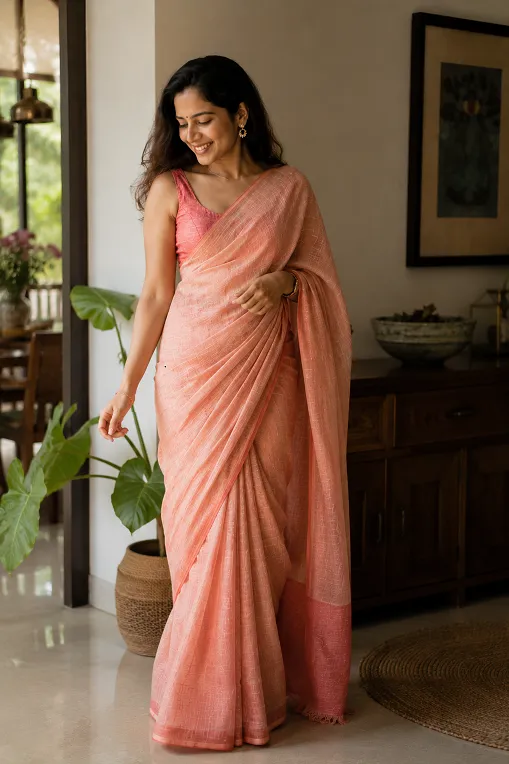
For office wear, keep the blouse structured and the jewellery minimal, since linen’s texture already does most of the visual work. A plain linen saree in a solid colour paired with simple gold studs and a straight cut blouse looks finished without effort. If sarees are not your only option on busy workdays, our guide to salwar kameez for office wear covers similar ground for readers who rotate between the two.

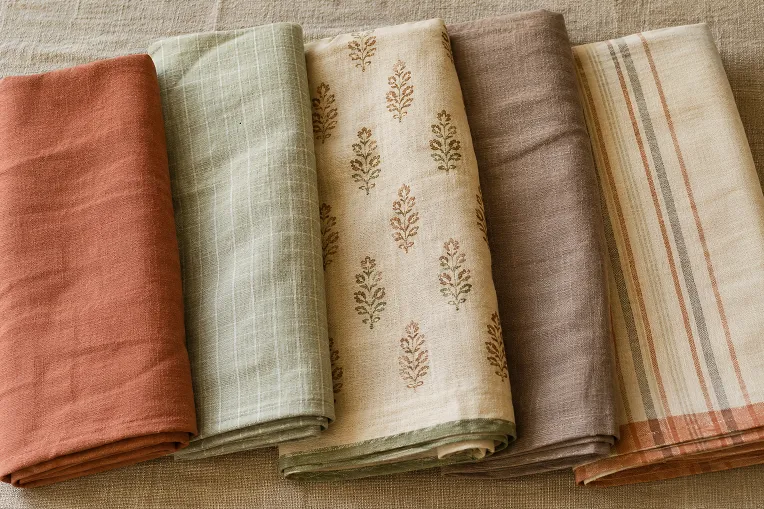
For festive daytime occasions, linen with a woven border or a subtle zari edge works better than heavily embroidered options, since linen was never meant to carry heavy embellishment well. It tends to pull at the weave under the weight. If you are unsure which shades will work best on you, our piece on colour combinations for ethnic wear can help you narrow it down before you buy.
Everyone assumes bright colours in linen look loud, but a well chosen mustard or deep teal linen saree actually looks calmer than the same shade in silk, because linen’s matte finish softens the colour instead of making it shout. That is worth trying if you have been sticking to pastels out of habit rather than preference.
Linen sarees kept folded for long periods can develop permanent creases along the fold lines, so roll them instead of folding flat if you are storing them for more than a few weeks. Our detailed piece on how to store silk sarees covers fabric storage in more depth if you are building a small collection across different materials.
The most common mistake with linen sarees is buying based on how the saree photographs on a model rather than how it will actually behave on your body through a real day. A saree that looks beautifully draped in a still photo can still slip at the pallu and crease unevenly by 4 pm. That gap between how something looks in a photo and how it performs in real life is the entire reason this guide exists.
Conclusion
Linen rewards you if you understand its quirks and works against you if you treat it like cotton with better marketing. Know the fabric weight before you order, pin your pallu before you leave the house, and buy from someone who can actually answer questions about slub texture without reading it off a product tag. If you want to go deeper into saree fabrics beyond linen, our blog has a few more honest breakdowns worth reading. And if you are close to buying, our store is launching soon with pieces made and sourced directly from Surat’s manufacturing floor, no middlemen in between.
FAQ
Is linen saree good for daily wear?
Heavier linen, above 120 GSM, works well for daily wear because it holds its shape better and does not need constant re-pinning. Lighter linen is better saved for occasions where you have time to style it properly, since it needs more attention through the day.
Can linen sarees be worn in winter?
Yes, though linen is primarily chosen for its breathability in heat. In cooler weather, a slightly heavier linen paired with a full sleeve blouse works fine, but it will not offer the warmth that silk or wool blends provide.
How do I know if a saree fabric is good quality before buying online?
Ask the seller for a close up video of the fabric texture and specifically ask about the fabric weight or GSM, since photos alone hide slub texture and drape quality. At Ethora, our sarees are manufactured at our own Surat unit or sourced directly from Surat’s textile manufacturers, which means we can answer these questions with actual production knowledge rather than a generic listing description, and it gives you factory level quality without paying middleman markups.
Why does my linen saree crease so much even after ironing?
Creasing is a natural property of linen’s fibre structure and cannot be fully avoided, only managed. Ironing while the fabric is slightly damp, rather than completely dry, helps the crease release more smoothly and hold longer.
Does linen saree need a separate fall and petticoat?
Lightweight linen sarees generally need a proper fall stitched into the border and a petticoat that closely matches the saree colour, since lighter GSM linen can be sheer enough to show through. Heavier linen behaves closer to cotton and does not usually need this extra step.
Still figuring out which linen saree actually suits how you dress day to day? You do not have to guess alone. Everything we make comes straight from our own manufacturing unit in Surat, and anything outside that range is sourced directly from Surat’s local textile manufacturers, so you are always closer to the source than the usual middleman markup. Our store is launching soon, and we would love for you to be there on day one.