
There is a specific kind of salwar kameez that belongs in a boardroom, and there is a specific kind that belongs at your cousin’s sangeet. The cut can look almost identical. The fabric is what separates them.
That distinction is something most styling guides skip entirely. They jump to colours, accessories, and “what to pair with what,” without ever explaining why one suit reads as polished and another reads as festive, even when both are technically the same silhouette. So you end up guessing, second-guessing, and often reaching for something safer than what you actually wanted to wear.
This guide starts where the decision actually begins: fabric. Then cut, then everything else. If you understand those three things in order, wearing salwar kameez for office stops feeling like a risk and starts feeling like the obvious choice it should be. And if you are a college student figuring out a more casual take on the same outfits, this guide on kurta styling for college covers that ground separately.
Table of Contents
The Fabric Decision Is Where It All Begins
Most styling guides jump straight to colours and cuts. That is backwards. The fabric you choose determines how the outfit behaves across a full working day, and that matters more than almost anything else.
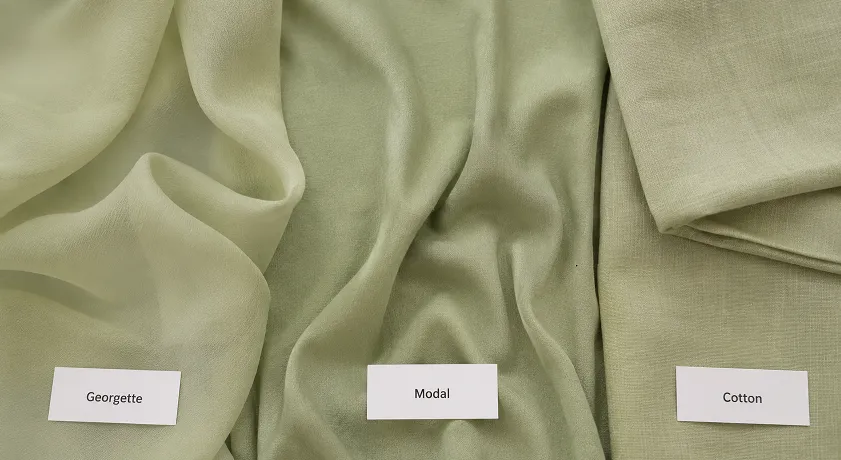
Cotton and cotton blends are the most practical choice for everyday salwar kameez for office, especially in Indian summers and humid cities like Mumbai or Chennai. Cotton breathes, it does not cling, and a well-pressed cotton kurta holds its shape through an eight-hour day better than most people expect. The one thing to know: cotton creases. If your commute involves an auto or a crowded metro, factor that in.
Georgette is an excellent option for more formal meetings or senior-level offices. Here is something worth knowing if you have never thought about it: georgette has more body than chiffon, which means it holds its drape when you move. Chiffon floats, which is beautiful, but it also catches on things, shifts with any breeze, and needs a little more management. Georgette sits more steadily on the body and looks more composed throughout the day.
Modal fabric is underrated for office ethnic wear in India. It looks similar to rayon from a distance, but it behaves very differently in Indian heat and humidity. Rayon clings to the body as the day warms up. Modal does not. It stays soft against the skin, moves with you, and maintains its structure. If you work in an office without strong air conditioning, modal is worth knowing about.
Avoid heavy silk, raw silk, or chanderi for daily office wear. They are gorgeous fabrics, but they are high-maintenance in ways that a busy workday does not accommodate. For a deeper understanding of how different fabrics behave in Indian weather, this guide on best saree fabric for summer applies many of the same principles.
Which Salwar Kameez Works for Office and Which Does Not
Not every kurta silhouette reads as office-appropriate. Here is a clear way to think about it.
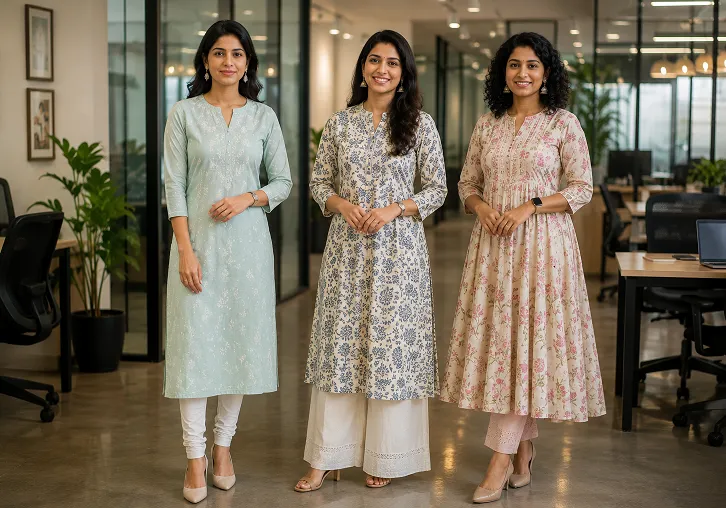
Straight kurtas and A-line kurtas work best for most office environments. They are clean, they layer well with blazers if your workplace is formal, and they do not require constant adjustment. A straight kurta that hits just below the hip with a well-fitted churidar or slim palazzo is a complete, polished look.
Anarkali suits can work, but choose carefully. A floor-length anarkali in a bold print belongs at a family function, not a conference room. A mid-length anarkali in a solid or subtly textured fabric with minimal embellishment reads as professional if the rest of the outfit is kept simple. If you are deciding between silhouettes, this detailed comparison of anarkali vs straight salwar kameez breaks down the differences clearly.
Palazzo suits have become more accepted in Indian offices over the last few years, especially in creative, media, and tech environments. The key is that the kurta should be longer, ideally to mid-thigh, so the proportions hold. A short kurta with wide palazzo pants looks casual in a way that a slightly longer kurta does not.
The Dupatta Problem Nobody Talks About
Here is the honest version: for most offices, the dupatta is more trouble than it is worth on a working day.
That is an unpopular thing to say, because the dupatta is a beautiful part of Indian dress. But practically speaking, a flowing dupatta draped over one shoulder will slide off three times in a meeting, trail behind you when you walk fast to a presentation, and require one hand to keep in place. That is cognitive load you do not need at work.
The better approach: if your suit comes with a dupatta, use it as a finishing piece for the commute, then fold it neatly on your desk or drape it over your chair during the day. Or choose suits that come with a narrow, structured stole instead of a wide flowing dupatta. These stay in place and still complete the look.
If you genuinely prefer wearing a dupatta throughout the day, pin it. A small safety pin at the shoulder, hidden inside the fabric, changes everything. The dupatta stops moving, and so does your attention toward it.
Colours and Prints for Salwar Kameez in Office Settings
This is where I want to push back on something. The standard advice is to stick to neutrals and muted tones for office ethnic wear. Beige, off-white, grey, navy.
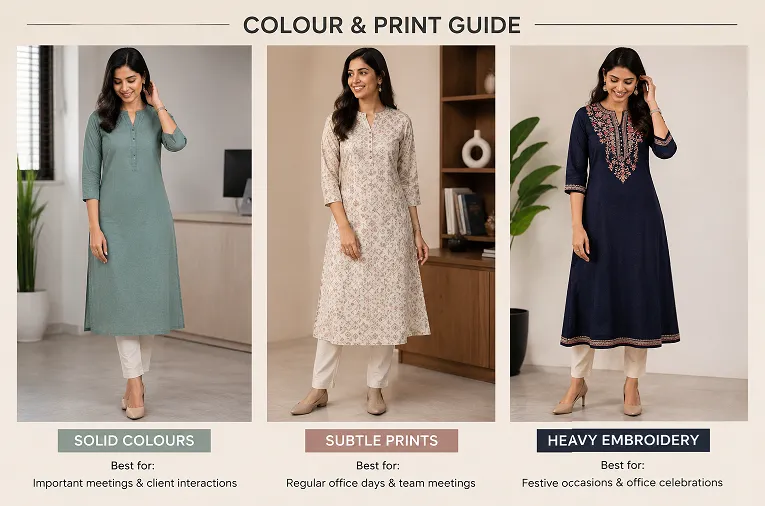
That is not wrong advice. But it is incomplete. A well-fitted kurta in a strong solid colour, rust, deep teal, forest green, or even a bright cobalt, looks equally professional if the cut is clean and the fabric is right. What makes something look casual is not the colour. It is a loose fit, a busy print, or excessive embellishment.
In practice:
- Solid colours in any shade work for office if the silhouette is structured.
- Subtle prints like small geometric patterns, thin stripes, or tone-on-tone textures read as professional.
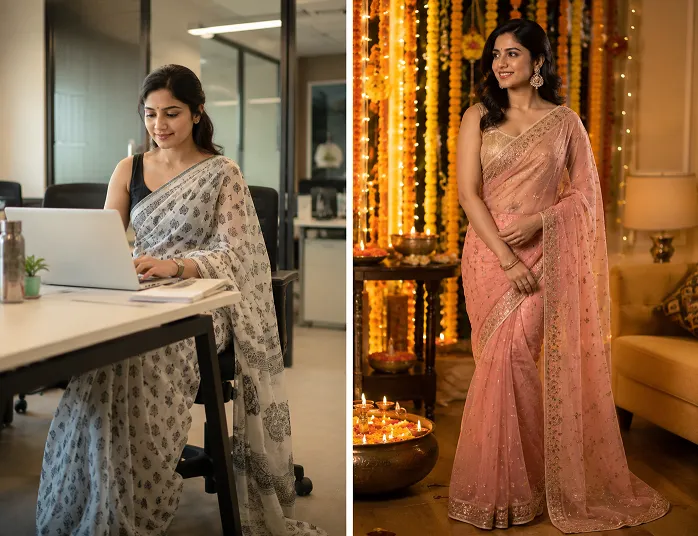
- Large floral prints or heavy embroidery are better reserved for office celebrations, Diwali parties, or casual Fridays.
- Zari and heavy embellishment belong at evening events, not Monday morning meetings.
The One Mistake Most Women Make With Office Kurtas
Most women choose a kurta length based on how it looks on the hanger or on the mannequin in the store. That is the wrong way to do it.
A kurta that looks perfectly proportioned when you are standing still will behave differently when you sit down, walk quickly, bend to pick something up, or climb stairs. Before buying any kurta for regular office wear, try it on and actually move in it. Sit down in the trial room. See what happens to the hemline. See whether the neckline holds. See whether the sleeves pull.
The other length issue: kurtas that are just slightly too short for the bottom you are pairing them with. If the kurta ends at exactly the hip, you need to think carefully about what you are wearing underneath. A churidar or slim salwar works. Wide palazzo pants with a hip-length kurta often does not give the right proportions for a formal setting.
Get the length right, and everything else becomes easier.
Footwear and Accessories That Complete the Look
Keep it simple and it will look intentional.
For footwear, block heels or low kitten heels in leather or faux-leather work well with straight and A-line kurtas. Flats work too, particularly kolhapuris or pointed-toe flats, as long as they are clean and in good condition. Avoid heavy juttis or heavily embellished footwear for daily office wear as they shift the tone of the outfit toward festive.
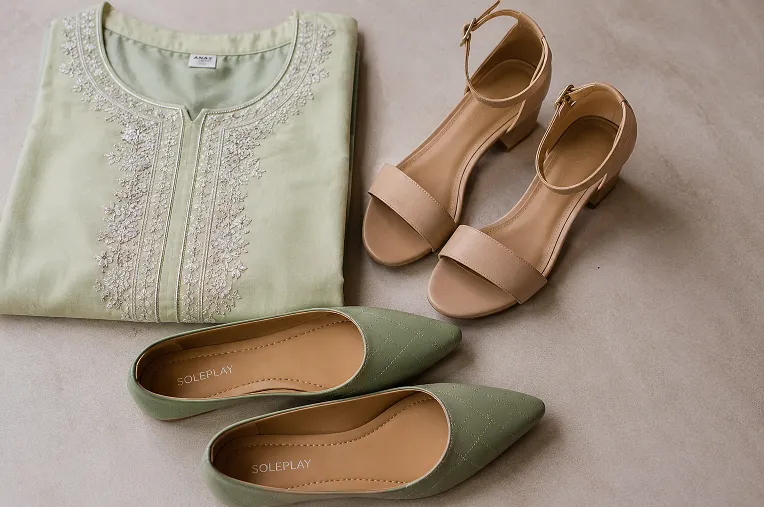
For jewellery, the rule that actually works: one statement piece or two quiet ones. Small jhumkas with no other jewellery. A structured watch and a simple chain. A single silk thread bracelet. The outfit itself has personality. The accessories just need to support it, not compete.
What the Fashion Industry Gets Wrong About Office Ethnic Wear
Most advice about wearing a professional Indian outfit to work is written for a generic, air-conditioned, formal office environment. That is not where most Indian women actually work.
Some offices are semi-formal. Some have no dress code at all. Some are on the shop floor of a business where you are standing and moving all day. The right salwar kameez for office depends entirely on what your day actually looks like, not what a style guide imagines it looks like.
The honest rule: dress one notch above the average in your workplace. If your colleagues wear casual kurtas, a neat cotton straight suit is already polished. If your office is formal corporate, georgette or a structured cotton blend with minimal accessories is what you need. Read your room, then apply the fabric and fit principles from this guide.
For a broader look at how Indian women across different work environments approach traditional office wear, G3Fashion’s guide on traditional Indian clothing for officewear covers salwar suits, kurtis, and sarees from a practical angle.
Conclusion
The real thing to take away: wearing salwar kameez for office is not about following a strict formula. It is about understanding how fabric, fit, and silhouette interact, and making choices that work for your specific body, your specific workplace, and the specific Indian summer you are dressing for. Get the fabric right first, then sort the cut, then worry about the rest. That order matters. For more on dressing with intention in Indian ethnic wear, keep reading on the Ethora blog.
FAQ
Which fabric is best for salwar kameez in a formal office?
For formal offices, georgette and good quality cotton blends are the most reliable. Georgette drapes well and holds its shape through meetings, while cotton breathes in Indian heat without looking casual if the cut is neat. Avoid anything with stretch fabric or synthetic blends that become shiny under office lighting.
Can I wear palazzo salwar kameez to office?
Yes, with the right proportions. The kurta should be longer, reaching at least mid-thigh, so the wide leg of the palazzo is balanced. Stick to solid colours or subtle prints and keep the footwear simple. In creative or relaxed office environments this looks polished; in very formal or corporate settings, a slim churidar may read as more appropriate.
What colour salwar kameez is best for office wear?
Any solid colour in a clean fabric works. The festive vs professional distinction comes from the print and embellishment, not the colour itself. A bright solid teal in cotton looks more office-appropriate than a muted pastel with heavy embroidery.
Should I wear a dupatta to office with my salwar kameez?
Only if you can manage it without it distracting you. If your dupatta needs constant adjustment, fold it or leave it aside during work hours. A narrow stole pinned at the shoulder is a practical middle ground if you prefer the look of a draped layer.
Can I wear an Anarkali suit to office?
A mid-length anarkali in a solid or textured fabric with minimal embellishment can absolutely work for office wear. Floor-length anarkalis or heavily embroidered ones are better suited to festive occasions. The length and embellishment level are the deciding factors, not the silhouette itself.
Pingback: Trending Saree Blouse Designs Women Are Loving In 2026 | Ethora
Pingback: Salwar Kameez For Apple Shaped Body: 3 Honest Fixes | Ethora
Pingback: Layering Jacket Over Kurta: 5 Confident Picks | Ethora