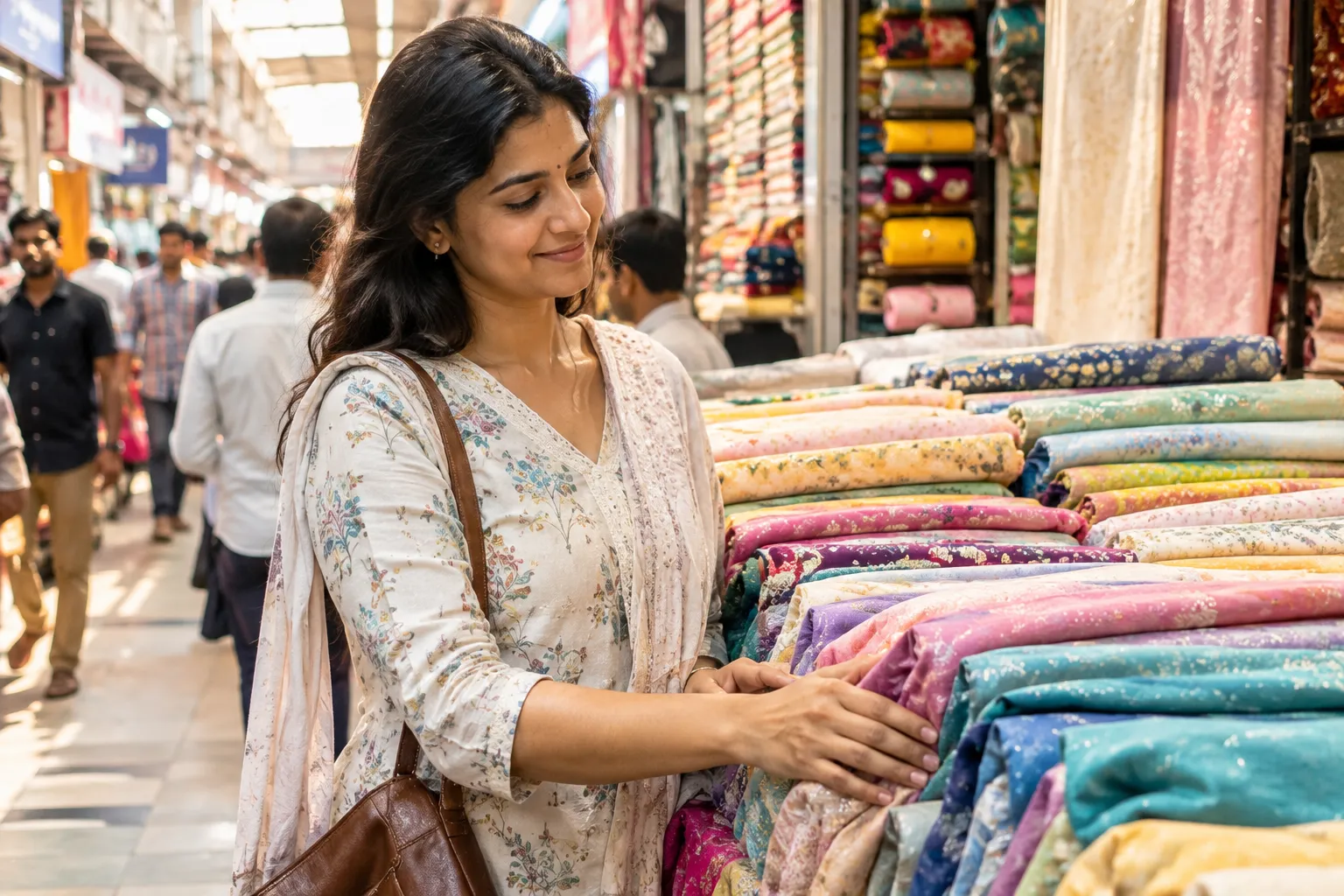
Walk into any wholesale market on Surat’s Ring Road on a Tuesday morning and you will lose your footing before you even reach the first shop. Bolts of georgette, chiffon and printed viscose are stacked chest high, and traders are calling out rates in a shorthand that only makes sense once you’ve worked here a while.
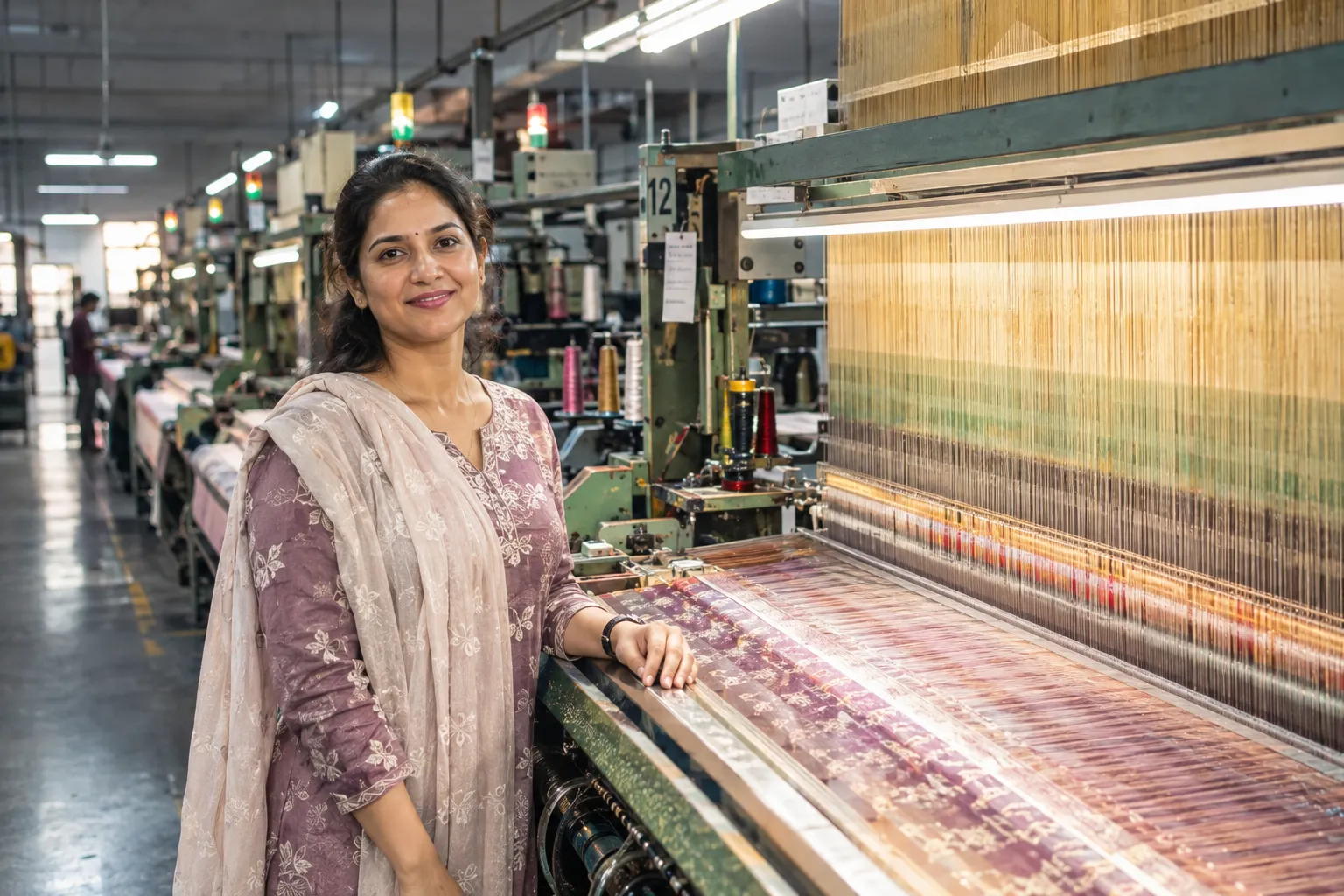
This is what the surat textile industry actually looks like on the ground, not the polished version most articles describe. I have spent years around Pahal Silk Mills’ production floor in Surat, watching fabric move from yarn to finished saree. This article is built on that, not on someone else’s summary of it.
Table of Contents
How the Surat Textile Industry Actually Got This Big
Surat’s textile story did not start with power looms. Centuries ago it was a busy port trading silk and cotton with the world, and the weaving skill never really left the city even as trade routes changed.
What changed was scale. From the 1960s onward, cheap synthetic yarn and small power loom units multiplied through areas like Katargam, Pandesara, Sachin and Palsana. Workers came from Uttar Pradesh, Bihar, Odisha and Madhya Pradesh, and many never left.
That’s the short version of surat fabric industry history, and what most retellings skip is why the numbers built on it still hold up decade after decade.
Today the surat textile hub runs on that same migrant workforce, close to two million people, spinning, weaving, dyeing, printing and finishing fabric across thousands of small and mid sized units packed into a handful of industrial pockets.
The numbers get repeated everywhere: an estimated 6 to 6.5 lakh power looms running through the city, weaving somewhere between 25 and 30 million metres of fabric a day. Surat’s share of India’s man-made fabric output gets quoted anywhere from 40 percent to well above that, depending on which industry body is counting and when.
The push toward higher value manufacturing is not just local talk either. National policy on textile exports is now nudging units toward higher value products instead of pure volume, which matters as this city competes globally.
Why Production Here Beats Weeks Long Cycles Elsewhere
Every fashion blog repeats the line that Surat produces faster than other textile hubs. Almost none of them explain why, so it ends up sounding like a marketing claim instead of something you can actually verify.
Here is the real mechanism. In most textile regions, spinning happens in one state, weaving in another, and dyeing or printing somewhere else entirely. Every stage needs transport, paperwork and waiting on the next unit’s schedule.
In Surat, all five stages sit inside a radius you could cover in an afternoon. A roll of grey fabric can leave a power loom in Pandesara, get processed in a dye house nearby, and come back finished within days, not weeks.
This is the part of the surat textile industry story that actually matters to a buyer. Faster turnaround means Surat can react to a trending print or colour while other hubs are still coordinating logistics between states.
If you’re curious about the mechanics behind this, our piece on how a saree is actually woven walks through the weaving process stage by stage, from thread density to why some sarees cost more than others.
What Nobody Puts in the Brochure
And here is where I will push back on the industry’s own marketing a little. Concentration cuts both ways. When everything sits in one place, a single disruption hits every stage at once, not just one region.
One of the unit supervisors I work with at Pahal Silk Mills put it simply during a slow month a few years back: “When the market sneezes, everyone here catches the cold on the same day.” That has stuck with me more than any industry report.
I remember the July 2017 stretch clearly. Traders shut down Surat’s textile market for over three weeks protesting the new GST structure, and the strike cost the industry thousands of crores in lost business almost overnight.
The same concentration means the industry leans hard on migrant labour. When the 2020 lockdown hit, workers walked back to their home states in numbers large enough to leave entire units idle for months afterward.
None of this makes Surat’s scale less real. It just means the speed you read about comes with a fragility that promotional articles rarely mention. That honestly makes more sense than pretending the industry never has a bad quarter.
What This Scale Actually Means When You’re Buying a Saree or Kurti
None of this history matters if it doesn’t change how you shop. So here’s the honest translation, and really the modern answer to why surat for sarees became the default sourcing decision for so many Indian ethnic wear brands.
Buying fabric that traces back to a concentrated hub like this gives you real, checkable advantages, not marketing ones:
- Trend speed. A colour or print seen at a fashion week can reach surat saree manufacturing units within weeks, which is why so much of India’s saree and kurti stock actually traces back here.
- Pricing. Buying closer to the source cuts out layers of middlemen markup that stack up once fabric changes hands three or four times before reaching a shop shelf.
- Tighter quality control, in theory. Finishing and printing happening under the same regional umbrella beats being outsourced across states with different standards, when the unit doing it invests in it.
- The honest catch. Scale does not mean uniform quality. Production is spread across hundreds of thousands of individually owned power loom units, and plenty still run machinery that is decades old. “Surat-made” spans an enormous range, from basic mass-market synthetic to genuinely well-finished silk-blend work, not one single quality tier.
Fabric Truths You Only Learn From the Production Floor
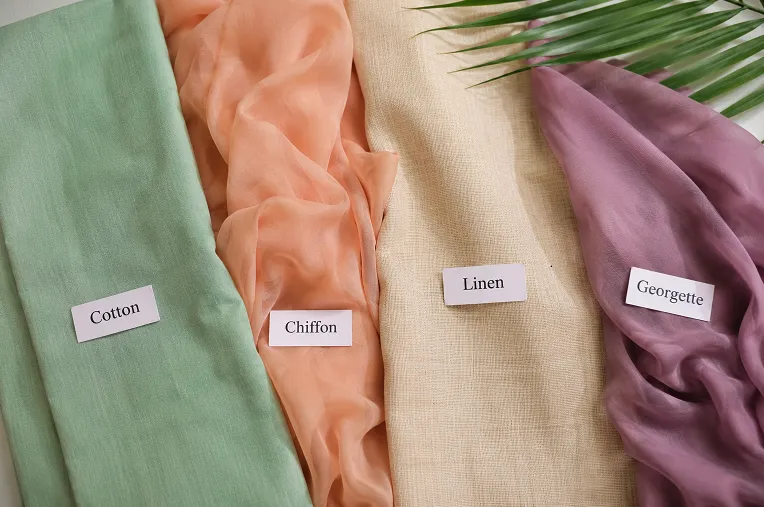
Georgette has more body than chiffon, so it holds a pleat better when you’re walking, while chiffon moves looser and catches light in a softer way that looks effortless even on a rushed morning.
Synthetic fabric from this region behaves differently in humidity than most people expect. A good viscose blend breathes better than cheap polyester, but it also needs a slightly cooler iron or the sheen dulls permanently.
Most shoppers assume “made near Surat” automatically means good quality. That’s the wrong assumption. Scale does not equal craftsmanship on its own, and checking who actually finished the fabric matters more than where it started.
Everyone romanticises handloom exclusivity, and it deserves respect. But honestly, it’s power loom and digital printing capacity that puts a trend accurate kurti in your size and budget within the same season, not six months later. If you’re weighing that trade-off for your own wardrobe, our honest guide to handloom versus power loom breaks down five signals that tell them apart.
If you’re weighing what actually holds up through an Indian summer, our guide on the best saree fabric for daily wear breaks down which fibres handle heat and humidity without clinging to the body.
What Actually Matters Before You Buy
Before you buy anything described as sourced from Surat, ask two questions: who finished the fabric, and how far did it travel before reaching you. Fewer hops usually means fresher stock and fewer markup layers.
If you want a sense of how many saree categories exist before you compare price and quality, our guide on the types of sarees in India is worth a look before you shop.
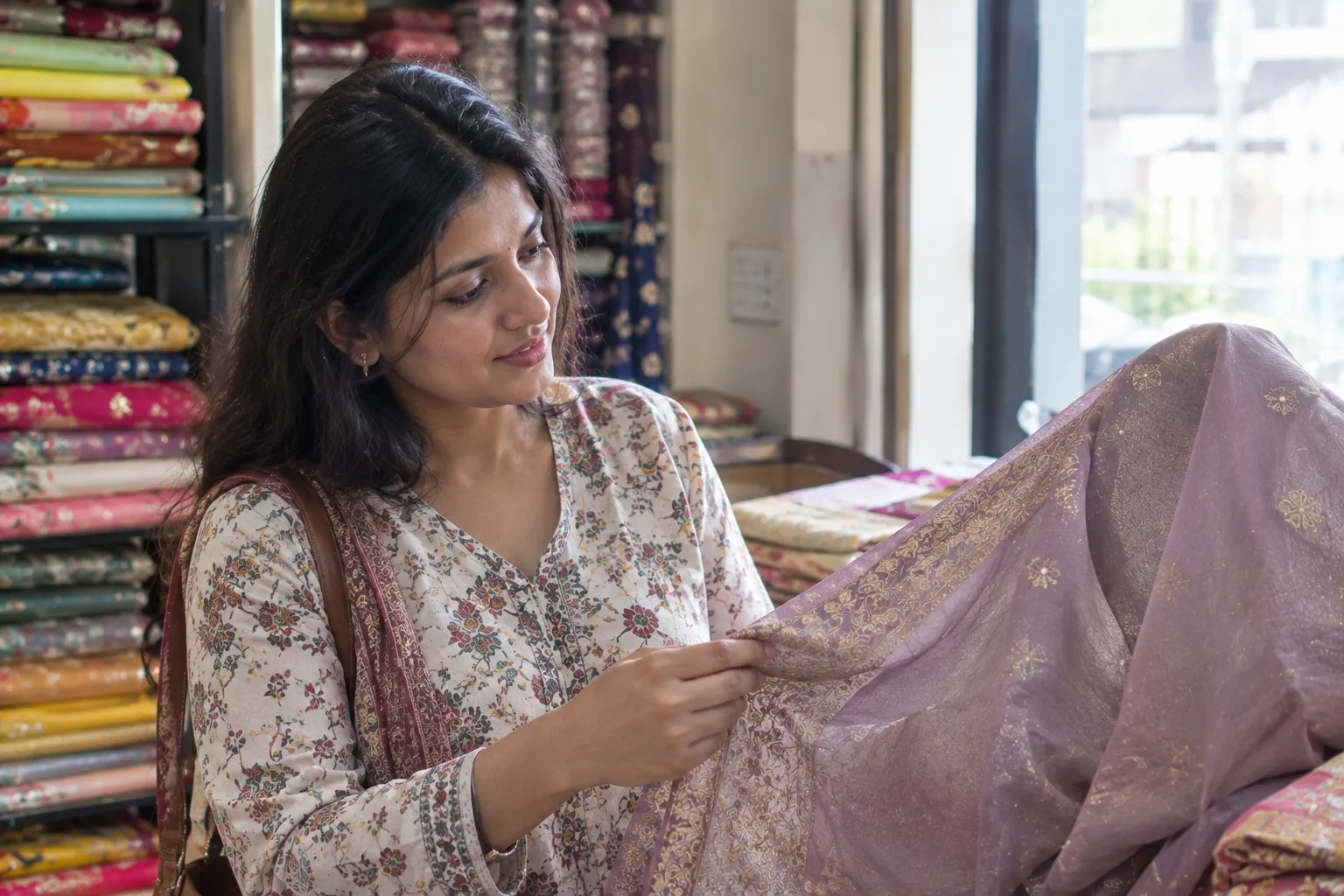
Ethora manufactures sarees, salwar kameez, kurtas and lehenga choli directly at our own unit in Surat, and we source everything else from Surat’s local textile market. This advice comes from people who handle these fabrics daily, not from a styling blog.
Conclusion
The real story of the surat textile industry is not just speed, it is concentration. Every stage sitting close together is what makes fast turnaround, real pricing advantages and tighter quality control possible. It is also what makes the industry fragile when one link breaks.
Next time a saree or kurti is labelled “sourced from Surat,” don’t stop at the label. Ask who finished it and check the drape yourself, the way this whole article has argued you should.
If you want more of this kind of on the ground perspective on fabric and fashion, our blog covers styling, fabric care and buying guides worth exploring.
Our store is launching soon, with pieces made directly at our Surat unit and sourced from Surat’s own textile manufacturers.
Frequently Asked Questions (FAQs)
Why is Surat called the textile city of India?
Because production, from spinning to finishing, is concentrated within a tight radius, letting fabric move through every stage without the delays other regions face when work is split across states.
Is Surat known for silk or synthetic fabric?
Both, though synthetic and man-made fabric dominate today. The city still produces silk and traditional weaves, but its scale comes mainly from power loom units producing georgette, chiffon and printed viscose.
Where can I buy good quality sarees or kurtis sourced directly from Surat?
Look for brands that manufacture directly or source straight from Surat’s mills rather than through multiple resellers. Ethora manufactures sarees, salwar kameez, kurtas and lehenga choli at its own Surat unit and sources everything else from Surat’s local textile market, giving you factory level quality without extra middleman pricing. Our store launches soon.
Does fabric from Surat include handloom sarees?
Yes, though it is a smaller share. Handloom output here includes traditional zari and brocade work, and pieces made this way take noticeably longer to finish than power loom fabric because zari threads are woven by hand at a slower pace. If a piece has visible zari, our guide on real versus fake zari covers the checks worth doing before you pay for it.
Why did the GST protests happen in Surat’s textile market?
In 2017, traders shut down Surat’s textile market for over three weeks after the government introduced a 5 percent GST on fabric, arguing it disrupted a trade that had run largely tax free for decades.
Surat’s textile scale is not just an industry fact, it’s the reason fabric can move from mill to your wardrobe faster and at a fairer price. Ethora manufactures its sarees, salwar kameez, kurtas and lehenga choli directly at its own unit in Surat, and sources everything else from Surat’s local textile market. Our store is launching soon, bringing that same factory level access straight to you.