It is the third week of shaadi season, and you are in a Surat showroom holding a lehenga that costs 6,000 rupees but looks like 16,000 under the shop lights. Then the doubt arrives. Will it look this good in daylight, in humidity, in photographs? Most budget lehenga shopping tips never answer that.
They tell you to fix a number and wait for a sale, and the advice stops there. This affordable lehenga guide goes further: where the money should actually sit across the blouse, skirt and dupatta, five checks you can run yourself in a shop, and when renting quietly beats buying.
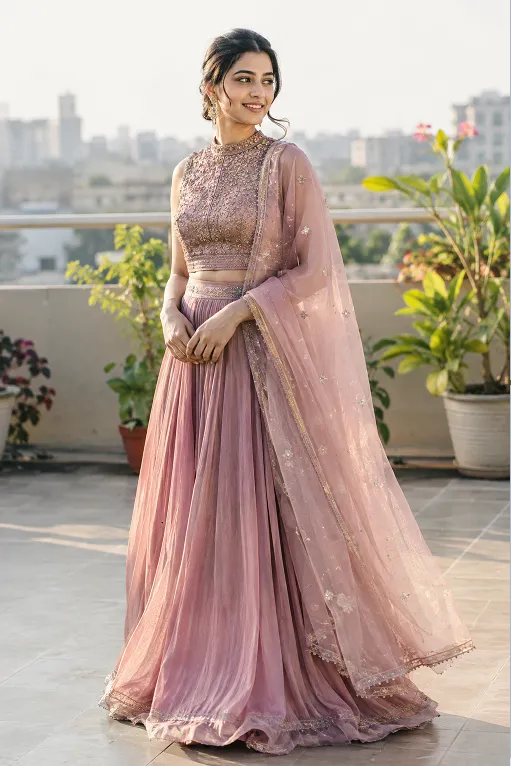
Table of Contents
Budget Lehenga Shopping Tips Start With Where the Money Goes
A lehenga is really three purchases wearing one outfit: the blouse, the skirt and the dupatta. Most shoppers judge the whole set by the skirt, simply because it is the biggest piece on the hanger. That is the wrong way to do it.
The blouse is usually the most expensive single element. It is small, but embroidery is priced by density and labour, and a blouse packs a lot of stitching into very little fabric. Padding, lining, hooks and fitting add to the bill.
The skirt works the other way. Its base fabric is often the cheapest part of the set, because a georgette or art silk skirt is plain cloth unless the whole thing is also embellished. The dupatta is the easiest place to economise, since it is the least dominant piece in any photograph.
So here is a rough split to start from, not a rule:
- Blouse, about 40 percent: this is where eyes land first and where embroidery quality shows. A well fitted blouse also does more for how the whole outfit sits than any skirt can.
- Skirt, about 30 percent: pay for a good flare and a soft, breathable lining rather than all-over embellishment.
- Dupatta, about 15 percent: a simple net or organza with a clean border is enough. Organza is crisp and holds its shape, so even a plain one looks deliberate.
- Fitting and alterations, about 15 percent: a 7,000 rupee lehenga that fits perfectly looks better than a 12,000 rupee one that pulls across the shoulders.
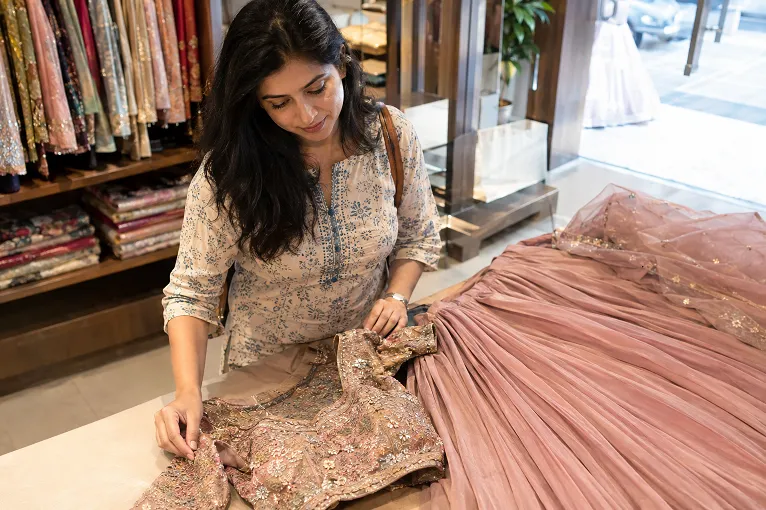
Here is an unpopular opinion. At a low price, an all-over embroidered skirt is usually a worse buy than a plain flared skirt with a strong blouse.
Cheap all-over work means thin thread and sparse stitching, and it makes the skirt heavy. By the third hour of a humid Surat evening, that weight drags at your hips and you will stop enjoying the function.
Genuine hand work such as zari zardozi embroidery is slow, patient labour by skilled artisans, which is exactly why it costs what it costs. A very cheap piece that claims to have it deserves suspicion. If the blouse carries metallic thread, learn the basics of real vs fake zari before you pay.
Timing and Where to Look Before You Spend
Now the part every other lehenga buying guide covers, because you do expect it. Buy early. Of all budget lehenga shopping tips, this is the least glamorous and the most effective.
Shops raise prices and run out of sizes in the weeks before peak wedding season, and alteration tailors get booked solid. Starting two months ahead gives you room to compare and room to fix mistakes.
Compare at least three sellers in person. If you can reach a manufacturing hub market, include it, since pricing there has fewer middle steps. Take a photo in daylight as well as under shop lights.
Be careful with sale tags. A heavy discount on a piece that was never priced fairly is just a bigger number crossed out. Judge the piece, not the percentage.
How to Tell a Good Budget Find From a Bad One
A price tag tells you what the shop wants. Construction tells you what you are getting. This cheap lehenga quality check takes a few minutes, works at any price point, and you do not need to be a tailor to do it.
Around any finishing table in Surat you learn quickly that the pieces that fail are rarely the expensive ones. They are the ones where somebody hurried the lining, or trimmed the threads in a rush.
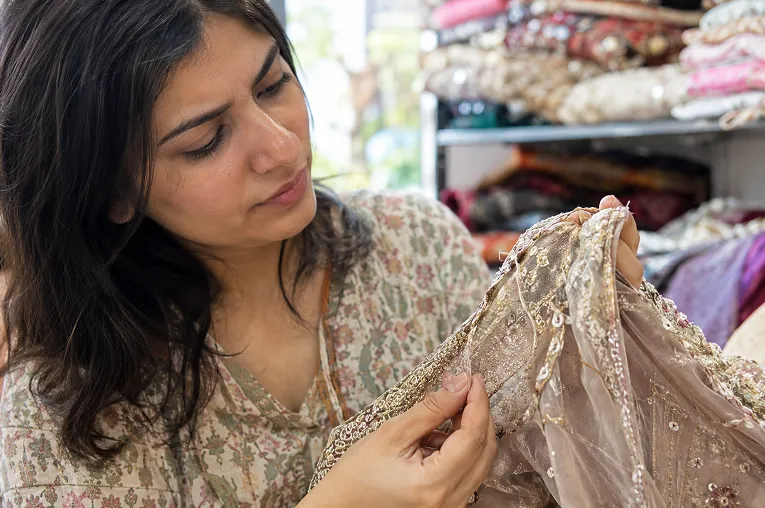
1. Turn the blouse inside out and read the back of the embroidery. Even machine embroidery should have a tidy reverse, with trimmed thread tails and a backing layer. Then tug one stone or sequin gently. Secure stitching stays put, while glued embellishment lifts.
Knots and scratchy edges will irritate your skin and snag your dupatta. The back never lies.
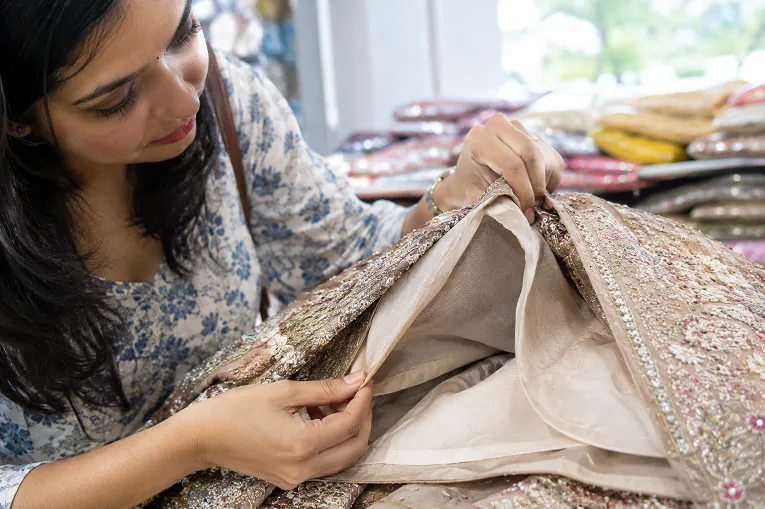
2. Lift the waistband and look at the lining. There should be a separate lining under the outer fabric, because a missing or thin one shows through and ruins the drape. A properly stitched lining hangs as its own layer. A fused one feels stiff and slightly glued, and it can bubble or peel after a wash or two.
Check what the lining is made of too. A polyester satin lining traps heat, and in Surat humidity it feels like wearing a plastic sheet by evening, while a soft cotton blend breathes.
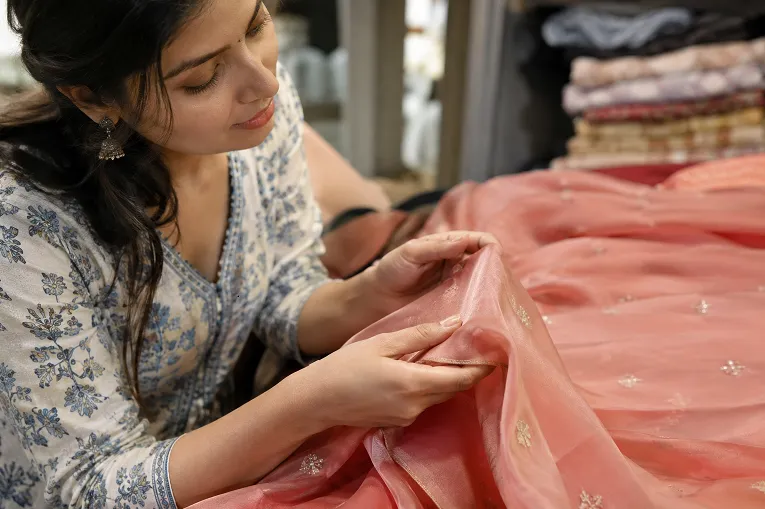
3. Pinch the skirt fabric between your fingers. Georgette should feel structured and have some body, not flimsy or see-through when you hold it against the light. Net looks airy but frays at cut edges, so its border should be stitched, not just cut.
But do not mistake heavy for good. Extra weight is often just bulky lining or too much embroidery, and it will tire you out long before the function ends.
4. Check the hem and the seam allowance. The hem should be stitched rather than glued, and its length should suit your height and heels, as this guide to lehenga length for your height explains.
Inside, look for an inch or more of spare fabric at the side seams and waistband, with neatly overlocked edges. That margin is what your tailor uses if you gain or lose a little weight before the wedding.
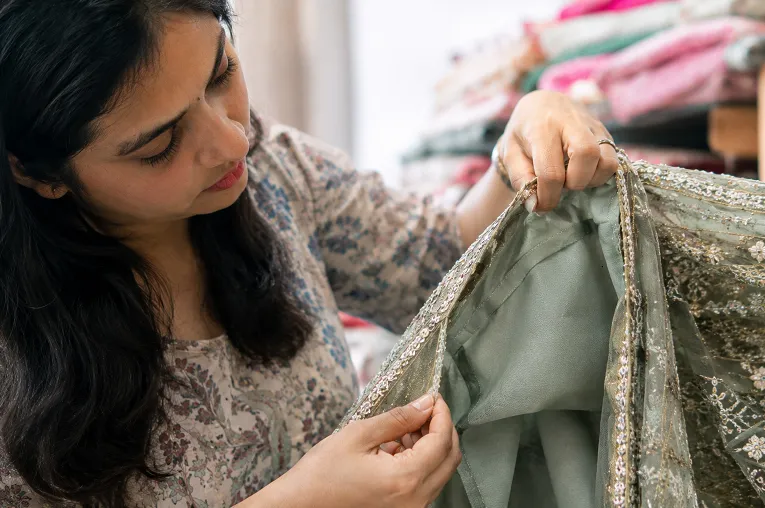
5. Inspect it the moment it arrives. Look for loose threads, mismatched pattern repeats and any damp or musty smell, which points to poor storage. Close every hook and zip too. Thin hooks bend on the first tight wear, and a flimsy zip is the usual reason a lehenga fails at 10 pm at the reception.
What to Check Before Buying Lehenga, Online or in a Shop
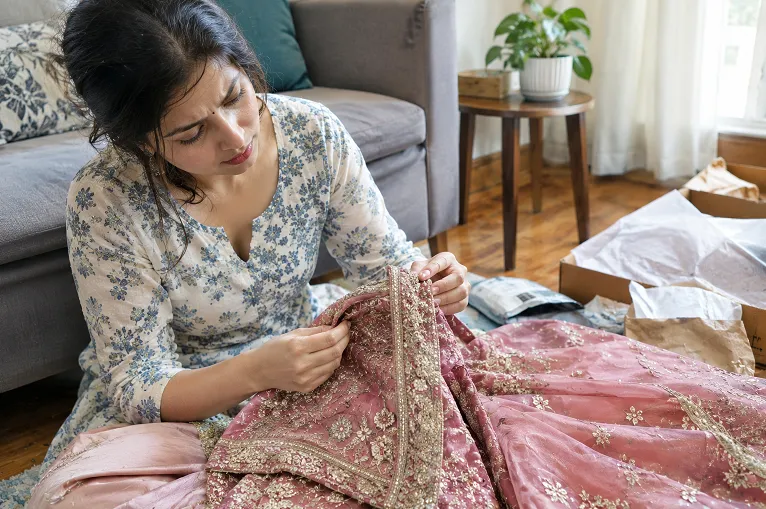
Take your phone torch into the shop. Light up the inside of the blouse, the lining and the hem allowance, and photograph what you see. This is what to check before buying a lehenga, whatever the price on the tag.
Ordering online? Ask the seller for a short video of the embroidery reverse, the lining turned out and the waist closure. A seller who sends it quickly usually has nothing to hide, and one who avoids it has answered your question. Confirm the return and alteration policy before paying.
Ethora manufactures at its own Surat unit and sources everything else directly from Surat’s local textile market, so this advice comes from people who handle these fabrics every day.
When Renting Beats Buying, Worked Out Properly
Among budget lehenga shopping tips, renting is the one most often dismissed in a single line. It deserves real arithmetic, because for a one-time event it can be the smarter move.
Say you buy a 9,000 rupee lehenga, spend 1,500 on alterations and wear it once. That is 10,500 rupees for one evening. Now say a well made rented piece costs 4,500 including a small alteration. Even if rental feels like money you never get back, the cost per wear is less than half.
Flip the situation. If you will wear the lehenga to three events, say a sangeet, a cousin’s wedding and Navratri, the owned piece falls to 3,500 rupees per wear and wins comfortably. Use your own city’s prices, but the logic holds.
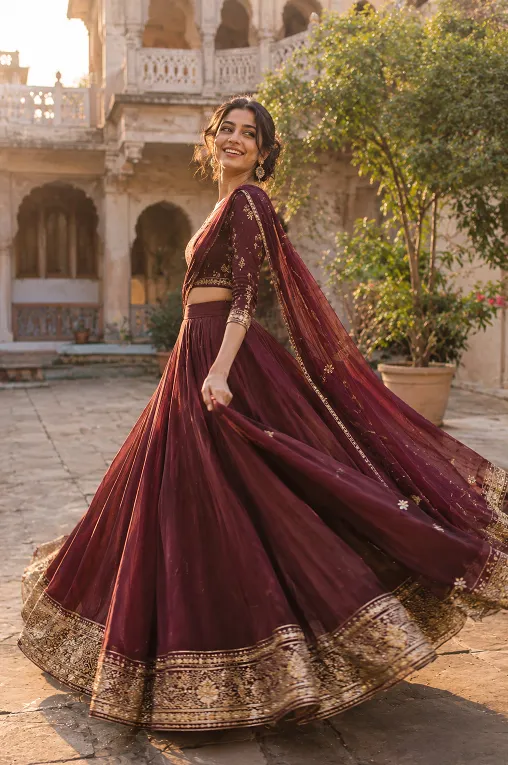
There is a quality angle too. A well made rented lehenga often photographs better than a cheap one you own, because better fabric keeps its structure under flash instead of throwing back a plastic shine.
Use this to decide:
- Wear count: one event leans towards renting, three or more leans towards buying.
- Photographs: if you will be in a lot of family photos, a good rental beats a weak purchase.
- Fit: rentals allow limited alterations, so if your measurements are unusual, buying and tailoring is safer.
- Reuse: a plain skirt in a strong colour can be restyled with a new blouse and dupatta, which makes buying the skirt smarter than renting a full set.
If you are still not sure a lehenga is the right outfit at all, this saree vs lehenga for wedding comparison is worth reading first. And if you do rent, ask for a trial at least three days before the event, get the cleaning policy in writing, and run the same five inside checks.
Conclusion
The cheapest lehenga is not the one with the lowest price. It is the one with the lowest cost per wear.
Before you shop, set your blouse, skirt and dupatta split, pack a phone torch for the inside checks, and decide whether this outfit is a rent or a buy. These budget lehenga shopping tips only work when you use them in the shop.
If this helped, there is plenty more on fabrics, fit and festive dressing on the Ethora blog.
Our store is launching soon, with pieces coming directly from Surat’s manufacturing source.
Frequently Asked Questions (FAQs)
What are the best budget lehenga shopping tips for a first-time buyer?
Decide your total first, then split it so the blouse gets the largest share and the dupatta the smallest. Check the inside of the blouse, the lining and the hem before you look at the price. And buy at least two months before the function so alterations never become an emergency.
How do I check lehenga quality when ordering online?
Ask for a video of the embroidery reverse, the lining and the waist closure, and read the return policy before paying. When the parcel arrives, check for loose threads, mismatched pattern repeats and any damp smell before you accept it.
Look for a stated fabric for both the outer layer and the lining, since vague listings often hide polyester blends. Ethora manufactures at its own Surat unit and sources other products directly from Surat manufacturers, which gives you factory-level quality without middleman pricing.
Which fabric is best for a budget lehenga in hot weather?
A georgette or crepe skirt with a soft cotton blend lining is the safest bet. Velvet looks beautiful but is heavy and warm, so save it for winter weddings in Delhi or Punjab. Avoid a satin lining under heavy net, since the two layers together trap heat.
Which month is cheapest to buy a lehenga?
Prices usually soften when the wedding calendar thins out, which often means the monsoon months. The catch is a smaller selection, so use that window for simple, reusable pieces and save heavy work for when you have a firm date.
Now that you know what a good lehenga looks like on the inside, it helps to buy from people who see how it is stitched. Ethora manufactures at its own unit in Surat and sources everything else directly from Surat’s local textile manufacturers. Our store is launching soon.