You’ve stood in front of the mirror in a saree that looked perfect on the shop mannequin, and on you it just falls straight down, no waist, no curve, just fabric hanging off your shoulders like a curtain.
That’s not a flaw in you or the saree. It’s the rectangle body shape, where your shoulders, waist and hips sit close to the same width. A saree for rectangle body shape needs to be draped and picked with that in mind, or it ends up looking shapeless instead of graceful.
This guide gets into the exact drapes, fabrics and border choices that build in the curve your outline doesn’t already have on its own. Not the five generic tips you’ve read on every other blog.

Table of Contents
Saree for Rectangle Body Shape: What This Term Actually Means
A rectangle body shape simply means your bust, waist and hip measurements are close to each other, usually within an inch or two. There isn’t a dramatic narrowing at the waist the way there is with an hourglass or pear shape.
This is one of the most common Indian body shapes, not a rare one. If this is you, you are in good company, and most of the confusion around saree for rectangle body shape comes from mixing it up with being thin or being plus size.
You can be a rectangle at any weight. What matters is the ratio between shoulders, waist and hips, not the actual numbers on the tag.
If you’ve searched for the best saree for straight body shape before landing here, you’ve probably read a dozen versions of “avoid busy prints,” which is only half the story and honestly not even the important half.
If you’re not sure which category you fall into, Ethora’s free body type calculator gives you a result in under two minutes based on your actual measurements, no guessing in front of the mirror needed.
If you’re still narrowing down which shape you actually are, our saree guide covering all four body types, hourglass, pear, apple and rectangle, is the place to start before you dive into this one.
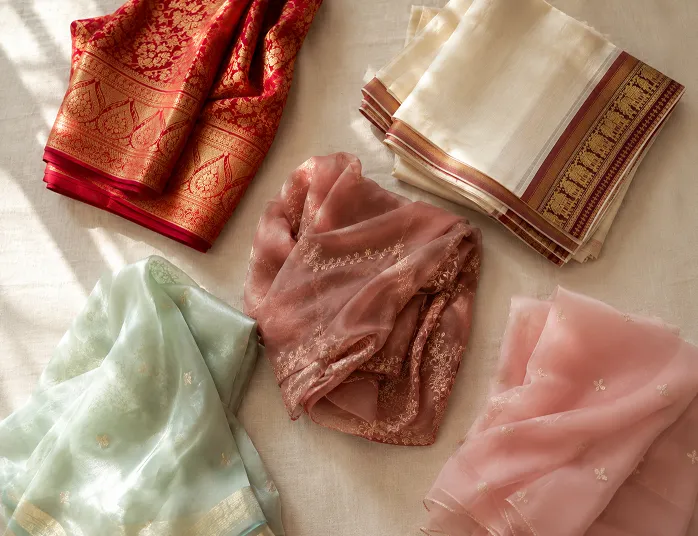
Georgette has more body than chiffon, and that matters here. A fabric with slightly more structure gives a rectangle frame something to hold onto. Sheer, boneless fabric on a straight frame just falls flat, literally.
Six Saree Drapes for Rectangle Figure That Actually Build a Waistline
There are more than 80 documented ways to wear a saree across India, so picking from just six of them still leaves plenty of room to find what suits you. A broader look at sari draping traditions is a good rabbit hole if you want to go deeper than this guide.
Getting the pleats to sit the way you want also depends on petticoat fit as much as the drape itself. Our saree petticoat guide walks through getting the pleat length and fall right before you even start draping.
Nivi Drape
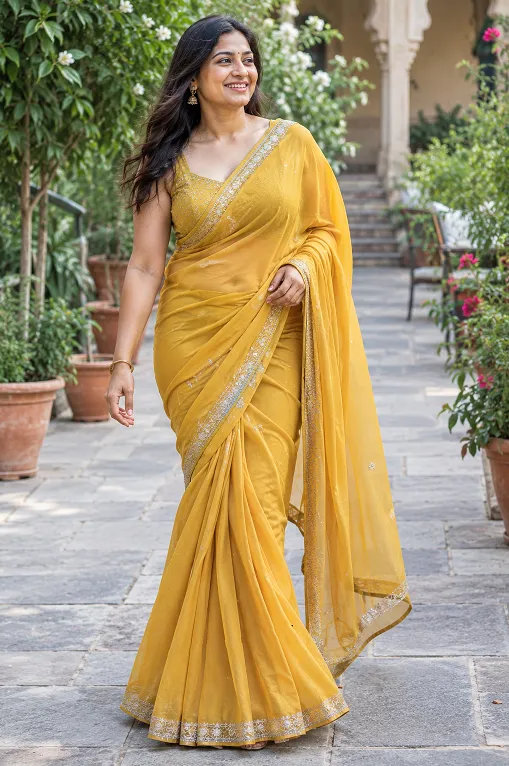
The Nivi is the drape most of us learned first, pleats in front, pallu over the left shoulder. For a rectangle body, the trick is pleat width. Narrower, tighter pleats sit closer to the body and create a visible break at the waist that wider pleats simply don’t.
Pin the pleats slightly to the left of centre instead of dead centre. It shifts the visual line just enough to suggest a waist instead of a straight drop.
Butterfly Drape
The butterfly drape flares the pallu out like wings instead of letting it hang flat down your back. That flare adds width at the shoulder and volume at the hip line, both of which trick the eye into reading a curve where your actual measurements are straight.
It photographs beautifully too, which is exactly why you see it so often at weddings and sangeets.
Seedha Pallu Drape
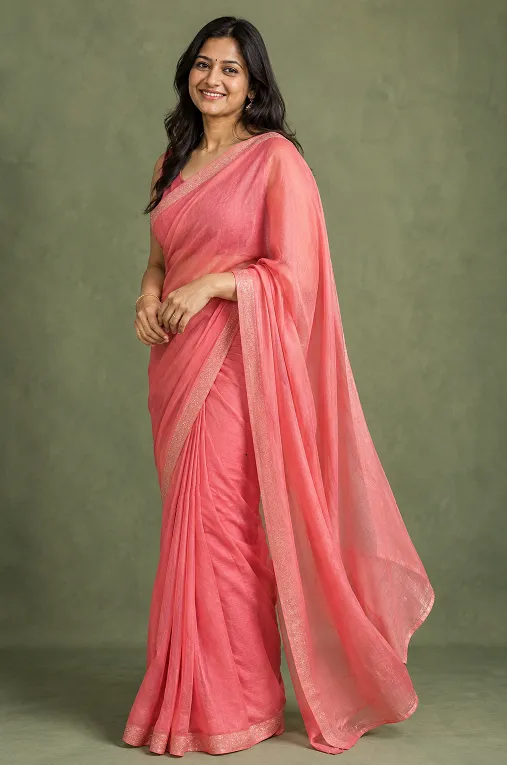
Seedha pallu, also called the Gujarati style, drapes the pallu forward over the right shoulder instead of back. It naturally sits closer to the body across the front.
A lot of the embroidery or border detail on the pallu sits right at chest and waist height in this drape, so it draws attention exactly where a rectangle shape needs it.
Bengali Drape
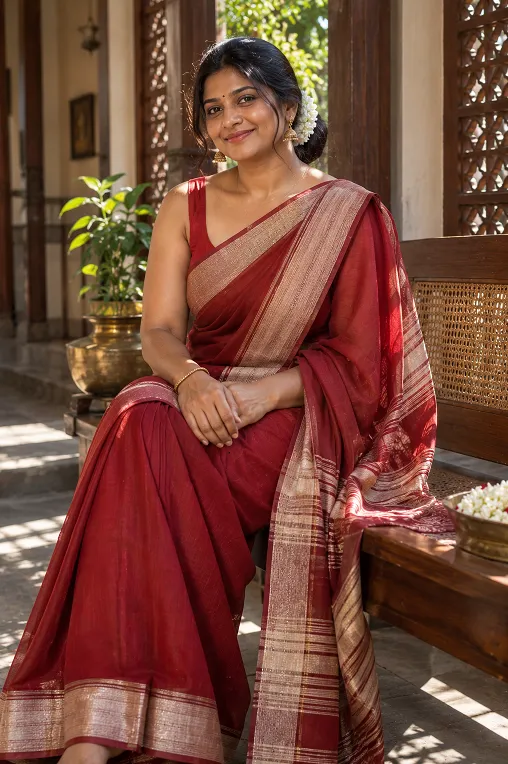
The Bengali drape uses big, dramatic pleats and a wide, flowing pallu, often with a bunch of keys tucked into the waist the traditional way. It adds volume everywhere, shoulders, chest and hips.
The overall silhouette reads fuller and rounder even though your actual body hasn’t changed shape at all. That’s the entire point of it.
Mumtaz Drape
Named after the Bollywood look from the 60s and 70s, the Mumtaz drape sits the pallu low on the hip with a fishtail-style pleat instead of the usual shoulder drape. It’s fitted through the torso and flares out below the hip.
That flare puts curve exactly where a rectangle frame is missing it, right at the hip line, which is why stylists keep coming back to it for this body type specifically.
Dhoti-Style Drape
The dhoti drape pulls the fabric between the legs like a pant instead of leaving it as a flat front panel. It’s unusual for daywear but genuinely useful here, because it breaks up the straight vertical line a regular drape creates.
It’s not something you want to manage while hopping into an auto rickshaw in a hurry, so save it for events where you have a few extra minutes to set the pleats properly.
The Stiff Fabric Myth: Where Structure Should Actually Go
Most advice about rectangle body shape saree fabric says buy something with more structure or body. Nobody explains where that structure should actually sit, and that gap causes more bad saree purchases than any wrong colour ever has.
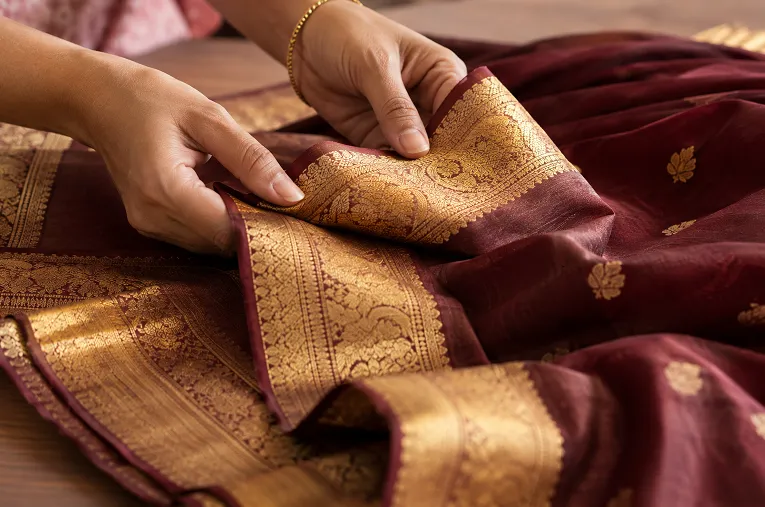
Here’s the part that usually gets skipped. Stiffness helps at the border and hem, not across the whole body of the fabric. A firm border holds its shape and creates a defined edge along the hem and pallu, which reads as structure to the eye without making the rest of the drape look stiff or boxy.
There’s a stiffness at the border that catches the light differently from the softer fall of the body fabric, and that contrast is exactly what you want visible in photos.
The main body of the saree, the part that actually wraps and pleats around you, works better with fabric that has enough weight to hold a pleat but still moves.
Banarasi silk is heavier than you expect, and if you’re wearing it through a full day wedding event, the pallu’s weight on your shoulder starts to show by evening. That weight is useful for structure but tiring by hour six.
Modal fabric looks similar to rayon but it doesn’t cling to the body the same way in Mumbai’s humidity, which matters if you’re wearing a fitted drape for hours at a summer function.
A uniformly stiff fabric across the entire saree looks boxy on a rectangle frame because it can’t be shaped into the curve at the waist the way a fabric with drape and a little give can be pleated to do. Structure at the edges, movement in the middle. That’s the real rule most articles never actually say out loud.
Border Width and Placement: What to Check Before You Buy
Once you understand that structure belongs at the edge, border width becomes the practical thing to check before you buy a saree for rectangle body shape. A border between four and six inches, placed with a firm but not rigid zari or woven edge, gives a rectangle frame the defined hem line it needs without adding bulk at the hip.
Run your fingers along the border in the store. It should hold a crease when you fold it and spring back, not go limp and not feel like cardboard either.
We manufacture our sarees at our own unit in Surat and source the rest directly from Surat’s textile market, so this is the kind of detail we actually check on the floor before a saree gets sold, not something we read off a spec sheet.
Colour, Prints and Blouse Choices That Add Definition
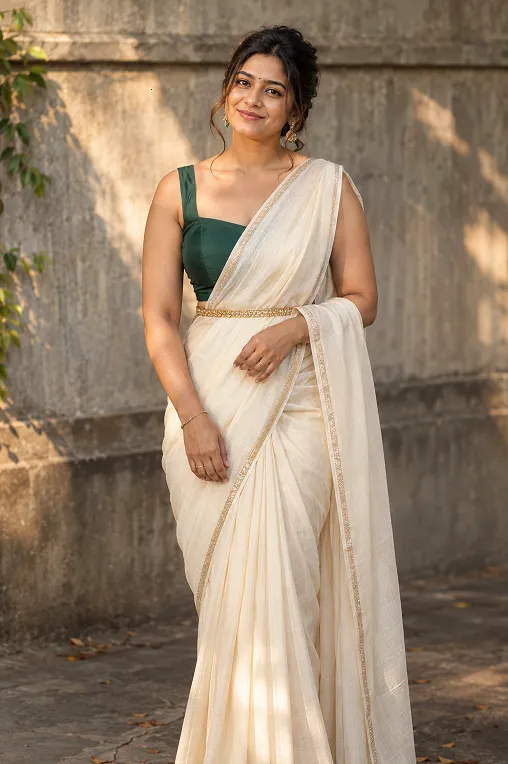
Vertical prints elongate the frame, that part of the usual advice is true. But a single horizontal accent right at the waist, a contrast waistband, a fitted belt, or a defined border at the hem, does more for rectangle body type saree styling than another head-to-toe vertical stripe print.
The two aren’t doing the same job. One lengthens, the other defines.
Everyone says stick to dark, slimming colours if you want a defined shape. Honestly, a saree with a contrast blouse and a defined waist belt does more for the illusion of curve than a dull, all-dark saree ever will, regardless of how convincing the colour theory sounds on paper.
Blouse cut matters just as much as the saree itself. A princess-cut or fitted peplum blouse creates a seam line at the waist that a straight-cut blouse simply doesn’t offer, and that seam does real visual work for a rectangle frame. Our saree blouse back design guide by body type has more on which back styles pull this off best.
If picking a colour that also suits your skin tone feels like a separate puzzle, Ethora’s free saree colour matching tool solves both at once, so you’re not choosing a defining silhouette in a shade that washes you out.
Conclusion
The real fix for a rectangle body shape in a saree isn’t one single trick. It’s understanding that structure and movement need to sit in different places on the same fabric. Get the border firm, the body fluid, and the pleats pinned close at the waist, and the shape follows.
There’s more on drapes, fabric and body-shape specific styling across our blog if you want to keep exploring beyond this one article.
Our store is launching soon, with every saree either made at our own Surat unit or sourced directly from Surat’s manufacturers.
Frequently Asked Questions (FAQs)
Which saree drape is best for a rectangle body shape?
There isn’t one universal best saree for rectangle body shape, it depends on how much curve you want and where. Mumtaz and butterfly add the most volume at hip and shoulder for occasions like weddings.
Bengali and seedha pallu keep things cleaner for everyday wear. Nivi works well too if you keep the pleats narrow and pinned slightly off centre.
Can a rectangle body shape wear a plain saree without looking flat?
Yes, but the blouse and border need to do more work. A contrast blouse with a defined waist seam and a firm horizontal border gives a plain saree the shape variation it’s missing on its own.
How do I know if a saree fabric is good quality before buying online?
Check the border first. Real zari or woven borders hold a crease and spring back rather than going limp or feeling stiff like cardboard. Genuine silk has a slight grip against the skin instead of a slippery, synthetic slide.
Ethora manufactures at its own Surat unit and sources everything else directly from Surat’s manufacturers, so you’re getting factory-level fabric knowledge and quality without middleman pricing added on top.
Is silk or georgette better for a rectangle body shape?
Georgette generally works better for everyday wear since it has enough body to hold a pleat without the extra weight silk carries.
Silk looks stunning for a full day wedding event, but that pallu weight on your shoulder does start to show by evening, so save heavier silk for shorter events or occasions where someone else is doing the walking for you.
Once you know where structure and movement need to sit on a saree, shopping for one stops feeling like guesswork. Every saree in our range is either made at our own manufacturing unit in Surat or sourced directly from Surat’s textile manufacturers, so the border, fabric and drape logic in this guide comes from people who handle these fabrics daily, not from a styling blog. Our store is launching soon, and this is exactly the kind of detail we build in from the first cut.