
Picture this. You are at a family wedding, maybe in Surat, maybe somewhere in Mumbai, and you have spent forty minutes draping a saree that looked stunning on the mannequin at the shop. But something feels off. The fabric is pulling in the wrong place. The pallu keeps slipping. You look at yourself in the mirror and you cannot quite pinpoint what went wrong.
This happens to almost every woman. And the reason is usually not the drape. It is the fabric choice. Most saree guides online talk about “silhouettes” and “body shapes” as if you are dressing a geometry problem. Real bodies are not triangles. But fabric behaviour is something you can actually understand and use.
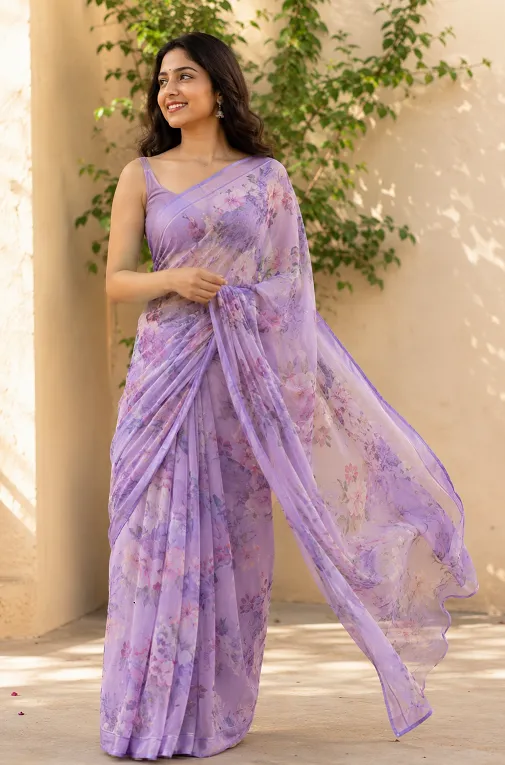
Here is what I have learned working around textile production and real Indian women wearing these clothes: choosing the right saree for body type is less about your measurements and more about how a fabric moves with you.
Table of Contents
The Fabric Comes Before Everything Else
Before you think about prints, borders, or colours, think about weight and drape. These two things will determine how the saree sits on your body more than anything else.
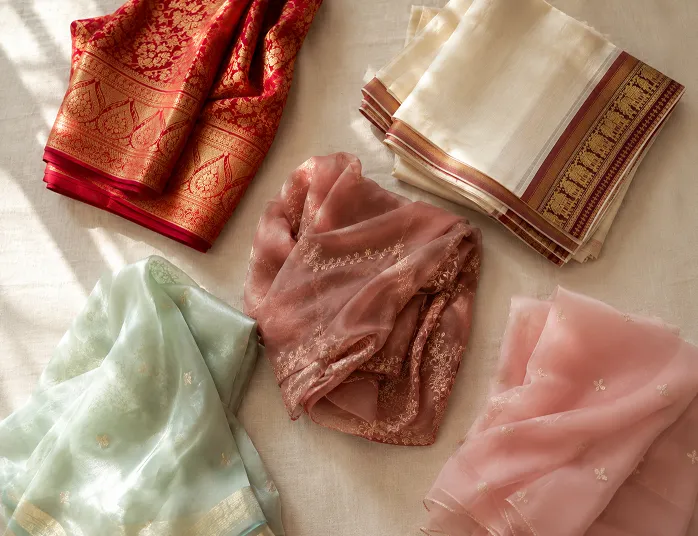
Georgette has more body than chiffon. This means it holds the pleats better when you walk, does not shift around as much, and gives a cleaner silhouette. Chiffon, on the other hand, is softer and more fluid. It catches the light differently, moves in a way that feels almost effortless, and is more forgiving around the midsection because it does not cling. If you are going to a function where you will be on your feet for hours, georgette will serve you better than chiffon. If you are going to a sit-down dinner where you want to look effortlessly elegant, chiffon wins.
Banarasi silk is heavier than most women expect. The weight of the pallu over your shoulder across a full day event will start to pull by the evening. You can actually feel the fatigue in your posture. If you are petite or slim, a heavy Banarasi can overwhelm your frame. If you are wearing it for a wedding sangeet that goes till midnight, pair it with a blouse that has good back support, or consider a lighter tissue silk version.
If you want to understand how Banarasi compares to Kanjivaram, Chanderi, or Chettinad cotton before you commit to buying, our guide to the types of sarees in India breaks down each variety honestly, including what they feel like and when they actually work.
India has dozens of silk weaving traditions, each producing fabric with a different weight, drape, and finish. The India Brand Equity Foundation, which works under the Government of India, maintains a list of GI-certified textile sarees from across the country, which is worth a look if you want to understand what makes a Banarasi or Kanjivaram different from a saree that merely borrows the name.
Saree for Body Type: Petite, Slim, and Plus Size
If You Are Petite or Short
The best saree for short height is one that creates a long, unbroken vertical line. This means:
- Avoid heavy borders and wide contrast borders. They cut your silhouette horizontally and make you look shorter.
- Stick to small or no prints. Large floral or block prints visually break the body into sections.
- Drape the pallu slightly shorter. A pallu that goes all the way to the floor looks elegant on taller women but can make petite women look like they are drowning in fabric.
Chiffon and georgette work well here because they are light and do not add volume. Cotton, especially heavy handloom cotton, can be stiff and boxy. It tends to stick out rather than fall, which makes you look shorter.
A high-contrast blouse and saree pairing, say a deep navy saree with a bright gold blouse, actually draws the eye upward and creates height. Most style advice says “match your blouse to your saree” but for petite women, a little contrast at the torso is genuinely flattering.
If You Are on the Slimmer Side
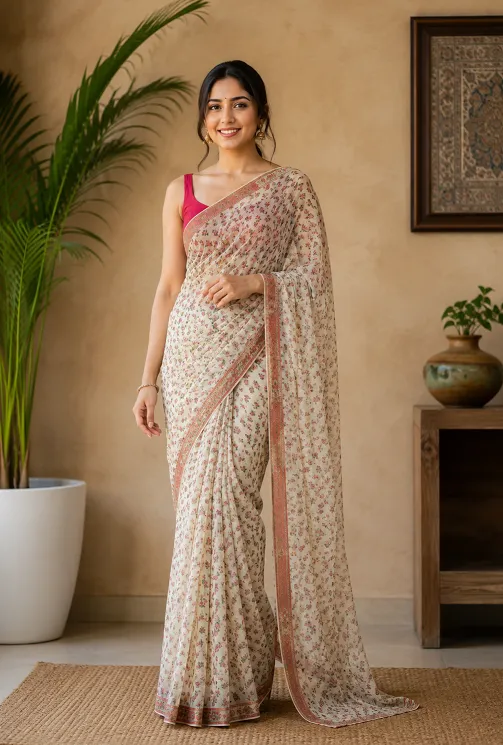
A saree for a slim body is about adding presence, not hiding anything. You do not need to “balance” your frame. That logic only makes sense if you think slim is a problem to solve, which it is not.
What actually works: sarees with texture and body. Raw silk, tussar, and organza all have a natural stiffness that adds dimension. Kanjivaram silk has a beautiful weight and sheen that photographs well and looks richer in person. These fabrics give your silhouette structure.
What does not work as well: very lightweight chiffon or georgette can look shapeless on a slim frame because there is not enough weight to hold the drape in place. The pallu slips, the pleats shift, and the whole thing looks unintentional.
Bold prints, wide borders, and heavy embellishments are your friends here. They add visual weight in the best way.
If You Are a Plus Size Woman
First, the fashion industry has spent years telling plus size women to minimise, hide, and downplay. That advice is exhausting and largely wrong.
The most important thing for a saree for plus size women is fabric behaviour around the midsection. Georgette and soft chiffon are the most forgiving because they do not cling. They skim. Stiff fabrics like heavy cotton or raw silk can fold and bunch in ways that are uncomfortable and unflattering. Modal fabric looks similar to rayon in photographs, but it does not cling to the body the same way in humidity. That is a meaningful difference in Indian summers.
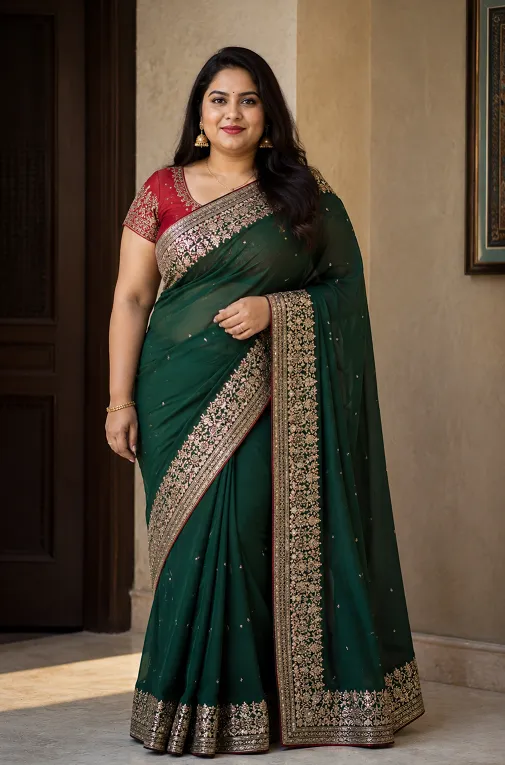
The petticoat matters enormously and this is something most style articles skip entirely. A petticoat that is too tight across the hips will bunch the saree fabric at the waist no matter how perfect your drape is. Go one size up on the petticoat. The silhouette will thank you.
Dark colours and vertical prints are not magic. They can work, but a well-fitted saree in a bold colour you love will look better than a poorly fitted saree in a “slimming” dark shade. Wear what you like.
Saree for Body Shape: Rectangle, Pear, Hourglass and Apple
Most women are told to dress for their “body shape” without anyone explaining what that actually means in the context of a saree. Here is a practical breakdown. Prefer an instant answer instead of reading through all four shapes below? Our free ethnic wear body type calculator works out your shape from your measurements in seconds, and also covers suit and lehenga recommendations, not just sarees
Saree for Rectangle Body Shape
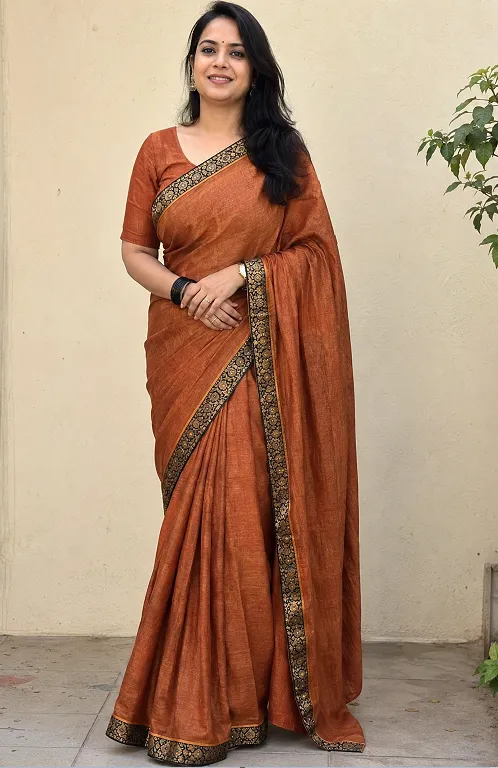
A rectangle body shape means your shoulders, waist and hips sit at roughly the same width. The saree gives you real freedom here. You can create definition exactly where you want it, or wear something clean and structured without needing curves to carry it.
The detail most guides get wrong is where structure should actually sit. A firm, well-defined border at the hem does more for shape than a uniformly stiff fabric through the whole saree, which can end up looking boxy on a straight frame. A well-structured blouse with a slightly cinched or princess-cut silhouette adds the waist definition the body’s natural line does not provide on its own.
For the full breakdown, which of the six saree drapes actually work best for this shape, where fabric weight should and shouldn’t add stiffness, and exactly what border width to check before you buy, read our complete guide to saree for rectangle body shape.
Saree for Hourglass Figure
An hourglass body shape means your bust and hips are wider than your waist, and the saree is genuinely the most naturally flattering garment for this shape. The traditional Nivi drape was essentially designed around it.
Lightweight georgette and chiffon follow your silhouette naturally, while Kanjivaram and Banarasi silk add a richness the frame can carry confidently. The one thing to avoid is a stiff fabric paired with a heavy border sitting right at the waist, since it flattens the definition already there.
For the deeper breakdown, including why blouse dart placement matters more here than for other shapes, where exactly the petticoat should sit before you drape, and the real trade-off between a flattering fit and all-day comfort, read our complete guide to saree for hourglass figure.
Saree for Pear Shaped Body
Pear body shape means your hips are wider than your shoulders. The goal, if you want one, is to balance the upper and lower half. A structured blouse with some volume, whether embellished, full-sleeved, or boat-necked, draws attention upward. Choose a saree with a busy border or heavy pallu, which keeps the eye moving rather than settling on the hips. Georgette and chiffon drape softly around the hips without clinging.
For a pear body shape, a saree with a busy or embellished border pulls the eye toward the hem, but pairing it with an equally detailed blouse, think embroidered yokes or statement sleeves, keeps attention distributed rather than settling at the hips. Georgette and chiffon are your best fabric choices because they skim over the hip and thigh area instead of clinging or adding bulk. Avoid stiff cottons or heavy silks with wide plain borders around the lower half, since they add visual weight exactly where you may not want it.
This covers the fabric and border basics. If you want the mechanics behind it, our pleat and drape guide for pear-shaped sarees breaks down which specific drape (Nivi, Bengali or Gujarati), pleat width, and blouse length actually do the balancing work.
Saree for Apple Body Shape
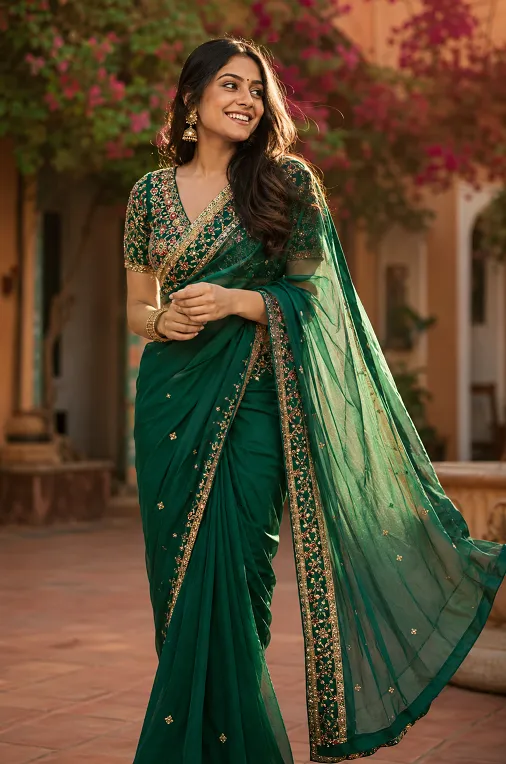
Apple body shape means weight sits more around the midsection. This is where georgette and soft chiffon earn their reputation. They skim rather than cling. A slightly higher drape and a longer blouse that covers the petticoat waistband make the silhouette cleaner. Avoid stiff fabrics that fold and bunch at the waist.
A single-colour saree in georgette or chiffon, without a heavy contrast border at the waistline, keeps the midsection visually smooth. Draping the pallu slightly higher than usual, just above the natural waistline, also helps, since it avoids drawing a horizontal line right across the widest point of the torso.
The Mistake Almost Everyone Makes
Most women choose a saree based on how it looks on the hanger or on the shop mannequin. That is the wrong approach.
A saree is not a static garment. It moves, drapes, and behaves completely differently on a body in motion versus a mannequin standing still. The way a fabric falls when you walk, the way the pallu moves when you raise your arm to adjust your hair, these things only reveal themselves when the fabric is on you.
The next time you are buying a saree, ask the shopkeeper to drape a rough version over your shoulder and walk a few steps. Feel the weight. See how it settles. You will know within thirty seconds whether this saree is going to work for you or fight you all evening.
The Occasion Changes Everything
Navratri in Ahmedabad means dancing. Hours of garba in a saree requires a fabric that stays put. Georgette with a good border weight works; slippery chiffon does not. The drape also needs to be slightly higher to avoid being stepped on.
A formal office environment in Mumbai summer calls for cotton or linen blends. Breathable, crisp, and professional without being stiff. Not silk. Not embellished fabrics. Something that holds up in humidity and does not show sweat.
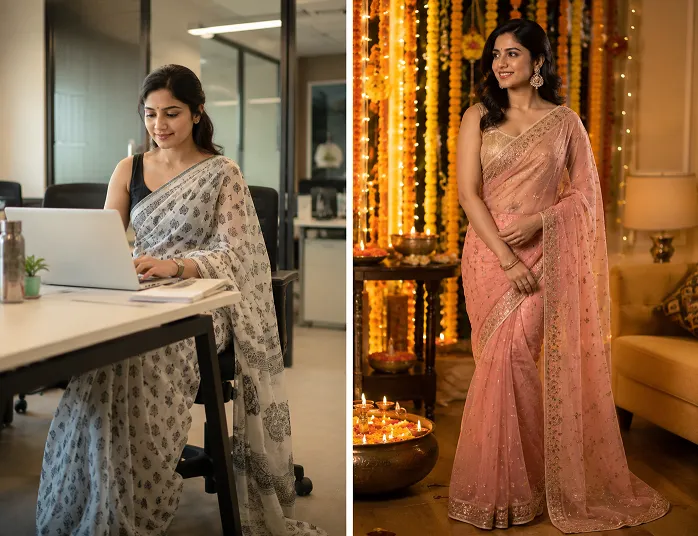
For Diwali pujas and family gatherings where you will sit, stand, and bend repeatedly over a few hours, choose a fabric that does not wrinkle easily. Synthetic georgette actually performs well here. It comes out of a packed bag looking nearly perfect, which cotton simply cannot promise.
Every fabric behaves differently depending on the occasion too. If you want to know which sarees work for specific events, browse our saree styling guides for occasion-based picks.
One Thing Nobody Tells You About Saree Draping
Here is an unpopular opinion: the six-yard drape that most Indian women learn from their mothers or tailors is not the only option. For some body types, it is not even the best one.
The Gujarati drape (where the pallu goes across the front rather than over the shoulder) distributes the fabric differently and can be more comfortable for petite women because it keeps the pallu shorter. The butterfly drape is forgiving around the midsection. The seedha pallu or Bengali drape sits beautifully on broader shoulders.
Experiment with draping styles. The drape is not tradition. It is a tool. Use it.
Conclusion
The right saree for your body type is not a formula. It is a conversation between you and the fabric. Start with weight and drape. Know what your fabric will do before you commit to it for a full-day event. And stop wearing sarees that fight you. Life is genuinely too short for a slipping pallu and a petticoat that digs in.
For more honest, experience-backed fashion guidance on fabrics, occasions, and what actually holds up in Indian weather, keep reading on the Ethora blog.
FAQ
Which saree fabric is best for plus size women in Indian summers?
Georgette and soft chiffon are the most practical choices. They do not cling in humidity, they drape smoothly over curves, and they breathe reasonably well. Avoid heavy cotton or raw silk in peak summer; they can bunch and feel stifling. If you want the look of silk, tissue silk or art silk georgette gives a similar sheen with much less weight and heat.
What is the best saree for short height?
Look for small or no prints, minimal borders, and lightweight fabrics like chiffon or georgette. The key is keeping the vertical line unbroken. Avoid anything that creates a strong horizontal cut across your body. A single-colour saree with a slightly contrasting blouse works particularly well.
Can a slim woman wear a heavy Banarasi saree?
Yes, but with intention. A heavy Banarasi will add presence and richness to a slim frame. The key is the blouse. Make sure it fits well and has good back support, because the weight of the pallu across the shoulder is real. If you are wearing it for a long event, pin the pallu at the shoulder rather than letting it drape free.
How do I stop my saree pallu from slipping all evening?
This is almost always a fabric problem, not a pinning problem. Slippery fabrics like pure silk and satin-weave georgette are the worst offenders. Switch to a fabric with more grip, such as raw georgette, net, or tussar silk, and the pallu will stay put with minimal pinning. If you must wear a slippery saree, a small safety pin at the shoulder seam of the blouse works better than pinning through the saree itself.
Is the Gujarati saree drape flattering for all body types?
The Gujarati drape works particularly well for petite women because the pallu falls across the front of the body rather than hanging from the shoulder, which keeps the length manageable. It is also good for women with broader shoulders because it does not emphasise the shoulder line. The front-facing pallu does add some visual bulk at the chest, so women who prefer a streamlined front profile might prefer a traditional Nivi drape.
Which saree is best for a rectangle body shape?
For a rectangle body shape, look for sarees with contrast or embellished borders, which add definition to the lower half. Fabrics with natural texture like tussar, raw silk, and organza add dimension to the silhouette. A well-structured blouse with a slightly cinched waist does more than the fabric alone. The Bengali or seedha pallu drape is particularly flattering for rectangle frames.
Which saree is best for a hourglass figure?
Almost any saree drape works well for an hourglass figure, since the traditional Nivi style is built around a defined waist. Lightweight georgette and chiffon follow your natural silhouette rather than fighting it. For the full picture, including blouse fit and petticoat placement, see our dedicated guide to saree for hourglass figure.
Which saree is best for a pear shaped body?
Georgette and chiffon drape softly over the hips without clinging, which works well for a pear shape. Pair a busy or embellished border with an equally detailed blouse, such as a statement sleeve or embroidered yoke, so attention is distributed across the whole outfit rather than settling at the hips. Pleat width and drape style matter just as much, our complete pear shape saree guide covers that in detail.
What type of saree looks best on a rectangle body shape?
For the full breakdown of drapes, fabric behaviour and border width for this body type, see our complete guide to saree for rectangle body shape.
Pingback: Colour Combinations For Ethnic Wear That Actually Work | Ethora
Pingback: 3 Best Karva Chauth Outfit Ideas For The Whole Day | Ethora
Pingback: Ethnic Wear For Tall Women: 5 Confident Styling Rules | Ethora
Pingback: Saree For Rectangle Body Shape: 6 Confident Fixes | Ethora