
It’s 6 pm on the first night of Navratri and your chaniya choli is laid out on the bed, looking perfect. Then you actually put it on, spin once in front of the mirror, and the dupatta slips off your shoulder. That gap between how an outfit looks standing still and how it behaves once the dhol starts is exactly what chaniya choli styling for garba is really about. Most guides stop at colours and cuts. This one is about what happens after the first spin.
Table of Contents
Why Chaniya Choli Styling for Garba Starts With Fit, Not Colour
Everyone obsesses over which colour to wear on which night. Fit matters more, and almost nobody talks about it properly.
A chaniya that sits low on your hips will keep sliding down the more you move. It should sit at your natural waist, snug enough that you don’t need to keep hitching it up between garba rounds.
The blouse or choli should let your arms move freely above shoulder height. Garba involves a lot of overhead clapping and turning, and a choli cut for standing photos will pinch under the arm within twenty minutes.
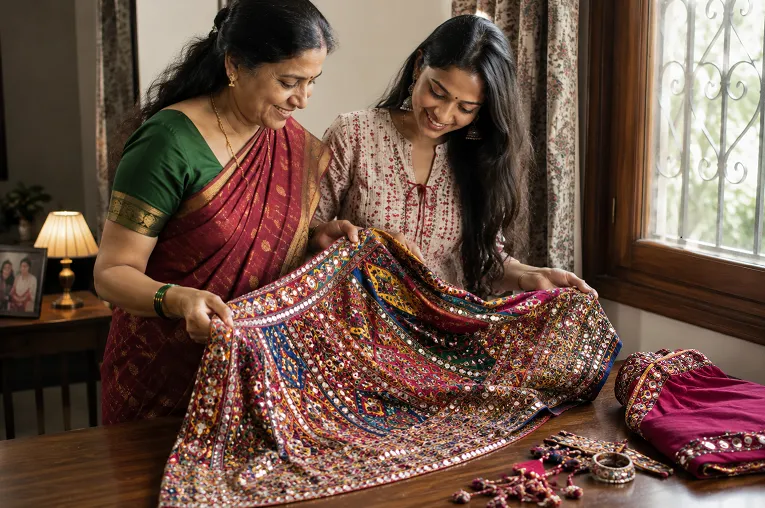
Gujarat’s embroidery traditions, the mirror work and heavy thread work you see on chaniya cholis, come from a genuine handloom and handicraft heritage that goes back generations in this region. That weight and texture is part of what makes the outfit feel special, but it also changes how the garment needs to be fitted and secured, which is exactly what the next section gets into.
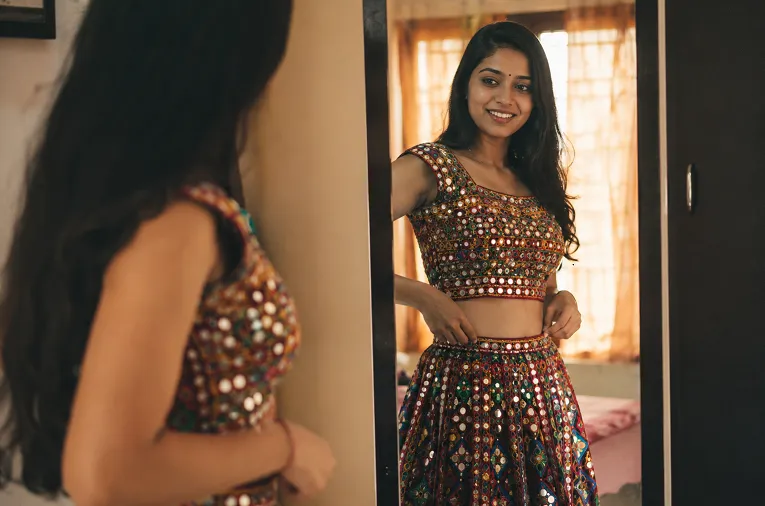
The Real Job of the Kamarbandh, and How to Pin a Dupatta That Survives the Night
Most women treat the kamarbandh as decoration, a pretty belt that finishes the look for photos. That’s not really what it’s there for.
The kamarbandh’s actual job is to anchor the chaniya at your natural waist so the fabric doesn’t shift downward as you spin and jump for three to four hours straight. Tie it firm, not tight, sitting just above your hip bone rather than at the belly button. If you can slide two fingers under it comfortably, it’s doing its job without cutting into you by round three.
The dupatta is the other weak point. A dupatta pinned only at the shoulder will fly off the first time you do a full turn, and chasing it across a crowded garba ground is nobody’s idea of fun.
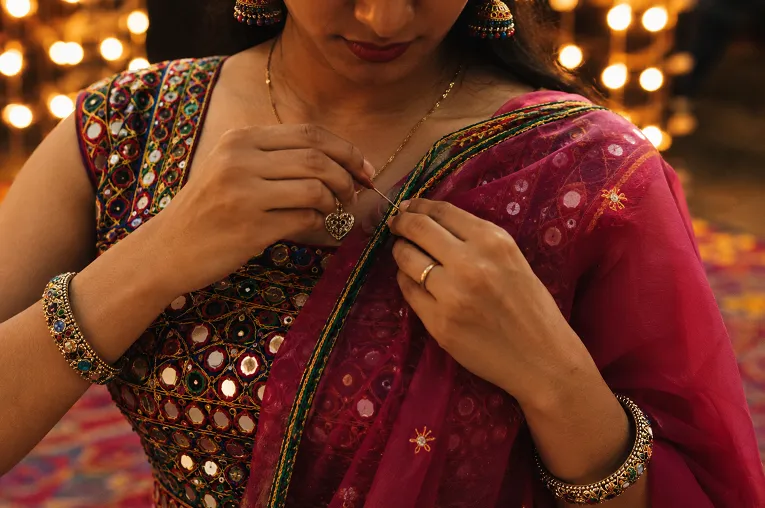
The cross-body pin method actually works. Here’s how it holds through spins instead of just looking good for the first photo:
- Drape the dupatta from the back over one shoulder, pulling it diagonally across your front like a sash rather than letting it sit loose.
- Pin it once at the shoulder where it starts, catching both the dupatta and the choli fabric underneath.
- Pin it a second time near your opposite hip, where the diagonal drape ends, so the fabric is anchored at two points instead of one.
- Leave a small safety pin tucked at your waistband as backup in case the first pin loosens mid-dance.
- Check both pins after the first ten minutes of dancing, since new pins settle differently once the fabric has moved a bit.
You genuinely don’t need a stylist for this. Two pins, placed right, will outlast a night of spins that a single shoulder pin never could.
You Don’t Need Nine Outfits for Nine Nights
Here’s an opinion that goes against every colour-of-the-day chart floating around: buying a new chaniya choli for each of the nine nights is not necessary, and honestly it’s not how most Indian women actually dress for Navratri anyway.
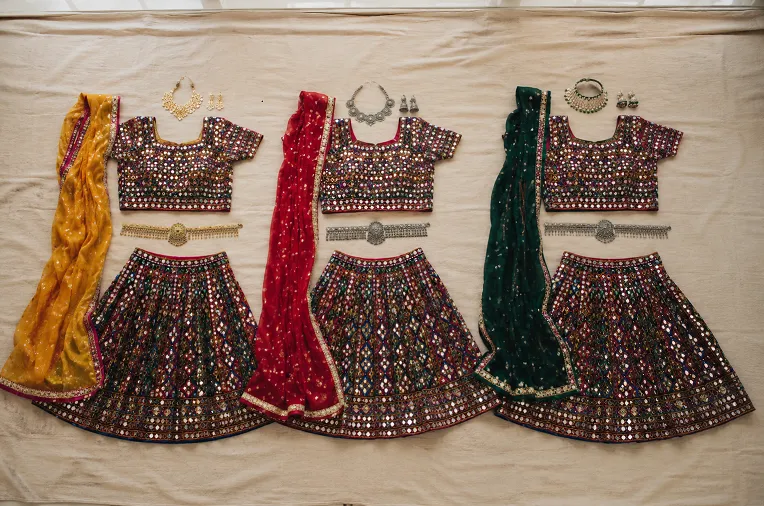
Two or three well-chosen chaniya cholis can cover all nine nights if you change what sits around them instead of the base outfit itself. A plain or lightly worked chaniya choli in a versatile base colour reads completely different depending on what dupatta, kamarbandh and jewellery you pair it with.
Swap the dupatta colour to match each night’s theme, change the kamarbandh to a contrasting shade, and switch your jewellery from oxidised silver one night to kundan or beaded the next. Nobody at a college fest in Surat or a housing society garba is tracking whether it’s technically the same base outfit as two nights ago.
This is also where a well-planned wardrobe genuinely saves money without looking repeated, something we’ve broken down in more detail in our full guide to navratri outfit ideas for garba night. And if you’re weighing a chaniya choli against a heavier lehenga for one of the bigger nights, it helps to know exactly how the two actually differ before you commit.
5 Real Chaniya Choli Styling Mistakes for Garba
These are the mistakes we see most often, the ones nobody warns you about until you’re standing on the garba ground realising it too late.
1. Choosing the chaniya length off the hanger. A chaniya that grazes your ankle when you’re standing still will ride up several inches once the flare lifts mid-spin. Try it on and actually turn a full circle before deciding the length works.
2. Matching the dupatta exactly to the chaniya colour. This is where I’ll disagree with most styling advice you’ve read. A dupatta in a contrasting shade catches the coloured lighting on a garba ground far better than a tone-on-tone match, which tends to flatten out and look duller than it did at home.
3. Ignoring the actual weight of the fabric. Georgette holds its shape and pleats better through movement than chiffon does, since it has more body to it, while a heavily embroidered silk chaniya can genuinely start pulling at your waist by the third hour of dancing. Choose the lighter option if you know you’ll be dancing hard all night.
4. Wearing brand new footwear on the first night. Break in your juttis or sandals at home first. Blisters by 10 pm on night one will ruin the rest of the festival for you.
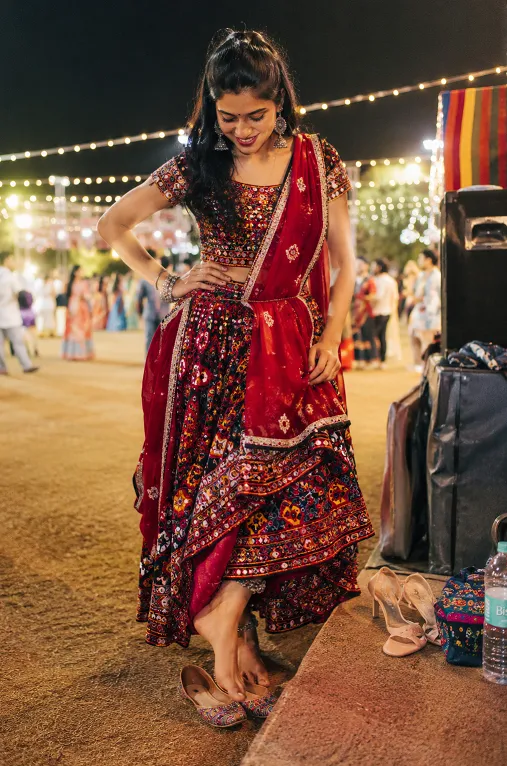
5. Underestimating Navratri humidity. Late September and early October in most of India, including Surat and Mumbai, is still warm and often humid. A silk crepe chaniya choli that looks stunning in a store can start clinging uncomfortably once you’re sweating on the dance floor, while a georgette or cotton-blend option stays cooler and moves better against the skin.
What to Check Before You Convert an Old Saree Into a Chaniya Choli
A lot of women don’t buy a fresh outfit at all. They get an old silk saree, often a family one, tailored into a chaniya choli instead. It’s a lovely idea, but it only works if the fabric can actually support it.
Check the yardage first. A saree needs roughly six metres of usable fabric to gather into a proper flared chaniya, and older sarees with worn or faded sections along the length simply won’t yield enough clean fabric for a full flare.
Check the weight too. A heavier Banarasi or Kanjeevaram will hang beautifully as a saree pallu but can feel unexpectedly stiff and bulky once cut and pleated into a full chaniya skirt. If you’re unsure whether an old saree is genuine silk before you commit to cutting it, the Silk Mark Organisation of India offers a way to verify pure silk fabric, which is worth doing before you hand over an heirloom piece to a tailor.
We manufacture chaniya choli and salwar kameez fabric directly at our own unit in Surat, and for anything outside that range we source straight from Surat’s local textile market. That’s the kind of hands-on fabric handling this advice actually comes from.
Conclusion
The outfit that actually survives Navratri isn’t the one with the most embellishment. It’s the one pinned right, tied right, and chosen with the humidity and the dancing in mind, not just the mirror.
Get the kamarbandh and dupatta sorted properly once, and you can stop worrying about your outfit for the rest of the festival. If this kind of practical, no-fluff styling advice is useful to you, there’s more of it waiting on the Ethora blog. Our store is launching soon, with everything made at our own Surat unit or sourced directly from Surat’s textile market, so it comes to you without a middleman markup.
FAQ
How do I stop my chaniya choli from slipping during garba?
Tie the kamarbandh firm at your natural waist, just above the hip bone, so it anchors the chaniya in place. Pair that with a properly pinned dupatta and the chaniya itself stops shifting even through fast spins.
Can I wear the same chaniya choli for multiple nights of Navratri?
Yes, and most women do. Change the dupatta, kamarbandh and jewellery each night to give the same base outfit a completely different look without buying anything new.
What fabric is best for garba if I’ll be dancing the whole night?
Georgette is a strong choice because it holds its pleats through movement without clinging in humidity the way silk crepe can. Cotton-silk blends also breathe better if your garba ground gets crowded and warm.
Where can I buy good quality chaniya choli fabric online?
Check the fabric weight and finish rather than only the photos, since a lightweight preview image can hide a stiff or scratchy fabric in hand. Ethora manufactures directly at its own Surat unit and sources everything else from Surat’s local textile manufacturers, so what you get reflects factory-level fabric knowledge rather than a reseller’s guess.
Is it a good idea to convert an old silk saree into a chaniya choli?
It can work well if the saree has enough clean, unworn fabric length and the silk isn’t so heavy that it turns stiff once cut and pleated. Getting the silk verified before cutting an heirloom piece is worth the extra step.
Getting your chaniya choli to survive a full night of garba comes down to the fabric it’s made from just as much as how you pin it. Ethora manufactures its chaniya choli, saree and salwar kameez fabric directly at its own unit in Surat, and for everything else, we source directly from Surat’s local textile manufacturers, so you’re getting factory-level quality without the usual markup. Our store is launching soon. Sign up below to know the moment it opens.
Pingback: Best Navratri Outfit Ideas: Your Complete Garba Night Guide | Ethora