
You are standing outside your cupboard at 8 am, it is already drizzling, and the auto is going to be five minutes late no matter what you do. You reach for a saree and your hand hesitates. Will this cling to your legs the second a puddle splashes up? Will the colour run onto your blouse if the pallu gets wet? Will you spend the whole day at your desk in a damp, heavy six yards that never quite dries? The real fix starts earlier than that rushed morning, with picking the right saree fabric for monsoon before the season even begins.
That hesitation is the real problem with monsoon sarees, and it has nothing to do with fashion. It is about picking a fabric that behaves itself when the weather does not. This article covers the usual suspects, georgette, chiffon, crepe, linen and synthetic blends, but it also explains why they actually work, how to catch a bad dye job before you buy it, and whether dark colours or bright ones really hide monsoon stains better. Most guides skip all three.
Table of Contents
Why Some Saree Fabrics Handle Rain Better Than Others
Every monsoon saree fabric guide will tell you to pick georgette or chiffon and avoid silk. Almost none of them tell you why, so you end up trusting the advice without really understanding it, which means you cannot judge a fabric on your own the next time you are in a shop.
Here is the actual mechanism. Fibres like polyester and viscose, which make up most georgette and chiffon sarees sold today, do not absorb water into the fibre structure the way natural fibres do. Textile chemists at the American Chemical Society explain this through what is called the moisture regain value, essentially how much water a fibre holds onto once it is wet, and polyester’s value is a fraction of cotton’s.
Water sits on the surface of the thread instead of soaking into it, so it shakes off easily and evaporates fast. This is why a georgette saree that gets caught in a sudden shower on your way to the bus stop will feel damp for a few minutes and then behave like nothing happened.
Cotton and silk work in the opposite way. Cotton fibres are hollow and absorb water readily, which is great for summer sarees for humid weather because it helps with sweat, but a nightmare in the rain because a wet cotton saree stays wet and heavy for hours. Silk absorbs water too, and worse, wet silk loses strength temporarily, which is part of why it can develop water spots that never fully go away.
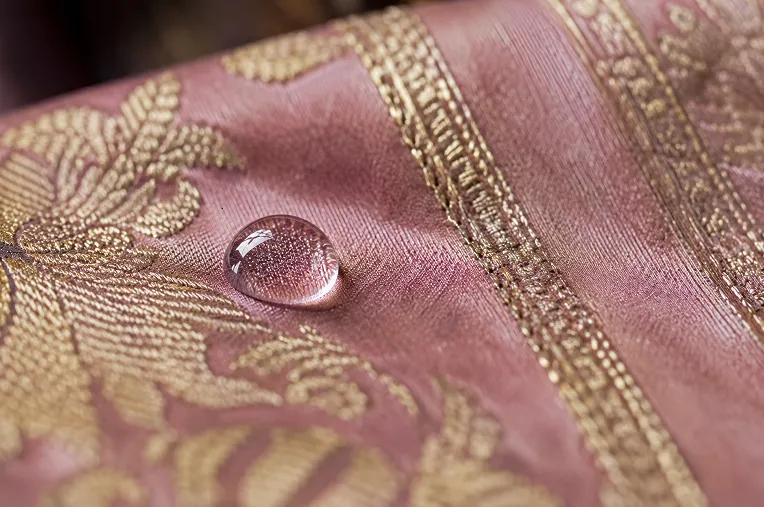
Georgette has more body than chiffon, so it holds its pleats better when you are walking briskly or climbing into a rickshaw with one hand full of bags. Chiffon is lighter and floats more, which looks lovely for an evening event but can feel a little unmanageable if the wind picks up along with the rain, which happens often during Mumbai’s monsoon squalls. Crepe sits somewhere between the two. It has a slightly grainy texture that hides water marks well and a certain grip that keeps the pallu from slipping off your shoulder every ten minutes, something anyone who has managed a saree and an umbrella at the same time will appreciate.
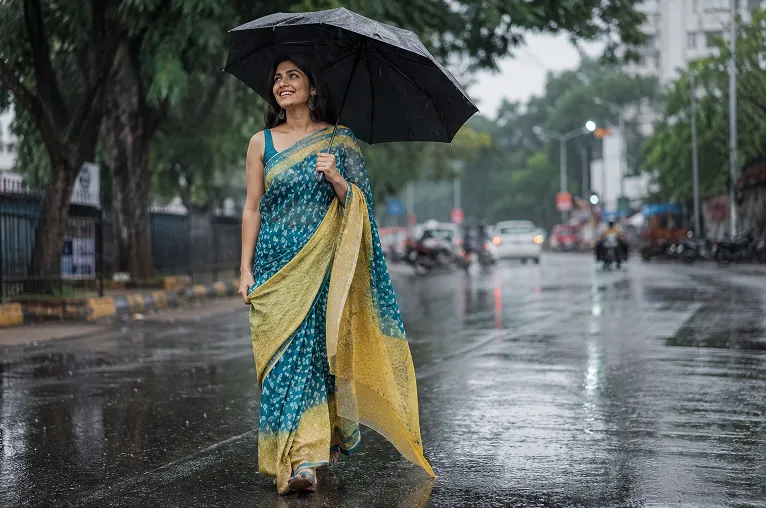
The Best Saree Fabric for Monsoon: A Fabric by Fabric Breakdown
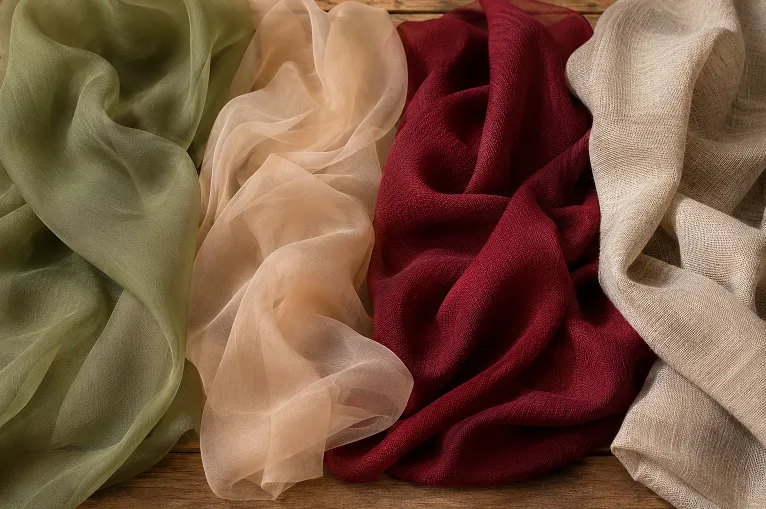
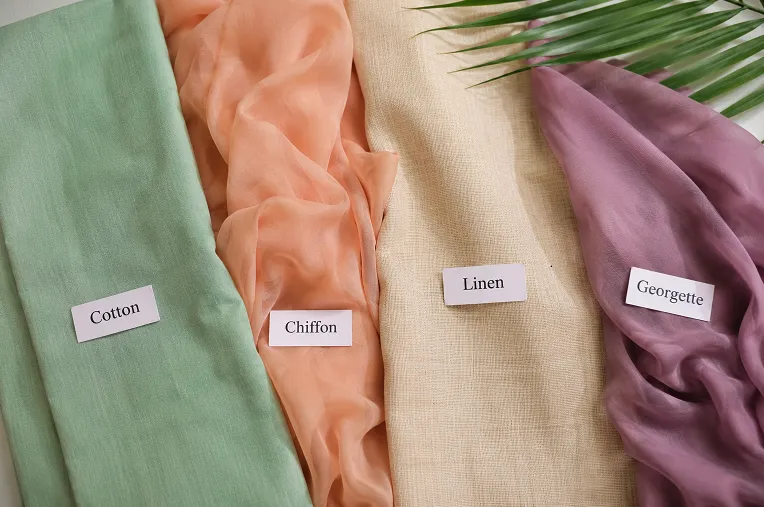
Georgette This is the safest all round choice for the rainy season. It dries quickly, does not crush easily if it gets folded into a bag, and holds its shape when you are moving around. A plain georgette saree in the office looks sharp even after a slightly damp commute, which is more than you can say for most fabrics.
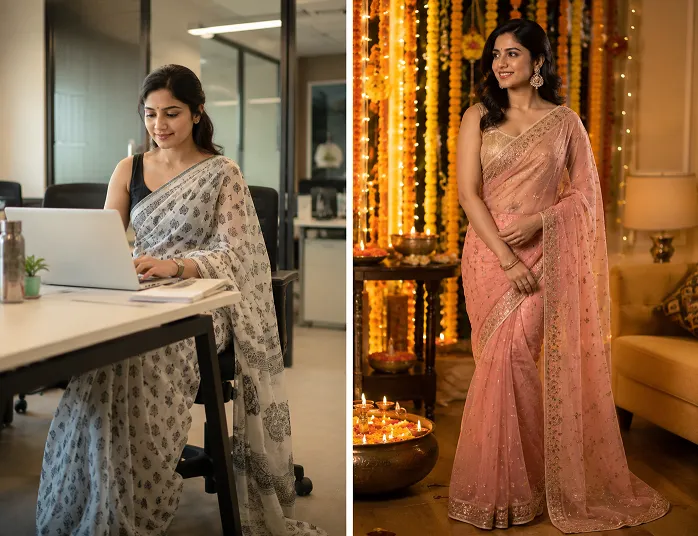
Chiffon Softer and more fluid than georgette, chiffon suits festive or evening occasions better than a full work day. It catches light beautifully under indoor lighting, which matters if you are heading to a Ganpati visarjan evening function straight from work. Just know it creases more visibly than georgette if it stays damp for long.
Crepe Underrated for monsoon. It has a bit more weight than chiffon without being heavy, and the slightly textured surface genuinely disguises small water splashes better than a flat, shiny fabric would. If you want one saree that works for both office and a casual family gathering during the season, crepe is worth considering.
Linen Linen breathes well and looks effortlessly elegant, but it needs a caveat nobody gives you. Linen absorbs moisture, so while it feels cool and airy on a humid but dry day, it is not the fabric you want caught in actual rainfall. Wear it on the days the sky looks clear, not the days the forecast says otherwise.
Synthetic blends Polyester blended sarees, often sold at a lower price point, are practical workhorses for monsoon. They dry fast and survive rough handling, though the drape is usually flatter and less graceful than georgette or crepe. Fine for a college fest or a quick errand day, less ideal if you want the saree to photograph well.
These five cover most monsoon situations, but if you are also trying to figure out which weave or regional style suits your body and the occasion, our full breakdown of the types of sarees in India is a useful next stop before you buy.
The One Thing Nobody Tells You to Check Before Buying
Here is where most advice on saree fabric for monsoon stops short. Everyone tells you which fabric to buy, almost nobody tells you to check whether the dye on that fabric is actually going to survive contact with water.
Monsoon means guaranteed contact with rain, splashes from the road, or a sudden downpour while you are still ten minutes from home. Cheap synthetic dyes, especially in the darker shades that are so often recommended specifically for hiding monsoon stains, can bleed the moment they get wet. That bleeding does not stay on the saree. It transfers onto your blouse, your petticoat, and sometimes your skin, and once that happens no amount of washing brings back the original colour of what it stained.
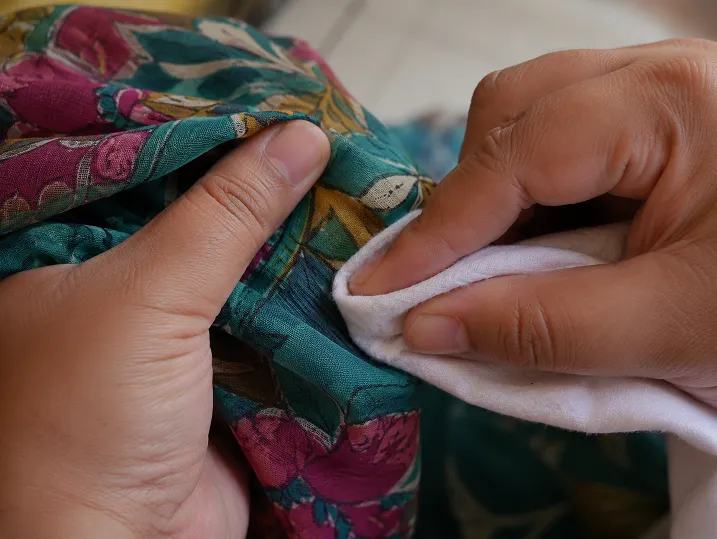
The fix takes thirty seconds in the shop. Take a small hidden edge of the fabric, near the fall or an inner seam, and press a damp white cloth against it firmly for a few seconds. If any colour transfers onto the cloth, the dye is not stable enough to trust in actual rain. This single check will save you more disappointment than any styling tip in this article, and it is the kind of thing you only learn if you have actually handled fabric coming off a loom rather than just styling it for a shoot.
Dark Colours or Bright Colours: What Monsoon Actually Needs
This is where most fashion content contradicts itself and never explains why. Older advice says wear dark colours in monsoon to hide stains. Trend focused content this year is pushing bright, nature inspired colours, deep greens, teals, mustard yellows, and telling you dark is outdated. Both are right, and both are incomplete, because the real answer depends on whether you are buying a solid or a print.
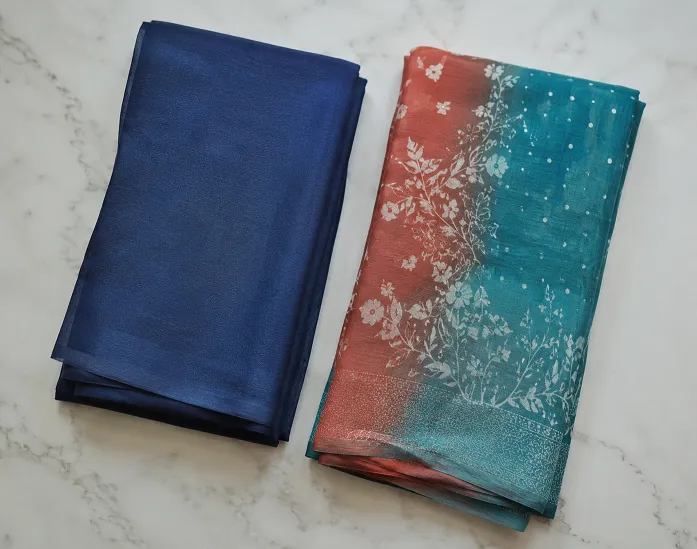
A solid dark saree, navy, black, deep maroon, genuinely hides mud splashes and water spots better than a solid pastel ever will. That part of the old advice is true. But a flat, solid dark saree under grey monsoon skies can look heavy and a little lifeless, especially in overcast daylight with no sun to bring out any shine in the fabric.
A busy print or a dual tone weave solves this without giving up the practical benefit. The broken pattern of a print hides a small splash or stain just as effectively as a solid dark colour does, because your eye has nothing plain to notice the mark against. And it does this while still looking fresh and alive against a dull sky, which is exactly what bright, print heavy monsoon collections are actually offering, even if nobody explains it this clearly.
So the real rule is not dark versus bright. It is solid versus busy. Choose a busy print in a colour you love, dark or bright, and you get both practicality and personality.
If you want to build out a wider seasonal palette instead of sticking to one shade, our guide on colour combinations for ethnic wear covers pairings that work well beyond monsoon too.
Everyday Monsoon Realities Nobody Warns You About
Wearing a saree through Indian monsoon is not just about fabric choice. It is about the small logistics of the season, and the fact that the India Meteorological Department tracks the southwest monsoon advancing across the country over roughly three months, which means your city’s rain pattern in June can look completely different by August.
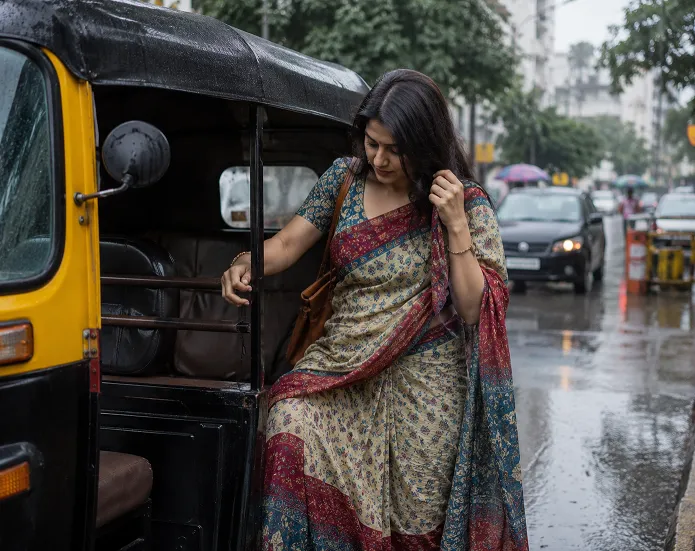
If you commute by auto rickshaw, tuck your pallu slightly higher than usual and keep the pleats a touch looser at the ankle. Splashes from the road hit the lower third of the saree first, so a little extra fabric room there means less direct contact.
Ironing is another quiet monsoon problem. Humidity makes fabric hold creases differently, and a saree ironed the night before can feel slightly damp again by morning in cities like Mumbai or Kolkata. Iron closer to when you are actually leaving, not the night before, if you can manage it.
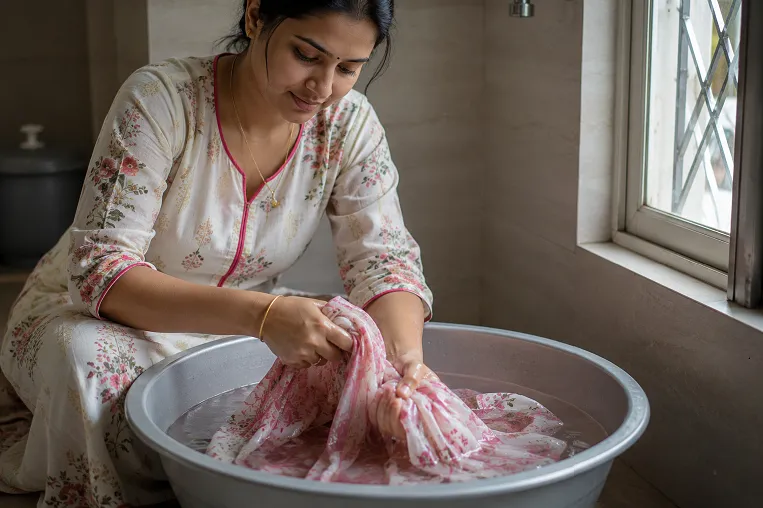
And if the saree does get properly soaked, do not just hang it up to dry and forget about it. A quick gentle hand wash the same day stops mud and dye from setting into the fibre permanently, especially if the print or embroidery has any loose colour left in it.
Most women pick their monsoon saree based only on which fabric dries fast and stop there. That is not wrong, but it is incomplete. A fast drying fabric with an unstable dye or a solid colour that looks flat under cloudy light is still going to let you down. Treat fabric, dye stability and colour pattern as three separate checks, not one.
What to Check Before You Buy
Choosing the right saree fabric for monsoon online or in a rush at a local shop comes down to one habit most people skip. Before anything else, check the colourfastness. Press a damp white cloth against a hidden edge of the fabric and look for any colour transfer. If the cloth stays clean, the saree is safe to wear in actual rain. If it picks up even a faint tint, put it back, no matter how good the print looks on the hanger.
Beyond that, feel the fabric between your fingers. A good quality georgette or crepe should feel slightly slippery but not flimsy, with enough weight that it does not feel like it will tear at the seams after one wash. This kind of judgment only comes from handling a lot of fabric.
That is exactly the kind of thing we deal with daily, since Ethora manufactures its sarees, salwar kameez, kurtas and lehenga choli directly at our unit in Surat, and sources everything else straight from Surat’s local textile market, so the advice here comes from people who actually work with these fabrics every day, not just style them.
Conclusion
A good monsoon saree is not the one that looks best in a photo before you leave the house. It is the one that still looks put together after an unexpected downpour, a splash from a passing car, and a slightly rushed commute. Pick the right saree fabric for monsoon based on how fast it dries, check the dye before you check the price, and choose a print or dual tone weave over a flat solid if you want both practicality and presence this season.
There is more on saree fabrics and styling on the Ethora blog if you want to go deeper into what works for your specific city and routine. Our store is launching soon, and everything on it will come directly from Surat’s manufacturing and textile source, the same place this advice comes from.
FAQ
What is the best saree fabric for monsoon?
Georgette is generally the best all round saree fabric for monsoon because it dries quickly, holds its pleats well when you are walking or getting in and out of vehicles, and does not crush easily when folded into a bag. Crepe and a printed dual-tone georgette are close seconds if you want a bit more texture or pattern to help hide splashes.
Is georgette or chiffon better for monsoon?
Georgette is generally the safer everyday choice because it has more body and holds pleats better when you are walking through rain or getting in and out of vehicles. Chiffon is lighter and drapes more delicately, which suits evening functions, but it shows creases faster if it stays damp. If you only want one monsoon saree, pick georgette.
Can I wear silk sarees during monsoon?
It is best to avoid pure silk sarees for daily monsoon wear because silk fibres absorb water and lose some strength while wet, which can lead to water spots and a shortened lifespan for the fabric. Save silk for indoor functions where you are unlikely to get caught in actual rain, and always carry it in a bag rather than wearing it during transit.
How do I know if a saree fabric is good quality before buying?
Check the colourfastness first by pressing a damp white cloth against a hidden edge of the fabric and looking for colour transfer. Also feel the weight and weave density between your fingers, since a fabric that feels thin or overly slippery often pills or tears faster after a few washes. Ethora manufactures directly at its own unit in Surat and sources everything else from Surat’s local textile manufacturers, which means you get real factory level fabric knowledge without paying middleman markups.
What colour saree is best to hide monsoon stains?
Solid dark colours hide stains well but can look flat under overcast monsoon skies. A busy print or dual tone weave, whether in a dark or bright shade, hides splashes just as effectively while still looking lively, which is usually the better overall choice.
How do I stop my saree pallu from slipping in the rain while holding an umbrella?
Fabrics with more body like georgette or crepe naturally grip the shoulder better than very fluid chiffon. Pinning the pallu at the shoulder with a small safety pin placed on the inner fold, so it does not show, adds extra security on windy, rainy days.
Choosing the right saree for monsoon should not mean choosing between looking good and staying dry. Ethora manufactures its sarees, salwar kameez, kurtas and lehenga choli directly at its own unit in Surat, and for everything else, we source directly from Surat’s local textile manufacturers, so you always get fabric that has actually been handled by people who know it, not just sold to you. Our store is launching soon, straight from the source that makes Surat India’s textile heartbeat.
Pingback: 7 Confident Ganesh Chaturthi Outfit Ideas That Work | Ethora