
The types of sarees in India can feel overwhelming the first time someone hands you a Banarasi silk and says “just drape it.” You realise very quickly that a saree is not just a piece of cloth. It is six to nine yards of history, occasion, region, and mood, all folded into something you are now somehow supposed to tuck around your waist in under ten minutes.
A chiffon saree and a cotton saree can carry the same block print. They will not behave the same way. Chiffon is light, almost weightless, and it moves when you move. There is a softness to the way chiffon catches a breeze that makes it look effortless even when you have barely managed the drape. Cotton is structured, breathable, and holds its shape. One is made for evenings and air-conditioned banquet halls. The other is made for afternoons in Ahmedabad in May.
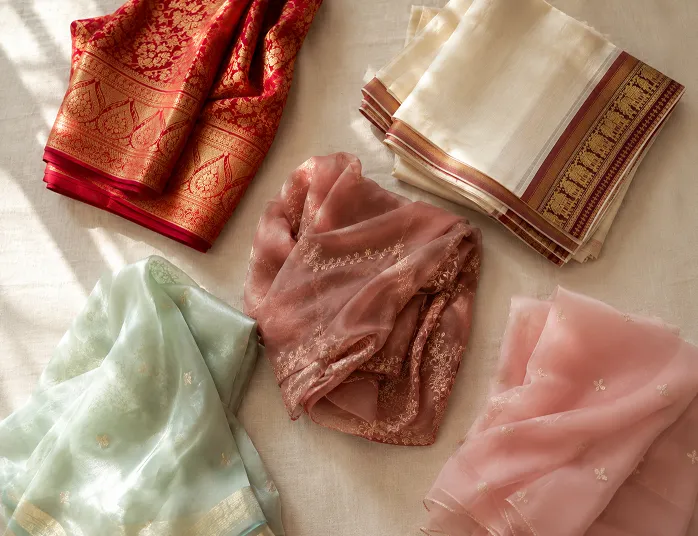
Georgette has more body than chiffon, which is why it holds the pleats better when you are walking. If you have ever had your pleats collapse halfway through a wedding reception, it was probably a chiffon saree. Georgette is more forgiving. This is not a minor detail. It is the difference between enjoying an event and spending the evening in a corner trying to fix your drape.
Table of Contents
The Most Important Types of Sarees in India, Explained Honestly
Banarasi Silk
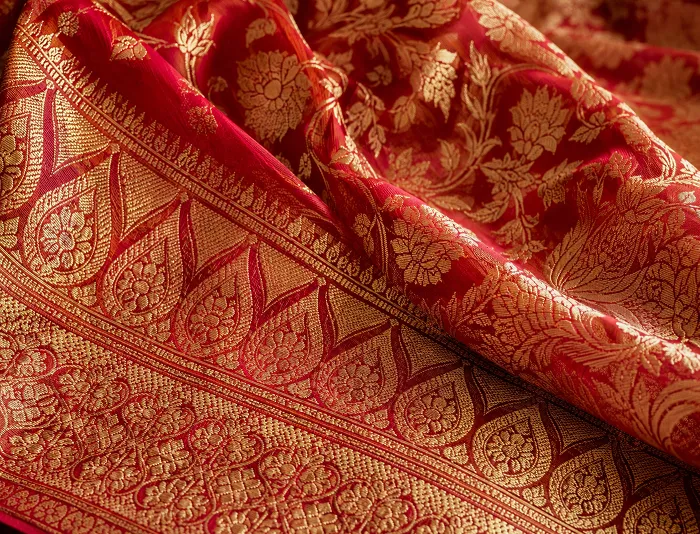
Banarasi sarees come from Varanasi and are woven with real zari, which is metallic thread. The brocade work, those heavy gold or silver patterns across the fabric, is done on a handloom. A genuine Banarasi silk has a weight and richness that you feel immediately when you hold it up.
Here is something no one says enough: Banarasi silk is heavier than you expect. If you are wearing it for a full-day event, the weight of the pallu on your shoulder will start to show by evening, literally in your posture. It is a saree for occasions where you will be seated or moving slowly through a crowd. Not for chasing after children at a cousin’s mehndi.
It is also one of the few sarees where synthetic imitations are genuinely common. If the price feels too good, it probably is.
If you want to verify whether a Banarasi saree carries legitimate GI certification before buying, this detailed guide on GI tags in Indian handloom sarees explains exactly what the tag covers, what varieties it includes, and how to check it.
Chanderi and Maheshwari
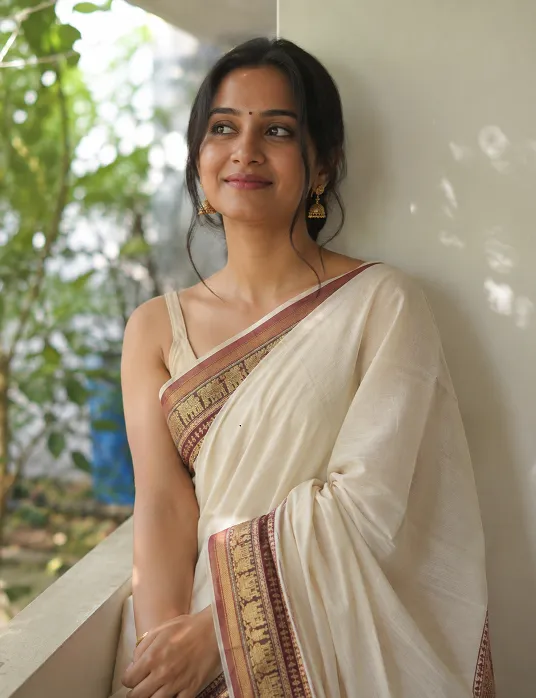
These two often get grouped together because both come from Madhya Pradesh and both have a similar lightness. Chanderi uses silk and cotton together. Maheshwari is a cotton-silk blend from the town of Maheshwar.
What sets them apart from other sarees in India is the texture: slightly sheer, with a delicate shine that is nowhere near as heavy as pure silk. They drape beautifully without much effort, which makes them a genuinely good starting saree for someone still learning. They work well for morning pujas, office events, or a family lunch during Diwali when you want to look dressed up without being uncomfortable.
Cotton Sarees
Cotton sarees, Tant from Bengal, Sambalpuri from Odisha, Chettinad from Tamil Nadu, are the most practical sarees in the Indian wardrobe. They breathe. They wash. They do not require dry cleaning. And in the heat of a Rajasthan summer or the humidity of a Mumbai monsoon, they are the only sensible choice.
The texture of a good handwoven cotton saree has a slightly rough, natural feel against the skin. Not unpleasant. More like the fabric is alive in a way that polyester never is.
Georgette and Chiffon
These are the everyday sarees of women who wear sarees regularly: to office, to temple, to small family functions. Both are synthetic or semi-synthetic fabrics, which means they are easy to drape, lightweight, and widely available.
Georgette is the practical one. Chiffon is the dramatic one. Both have their place.
If you are buying your first saree for office or a casual occasion, a printed georgette is genuinely one of the most sensible choices. It drapes easily, does not crease badly, and the weight keeps the pleats in place. A chiffon saree looks stunning but requires more confidence. It is slippery, more sheer, and does not forgive an uneven fold.
If you are figuring out how to ease into ethnic wear without going full saree just yet, our guide on kurti with jeans is a good place to start.
Kanjivaram Silk
Kanjivaram sarees, also called Kanchipuram, come from Tamil Nadu and are considered among the finest silk sarees in India. The silk is heavy, the colours are vivid, and the borders are wide, often woven separately and then joined to the body of the saree. That joining line is actually one of the marks of a genuine Kanjivaram.
These are wedding sarees. They are also heirloom sarees, the kind passed from mother to daughter. The shine of a real Kanjivaram under the light of a wedding mandap is unlike anything else.
Buy them only from trusted sources. The market for imitation Kanjivaram is enormous, and the difference between real and fake is not always obvious until you have worn both.
The Mistake Most Beginners Make
The most common mistake is buying a saree without thinking about the occasion and the draping difficulty together.
Someone buys a beautiful chiffon saree because it looks gorgeous in the shop. They wear it for the first time at a function where they will be standing, walking, and sitting for four hours. The pleats dissolve. The pallu slips. They spend the night anxious instead of present.
Buy your first saree in a fabric that is forgiving, not one that is flattering on the hanger. Georgette, Chanderi, or a cotton blend will teach you how to drape without punishing you for imperfection. Save the chiffon and the heavy silk for when you have some confidence in your hands and a full practice session at home behind you.
An Unpopular Opinion About Saree Varieties in India
There is a persistent idea in Indian fashion that certain saree varieties are “superior” and that Banarasi and Kanjivaram are real sarees while printed georgette is somehow lesser. This is nonsense.
The worth of a saree is not in its price or its weave complexity. It is in whether it suits the occasion, fits the woman wearing it, and makes her feel good. A 200-rupee printed cotton saree worn with confidence and the right blouse will always outperform a 20,000-rupee Kanjivaram that someone is clearly uncomfortable in.
Wear what works for your life. That is the whole point.
Which Indian Saree Style Should You Start With?
This depends entirely on your first occasion and your comfort with draping.
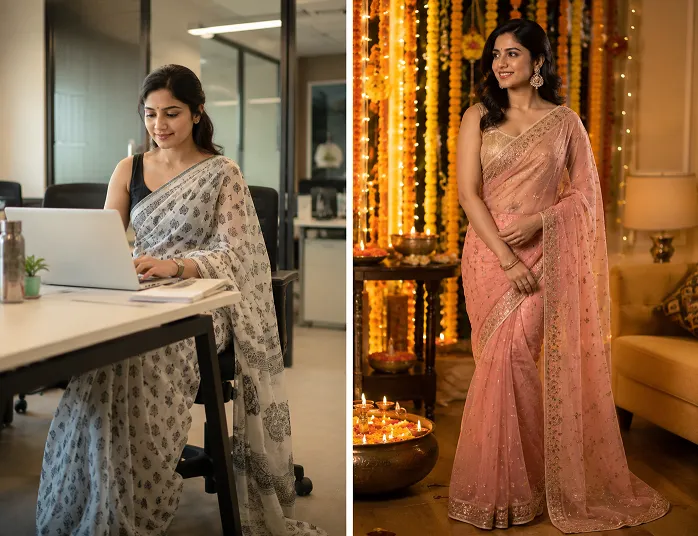
- For Navratri, Diwali, or a family function: A printed georgette or a semi-silk saree in a festive colour. Easy to drape, looks celebratory, easy to move in through a full evening.
- For a wedding as a guest: Chanderi, soft silk, or a lightweight Banarasi georgette. You want something that looks occasion-appropriate without being so heavy you are exhausted by the pheras.
- For office or a college cultural event: Cotton, Chanderi, or linen. Comfortable, appropriate, and you will not be miserable by noon.
- For your very first saree: Go for georgette or cotton. Practice the drape at home before the actual occasion. Seriously. At least twice.
Conclusion
Sarees are not complicated. They just require honest matching of fabric to occasion, and occasion to your current skill level. Start with something forgiving. Build confidence. Then work your way into the heavier, more dramatic saree varieties in India as you go. There is no rush. The Banarasi will wait.
For more on how fabrics behave in real Indian conditions and how to build a saree wardrobe that actually works, keep reading on the Ethora blog. We write from the inside of a textile mill, not from a mood board.
FAQs
Which is the most comfortable saree for daily wear?
Cotton sarees are the most practical for everyday wear, especially in Indian heat and humidity. Tant, Chettinad, and Sambalpuri cottons all breathe well, wash easily, and do not need special care. For an office setting where you want a slightly more polished look, a cotton-silk blend like Chanderi or Maheshwari gives comfort with a dressier finish.
What is the difference between Banarasi and Kanjivaram sarees?
Both are heavy silk sarees used for weddings and formal occasions, but they come from different regions with different weaving traditions. Banarasi sarees feature Mughal-influenced brocade work with zari across the body and pallu. Kanjivaram sarees use a heavier silk with wide contrasting borders, often in bold temple motifs. Kanjivaram is generally stiffer and heavier; Banarasi tends to have a slightly more fluid drape once it breaks in.
What saree is best for a first-time wearer?
Georgette is the most forgiving fabric for beginners because the weight helps the pleats stay in place, unlike chiffon which is slippery and much harder to control. A printed georgette in a medium weight gives you enough structure to learn the drape without fighting the fabric the whole time.
Can I wear a silk saree in summer?
Pure silk is actually more breathable than people assume, but heavy silk sarees like Kanjivaram and Banarasi are not ideal for outdoor summer events because the embroidery and zari work traps heat. For summer occasions, Mysore silk or tussar silk are better choices. Both are lighter silk varieties that drape well and do not overheat the way the heavier wedding silks do. Tussar especially has a dry, matte texture that feels noticeably cooler against the skin than the glossy weaves.
What is the difference between georgette and chiffon sarees?
Georgette has more texture and body while chiffon is smoother and more sheer. Georgette holds pleats better because of the slight crinkle in the weave, making it more practical for long events. Chiffon moves more dramatically and photographs beautifully, but it is harder to drape neatly and needs more attention throughout the day. For a beginner, georgette is the significantly more manageable choice.
Pingback: How To Choose The Right Saree For Body Type | Ethora
Pingback: Saree Fabric For Summer: 4 Best Options For Indian Heat | Ethora
Pingback: Colour Combinations For Ethnic Wear That Actually Work | Ethora
Pingback: How To Store Silk Sarees: 7 Proven Tips | Ethora
Pingback: Saree Petticoat Guide: 3 Secrets For Perfect Pleats | Ethora
Pingback: Best Saree Fabric For Monsoon: 5 Options That Work | Ethora
Pingback: 5 Confident Mehndi Outfit Ideas For Guests | Ethora