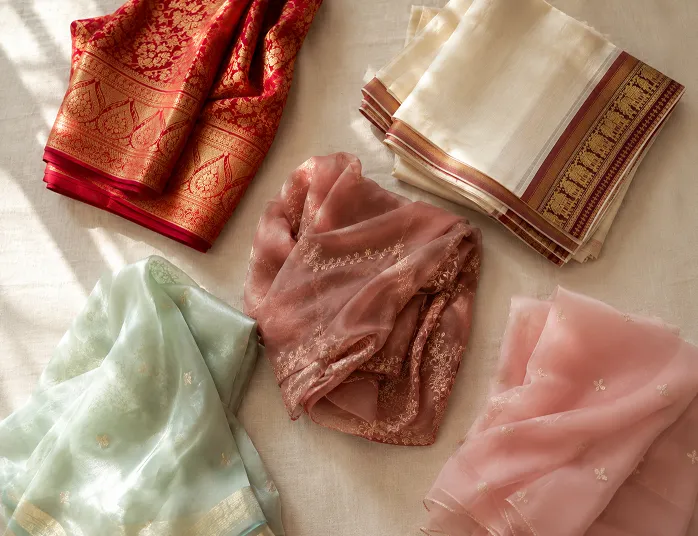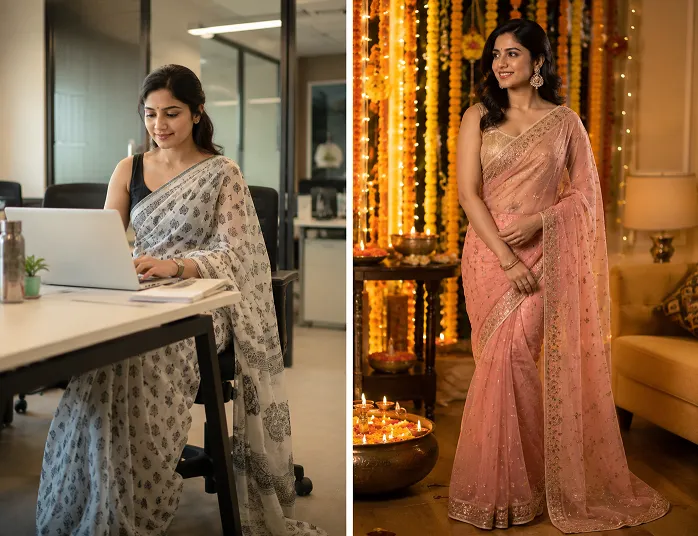
You are standing in front of your cupboard twenty minutes before you need to leave for a college fest, a friend’s mehendi, or a Sunday brunch that somehow needs a saree now. Your mother’s voice is somewhere in your head saying wear the silk, wear it properly. Your Instagram feed is saying belt it, sneaker it, crop top it. Neither one is wrong, but neither one tells you why.
This article is about the why. Once you understand what actually makes modern saree styling work on your body, in your weather, with your fabric, you stop copying looks blindly and start making choices that suit you specifically.
Table of Contents
What Is Actually Trending Right Now
Saree trends for young women in 2026 are less about a single new style and more about permission. Permission to break the saree into pieces and rebuild it the way you want.
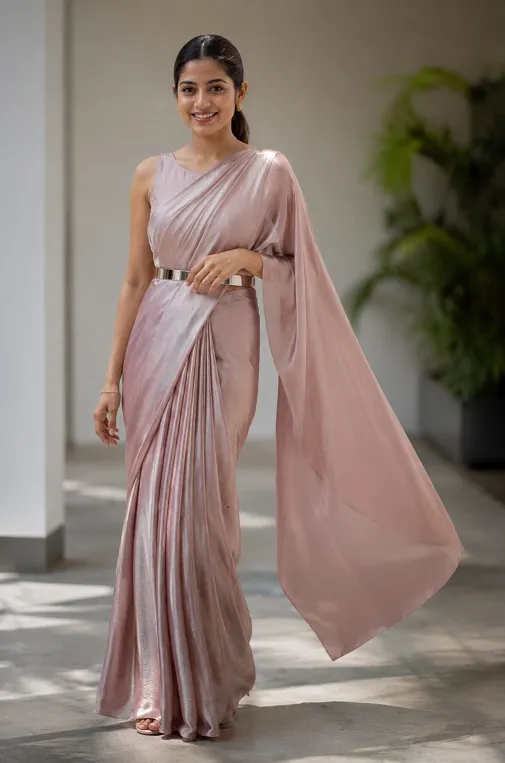
The pre-draped saree, essentially a saree already stitched into its pleats with a separate pallu, has become the default for anyone who does not have twenty minutes or a helper to pin a traditional drape. It is not cheating. It is a genuine convenience shift, and it looks identical to a hand draped saree once you are standing still, which is most of the time anyway.
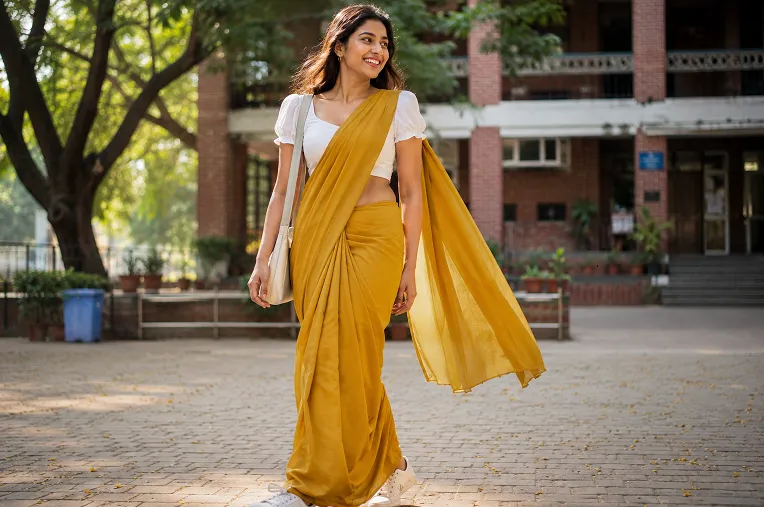
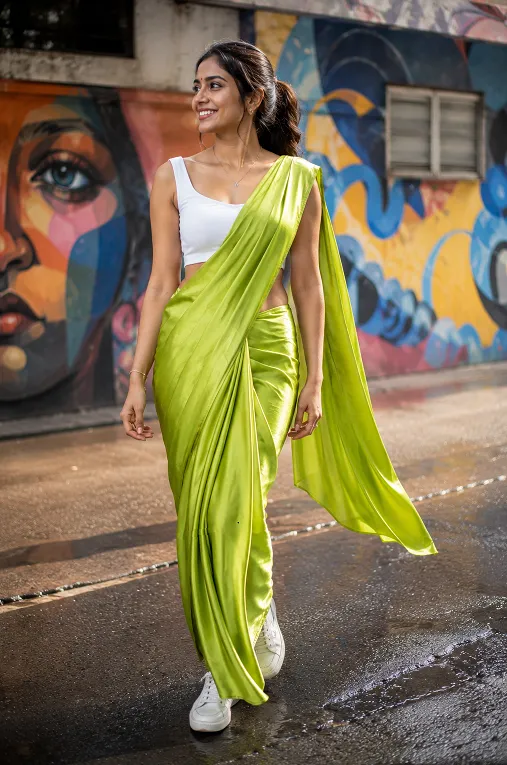
The sneaker and crop top formula is everywhere for a reason. It takes the saree out of the “special occasion only” box and puts it into daytime wardrobes, college fests, and casual family functions where a full blouse and heels would feel like overkill. It is probably the single most searched saree for college girls look right now, and once you see why it works, you will understand why it has stuck around.
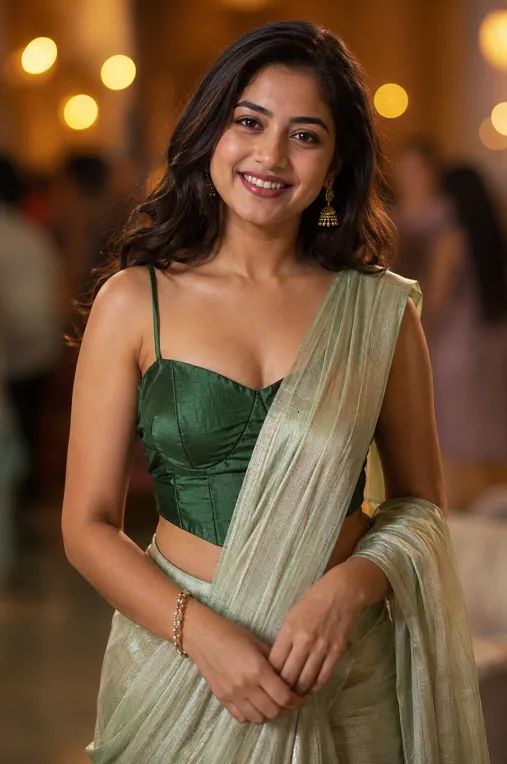
Bold, structured blouses with statement sleeves or contrast piping are doing the work a plain blouse used to do quietly in the background. A corset blouse in particular gives the waist definition that six yards of unstitched fabric usually fights against.
And belts, whether a proper kamarband or something borrowed from a western outfit, are being used to nip the waist and give the drape a defined shape that reads modern rather than borrowed from your mother’s cupboard. Capes and asymmetric overlays are the more dramatic cousin of the same idea, worn over a pre-draped base for a shape that holds without a single pin.
The Bold Versus Muted Colour Debate Nobody Actually Explains
Scroll through enough saree trend content and you will notice something odd. One article tells you lime green and hot pink are the colours of the season. Another swears by terracotta and sage as the only sophisticated choice for 2026. Both are right, and the contradiction only exists because nobody bothers to explain when each one applies.
Saturated, single tone colours like lime green, hot pink, and cobalt blue hold their intensity under artificial and evening light in a way muted tones simply cannot. Under a mandap light or a party string light, a pale terracotta can wash out and look flat, while a hot pink saree stays vivid and photographs beautifully. That is why bold colour dominates every sangeet and night event trend list you see.
Muted, earthy tones like terracotta, sage, and rust behave completely differently in daylight. Outdoors, under natural sun, these colours pick up warmth and depth that saturated colours can actually lose, sometimes looking almost neon or harsh in direct sunlight. A muted saree also moves more easily between a day event and an evening one, which matters if you are going straight from a haldi in the afternoon to dinner at night without a chance to change.
So the real answer is not bold or muted. It is bold for night, artificial light, and photographs, muted for day, sunlight, and versatility across a long event. This single distinction explains most of the contradictions you will see across saree trends 2026 content elsewhere. Once you know this, you stop treating colour trend lists as contradictions and start treating them as two different tools for two different situations. If you want to take this further, our guide on colour combinations for ethnic wear breaks down which shades pair well together once you have settled on bold or muted.
How to Modernise Your Mother’s Or Grandmother’s Saree Without Ruining It
Almost every Indian household has one. A silk saree, probably Banarasi or Kanjivaram, sitting in a cupboard, too precious to wear casually and too traditional looking for a college fest in its current form. Most young women either avoid touching it entirely or go too far and damage something irreversible. Modernising it without a single cut is one of the more rewarding saree trends for young women to try, mainly because it costs nothing and uses fabric you already own. There is a middle path, and it comes down to knowing what is reversible and what is not.
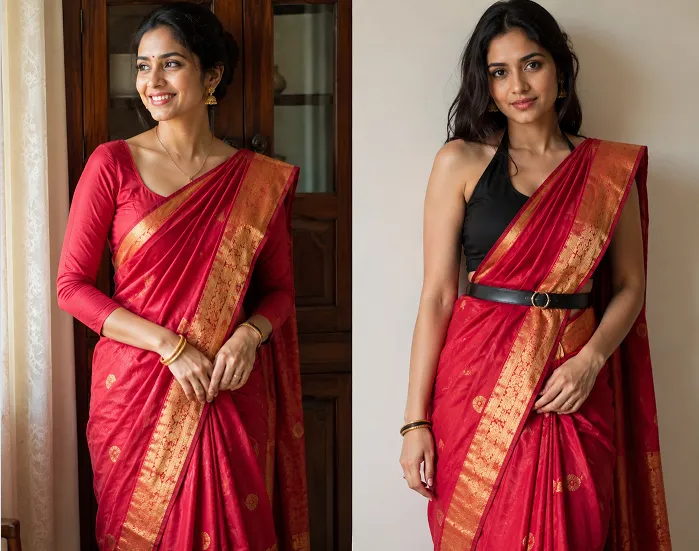
Reversible changes include adding a belt over the drape, pairing it with a completely different, unattached blouse in a contrasting fabric or colour, changing the pin placement to sit higher or lower on the shoulder, or draping it in a modern pre-pleated style instead of the traditional Nivi drape. None of these touch the original fabric. You can undo every single one of them tonight and the saree goes right back into the cupboard exactly as it came out.
Irreversible changes are the ones you cannot take back. Cutting into the pallu or border to make it into a lehenga or a co-ord set permanently alters a piece that often cannot be replaced, especially handwoven silk with a border pattern that is no longer being made. Cutting the original blouse fabric, if it came stitched with the saree, falls into the same category.
Before you touch scissors on anything with a woven zari border, ask yourself if you would regret it in five years. If the answer is even slightly yes, stick to the reversible list. It genuinely gives you more range than most people expect. And while you are figuring out how much this saree is worth protecting, it helps to also know how to store silk sarees properly so the next generation gets the same choice you just had.
Why Some Sarees Actually Work With Sneakers and Others Just Do Not
Most articles tell you to skip heavy Banarasi with sneakers and move on without explaining why. The real answer is about how the fabric behaves when you walk, not just how it looks standing still.
A casual, sneaker-friendly look needs a saree that falls and swings the way a skirt does. Soft satin, handloom cotton, and lightweight georgette have enough give in the weave to move with your legs, creating that easy swishing motion when you walk that makes the whole outfit look effortless rather than staged.
Georgette in particular has more body than chiffon, which means it actually holds a pleat better when you are moving around all day at a fest instead of standing for photos. This is the fabric logic behind most contemporary saree looks you see paired with sneakers, and it has nothing to do with the print or colour.
A stiff, heavy weave like Banarasi silk or a densely embroidered fabric behaves the opposite way. It holds its own structure regardless of your movement, which is exactly what makes it drape beautifully for a formal, still occasion like a wedding ceremony where you are seated or standing for portraits.
But the same structure that looks regal at a mandap pools awkwardly around the ankles and fights against sneakers when you try to walk briskly across a college campus or hop into an auto rickshaw. It simply was not built to move that way, and no amount of styling fixes a fabric fighting your body’s motion.
This is the actual rule, not skip heavy silk because it looks wrong, but skip heavy silk because it physically will not move the way a casual outfit needs it to. Once you feel the difference between a saree that swings and one that holds, you will never need to guess again.
What to Look For When You Buy
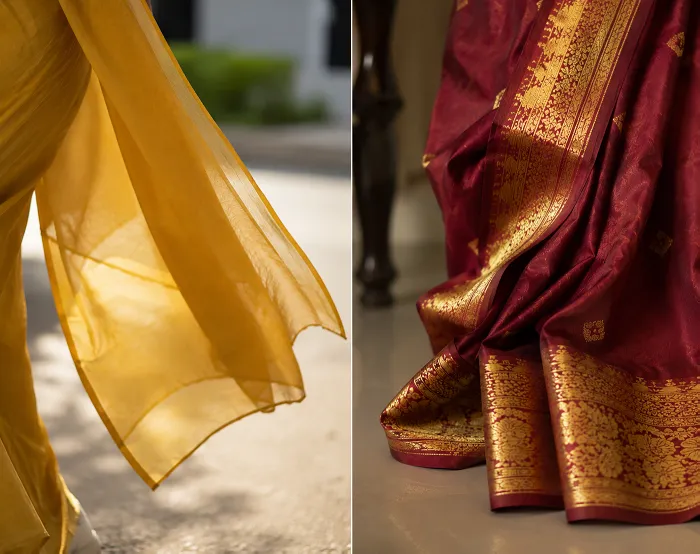
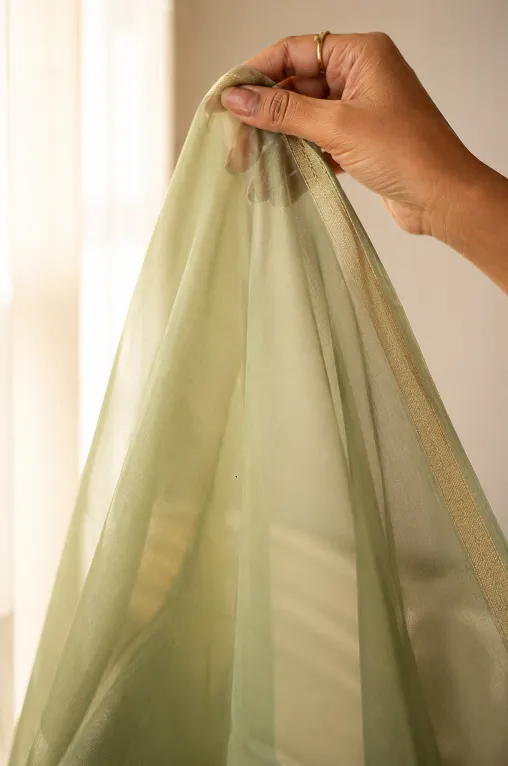
If you are buying a saree specifically to match current saree trends for young women, do not shop by print or colour first. Check how the fabric hangs before anything else. Hold it up and let a length fall freely from your hand.
A saree meant to move with sneakers and a crop top should fall in soft, uneven folds and sway slightly on its own. If it holds a stiff, board-like shape even when hanging loose, that structure will only fight you once you start walking in it, no matter how good the print looks under the shop lighting.
Modal, softer cottons, and lightweight georgettes usually pass this test easily, while heavier zari-worked silks generally do not, and that is fine, they are simply meant for a different kind of day. This is the kind of detail you only really learn by handling fabric daily on a factory floor, which is where Ethora’s own understanding comes from, since we manufacture directly at our unit in Surat and source everything outside our own range straight from Surat’s local textile market.
Conclusion
The honest truth about saree trends for young women is that there is no single right way to wear one anymore, and that is the actual trend. Bold colour and muted colour both have their place depending on the light you will be standing in.
An inherited silk saree can be modernised without a single cut if you know which changes are reversible. And a sneaker look only works when the fabric underneath is built to move, not just look good in a photo.
Get comfortable with these three ideas and you will style a saree with more confidence than any single tutorial can give you. If you enjoyed this, there is more like it waiting on the Ethora blog. And if you are already close to picking your next saree, our store is launching soon with pieces made and sourced right here in Surat.
FAQ
Is the pre-draped saree a good option for beginners?
Yes, a pre-draped saree is genuinely one of the easiest saree trends for young women to try first, especially if you have never draped one on your own before. It comes with the pleats already stitched in place, so you only need to secure the pallu, which removes most of the guesswork that intimidates first time wearers.
Can I wear a saree with sneakers for a college function?
long as the saree fabric is soft enough to move naturally, like georgette, handloom cotton, or satin. Avoid heavy Banarasi or stiff embroidered silk for this look since the fabric will hold its shape instead of swinging with your walk. If you are also deciding between convenience and tradition for the same look, our comparison of pre-stitched saree vs traditional saree covers that decision in more detail.
How do I know if a saree blouse fabric is good quality before buying online?
Check whether the fabric has a slight natural texture rather than a uniform, plasticky sheen, since genuine cotton or silk blends usually show subtle irregularities in the weave. Ethora manufactures at its own Surat unit and sources everything else directly from Surat’s local manufacturers, which means the fabric knowledge behind our recommendations comes from people who handle these materials daily, not just style them, giving you factory level quality without middleman pricing.
What blouse styles are trending with sarees right now?
Structured blouses with statement sleeves, contrast piping, and bold necklines are currently popular because they let a simple saree drape carry visual interest without needing a heavily embellished fabric. Our roundup of trending saree blouse designs goes deeper into which necklines and sleeve styles are worth trying this season.
Does a belt work with every type of saree?
A belt sits best on drapes with some fall to them, like georgette or soft silk, since it needs fabric that can gather naturally at the waist. On very stiff or heavily starched sarees, a belt tends to sit awkwardly rather than cinching in smoothly.
Figuring out which saree actually suits your day, your fabric, and your movement is half the battle, and now you know how to do it properly. Everything we make comes straight from our own manufacturing unit in Surat, and for the pieces outside our range, we source directly from Surat’s local textile manufacturers so you get the real thing without layers of markup in between. Our store is launching soon, built entirely around that promise.