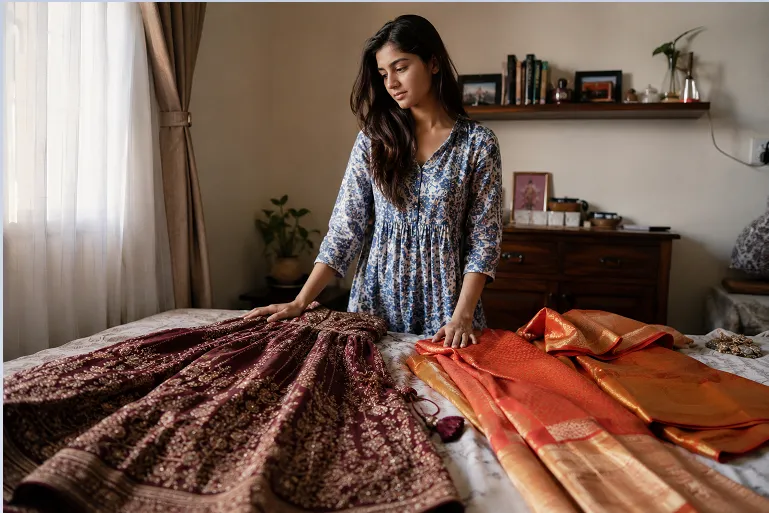
Your kurta is ironed and hanging on the wardrobe door, but you still haven’t decided if today calls for a saree or something you can actually dance in without holding your pallu every five minutes. Ganesh Chaturthi 2026 falls on Monday, September 14, not the 15th, whatever a couple of calendars floating around right now are telling you.
That date matters more than it looks. It sits right at the tail end of the monsoon, which quietly changes what actually works and what only looks good in a photo.
Most Ganesh Chaturthi outfit ideas you’ll find online repeat the same three suggestions, saree, kurta set, or Anarkali, without asking what you’re actually doing that day. This one goes occasion by occasion, including the one part of the festival almost nobody dresses for properly, the visarjan procession itself.
Table of Contents
What to Wear for Ganpati Sthapana and the First Puja at Home
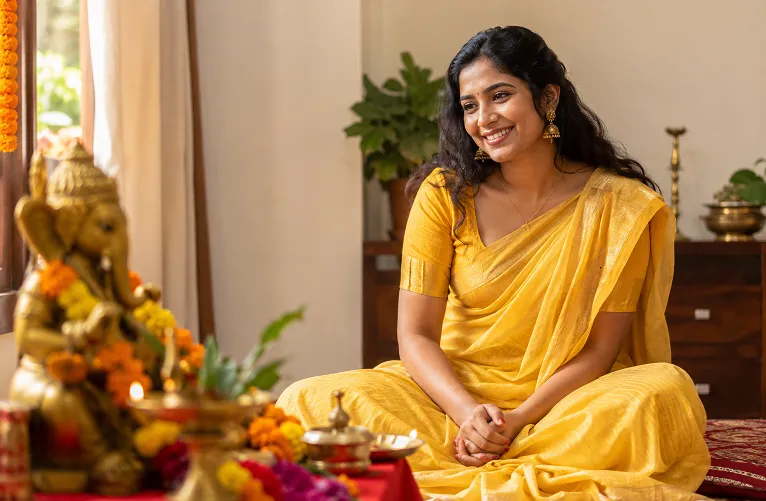
Figuring out what to wear for Ganesh Chaturthi usually starts here, on the calmest morning of the festival. Your outfit should match that energy. You’re sitting on the floor through the puja, folding a saree pleat or a kurta hem under you more than once, so anything too stiff or too heavy works against you before the aarti even starts.
A cotton or cotton-silk saree in a soft weave handles this well. It sits close enough to the body that you’re not fighting the fabric while you sit, and it doesn’t crease into deep, stubborn lines the way pure silk can after an hour on the floor.
If sarees aren’t your thing for a home puja, a handloom cotton kurta set does the same job. Go for a straight cut rather than a heavy flare. It’s easier to move between the kitchen and the puja room in the same morning, and it looks just as festive with the right jewellery.
Pandal Hopping and Evening Aarti: Where the Weather Actually Decides Your Outfit
This is where most Ganesh Chaturthi outfit ideas online go wrong. They tell you to dress for heat, because August and September in India obviously mean heat.
What they miss is that this window sits at the tail end of the monsoon, so the real risk isn’t heat alone. It’s heat, humidity, and a genuine chance of an unexpected downpour on your way to the pandal.
The India Meteorological Department doesn’t expect monsoon withdrawal to properly begin over most of the country before the first week of September, and full withdrawal isn’t declared until conditions stay dry for several days after that. A festival in mid-September genuinely falls inside that risk window, not safely after it.
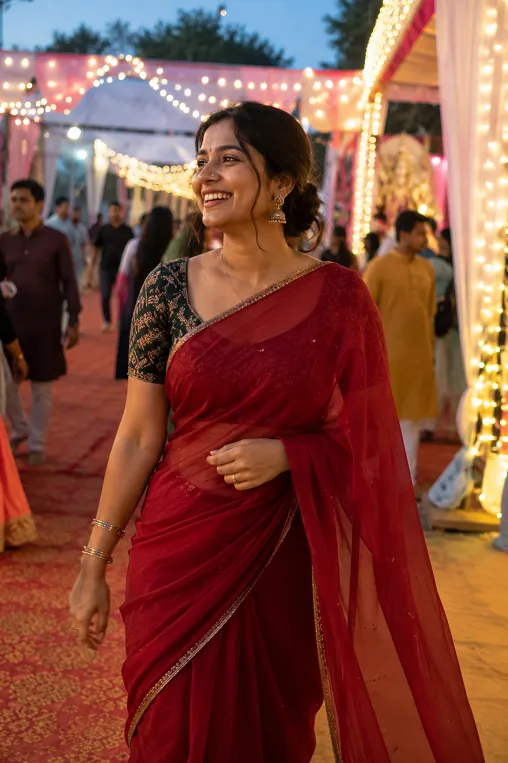
This changes what counts as a practical fabric. Georgette has more body than chiffon, so it holds a pleat better when you’re walking between pandals, and it recovers its shape faster after a light spray of rain.
Chiffon looks beautiful and moves more freely, but it clings and creases the moment humidity or water touches it. That’s not what you want three pandals into the evening.
Pure cotton, oddly, isn’t always the safer pick here either. Cotton absorbs water and takes a while to dry against skin, so if you’re caught in a sudden shower, it stays damp and heavy for the rest of the night.
A cotton-silk or silk-cotton blend sheds a light drizzle instead of soaking it in, which makes it a better bet if you want a festive Ganpati look that actually survives three pandals without wilting.
If monsoon-proofing your wardrobe interests you beyond this one festival, our guide on the best saree fabric for monsoon breaks down which weaves genuinely hold up through an Indian rainy season.
Most women choose their outfit based on what photographs well for the sthapana morning, then wear the exact same thing straight through pandal hopping and visarjan later. That’s the wrong way to plan for this specific festival, because each part of the day makes different demands on the fabric.
In Surat and Ahmedabad, the September humidity does something similar even on a dry day. Dupattas stick to bare arms and blouses cling by mid-afternoon, so breathable fabric matters whether or not it actually rains.
The Visarjan Procession Needs Its Own Outfit Plan
Every other article treats visarjan as a casual add-on to pandal hopping. It isn’t. You could be walking and dancing for three to five hours in a dense, slow-moving crowd, and there’s a real chance of direct water contact when the idol goes in, whether that’s spray from the ghat or getting jostled at the edge of the water.
Skip anything with a long pallu you’ll keep re-pinning, and skip delicate embroidery you’d be upset to see wet or crushed. A cotton or linen-blend kurta with a fitted churidar or straight pants works better than a flowing saree here, mainly because it doesn’t need constant adjusting while you’re moving with a crowd that isn’t moving on your schedule.
Banarasi silk is heavier than it looks in the store. If you’re wearing it through a full visarjan procession, the weight of the pallu on your shoulder makes itself known by the second hour, no matter how excited you are to be there.
The Banarasi weave itself carries a genuine Geographical Indication tag tied to Varanasi’s traditional zari brocade, which is exactly why authentic pieces run heavy. Real zari thread has real weight.
In cities like Mumbai, where visarjan routes can stretch from the main mandal processions toward the coast for the better part of a day, this isn’t a minor styling detail. It’s the difference between an outfit that lasts and one you’re peeling off in exhaustion by evening.
Everyone insists on saving the heaviest, most festive outfit for Ganesh Chaturthi because it’s a major festival. Honestly, if visarjan is part of your day, that instinct works against you. A well-fitted cotton kurta looks just as festive in photos and actually lets you enjoy the procession instead of managing your outfit through it.
There’s a particular kind of fabric fatigue that sets in around hour three of a procession. A heavy pallu starts pulling at your shoulder with every step, and you only stop noticing the weight because your shoulder has gone slightly numb.
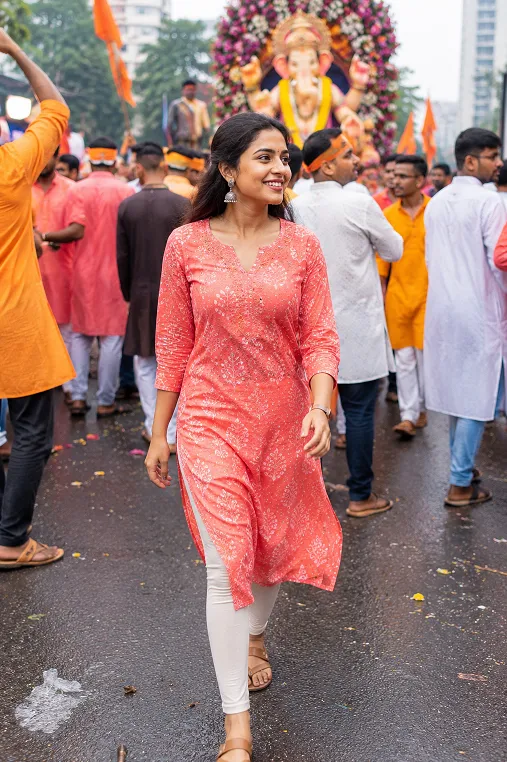
Why There’s No Fixed Colour Calendar for Ganesh Chaturthi
If you’re used to Navratri’s strict day-by-day colour chart, Ganesh Chaturthi will feel oddly unstructured. There isn’t one. Colour choice here is more personal and devotional than prescriptive, built around a handful of auspicious shades rather than a fixed schedule.
If you’re looking for what to wear to garba a few weeks later, that festival does follow a stricter dress code. Our Navratri outfit ideas guide breaks down the day-by-day colours if that’s what you’re planning next.
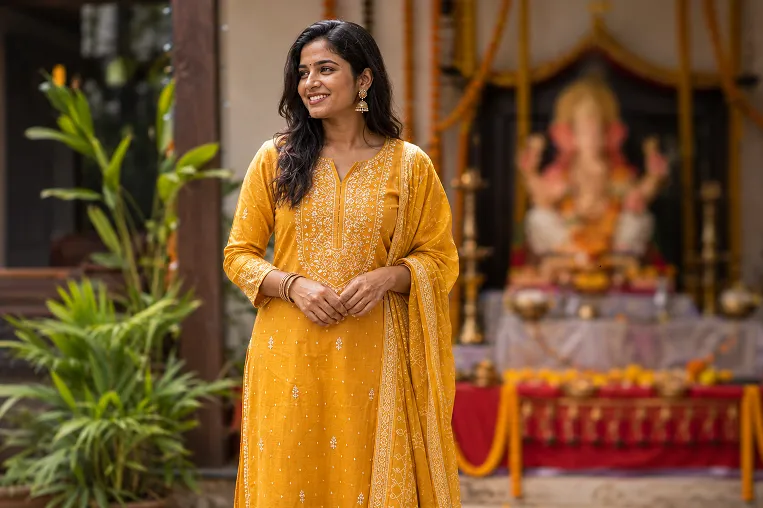
Yellow, red, orange, and green are all considered auspicious for the festival, with saffron and yellow especially linked to Lord Ganesha in popular tradition. None of this is compulsory, though. You can wear a soft blue Anarkali or a plain ivory saree and still be completely appropriate, because the sentiment behind the colour matters more than hitting an exact shade.
A traditional Ganesh Chaturthi outfit has always leaned toward warm, festive colour. Leaned toward is not the same as required, and most Ganesh Chaturthi outfit ideas online skip that distinction entirely, presenting a loose preference as if it were a rule.
If you’re unsure which of the auspicious shades actually suits your skin tone, Ethora’s free saree colour matching tool gives you blouse and jewellery pairings in under two minutes based on the shade you pick. Our guide on picking the best colour for saree by skin tone goes deeper if you want to understand the reasoning behind it.
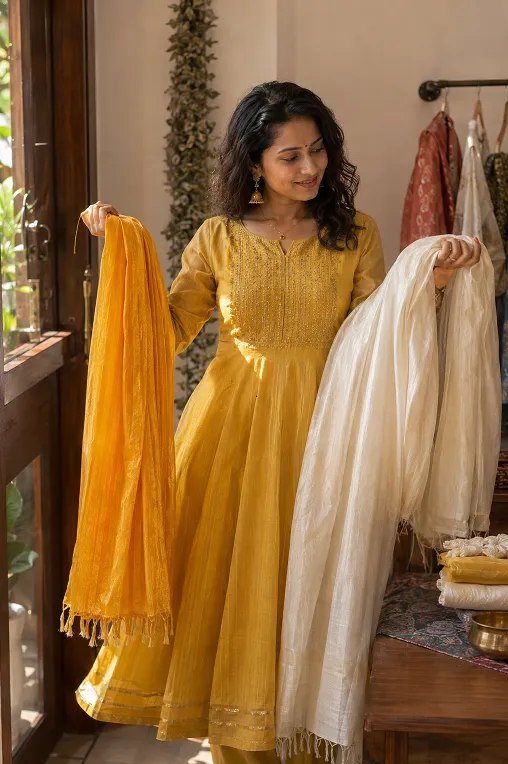
Ganesh Chaturthi Outfit Ideas by Occasion, at a Glance
Think of these as a starting point for your ganpati festival dress plan, not a rulebook you need to follow exactly.
- Sthapana morning puja: A cotton-silk saree or a handloom cotton kurta set, chosen for comfort while sitting on the floor for extended stretches.
- Pandal hopping in the evening: A georgette saree or a crepe Anarkali suit, both of which hold their shape through humidity and light rain.
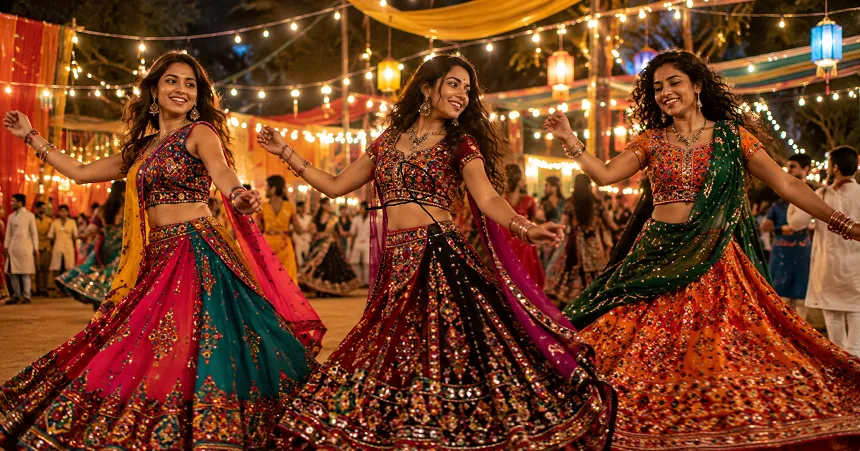
- Aarti with dancing involved: An A-line kurta with palazzo pants, or a lightweight lehenga that moves easily without tangling around your feet.
- The visarjan procession: A cotton or linen-blend kurta with a fitted churidar, chosen specifically for hours of walking and possible water contact.
- A quieter family day at home: A Banarasi or Chanderi silk saree, saved for the day you’re mostly indoors rather than out in the crowd.
- Casual pandal hopping with friends: A well-fitted printed kurti with palazzo pants and comfortable juttis, festive without needing a full nine yards of effort.
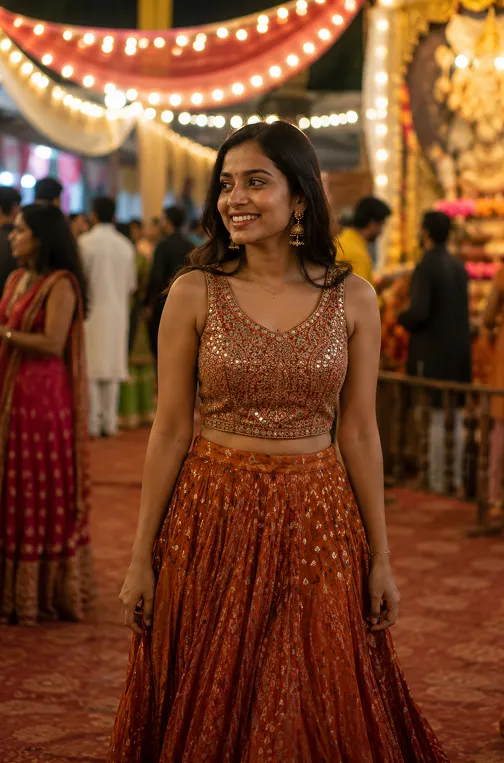
- College fest or a night out with friends: A fitted embroidered crop top with a flowing ankle-length skirt, indo-western but still built around the festival’s own colours.
If cropped silhouettes and long skirts feel more like you than a saree or a kurta set, that counts as a legitimate seventh option here, not a compromise. A fitted crop top with a flowing ankle-length skirt in rust, gold, or marigold keeps you inside the festival’s colour logic without asking you to dress the way your mother did.
It works well for an evening pandal visit with friends or a college fest crowd. It works less well for the actual puja, where most families still expect something more traditional.
What to Check Before You Buy an Outfit for This Festival
If you’re buying new for Ganesh Chaturthi, check the fabric with pandal visits and possibly visarjan in mind, not just how it feels under a store’s air conditioning. Rub a corner between your fingers. If it feels papery and stiff, it will crease and cling the moment humidity or a light shower reaches it.
Ask specifically whether a saree or kurta fabric is cotton-silk, georgette, or a rain-resistant blend if you know you’ll be outdoors for hours. A fabric that only performs well in a shop is the wrong purchase for this particular festival.
Ethora manufactures its sarees, kurtas, and lehenga choli directly at its Surat unit, and sources everything else from Surat’s own textile market. This advice comes from people who handle these fabrics every day, not just style them.
One Outfit Won’t Do Everything, and That’s Fine
The single most useful thing to take from this is to stop expecting one outfit to survive the entire festival. Pick your fabric based on what you’re actually doing that hour, sthapana, pandal hopping, or visarjan, and the rest falls into place on its own.
There’s more on Ethora’s blog if you want to go deeper into monsoon-proofing your wardrobe or picking festive colours that genuinely suit your skin tone. Our store is launching soon, with pieces made directly at our Surat manufacturing unit and sourced from Surat’s own textile market.
Frequently Asked Questions (FAQs)
When is Ganesh Chaturthi 2026?
Ganesh Chaturthi 2026 falls on Monday, September 14. The Madhyahna sthapana muhurat generally sits in the late morning, and visarjan can happen anywhere from a day and a half to ten days later depending on family and community tradition.
What should I wear for Ganesh Chaturthi if I don’t own a saree?
A well-fitted kurta set works for every part of the festival, including the puja itself. For visarjan specifically, pair a fitted kurti with wide-leg palazzo pants rather than skinny jeans, the extra room makes it far easier to sit cross-legged during a long aarti without your outfit fighting you.
Can I wear western clothes for Ganesh Chaturthi?
Western clothes work fine for casual pandal hopping with friends, but most families still expect ethnic wear for the actual puja out of respect for the ritual. A middle ground, like a kurta paired with palazzo pants, tends to satisfy both.
Is it okay to wear the same outfit for the puja and the visarjan procession?
It’s fine if that’s all you have, but plan it in the visarjan-friendly direction rather than the other way around. Choose the cotton or linen-blend outfit that can survive hours of walking, then dress it up with jewellery and a bindi for the morning puja instead of starting with something too delicate for later.
How do I know if a saree or kurta fabric is good quality before buying it online?
Check the fabric description for the exact material, cotton-silk, georgette, or pure silk, rather than a vague label like “premium fabric.” Genuine handloom pieces usually mention the weaving region or technique by name. Ethora manufactures its sarees, kurtas, and lehenga choli at its own Surat unit and sources everything else directly from Surat’s textile manufacturers, which means genuine fabric knowledge and factory-level quality without middleman pricing.
Once you’ve settled on the right fabric for pandal hopping or visarjan, the next question is usually where to actually get it. Ethora manufactures its sarees, kurtas, and lehenga choli directly at its own unit in Surat, and for everything else, we source straight from Surat’s local textile manufacturers, so you’re getting factory-level quality without the usual markup. Our store is launching soon, sign up below and we’ll let you know the moment it’s live.