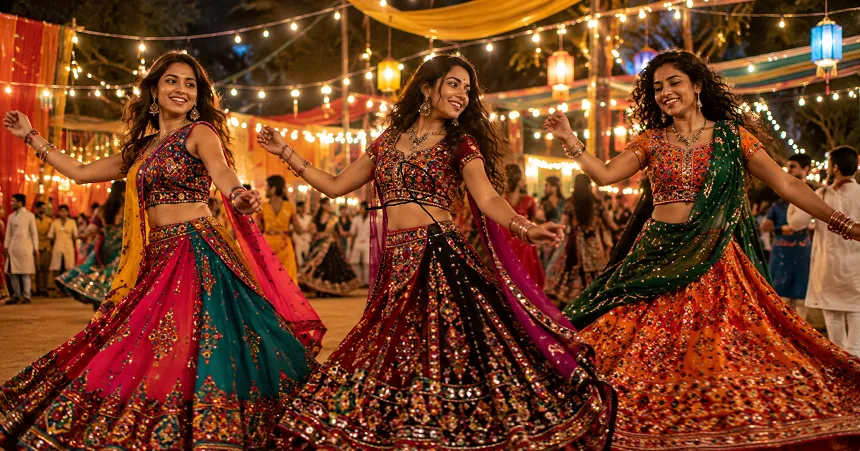
Your family WhatsApp group has probably already started asking what colour tomorrow is, and Navratri has not even begun yet.
It happens every year. Someone forwards a colour list with no source, another cousin forwards a completely different one, and by day three nobody in the group agrees on what Ashtami is supposed to look like.
This navratri colour calendar 2026 is built specifically around Sharad Navratri, the nine nights of Garba and Dandiya, which falls from October 11 to October 19 this year. Below is the full day-wise breakdown, why the sequence is not the same list you saw last year, and what actually happens to these fabrics once you are three hours into dancing.

Table of Contents
Why the Navratri Colour Sequence Isn’t Fixed Forever
Here is the part most colour charts skip. The first day’s colour is not chosen randomly, and it is not the same every year either.
It is set by the weekday Navratri begins on. Each day of the week has traditionally been linked to a colour, going back to old associations between the days and the planets that rule them. Sunday belongs to the Sun, and its colour is orange.
Since Sharad Navratri 2026 opens on a Sunday, October 11, the entire nine-day sequence starts with orange and works forward from there.
This is exactly why last year’s colour list will not match this year’s, and next year’s will not match 2026 either. The sequence resets based on which weekday the festival lands on, not on some fixed nine-colour order that repeats forever.
A lot of existing Navratri content treats the colour order as unchanging tradition. It is not. Treat any calendar you find online with a little suspicion unless it states the year and the starting weekday clearly.
The Navratri Colour Calendar 2026, Told as Three Chapters
Most lists hand you nine disconnected colours in a row. That misses the actual structure of the festival.
Navratri builds in three chapters of three days each. The first three days honour Durga, and the theme is purification, clearing out negativity before anything else can grow. The middle three belong to Lakshmi, centred on prosperity and abundance. The final three are Saraswati’s, built around wisdom and clarity.
Once you see the nine days this way, the colour calendar stops feeling random and starts feeling like a story with a beginning, a middle, and an end.
Chapter One: Durga, Days 1 to 3
Day 1, October 11 (Sunday): Orange, honouring Maa Shailputri. Orange is warm, high-energy, and forgiving on almost every skin tone, which makes it a genuinely good opener for the festival.
Day 2, October 12 (Monday): White, honouring Maa Brahmacharini. White reads as calm and a little austere against the colour that came before it, which is exactly the point on a purification day.
Day 3, October 13 (Tuesday): Red, honouring Maa Chandraghanta. Red is the colour most people associate with Navratri overall, and this is genuinely the day it belongs to.
Chapter Two: Lakshmi, Days 4 to 6
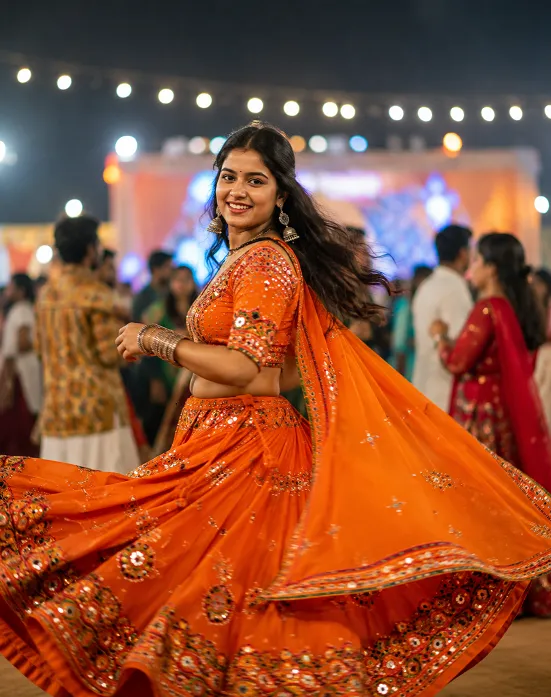
Day 4, October 14 (Wednesday): Royal blue, honouring Maa Kushmanda. It is a deeper, richer shade than regular blue and photographs beautifully under the string lights most Garba grounds use.
Day 5, October 15 (Thursday): Yellow, honouring Maa Skandamata. Yellow carries genuine festive energy, and it is one of the more flattering colours for evening event lighting.
Day 6, October 16 (Friday): Green, honouring Maa Katyayani. Green marks the shift toward the prosperity theme peaking, and it pairs unusually well with gold jewellery.
Chapter Three: Saraswati, Days 7 to 9
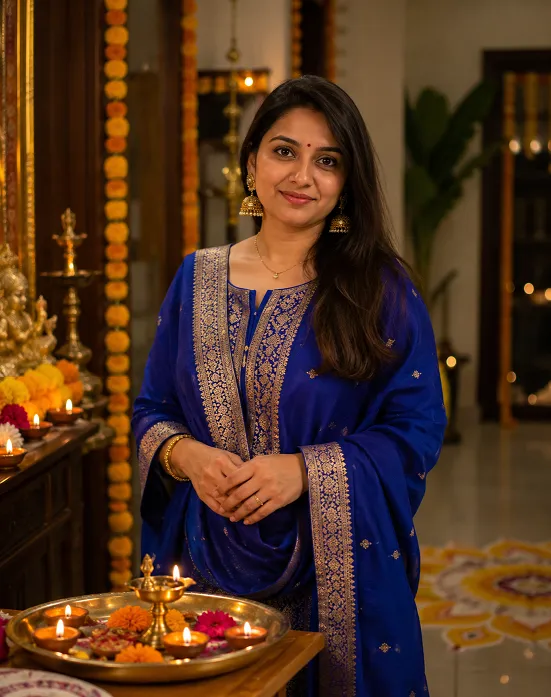
Day 7, October 17 (Saturday): Grey, honouring Maa Kalaratri. Grey is the most underrated colour on this entire list. It photographs as elegant rather than dull, especially with silver accessories.
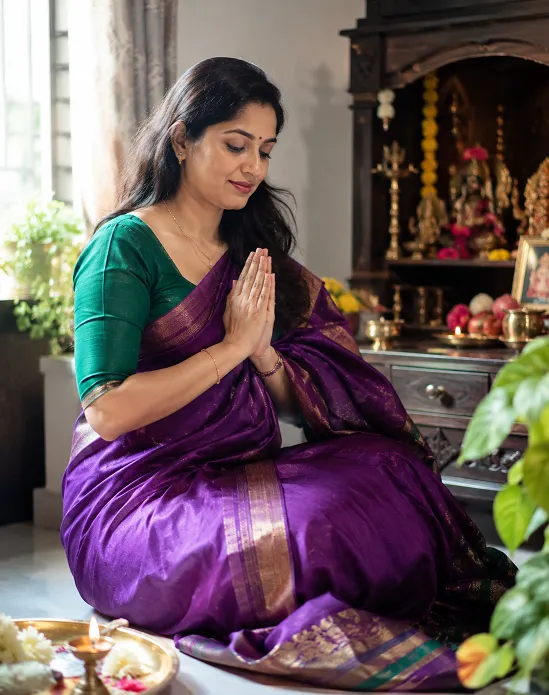
Day 8, October 18 (Sunday): Purple, honouring Maa Mahagauri. Purple closes out the wisdom chapter with a shade that reads as both regal and calm.
Day 9, October 19 (Monday): Peacock green, honouring Maa Siddhidatri, the final night before Vijayadashami. It is a slightly unusual, jewel-toned shade that most women only wear during this one week of the year.
If you are heading to one of Gujarat’s big organised celebrations rather than a neighbourhood circle, the state’s own Vibrant Navratri Festival listing is worth a look for dates and venue details before you plan your outfit around a specific event.
For a fuller breakdown of what actually works on the dance floor itself, our garba night outfit ideas guide goes deeper into silhouette and movement than a colour calendar alone can.
What to Actually Wear Each Colour: Notes From the Factory Floor
A colour chart tells you what shade to wear. It does not tell you what that colour will actually feel like on your body for four hours of dancing, and that is where most guides stop short.
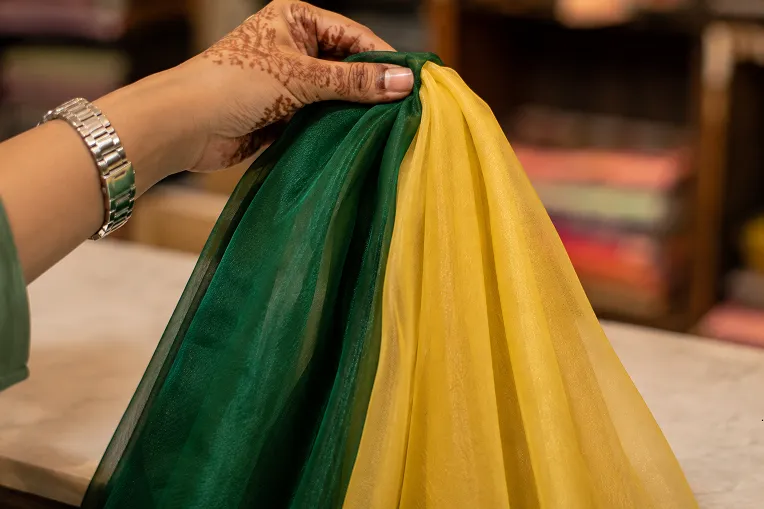
Georgette has more body than chiffon, so it holds a pleat and a flare far better once you are actually moving in a circle. If your chaniya choli needs to swing and hold its shape, georgette is doing more work than chiffon ever will.
Chiffon, on the other hand, catches light in a softer way. There is a lightness to how it moves that looks effortless even when your drape has slipped a little by 10 pm, which, honestly, it will.
Here’s the mistake most women make with this calendar: they buy a stiff, structured outfit in the day’s exact colour and then discover it does not breathe once the dancing starts. Colour first, comfort second is the wrong order for Garba specifically.
If you are wearing something heavier like Banarasi silk for a daytime aarti or a family function, know that it sits heavier than you expect. By evening, the weight on your shoulder from the pallu genuinely starts to show, which is worth knowing before you commit to it for a full day.
Everyone will tell you to stick strictly to the day’s colour. Here is an unpopular opinion: a well-fitted outfit in a shade close to the day’s colour, one that actually suits your skin tone, will look better in every photo than a technically correct colour that washes you out.
If you want to check which shades genuinely work for your skin tone before buying anything for this navratri colour calendar 2026, Ethora’s free saree colour matching tool gives you a result in under two minutes.
For deeper colour pairing logic beyond the nine-day list, our guide on colour combinations for ethnic wear that actually work covers blouse, dupatta, and jewellery pairing in more detail.
Building a Nine-Day Wardrobe Without Buying Nine Outfits
You do not need nine new outfits. You need three or four versatile pieces that can shift colour with the right dupatta, jacket, or jewellery.
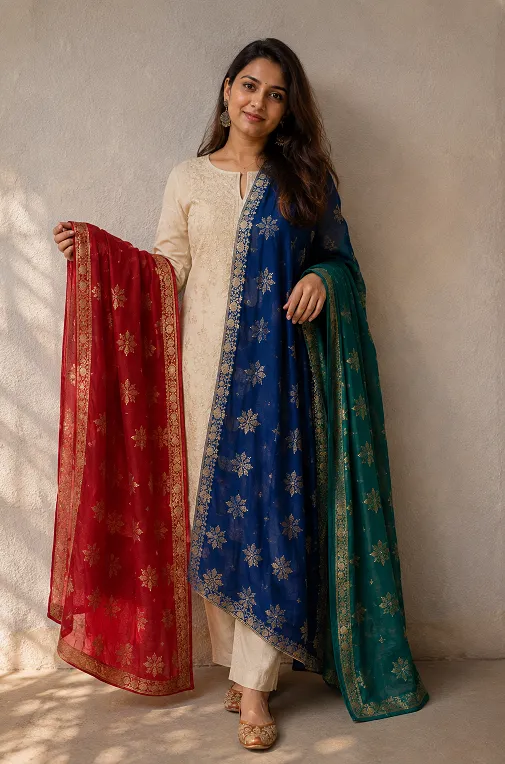
A cream or off-white base kurta set, for instance, can carry an orange dupatta on day one and a red one on day three without looking repeated in photos.
Keep one plain chaniya choli in a neutral base and rotate the odhni across the week. This is the same wardrobe-stretching logic behind our chaniya choli styling mistakes to avoid for Garba piece, just applied to colour instead of garment type.
Building a rotation this way is really what a navratri colour calendar 2026 should be used for, a planning tool, not a nine-item shopping list.
This advice comes easier from a brand that actually sits inside the supply chain. Ethora manufactures sarees, salwar kameez, kurtas, and lehenga choli directly at its own Surat unit, and sources everything outside that range from Surat’s local textile market, so the fabric guidance here comes from people who handle these materials daily, not just style them.
Conclusion
Pick your outfits for what actually holds up on a dance floor, not just what technically matches the chart. A cream base with the right dupattas will carry you further than nine separate purchases ever will.
If you enjoyed this breakdown, there is more festive and fabric-focused reading on the Ethora blog worth exploring next. And if you are close to buying, our Surat-manufactured store is launching soon, with everything sourced directly from the source itself.
Frequently Asked Questions (FAQs)
What is the correct navratri colour calendar 2026 for Sharad Navratri?
Day 1 (October 11) is orange, followed by white, red, royal blue, yellow, green, grey, purple, and peacock green through October 19. The order is set by the weekday the festival begins on, which is why it is not identical to last year’s list.
Why do Navratri colours change every year instead of staying the same?
The first day’s colour follows the weekday Navratri opens on that year, and the remaining eight days follow a set order from there. Since the starting weekday shifts annually, the full nine-day list shifts with it.
What fabric actually holds up best for nine days of Garba dancing?
Georgette and cotton-silk blends handle continuous movement better than pure chiffon, which is more prone to slipping out of place. Georgette has enough body to hold pleats through hours of circular dancing without needing constant readjustment.
Where can I buy good quality Navratri outfits online without overpaying for the brand name?
Check the seams and lining before anything else, since that is where cheap stitching shows first. Ethora manufactures directly at its own Surat unit and sources everything else from Surat’s local textile manufacturers, which means genuine fabric knowledge and factory-level quality without the usual middleman markup.
Is it necessary to wear the exact colour of the day for Navratri?
No, it is a tradition rather than a rule, and plenty of women simply carry the colour through an accessory or dupatta instead of the full outfit. What matters more for how you actually look in photos is choosing a shade close to the day’s colour that also suits your skin tone.
Nine nights, nine colours, and you still deserve outfits that hold their shape past midnight. Ethora manufactures sarees, salwar kameez, kurtas, and lehenga choli at its own unit in Surat, and sources everything else directly from Surat’s local textile manufacturers, so what reaches you skips the usual middlemen. Our store is launching soon, built entirely on that same sourcing.