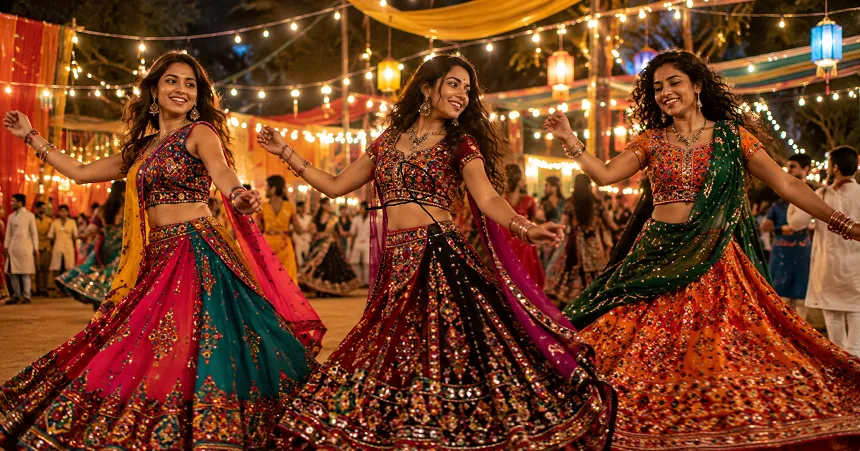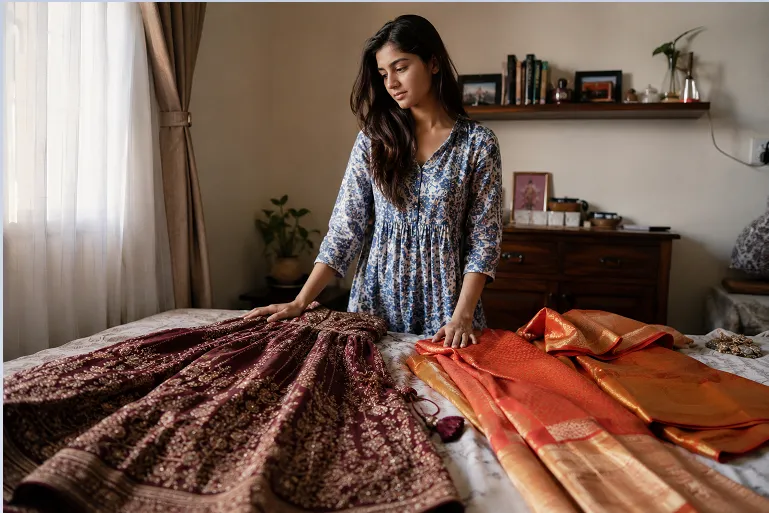
Your sangeet invite says 8 PM, and by 9 you already know two hours of dance rehearsals and Bollywood songs are coming. You want to look glamorous in every photo, but you also want your outfit to survive the actual dancing, not just the entry shot.
That gap between how an outfit looks standing still and how it holds up an hour into dancing is where most sangeet outfit ideas online fall short. This guide covers the usual silhouette suggestions, but it also explains the construction, fabric and lighting reasons behind them, the part every other list skips.
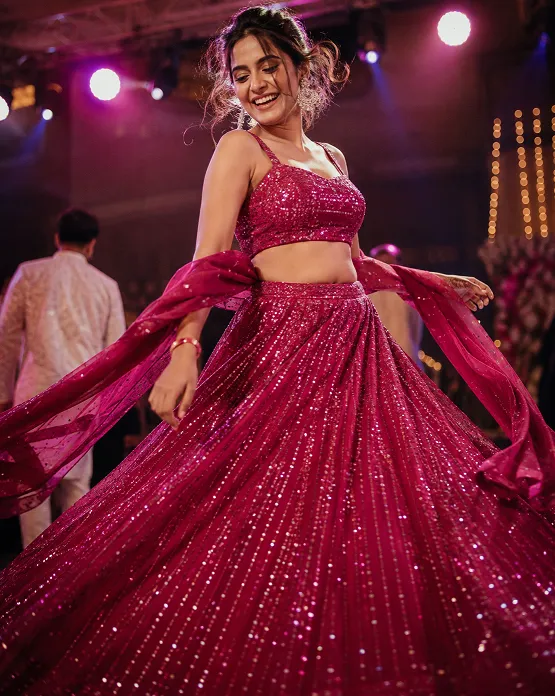
Table of Contents
What to Wear to Sangeet: Why the Silhouette Ranking Actually Holds Up
Every guide ranks lehenga and Anarkali above saree for a sangeet, and most stop there without saying why. The real answer sits in how each outfit is put together, not in how it looks in a photograph.
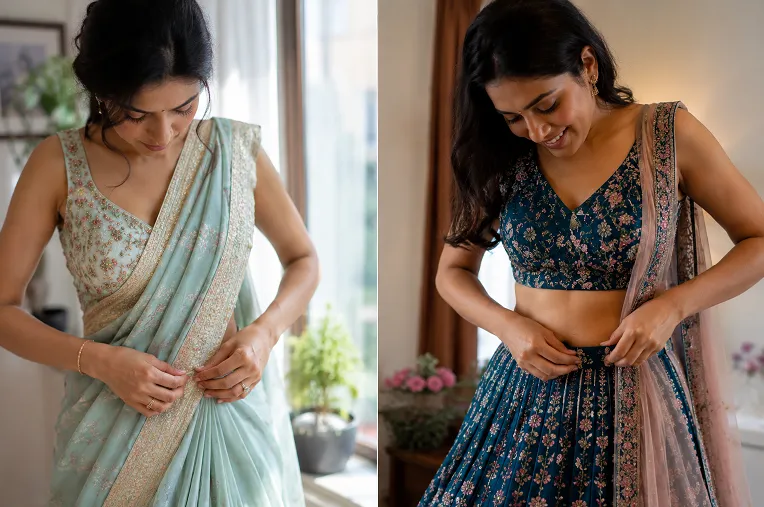
A saree stays in place through friction. The pleats are tucked into a petticoat, and the tightness of that petticoat, along with how firmly the pleats are pinned, is what holds the drape together while you move. Repeated movement gradually loosens that grip, which is why a saree that looked perfect at 8 PM can start slipping by 10.
A stitched Anarkali or lehenga works differently. The waistband is sewn to a fixed measurement, so it does not loosen the way a friction-held drape does. That is the actual construction reason behind the ranking, not just a vague comment about sarees being harder to manage.
Here is the part most articles skip. A well pinned saree in the hands of someone experienced with the drape will often outlast a badly stitched lehenga with a loose waist fitting. The blanket rule that lehenga always beats saree ignores tailoring quality, and tailoring quality matters more than fabric type.
If you still want to wear a saree, learn more about saree vs lehenga for wedding events before you decide, and read our petticoat length guide for a proper saree fit so the pleats you pin actually stay pinned.
Sangeet Outfit Ideas That Actually Catch the Stage Lighting
Sangeet venues run on dim, colour-shifting stage lighting, which is a different condition from the bright daylight of a mehendi or the warm lamps of a reception. This is why the same outfit can look flat at one function and dazzling at another.
Sequins, mirror work and metallic thread reflect and scatter whatever light hits them. Under a moving spotlight, that scattering is what reads from a distance and shows up well on camera. Matte fabric absorbs more of that light instead of throwing it back, which is why a plain silk can look surprisingly flat under the same conditions that make an embellished georgette glow.
This is worth knowing before you shop. Embellishment techniques like zardozi embroidery were originally developed for exactly this kind of visual impact, catching available light with metallic thread and stitched embellishment.
Georgette has more body than chiffon, so it holds a heavier sequin border without collapsing while you dance. Chiffon drapes beautifully but can sag under dense embellishment by the end of the night.
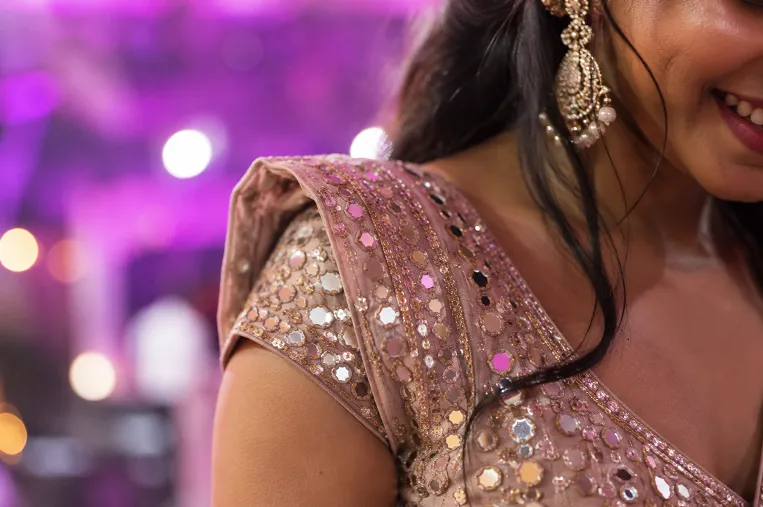
The Comfort vs Glam Question Nobody Explains Properly
Every sangeet guide tells you to balance comfort and glam, and almost none of them explain what that actually means at a fabric level. So here is the real mechanism.
Dense embroidery, sequins and mirror work reduce how much a fabric can breathe. This matters most at the bodice, exactly where your body generates the most heat once you start dancing and moving for hours.
It is not really a weight problem. A heavy dupatta is annoying, but you can adjust it. A blouse with layered embellishment across the chest and back traps body heat with nowhere for it to go, which is a heat retention problem that gets worse the longer you dance.
This is the actual reason lighter embellishment at the bodice, with heavier detailing concentrated on the skirt or dupatta, tends to feel more comfortable by midnight than an outfit embroidered evenly everywhere.
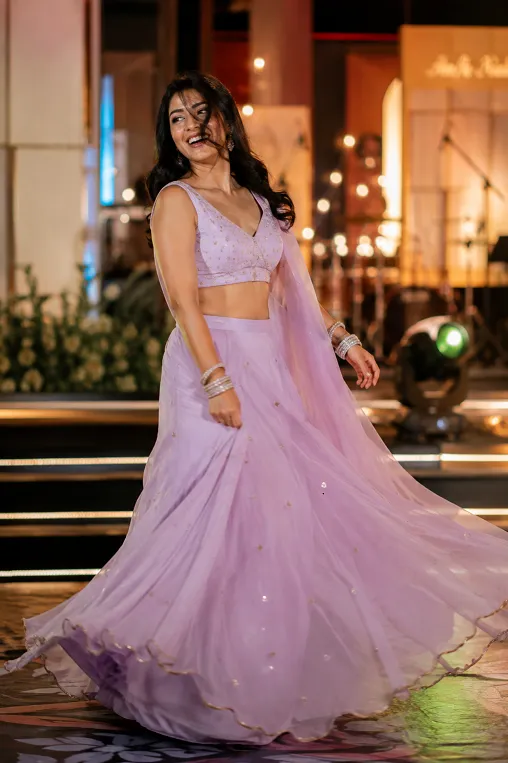
The same logic applies below the waist. A single-layer georgette or net lehenga skirt moves noticeably lighter and freer over hours of dancing than one built on a heavy can-can lining, even when both look equally full standing still.
If you are unsure which cut and coverage actually suits your body shape before you commit to heavy embellishment, Ethora’s free body type calculator gives you a result in under two minutes based on your own measurements.
Six Sangeet Guest Outfit Ideas Worth Trying
You have the construction and lighting logic now. Here are six sangeet outfit ideas that put it to actual use, whether you want a classic sangeet night outfit or something a little different.
- Sequinned georgette lehenga. Bold jewel tones like emerald or fuchsia photograph well under stage lighting, and georgette holds the embellishment without weighing down the flare.
- Mirror work sharara set. The wide-leg cut gives you more freedom to dance than a fitted lehenga skirt, and mirror work catches light from every angle as you move.
- Pre-draped organza saree. You get the classic saree look for your sangeet guest dress without worrying about the pleats loosening halfway through the night.
- Cape jacket over a fitted skirt. A modern indo-western look that keeps embellishment light near the shoulders while the cape itself does the visual work.
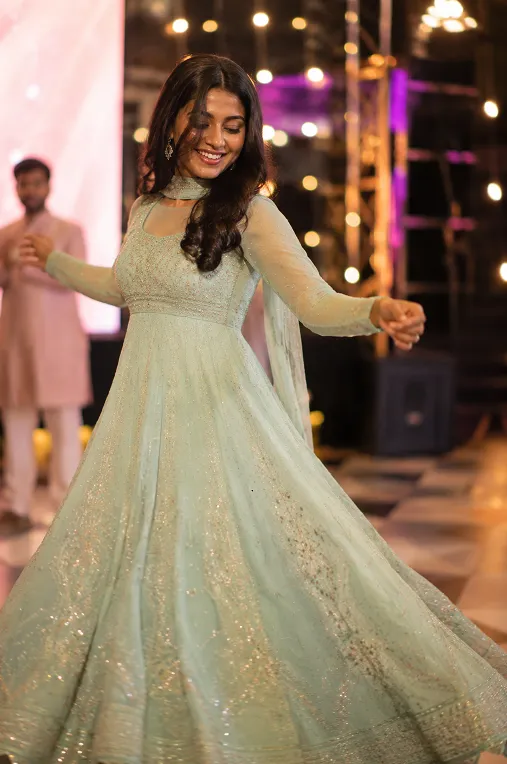
- Floor-length embroidered Anarkali. The fixed waistband means it holds shape all night, and a slightly flared hem still moves nicely on camera.
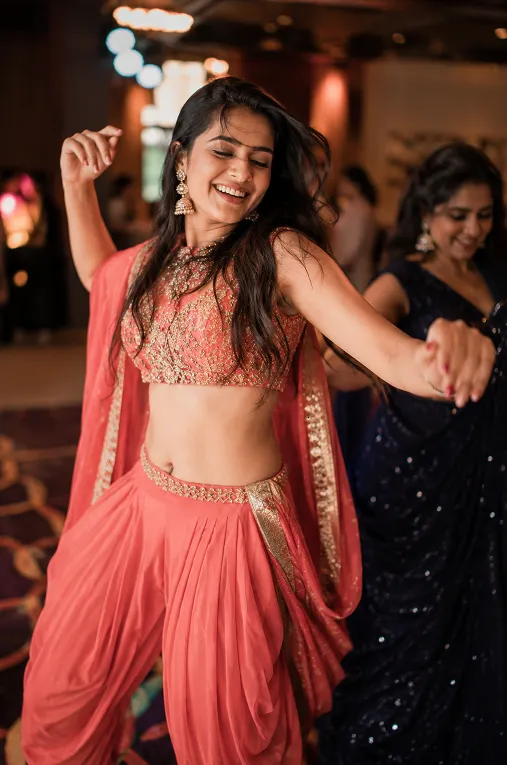
- Dhoti pants with an embellished crop top. One of the most dance-friendly indian wedding sangeet look options, since the pants allow full leg movement.
Whatever you pick, avoid bridal red as a guest and steer clear of anything too close to ivory, since both can read as bridal in photographs.
Here is what four of these actually look like once they are moving on the dance floor, not hanging on a rack.
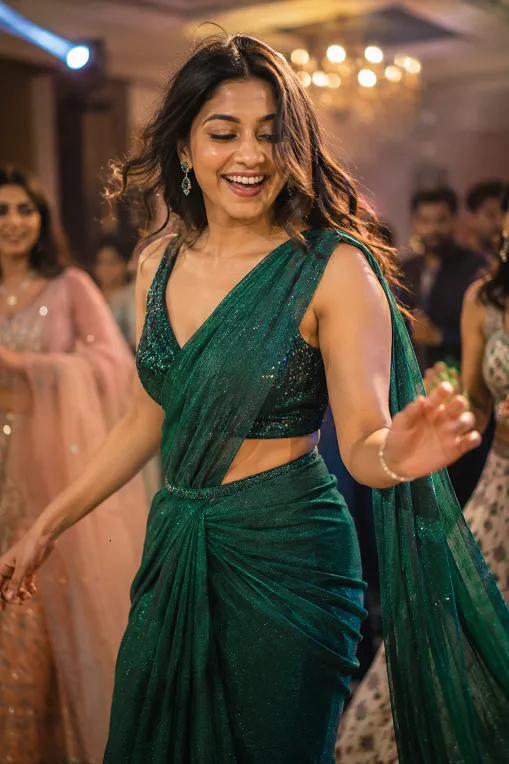
A sharara swaps the saree’s drape concerns for something even easier to dance in.
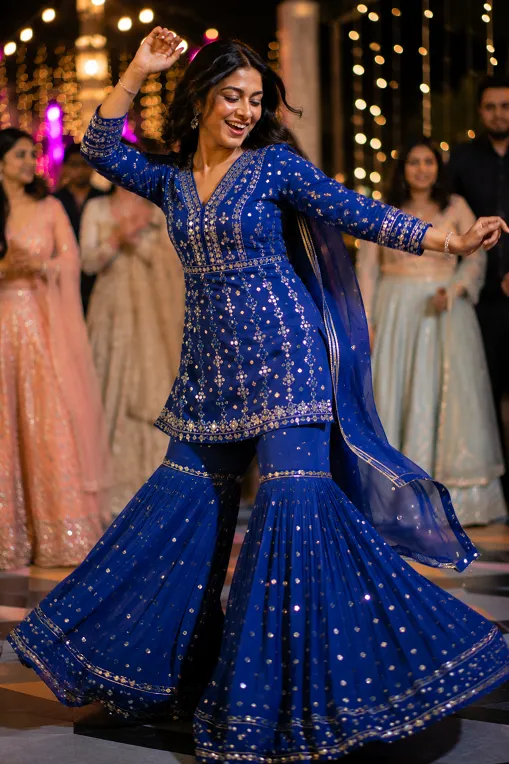
If you want more coverage than a sharara without losing movement, the Anarkali is the middle ground.
And if you want the least fabric restriction of all six picks, this is where fusion wear pulls ahead.
What Actually Matters Before You Purchase
Before you buy, check the waistband and closure, not just the embroidery. A stitched, fixed waistband on a lehenga or Anarkali is what actually survives a full night of dancing, while a saree depends entirely on how well you or your tailor manage the pleats and petticoat fit.
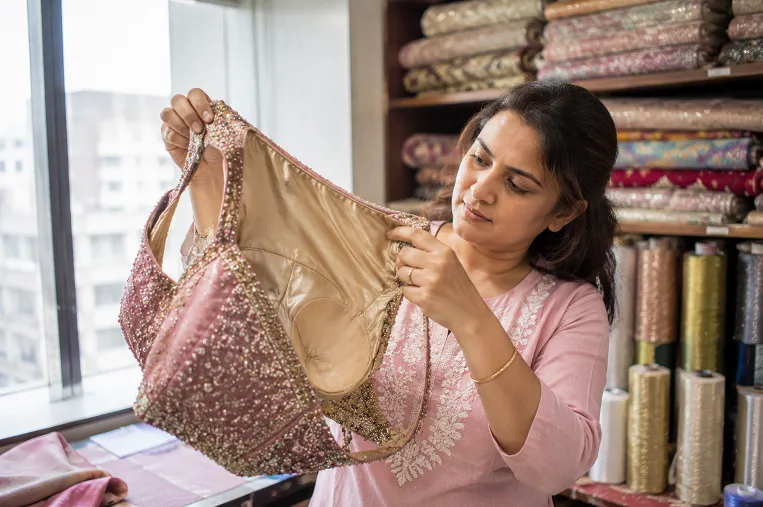
Ask whether the blouse or choli lining sits directly against skin at the bodice, since that is where breathability matters most once the dancing starts. A cotton or silk lining under embellishment feels noticeably cooler than a synthetic one by the third hour.
This is not something you can judge from a photo online. Ethora manufactures sarees, salwar kameez, kurtas and lehenga choli directly at its own unit in Surat, and sources everything else from Surat’s local textile market, so this advice comes from people who actually handle these fabrics every day, not just style them.
Before You Decide
The best sangeet outfit ideas are not the ones that look flawless in the mirror standing still. They are the ones whose waistband, embellishment placement and fabric weight you actually checked before buying.
There is more on Ethora’s blog if you want to plan the rest of your wedding wardrobe, from mehendi to reception, including our mehndi outfit ideas for guests guide for the function right before the sangeet.
Ethora’s own store is launching soon, with pieces made at our Surat manufacturing unit and sourced directly from Surat’s textile market.
Frequently Asked Questions
What should I wear to a sangeet as a guest?
A lehenga, Anarkali or pre-draped saree in a bold jewel tone works well. Avoid bridal red and heavy ivory, and choose georgette or organza over stiff silk if you plan to dance for hours.
Is a saree a good sangeet night outfit if I am not experienced with draping?
It can be, but only if someone experienced pins the pleats for you, since a loose petticoat is the main reason sarees slip during dancing. If you are not confident, a pre-draped saree or a stitched Anarkali is the safer choice.
How do I know if a blouse or lehenga fabric is good quality before buying online?
Check whether the lining sits against skin at the bodice, since synthetic lining under embellishment traps more heat than cotton or silk. Ethora manufactures at its own Surat unit and sources everything else directly from Surat’s textile market, which gives you factory-level fabric knowledge without middleman pricing.
What colours should I avoid at a sangeet?
Avoid bridal red and heavy ivory or white, since both can read as the bride’s colours in photographs. Jewel tones like emerald, fuchsia, royal blue and mustard are safe, festive choices for a guest.
Can I wear the same outfit to sangeet and another wedding function?
You can, but restyle it so it does not look repeated in photos. Changing the dupatta, jewellery or draping style is usually enough to make one outfit feel like two.
Still deciding between a lehenga, a sharara or a saree for your sangeet look? You do not have to guess. Ethora manufactures sarees, salwar kameez, kurtas and lehenga choli directly at our own unit in Surat, and everything else we carry is sourced straight from Surat’s local textile manufacturers. Our store is launching soon, bringing that same factory-level fabric knowledge straight to you, without the middleman markup.