
It’s 9 pm the night before the wedding and there are two outfits laid out on the bed. One is a saree your mother helped you pick. The other is a lehenga you fell in love with on Instagram three months ago. You’ve tried both on twice already and you still don’t know which one is going with you tomorrow.
This is not really a fashion decision. It’s a comfort decision wearing a fashion decision’s clothes. The saree vs lehenga for wedding question comes up every single shaadi season, and most articles answer it by talking about trends. We’re going to answer it by talking about fabric, weight, movement and what actually happens to your body after six hours in a banquet hall.
By the end of this, you’ll know exactly which one makes sense for the function you’re attending, not just which one looks nicer in a photo.
Here are the five differences that actually matter, the ones you’ll feel on the day rather than just notice in a store mirror:
- Where the weight sits. A saree’s pallu rests on your shoulder. A lehenga’s weight sits at your waist through the waistband.
- How the fabric behaves once you’re moving. Pleats hold, loosen or shift depending on whether you’re sitting for hours or dancing at sangeet.
- Which function it actually suits. Mehendi, sangeet, the ceremony and the reception each call for a different weight and structure.
- How it fits your body, not just your trend board. Draped versus structured changes what you need to check before buying, not just how it photographs.
- What you’re actually paying for. Panels, tailoring and embroidery work price a lehenga and a saree very differently, even at the same fabric quality.
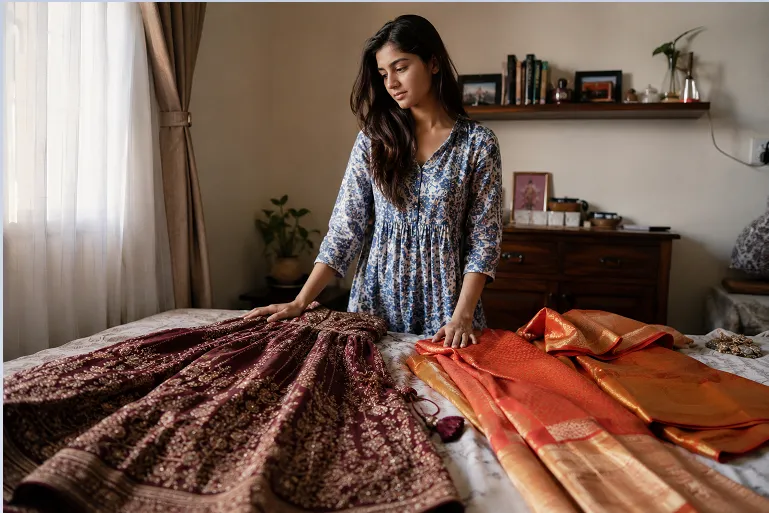
Table of Contents
The Real Difference Isn’t How They Look, It’s How They Behave
Everyone compares saree and lehenga on appearance. That’s the wrong comparison. The real difference is how each one behaves on your body over the course of a long event, and almost nobody explains this properly.
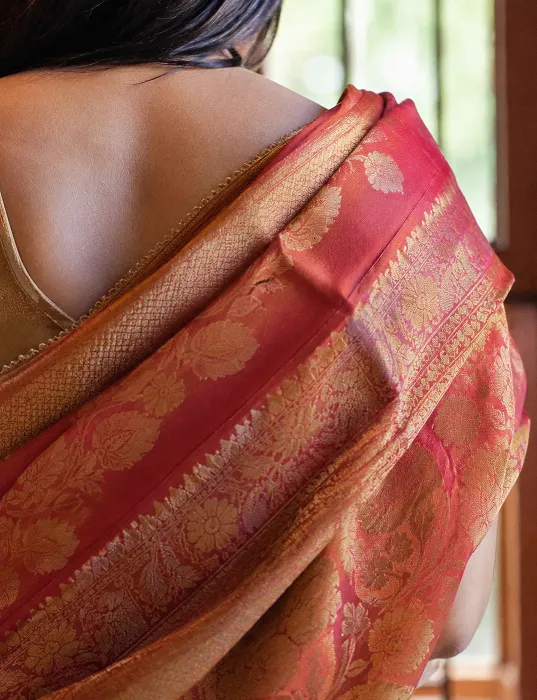
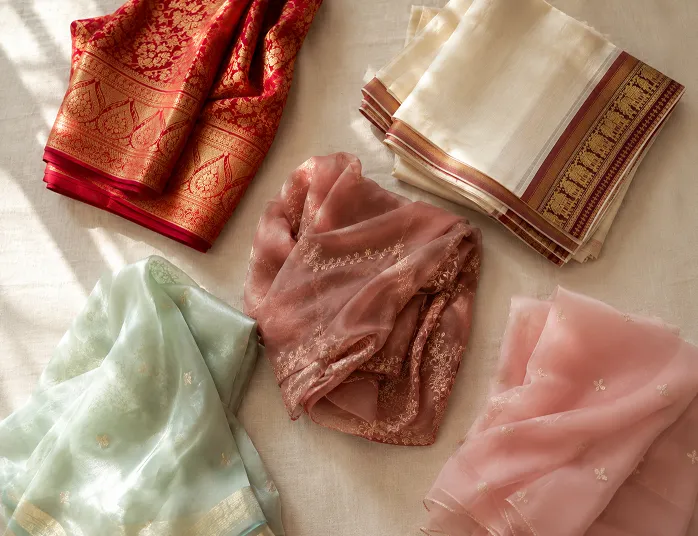
A saree is one continuous piece of fabric, usually five and a half to six metres, draped and tucked into your petticoat. Its comfort depends entirely on the fabric weight and how well it’s pleated. Banarasi silk is heavier than most brides expect. If you’re wearing it through a full day event, from morning rituals to evening reception, the weight sitting on your shoulder from the pallu starts to show by the third or fourth hour. Your shoulder genuinely gets tired. Nobody tells you this until you’ve lived it.
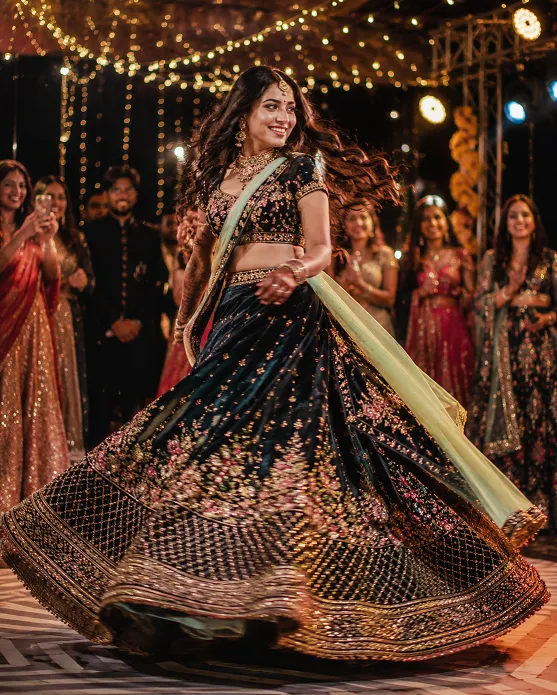
A lehenga is structured. The skirt has its own weight distributed around your waist and hips through a waistband, not your shoulder. This is why brides who dance a lot at sangeet almost always prefer lehenga. The volume of the skirt also does something a saree can’t. It moves with you rather than needing you to manage it while you move.
Here’s the fabric detail that actually matters when you’re comparing the two: georgette has more body than chiffon, which means a georgette saree holds its pleats better through a long evening of walking and sitting, while chiffon drapes softer but needs more touch ups by the end of the night. Lehengas are usually made in raw silk, velvet, or net with heavy embroidery, and the embroidery itself adds real weight. A heavily worked velvet lehenga can weigh more than double a plain silk saree.
So the question isn’t which looks better. It’s which weight and movement pattern your body can handle for the number of hours you’ll actually be wearing it.
Saree vs Lehenga for Wedding: Match the Outfit to the Function
This is where most people get it backwards. They pick the outfit first and then figure out where to wear it. It should be the opposite.
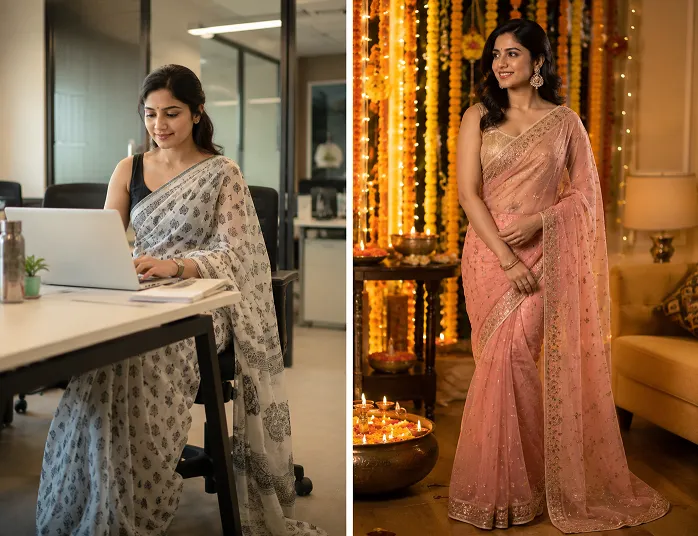
Mehendi and haldi functions are usually daytime, often partly outdoors, and involve a lot of sitting on the floor or on low seating. A lighter cotton or georgette saree, or a simple lehenga in cotton silk, works better here than anything heavy. You’ll be sitting for hennaed hands to dry, getting turmeric on your clothes on purpose, and moving around a lot. Heavy zardozi work has no place at a haldi function. It just gets in the way and looks out of place next to the marigolds.
Sangeet and cocktail functions are where lehenga genuinely has the edge. There’s dancing, there’s standing for hours, there’s a stage and choreography rehearsals happening around you even if you’re not performing. The structured waist of a lehenga stays put in a way a saree’s pleats don’t when you’re moving fast. If your sangeet outfit needs to survive a garba circle or a full dance number, lehenga wins this round honestly.
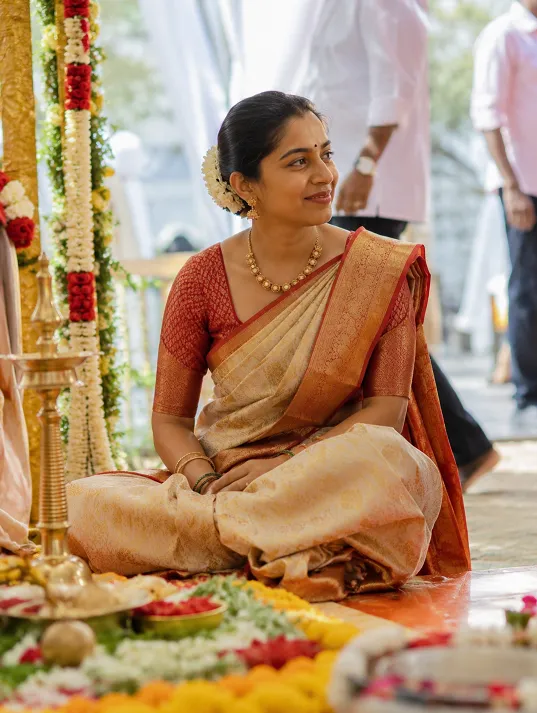
The actual wedding ceremony is traditionally saree territory in most Indian communities, especially for the bride and close family. There’s a reason for this beyond tradition, one that goes back generations, as this overview of the wedding sari’s regional traditions lays out well. The ceremony involves sitting near the mandap for extended periods, often on the floor, in front of a fire, with cameras everywhere. A well draped silk saree photographs beautifully in that setting and the pallu can be arranged to sit gracefully whether you’re seated or standing for rituals.
Reception is genuinely open territory. Both work. This is usually where the heaviest, most photograph ready outfit comes out, whichever one that is for you.
For a closer look at which drape suits which body shape, check our guide on saree for body type.
The Body Type Conversation Everyone Gets Wrong
Most advice around body type and outfit choice makes it sound like there’s a rulebook. There isn’t, not really, and I’ll say this directly: a saree does not automatically suit every body type better than a lehenga, and a lehenga does not automatically hide everything a saree reveals. Both claims get repeated constantly and both are oversimplified.
What actually matters is where the outfit sits on your body and how much of your natural shape it follows versus structures. A saree follows your body’s actual shape because it’s draped, not stitched to a pattern. This means the blouse fit matters enormously, more than people realise. A saree with a poorly fitted blouse will look wrong no matter how expensive the fabric is. A lehenga, being structured with a waistband and stitched panels, can be tailored to smooth out areas you’re not comfortable with, but only if the tailoring is actually done properly and not just bought off the rack in a standard size.
Here’s an opinion I’ll state plainly. Everyone says to choose based on hiding your body type, but honestly, comfort with movement matters more than the illusion of a slimmer silhouette. A woman who feels physically restricted in a heavy lehenga skirt all evening is going to look uncomfortable in every photo, no matter how flattering the cut is supposed to be. Fit and freedom of movement do more for how you actually look than any styling trick.
The Mistake Almost Everyone Makes While Choosing
Most women choose based on what looked good in the trial room or in a single Instagram photo, without accounting for how many hours they’ll actually wear it and in what weather. This is the single biggest mistake in the saree vs lehenga for wedding decision, and it’s an easy one to avoid if you just ask two extra questions before buying.
If you’re attending a Gujarat wedding in October, you’re dealing with heat that doesn’t fully drop even in the evening. A heavy velvet lehenga with dense embroidery in that weather is a genuine endurance test, not a fashion choice. If it’s a Delhi winter wedding in December, the same lehenga suddenly makes complete sense because the weight actually helps you stay warm through an outdoor ceremony.
And there’s the outdoor mandap problem nobody plans for. Grass, uneven ground, sometimes mud if there’s been rain. A saree’s pallu can catch under your heel if you’re not careful walking on grass, and a wide lehenga skirt can drag through mud in a way a saree tucked properly won’t. Ask where the function is happening before you decide what to wear, not after.
There’s also the practical reality of getting to the venue itself. If you’re travelling by car through city traffic in a heavily pleated saree, sitting down for an hour without crushing the pleats takes real skill. A lehenga is genuinely more forgiving here since the skirt volume hides creasing far better than a fitted saree drape does.
If you’re still deciding on saree fabric for warmer functions, our guide on best saree fabric for summer breaks this down properly.
What to Check Before You Buy Your Saree vs Lehenga for Wedding
Once you’ve decided which one suits your function, the buying decision is where most of the disappointment actually happens, usually because of things that aren’t visible in a photo online.
Check the fall and lining first, not just the print or embroidery. A saree without proper fall stitched along the edge won’t drape correctly no matter how good the fabric is, and it’ll show within the first hour of wearing it. For a lehenga, check whether the skirt has proper lining underneath the outer fabric. Cheap lehengas skip this to cut cost, and the outer fabric ends up clinging or losing shape by evening.
Feel the embroidery from the inside, not just the outside. Good zari and thread work is secured properly and won’t catch on your dupatta or scratch your skin through the blouse lining. Cheap embroidery is glued or loosely stitched and starts coming apart after one or two wears.
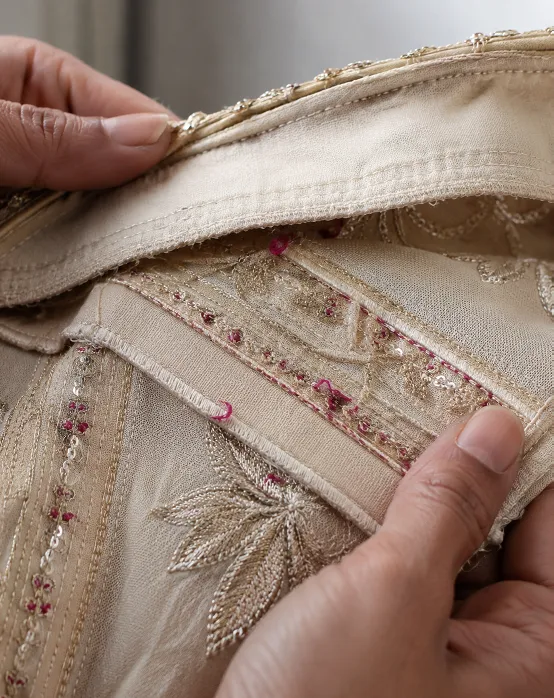
Ask what the fabric actually is, not just what it’s called. A lot of “silk” in the market is actually a silk blend or art silk, which behaves very differently in terms of weight, drape and how it photographs. There’s nothing wrong with a blend if you know what you’re buying, but you should know.
This is genuinely where buying from people who manufacture rather than just resell makes a difference. Ethora makes sarees, salwar kameez, kurtas and lehenga choli directly at our own unit backed by Pahal Silk Mills in Surat, and for pieces outside what we manufacture, we source straight from Surat’s local textile market, which is India’s largest textile hub. The advice above isn’t theory. It’s what we check on our own production floor every day.
Conclusion
The honest way to choose between a saree and a lehenga is to think about your day hour by hour, not outfit by outfit. Ask what you’ll be doing, how long you’ll be standing, sitting or dancing, and what the weather and venue actually look like, then let the fabric and structure follow from that. That one shift in thinking will save you more discomfort than any styling tip.
If this helped, there’s more like it on the Ethora blog for every function this wedding season throws at you. And if you’re already thinking about where to buy, our store is launching soon with pieces made and sourced straight from Surat’s own textile manufacturers.
FAQ
Is saree or lehenga better for a wedding guest?
For a wedding guest, it genuinely depends on the function and how long you’ll be on your feet or dancing. A saree works well for daytime and ceremony functions where you’ll be seated, while a lehenga is easier for evening functions with dancing since the structured waist moves with you.
Which is more expensive, a bridal saree or a bridal lehenga?
A heavily embroidered bridal lehenga is usually more expensive than a comparable saree because it uses more fabric across multiple panels and requires more tailoring work. A pure silk saree with heavy zari border can still cost close to a mid-range lehenga, so it comes down to the specific fabric and workmanship rather than the category itself.
Can a saree be worn for sangeet instead of a lehenga?
Yes, but choose a lighter fabric like georgette or a pre-draped saree style if there’s dancing involved, since traditional silk sarees can slip out of pleats during fast movement. Many women now opt for a saree gown or a dhoti style saree for sangeet specifically because it holds up better while dancing.
How do I know if a blouse or lehenga fabric is good quality before buying?
Check the fabric from the inside seams, not just the front. Good quality fabric doesn’t fray easily at the cut edges and the embroidery threads are woven through rather than glued on top. Ethora manufactures directly at its own Surat unit and sources everything else from Surat’s local textile manufacturers, so you’re getting factory level fabric knowledge without the usual middleman markup.
Is it okay to wear a lehenga to a traditional wedding ceremony instead of a saree?
Yes, this has become increasingly common, especially among younger brides and guests, though many traditional ceremonies like the actual pheras still lean toward saree in most Indian communities. There’s no rule against a lehenga for the ceremony itself, it’s really about family tradition and what you feel most like yourself in.
Every fabric recommendation in this article comes from handling these materials daily at our own Surat workshop.
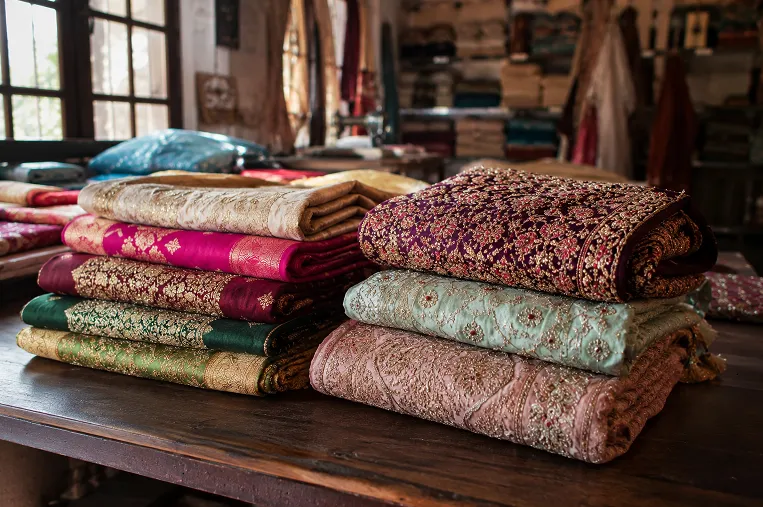
Whichever one you choose, saree or lehenga, the fabric underneath the embroidery is what decides how it actually feels by the end of the day. Ethora manufactures sarees, kurtas, salwar kameez and lehenga choli directly at our own unit in Surat, and everything else is sourced straight from Surat’s local textile manufacturers, so you’re getting real quality without the markup. Our store is launching soon, and we’d love for you to be among the first to see it.
Pingback: Sangeet Outfit Ideas: 6 Confident Picks For Dancing | Ethora