
It’s 8:40 in the morning and you’re standing in front of the ironing board in a half tied petticoat, running late for the cab pool, wondering why you even picked a saree today instead of the kurta hanging right next to it. This happens to almost every woman who wears sarees to work. The saree looks perfect on the mannequin and starts falling apart by 11am under office AC, humidity from the walk to the bus stop, and eight hours of sitting, standing and moving between desks.
Finding sarees for office wear that hold their shape through all that is less about fashion and more about picking fabric that behaves the way your actual day happens. This article gets into exactly that, fabric by fabric, mistake by mistake.
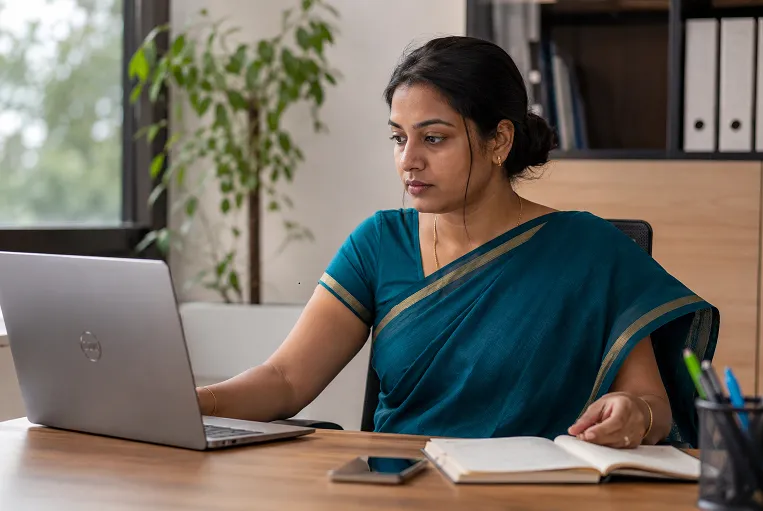
Table of Contents
Why Most “Office Sarees” Fail By Lunchtime
Most women pick an office saree the same way they pick a going out saree. They hold it up, check the colour against their skin, maybe check the border, and buy it. Nobody checks how the fabric handles eight hours of continuous wear, and that is the actual problem.
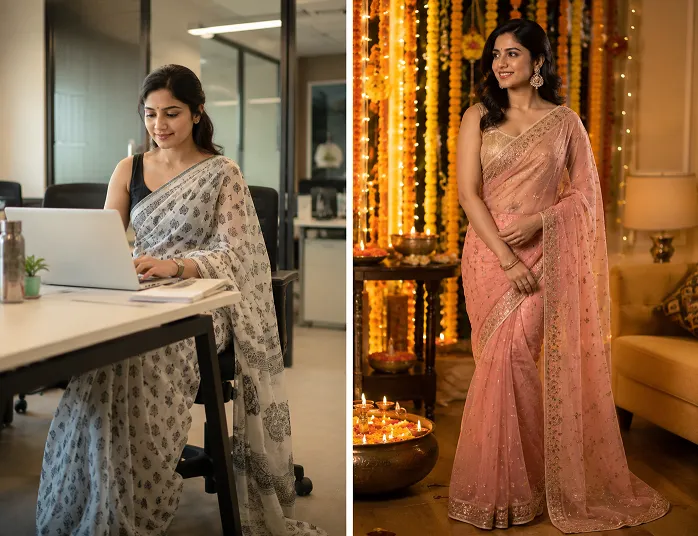
An office day is not a wedding day. You are not adjusting your saree every ten minutes with someone around to help. You are getting into an auto rickshaw in Surat traffic, sitting through back to back meetings, walking to the printer, and maybe eating lunch at your desk without spilling on the pallu.
A saree with too much drape and no structure will slip off your shoulder every time you lean forward to type. A saree that creases the moment you sit will look crumpled by the second half of the day, no matter how well you ironed it in the morning.
This is really a fabric selection problem, not a styling one. Office saree ideas that work on Instagram do not automatically translate into a fabric that survives your commute and your chair.
Choosing the Right Fabric for Sarees for Office Wear
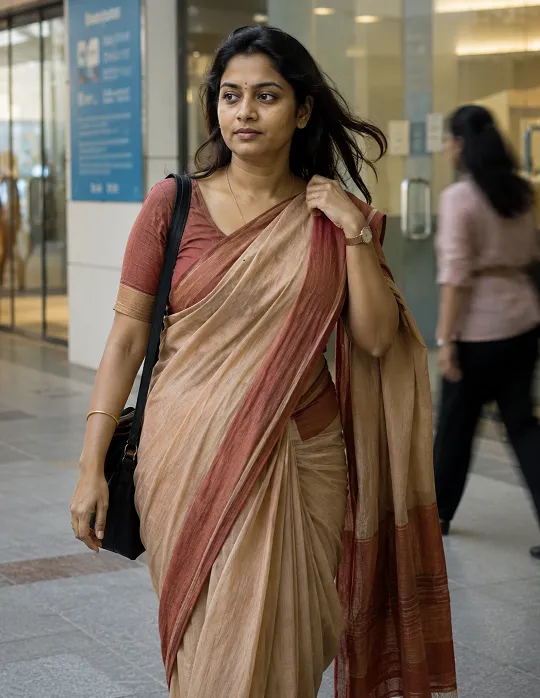
This is where real textile knowledge matters more than trend knowledge. Not every fabric used in sarees for office wear is built for movement, and most fashion advice online does not mention this at all.
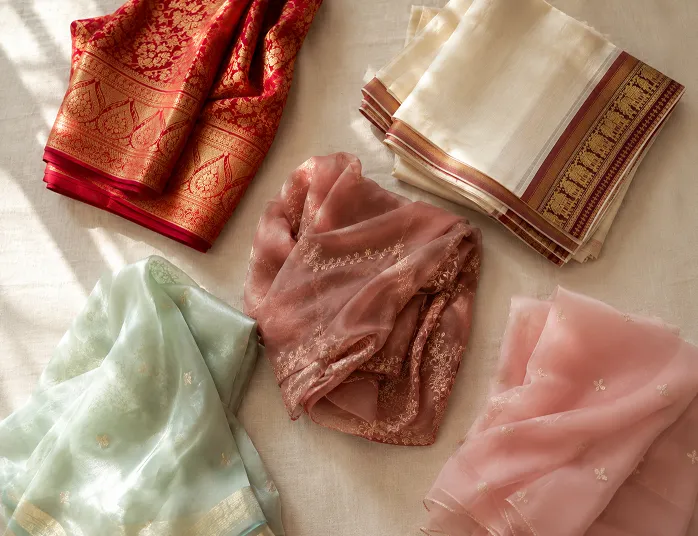
Cotton and cotton blends are the most underrated daily wear saree option and honestly the most forgiving. Pure cotton breathes well in humid cities like Mumbai or Surat, but it creases fast, so a cotton blend with a small amount of linen or a soft finish holds its shape through a full day far better than 100% pure cotton. If you are sitting for long stretches in AC offices, this blend is the one that will not look tired by 4pm.
Georgette has more body than chiffon, which means it holds a pleat better when you are walking between desks or up a flight of stairs. This is one of those fabric behaviours you only really learn from handling it, not from reading about it. Georgette gets that extra body from being woven with tightly twisted yarns in alternating directions, which is also documented in the fabric’s history. Chiffon looks lighter and more elegant in photos, but it moves too much for a long work day and needs constant readjustment.
Linen sarees are having a real moment for office wear and there is a genuine reason for it. Linen has a natural structure that does not cling in humidity the way synthetic fabrics do, and the slight texture actually hides small creases better than a smooth fabric would.
Tussar silk works well for a slightly more formal office day, a client meeting or a presentation day, but be honest with yourself about the weight. Tussar has more weight on the shoulder than people expect, and if you are wearing it for a full nine hour day, that weight starts to show by evening, especially around the pallu pin.
Modal fabric deserves more attention than it gets. It looks similar to rayon on the hanger but behaves completely differently once you are wearing it in humidity. Rayon tends to cling and lose shape by afternoon. Modal holds a cooler, drier feel against the skin for longer, which is exactly what you want for daily wear.
If summer heat and humidity are the bigger problem for you than the office chair, our detailed guide on the best saree fabric for summer goes deeper into which fabrics genuinely hold up against Indian heat.
The Colour and Print Rule Everyone Gets Wrong
Here is where this article is going to disagree with most fashion advice you have read. Everyone says stick to muted, neutral colours for office wear because it looks more “professional.” That advice is only half true and honestly a bit lazy.
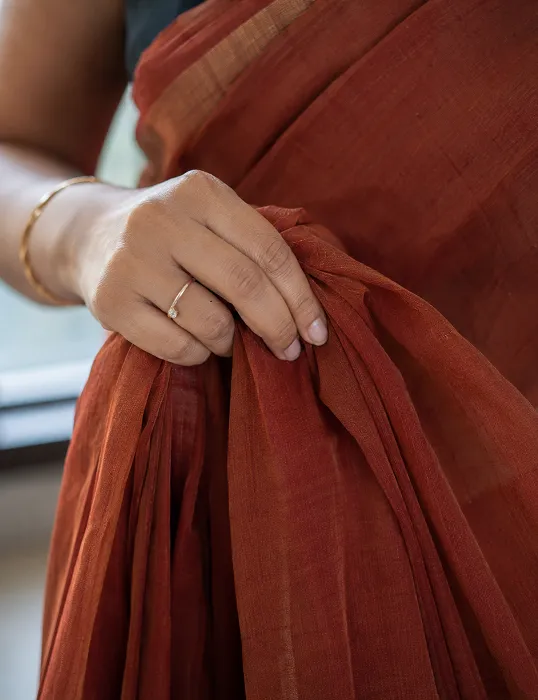
A well fitted, well draped saree in a confident colour reads as more put together than a dull, washed out neutral that makes you disappear into the background of every meeting. Deep teal, mustard, brick red and bottle green all read as professional. They are simply not beige. The idea that professional automatically means boring is one of those assumptions that has just been repeated so many times nobody questions it anymore.
When it comes to sarees for office wear, what actually matters for formal saree styling is the print size and the contrast level, not the colour family. A large, busy print with high contrast will look loud in a meeting room, regardless of colour. A small, controlled print or a solid with a subtle woven texture will look composed even in a bright shade.

One mistake worth calling out directly: a lot of women choose their saree colour based on what they think looks slimming, and end up in the same three or four colours for every single work outfit. That gets exhausting fast, and it is simply not necessary. If you want to break out of that rotation, our guide on colour combinations for ethnic wear goes into pairing logic that works well beyond just office days too.
Draping and Wearing It So It Survives Your Actual Day
This is the part most articles skip because it is less glamorous than fabric talk, but it matters more than people think.
If your mornings are genuinely rushed and draping from scratch is what makes you avoid sarees on workdays altogether, it’s worth actually comparing a pre-stitched saree against a traditional one instead of just assuming pre-stitched is the lesser option. For a busy office morning, the time saved can be the difference between wearing a saree that day or reaching for the kurta instead.
Pin your pallu in at least two places, not one. One pin at the shoulder is not enough for a day that involves getting in and out of a car, reaching for files, or carrying a laptop bag. A second, smaller pin lower down the pallu keeps it from swinging forward every time you bend.
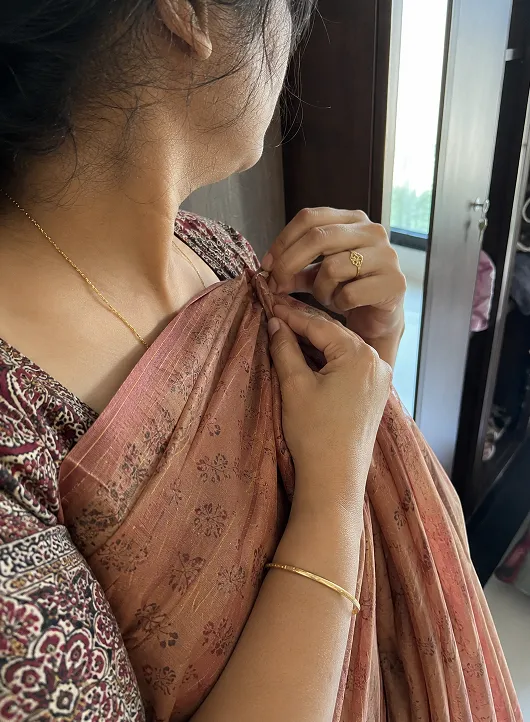
Keep the petticoat slightly higher than you normally would for evening wear. A saree that sits too low will drag when you sit at a desk for long stretches, and you will feel it by afternoon even if it does not show.
Choose a blouse that you can actually raise your arms in without strain. This sounds obvious, but so many women order blouses based purely on how they look in the mirror standing still, not how they feel typing, reaching, or carrying a bag over one shoulder for eight hours straight.
And here’s a small, slightly personal observation. The women who look the most effortless in office sarees are rarely the ones with the most elaborate drape. They are the ones whose saree does not need constant fixing through the day, because they chose fabric and fit that actually cooperates with movement in the first place. Our roundup of trending saree blouse designs is worth a look if you want options that stay this functional without looking plain.
When a Saree Isn’t the Right Call for the Day
Not every office day needs a saree, and pretending otherwise does readers a disservice. If you have back to back client meetings across two office locations, or a day involving a lot of stairs and physical movement, a well tailored salwar kameez or a straight kurta set will genuinely serve you better than a saree that needs babysitting all day. There is no shame in matching the outfit to the actual demands of the day instead of forcing a saree into a schedule it was never suited for. Our detailed piece on salwar kameez for office covers exactly what to look for on those days.
What to Look For When You Buy
Buying the right sarees for office wear is not just about the print you like on screen. Check the fabric weight first, since anything too heavy or too stiff will fight you through a long day rather than move with you.
Run your fingers along the border and pallu edge and check the finishing stitches. Loose or uneven stitching there is usually the first sign of a cheaper production run, and it is where sarees fray first with regular wear.
Also check how the fabric feels when slightly crushed in your palm. If it holds deep creases instantly and does not release them, it will look tired by lunch no matter how well it was ironed in the morning. This kind of detail is easier to catch when you are actually handling fabric regularly, and at Ethora, that comes from our own manufacturing unit in Surat along with everything we source directly from Surat’s local textile market, where this checking happens daily, not occasionally.
Bringing It Together
The right sarees for office wear are not the ones that photograph best on a hanger. It’s the one that still looks the way it did at 9am when you’re leaving the office at 6pm, tired and rushing for the bus. Fabric choice does more work than styling ever will here, so start there before you start thinking about colour or print.
There’s more like this on the Ethora blog if you want to go deeper into fabric and styling before you buy anything. Our store is launching soon, and everything on it will come directly from our own manufacturing unit and Surat’s local textile market, without a middleman in between.
FAQ
Which saree fabric is best for daily office wear in India?
Cotton blends and linen are the most reliable for daily office wear because they breathe well and don’t cling in humidity. Georgette is a strong second choice if you need something with a bit more drape and formality, since its extra body holds a pleat better through movement than a lighter fabric like chiffon.
Can silk sarees be worn to the office regularly?
Silk sarees like tussar or a lighter Banarasi can work for occasional formal office days, but they are not ideal for daily wear because of their weight and the care they need. Wearing heavy silk every day also means more frequent dry cleaning, which adds up in cost and shortens the fabric’s life over time.
How do I keep my saree from slipping through a long work day?
Pin the pallu at two points instead of one, and keep the petticoat fitted slightly higher than usual so the saree doesn’t drag when you sit for long stretches. A fabric with more structure, like georgette or a cotton blend, will also naturally slip less than a very fluid fabric like chiffon.
What should I check when ordering a saree blouse online for work?
Check the fabric composition listed and avoid anything vague like “mixed fabric” without a percentage breakdown, since that usually means lower quality filler material. Also check the stitching around the armholes and shoulder seams in the product photos, since that is where cheap blouses fail first under regular movement. Ethora manufactures directly at its own Surat unit and sources everything else from Surat’s local textile manufacturers, which means the fabric quality and stitching standards come from people who handle this production daily, not from a reseller adding a markup with no real fabric knowledge behind it.
Are printed or plain sarees better for a professional look?
Plain sarees with a subtle woven texture or a small, controlled print both read as professional. What actually matters more than plain versus printed is the contrast level and print size, since a large high contrast print will look busy in a meeting room regardless of how neutral the base colour is.
Picking the right office saree fabric is exactly the kind of decision that gets easier when you’re buying from people who actually handle the fabric every day. Ethora manufactures directly at its own unit in Surat, and for everything outside that range, we source directly from Surat’s local textile manufacturers so you’re never paying a middleman markup. Our store is launching soon, built entirely around that kind of real fabric knowledge.
Pingback: How Many Sarees Do You Need? The Best 4-Step Answer | Ethora