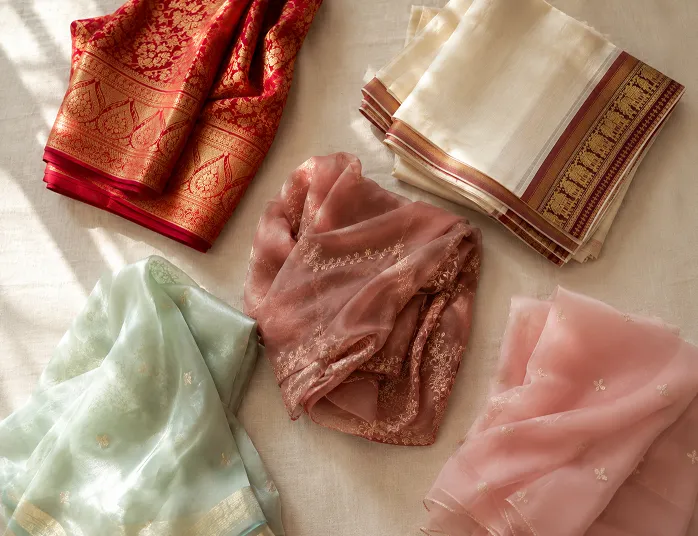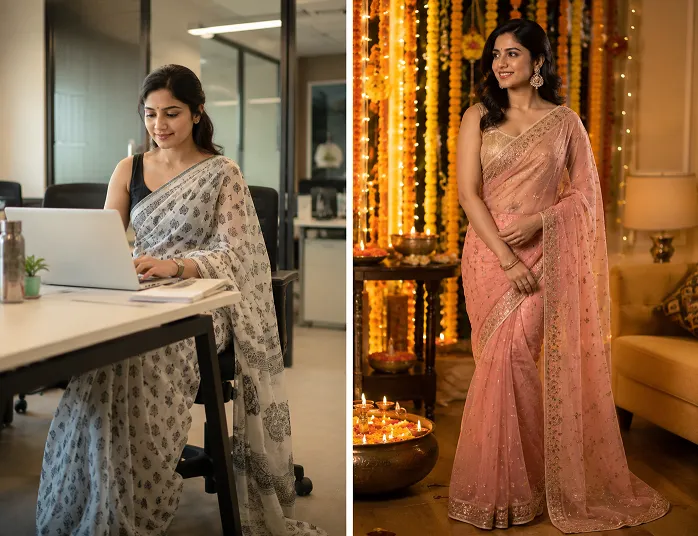
You bought the plain saree because it felt safe. Georgette in a colour that suited you, no border drama, no heavy work to worry about while sitting through a five hour function. But now it’s the morning of the wedding and you’re standing in front of your almirah with three jewellery boxes open, and none of it looks right against a saree with nothing on it to work off.
This happens to almost every woman who owns a plain saree. The fabric is the easy part. The jewellery is where people either get it right or end up looking underdressed in every photo from that day.
Here’s how to actually think about it, not just which pieces to throw on.
Table of Contents
How to Style Plain Saree: The Basic Rule Nobody Explains
The advice you’ve heard a hundred times is true, but usually explained badly: a plain saree needs jewellery to do the talking. When there’s no border, no zari, no print pulling the eye, your neckline and your neck become the entire visual story of the outfit. That’s it. That’s the whole logic behind why a plain saree can carry heavier jewellery than a printed or heavily worked one.
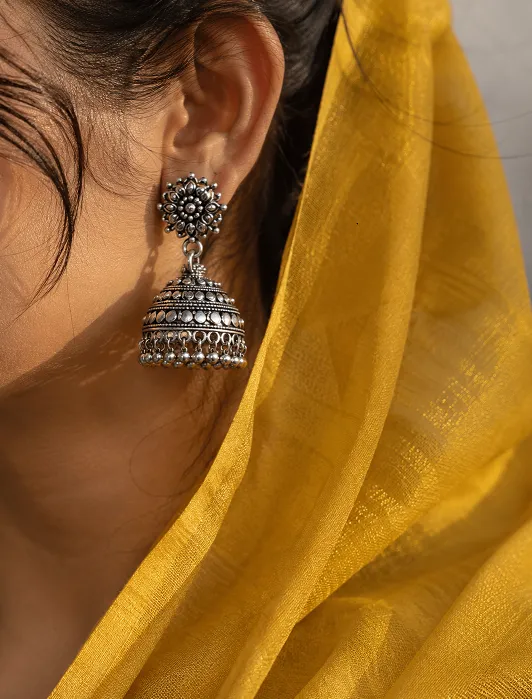
So a temple jewellery choker, a statement kundan necklace, or a set of oxidised silver jhumkas that would look too much against a Banarasi with heavy zari work looks exactly right against plain silk or georgette. The saree gives the jewellery room to breathe. That’s the trade you’re making when you pick plain over printed, and it’s worth remembering when you’re shopping for the jewellery, not just the saree.
Match the Weight of the Jewellery to the Weight of the Fabric
This is where most guides stop at “cotton light, silk heavy” and leave you no better off than before. It’s more specific than that.
Plain chiffon or georgette has almost no structure of its own, so it moves with you when you walk. Heavy jewellery, especially a long layered necklace, will actually drag the pallu down on one side over a few hours. Go for mid weight pieces here: a single statement necklace, not a full set with matching maang tikka and armlets.
Plain silk, on the other hand, has body. It holds its shape, sits on the shoulder without shifting much, and can genuinely carry a full jewellery set without looking cluttered, because the fabric itself has enough weight to balance it out.
Plain mill cotton sits in between. Comfortable enough for statement earrings and bangles, but a heavy necklace will look like it’s fighting the fabric instead of complementing it.
One fabric detail that catches people off guard: modal fabric looks a lot like a soft rayon on the hanger, but it doesn’t cling the same way once Mumbai humidity gets into it. It drapes closer to how silk behaves in heat, which means it can take slightly heavier jewellery than a similar looking rayon saree without going limp by afternoon.
Your Drape Style Changes What Jewellery Actually Makes Sense
This is the part almost nobody talks about, and it matters more than people think. How you drape a saree changes what part of your neck, shoulder and collarbone is actually visible, and that decides which jewellery placement even registers.
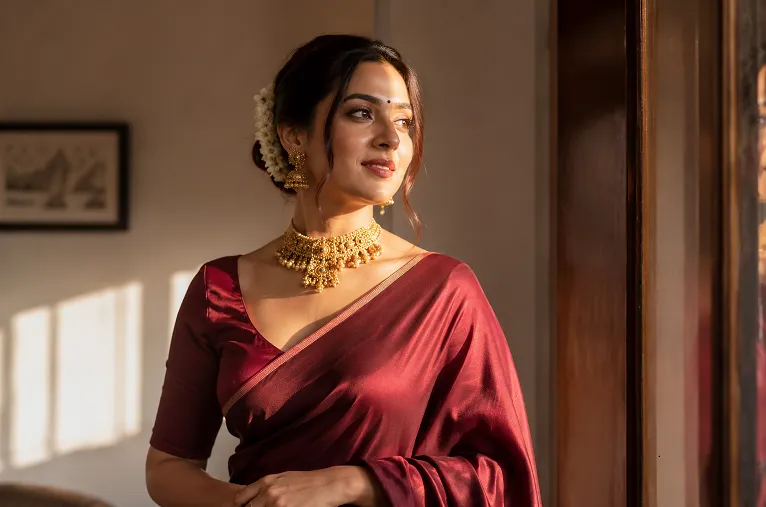
A Gujarati seedha pallu, common across Surat and Ahmedabad, brings the pallu over the right shoulder to the front, which covers more of the chest and one shoulder than a standard Nivi drape. In this style, a long necklace often gets hidden under the pallu fabric. Shorter chokers or a statement piece that sits higher on the neck work better because they stay visible above the drape line.
A Nivi drape, the one most of us default to, leaves the shoulder and neckline more open on both sides, which is exactly why longer necklaces and layered sets photograph so well in this style. There’s simply more open space for the jewellery to sit against.
A Bengali drape, with its wide pleats and the second pallu wrapped differently, exposes the collarbone and shoulder area in a way that suits bold, close fitted chokers rather than anything that hangs long, because a long necklace tends to get lost in the fuller pleating at the front.
Textile historian Ṛta Kapur Chishti spent years documenting exactly this kind of regional variation, and has recorded 108 distinct ways of draping a sari across fourteen Indian states. If you’re curious just how differently a saree can be worn depending on where you’re from, Wikipedia’s overview of regional sari draping styles is a good place to see the range for yourself, everything from the seedha pallu you already know to styles specific to Kerala, Odisha, and the Northeast.
If you’ve ever felt like your jewellery “disappeared” in photos despite looking perfect in the mirror, this is very often why. It’s not the jewellery. It’s the drape hiding it.
Weave Texture Matters More Than You’d Think
Here’s a fabric handling detail that only really comes up once you’ve actually worked with the material, not just styled it. A slubby handloom cotton, the kind with a slightly rough, uneven surface texture, can snag delicate chain jewellery and jhumka hooks over the course of wearing it.
The tiny irregular threads in a handloom weave catch on fine metal in a way that a smooth mill woven cotton or plain silk simply doesn’t, because those surfaces are even and don’t have the same texture for a hook or chain link to grab onto.
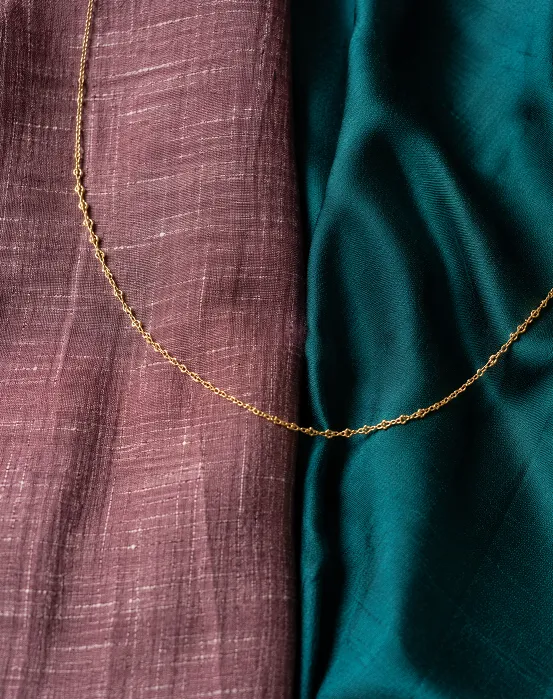
If you’re wearing a handloom cotton with heavy dangling jhumkas, check that the earring back is secure, and avoid extremely delicate layered chains that can catch on the pallu fabric when you move. This isn’t a reason to avoid handloom cotton. It’s genuinely one of the more comfortable fabrics for a full day event. It’s just a detail worth knowing before your favourite chain gets pulled out of shape by evening.
This is also where a real mistake shows up often. Most women pick jewellery based entirely on how it photographs against the saree colour and completely ignore how the fabric surface will actually interact with it over hours of wear. That’s backwards. Check the fabric first, then pick jewellery that suits both the look and the texture.
What Actually Happens by the End of the Day
Every article assumes you’re dressing for one photo outside the mandap. Nobody talks about hour six.
Jhumkas look stunning at 10am and genuinely start to hurt by 6pm, especially the larger oxidised or temple jewellery styles. If it’s a full wedding day, consider studs or smaller drop earrings for the daytime function and save the jhumkas for the evening when you’re mostly seated.
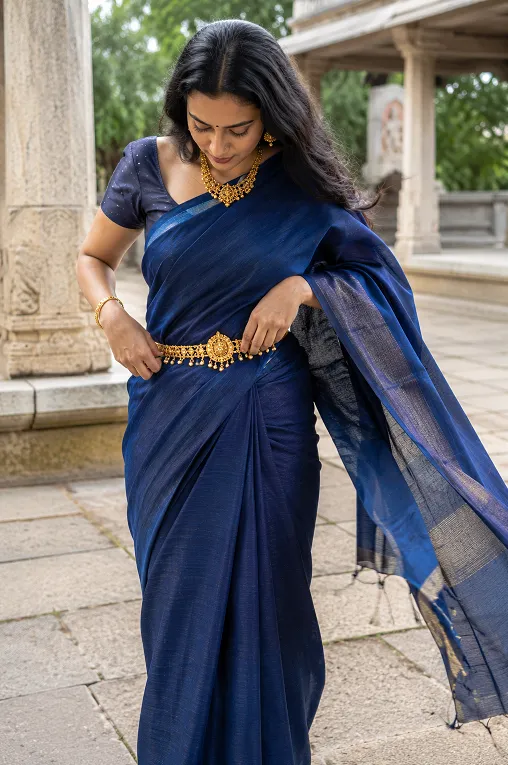
A waist belt over a plain silk saree looks incredible in photos but has a real tendency to slip down slightly as the evening goes on, simply because silk is smoother and doesn’t grip a belt the way cotton or georgette does. If you’re wearing one, check it every couple of hours rather than assuming it’ll hold.
Bangles clinking against a raised handloom weave is a small, specific sound you’ll notice by the third hour of a function, especially near the wrist where the pallu tends to sit if you’re holding it. Not a dealbreaker, just something you’ll feel more than you expect from photos alone.
Unpopular opinion here: everyone tells you to remove your jewellery in stages through the evening to “keep it fresh,” but honestly, over accessorising at the start and then removing pieces one by one through the day looks more put together in photos than adding pieces later. Start heavier, ease off as the day gets long. It reads better on camera and it’s kinder to your ears.
For Navratri or garba nights specifically, the jewellery and drape choices shift again since you’re moving constantly, not standing still for photos (garba night outfit ideas covers that in more detail). And if you’re still deciding between a plain saree and something with more work on it depending on your body type, our saree for body type guide is worth a read before you shop.
What to Look For When You Buy
Once you know how to style a plain saree for the occasion, the buying decision matters just as much. Before you buy, check the pallu edge closely. A well finished plain saree has a clean, even fall at the pallu, not a curling or uneven edge, which usually means the fabric was cut and finished properly rather than rushed.
Rub a small section of the fabric between your fingers. Cheaper plain silk or georgette often has a slightly stiff, papery feel that softens after one wash and loses its drape quality within a few wears, while genuinely good fabric holds its texture wash after wash.
Check the width too. Standard saree width should sit close to 44 to 46 inches, and anything noticeably narrower usually means cut corners in the weaving.
Ethora manufactures its sarees directly at our own unit backed by Pahal Silk Mills in Surat, and for pieces outside our own production, we source directly from Surat’s local textile market, so this advice comes from people who actually handle these fabrics on the floor, not just style them for photos.
Getting the jewellery right on a plain saree isn’t about buying more pieces. It’s about matching what you already own to your drape style, your fabric, and how long you’ll actually be wearing it. Start with the fabric weight, think about your drape before your neckline, and dress for the whole day instead of just the first hour of it.
If this kind of fabric-first thinking is useful, there’s more of it across the Ethora blog worth exploring. Our store is launching soon, with pieces made and sourced directly from Surat’s manufacturing units.
FAQ
Can I wear gold jewellery with a plain cotton saree, or does it look too much?
This is one of the most common questions when people are learning how to style plain saree looks for daytime events. Gold works fine with plain cotton as long as the piece itself isn’t overly ornate. A simple gold choker or jhumkas suit cotton well, but a heavily studded kundan set can look mismatched against a fabric that’s meant to feel casual and breathable.
How do I stop my necklace from getting hidden under the pallu?
This comes down to drape style more than jewellery choice. If you’re using a Gujarati seedha pallu or a Bengali drape, choose a shorter choker style that sits above where the pallu falls, rather than a long necklace that’ll disappear under the fabric.
Is oxidised silver jewellery okay for a wedding, or is it too casual?
Oxidised silver has genuinely moved beyond casual daywear and works well for daytime wedding functions, especially with a plain saree in a strong colour. For the evening reception, most people still lean toward gold or kundan, but that’s a preference, not a rule.
Where can I buy good quality sarees and jewellery-ready blouses online without overpaying?
Check the fabric weight and finishing on the blouse lining before ordering, since a poorly lined blouse won’t sit right under heavier jewellery. Ethora manufactures directly at its own Surat unit and sources everything else from local Surat manufacturers, which means genuine fabric quality without the usual middleman markup once our store launches.
Does the colour of the saree change what jewellery metal I should wear?
To some extent, yes. Cooler saree colours like blues and greens tend to lean better with silver or oxidised jewellery, while warmer tones like maroon, mustard and rust generally sit better with gold, though this is a general lean rather than a fixed rule.
Getting the drape and the jewellery right on a plain saree takes a bit of trial and error, and we’d rather you didn’t have to guess. Ethora makes its sarees directly at our own manufacturing unit in Surat, and for everything outside what we produce ourselves, we source straight from Surat’s local textile manufacturers, so what you get is real fabric quality without layers of markup in between. Our store is launching soon, and we’d love for you to be among the first to shop it.