You are sitting in a tailor’s shop in Surat, flipping through a torn catalogue of blouse back designs, and the tailor is waiting for an answer. Every picture looks nice in isolation. None of them tell you what will actually look nice on you. So you point at whatever the model on Instagram wore last week, hope for the best, and three weeks later you pick up a blouse that photographs fine from the front and looks like an afterthought from the back.
This happens to more women than admit it. Choosing a saree blouse back design is not about trends. It is about understanding your shoulders, your spine length, your back width, and how a particular cut sits on that specific structure. This article walks through what actually works for different body types, and where popular advice about saree blouse back design quietly fails.
Table of Contents
Why the Saree Blouse Back Design Matters as Much as the Front
Most women spend all their attention on the front of the blouse, the neckline, the sleeve length, maybe the embroidery. The back gets decided in the last two minutes of the tailoring conversation, almost as an afterthought.
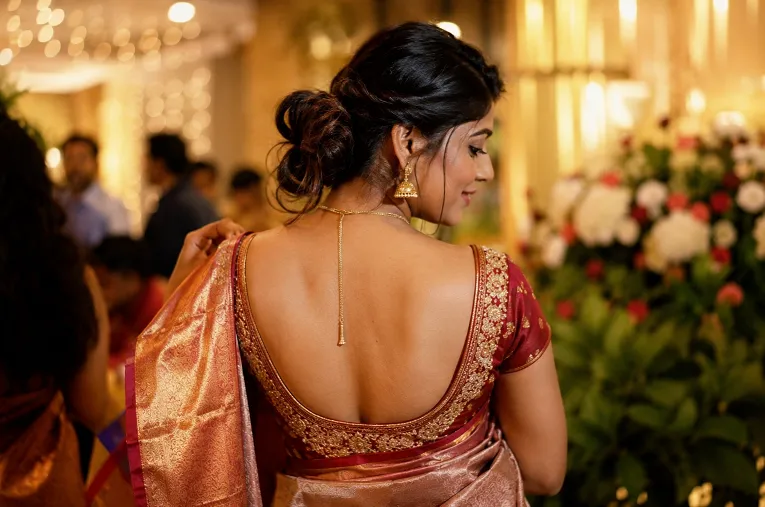
That is a mistake, and a fairly common one. A saree blouse back design changes how the entire outfit reads when you walk away from someone, sit down at a function, or stand for photos at a mandap. At a wedding, people see your back for a significant part of the evening, especially when you are seated. A well chosen back design pulls the whole look together. A mismatched one makes even an expensive silk saree look ordinary.
If you want to see what is actually popular in blouse designs right now before deciding on the back, our roundup of trending saree blouse designs is worth a look before your next tailoring appointment.
If You Have Broad Shoulders
Choosing the right saree blouse back design for broad shoulders comes down to one thing: curves over straight lines. Broad shoulders carry structure well, but a wide back design can sometimes exaggerate the shoulder line rather than balance it. A deep U-back or a rounded scoop back tends to work better than a wide square cut, because the curve softens the shoulder edge instead of running parallel to it.
Avoid boat neck backs with straight horizontal lines. They add visual width exactly where you already have width. If you love the boat neck silhouette, ask your tailor to taper it slightly narrower at the shoulder seam. It is a small change but it makes a real difference in photographs.
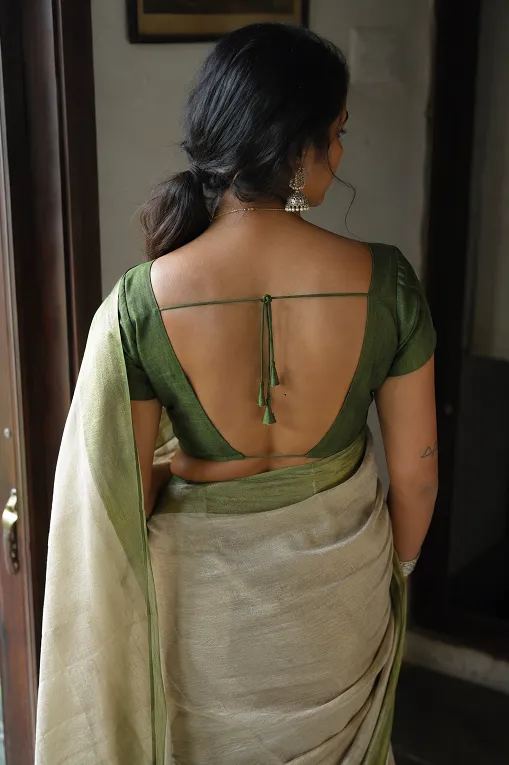
Unpopular opinion: most stylists tell broad shouldered women to avoid backless blouses entirely. That is not accurate. A deep V-back with a single string tie actually elongates the shoulder line rather than widening it. The problem is not backlessness, it is the shape of the cut.
Colour plays into this too, the same way it does with any silhouette. Darker shades along the shoulder line and a contrasting lighter tone lower down can make a broad back look narrower without changing the design itself at all. Our guide on colour combinations for ethnic wear goes into this in more detail if you want to pair the right blouse colour with the right back design.
If You Have a Petite or Small Frame
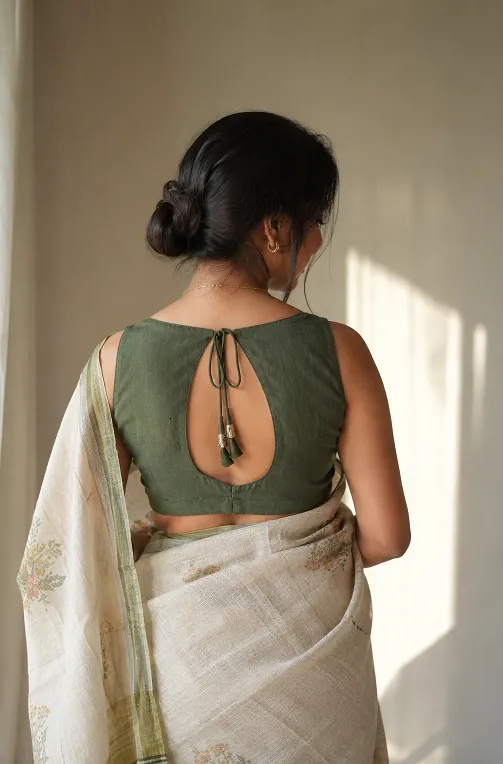
For a petite frame, the saree blouse back design you pick should stay proportional to your torso length rather than copying whatever looks trendy on someone taller. On a petite frame, an oversized back design can overwhelm the proportion of the whole blouse. A keyhole back or a small dori back with tassels works well because it keeps the visual weight compact instead of spreading it across the entire back panel.
Deep U-backs can work too, but keep the depth moderate. A back cut that goes too low on a shorter torso can make the blouse look like it belongs to someone else’s body, borrowed rather than fitted. This is one of those tips nobody explains properly. Depth has to be proportional to torso length, not copied directly from a picture.
Back design is only one piece of the puzzle though. If you want the fuller picture on how draping style and fabric choice work with your overall body shape, our detailed guide on saree styles for different body types covers the rest of it.
If You Have a Fuller Back or Broader Waist
For a fuller back or a broader waist, the saree blouse back design that works best is one that adds some visual structure instead of leaving the entire back bare. This is where most tailoring advice becomes generic and unhelpful, telling women to just “choose something flattering” without saying what that actually means.
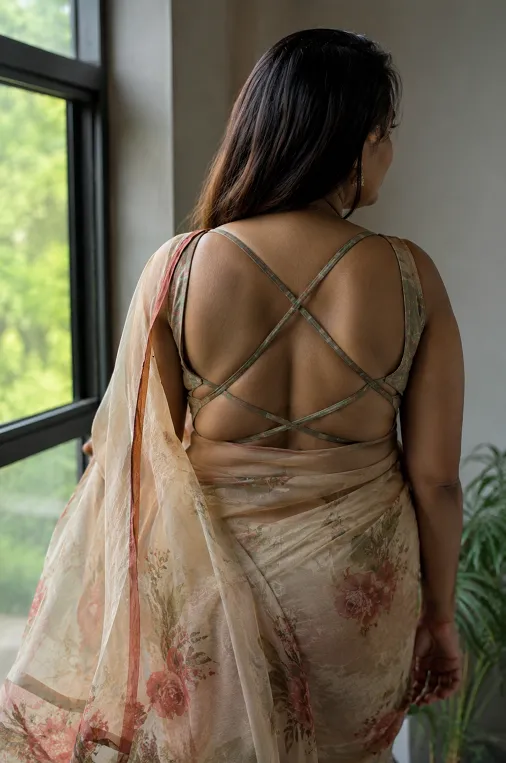
A halter back with a well structured strap distributes attention upward, toward the neck and shoulders, instead of drawing the eye across the width of the back. A criss-cross back with two or three straps also works well because the diagonal lines break up horizontal width visually, the same principle tailors use with vertical stripes on kurtas.
What does not work as well is a very low, wide U-back without any strap detail. It removes structure exactly where structure is doing you a favour. A back design with some visual interruption, whether a strap, a tie, or a pattern, almost always looks more considered than a completely bare expanse of fabric.
The Fabric Actually Changes How the Back Design Looks
This is the part most styling articles skip completely, and it matters more than people realise. The fabric you choose changes how any saree blouse back design ultimately looks and holds up through the day.
Georgette has more body than chiffon, so a deep U-back or halter cut holds its shape through the evening instead of sagging by the third hour of a function. Chiffon, on the other hand, moves beautifully and catches light in a soft, floating way, but a deep back cut can lose its structure faster, especially in Mumbai humidity where the fabric tends to soften further as the evening goes on.
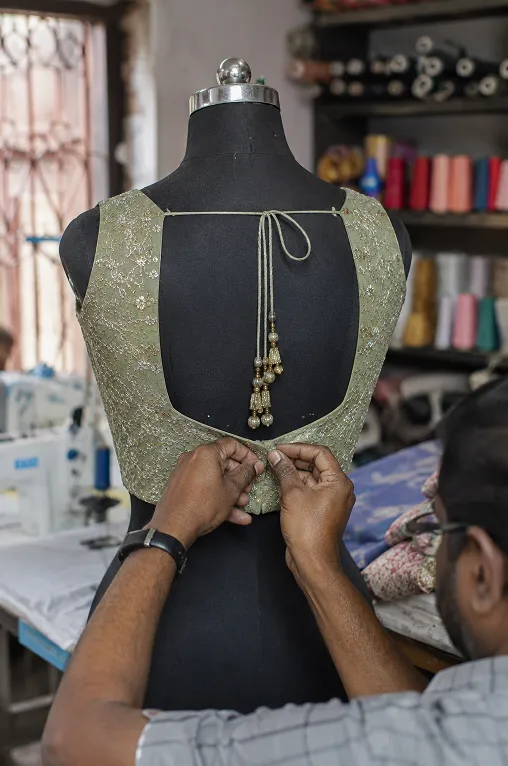
Banarasi silk blouses are heavier than they look on the hanger. If you are choosing an elaborate back design in silk for a full day wedding function, the weight sits on the shoulder straps by evening, and a thin string back can start digging in. For heavier fabrics, a slightly wider strap or a fabric-covered dori handles the weight far more comfortably than a delicate thread tie.
If humidity and long wear time are your main concern, especially through a Mumbai summer or a full day wedding function, our breakdown of the best saree fabric for summer goes deeper into which fabrics actually hold their shape and stay comfortable through the day.
The One Mistake Almost Everyone Makes
Most women choose a saree blouse back design straight off a picture they saw online, without accounting for their own blouse fit underneath it. That is the wrong way to do it, and it is worth saying plainly instead of softening it into vague advice.
A backless design assumes the blouse fits snugly around the ribcage first. If the front and side fit are even slightly loose, a backless cut will gape, shift, and look unfinished no matter how well the pattern itself was designed. Get the base fit right before you even discuss the back design with your tailor. Fit comes first. Design comes second. Always, without exception.
Conclusion
The saree blouse back design you choose should work with your body, your fabric, and how long you will actually be wearing the blouse that day, not just how it photographs on someone else. Get the base fit sorted first, pick a fabric that suits the depth and structure you want, and let the design follow from there. If you are still figuring out what works for your saree style overall, there is more on the Ethora blog worth reading before your next fitting.
Which blouse back design is best for daily wear sarees?
For daily wear, a simple round or U-back with a moderate depth works best because it does not require constant adjustment. Deep backless designs are better saved for evening or festive wear where you are not moving around as much through the day.
Does blouse back design depend on saree fabric too?
Yes, and this is often overlooked. A heavier saree like Kanjeevaram or Banarasi pairs better with a slightly structured back design, while a lighter georgette or chiffon saree can carry a more delicate, intricately cut back without looking unbalanced.
Can a deep back design work for an office-appropriate saree look?
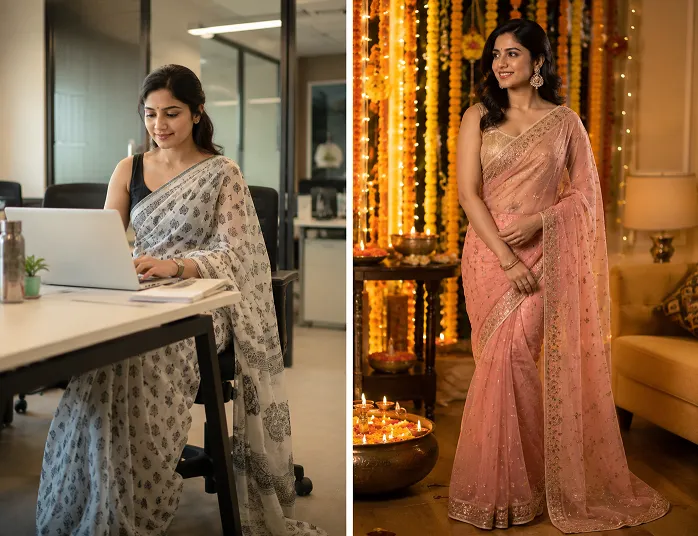
It can, but keep the depth moderate and avoid completely backless cuts for the office. A tasteful U-back or a keyhole design looks polished without being inappropriate for a work setting.
How do I know if a backless blouse will suit me?
Backless blouses work best when the front and side fit is already snug, since a loose fit will cause gaping at the back. Try the base blouse fit first, then decide on the back design with your tailor rather than choosing the design before the fit is finalised.
Is a high neck front with a deep back design a good combination?
Yes, this is actually a popular and flattering pairing because the high front balances the deep back, giving the outfit a deliberate, styled look rather than an unbalanced one. It also works well for women who want drama at the back without showing too much at the front.