
You have probably typed “punjabi suit vs salwar kameez” into Google while standing in front of a shop rack, or scrolling through an online store at 11pm, trying to figure out why the same outfit gets called two different names. You are not confused because you do not know fashion. You are confused because the internet has made this sound like a real comparison when it is not one.
Here is the short version, and we will get into the long version right after. A Punjabi suit is a salwar kameez. Same garment, different name, mostly a regional thing. What you are actually trying to compare is something else entirely, and by the end of this article you will know exactly what that is.
Table of Contents
Punjabi Suit and Salwar Kameez Are the Same Garment
Let’s clear this up properly, because most articles on this topic dance around it instead of just saying it.
Salwar kameez is the umbrella term. It means a kameez, which is the top, paired with a salwar, which is the bottom, usually worn with a dupatta. That’s it. That’s the whole category.
A Punjabi suit is simply a salwar kameez that originated from Punjab, and over time the name stuck as a way to describe a certain look within that category, usually one with a fuller, more festive silhouette. In Punjab, and in a lot of North Indian usage, people say “Punjabi suit” the way people in other regions just say “suit” or “salwar suit.” The word “Punjabi” here is describing the origin, not a separate garment structure.
So when someone asks “punjabi suit vs salwar kameez,” they are not really comparing two different things. They are usually asking one of these three questions without realising it:
- Straight Punjabi salwar versus Patiala salwar, meaning two different cuts within the same category
- Punjabi suit versus Pakistani style salwar suit, meaning two different regional silhouettes
- Punjabi suit as a general term versus salwar kameez as the general term, which is really just a naming confusion
We are going to answer all three, because this is genuinely what most people mean when they type this search, and almost nobody explains it clearly before jumping into styling tips.
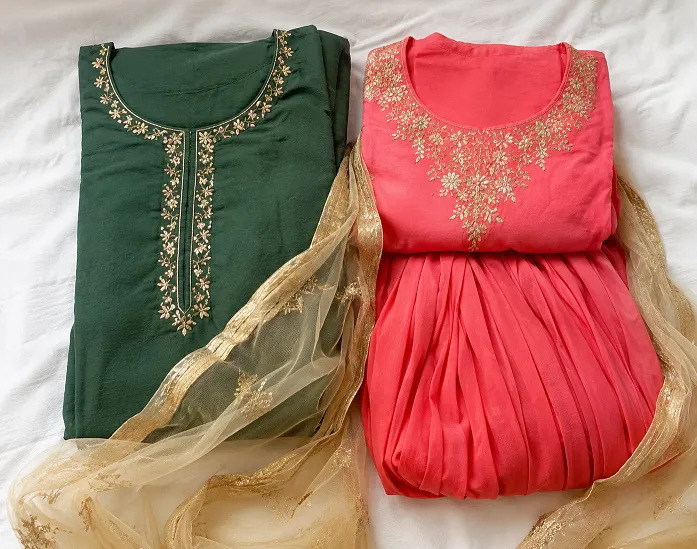
Straight Punjabi Salwar vs Patiala Salwar: The Real Construction Difference
This is the comparison most people actually mean, even if they don’t know the correct terms for it yet. And this one is not a styling opinion. It is a fabric and construction difference you can see and feel.
A straight cut Punjabi salwar is stitched close to the leg with minimal pleating at the waist. It uses less fabric overall, sits closer to the body, and moves with you rather than around you.
A Patiala salwar is built completely differently. It uses significantly more fabric, sometimes almost double, pleated tightly into the waistband so the extra volume falls in soft folds down the leg. That is where the fullness comes from. It is not the fabric type, it is the yardage and the pleat count. A Patiala with proper pleating uses two panels of fabric stitched together and gathered at the waist, which is exactly why a good one holds its shape for years and a cheap one goes flat after a few washes.
This is not a small detail. It changes how the outfit feels on your body for an entire day.
If you want the fuller backstory, the Patiala salwar’s royal Punjab origins are well documented, including why it started as menswear worn by the royal court before it slowly became a women’s staple through the mid-20th century.
The straight salwar stays cooler because there is simply less fabric touching your legs, and less fabric means less heat trapped against the skin. If you have ever worn a Patiala salwar through a Surat afternoon in September, you know exactly what we mean by heavy. It looks stunning in photos and it genuinely does feel warm by 4pm.
If you have already sorted out the salwar question and are now stuck between silhouettes altogether, our anarkali vs straight salwar kameez comparison breaks down that decision the same way, cut by cut rather than just by looks.
Which One Is Actually Easier to Get Through a Long Day
This is where most articles get vague and say things like “both are comfortable in their own way,” which tells you nothing.
Here is the honest answer. If you have a full wedding day ahead of you, a garba night that runs past midnight, or a function where you are standing, greeting people, and walking between rooms for hours, the straight Punjabi salwar is the more forgiving choice. It is lighter, less bulky at the waist and hips, and does not need constant adjusting.
The Patiala salwar looks more festive and photographs beautifully, there is no argument there. But the pleated volume that makes it look rich also adds weight around your waist and legs, and by the end of a long event you will feel it, especially if the fabric is a heavier georgette or silk blend rather than a lighter cotton or chanderi.
Most women choose a Patiala suit purely because it photographs well for the wedding album, without thinking about whether they will be standing in it for eight hours straight. That is a real mistake we see often, and it is worth thinking through before you buy, not after you have worn it once and regretted it by 9pm.
If your day involves a lot of movement, sitting on the floor for rituals, or dancing, go straight cut or a slightly relaxed Patiala with fewer pleats. Save the heavily pleated, high volume Patiala for events where you are mostly seated or posing for photos rather than moving around all evening. If garba night specifically is what you are planning around, our Navratri outfit ideas for garba night covers what actually survives hours of movement versus what only looks good standing still.
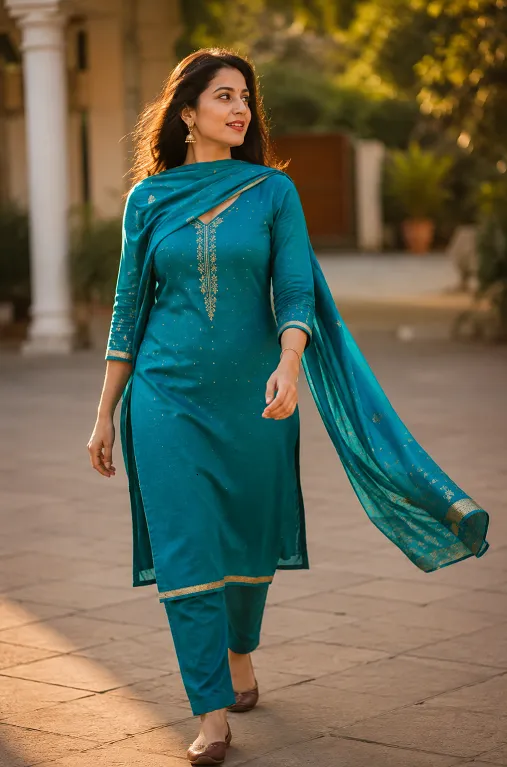
Punjabi Suit vs Pakistani Suit: The Other Comparison People Actually Mean
Sometimes the search is not about the salwar at all. It is about the overall silhouette, and here the comparison is Punjabi suit versus Pakistani style suit.
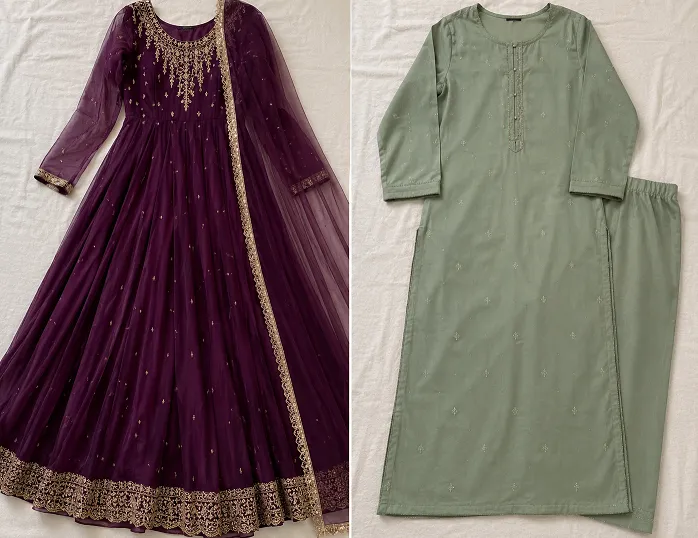
A Punjabi suit typically has a shorter kameez, often knee length or just above, paired with a fuller salwar, and tends to lean bright and festive with heavier embroidery on the neckline and sleeves.
A Pakistani suit usually has a longer kameez, often falling below the knee or close to ankle length, paired with a straighter, narrower trouser or churidar, and the embroidery tends to be more spread across the fabric rather than concentrated at the neckline. The overall look reads more elegant and flowy, less about volume and more about drape.
Neither is better. They serve different moods. A Punjabi suit feels celebratory and loud in the best way. A Pakistani suit feels more like evening wear, the kind of outfit that photographs well under soft indoor lighting at a dinner or reception rather than a daytime function.
Fabric Actually Changes How Both of These Wear
This is the part most styling articles skip entirely, and it matters more than the cut does.
Georgette has more body than chiffon, so it holds a pleat structure better when you are walking, which is exactly why most heavily pleated Patiala salwars are made in georgette rather than softer fabrics. A Patiala in pure chiffon or soft cotton will not hold its pleat shape the same way, it will look nice on day one and start sagging by the third wear.
Cotton and cotton blends work beautifully for a straight Punjabi salwar because the whole point of that cut is comfort, and cotton breathes in a way silk blends simply do not. If you are wearing a straight suit to office or college through a Mumbai humid afternoon, cotton or a cotton silk blend will save you from that sticky, clingy feeling by 2pm. We have gone deeper into which fabrics actually hold up through a full working day in our guide on salwar kameez for office wear, if that is the context you are shopping for.
This is really the point of the whole category. The same silhouette that looks loud and festive for a mehendi or haldi function can look composed and formal for office or an evening event, and that shift comes entirely from fabric weight, embroidery placement and colour, not from the garment itself changing.
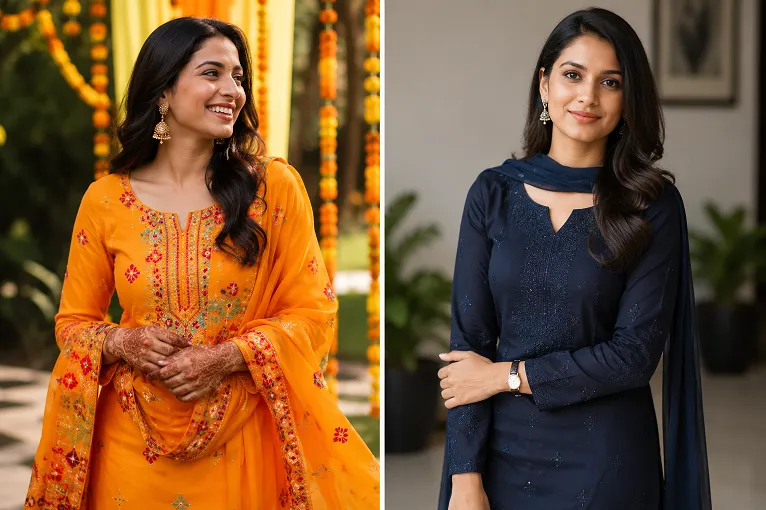
Here’s an unpopular opinion. Everyone tells you to pick dupatta fabric to match the kameez exactly, but a slightly heavier dupatta in a lighter fabric outfit actually drapes better over the shoulder and stays in place longer, instead of sliding off every time you move. A pure chiffon dupatta on a cotton suit looks pretty in a photo and is genuinely annoying to manage all day, especially if you are getting in and out of an auto rickshaw or navigating a crowded Navratri ground.
What Actually Matters Before You Purchase
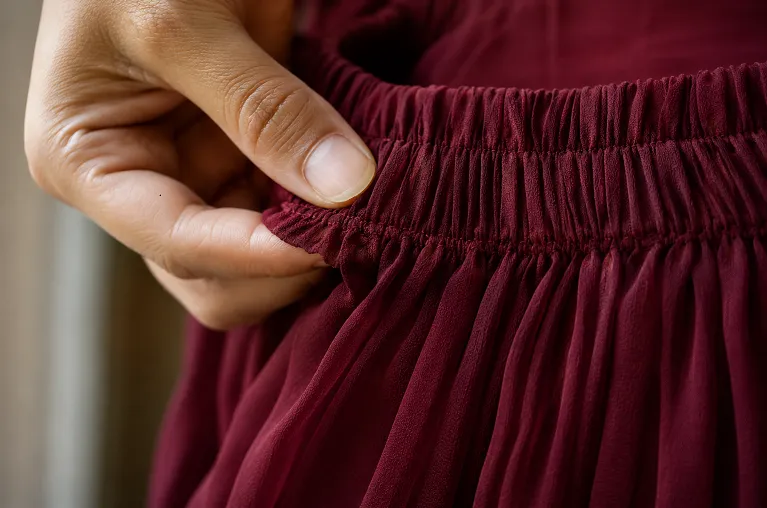
Most of the punjabi suit vs salwar kameez confusion actually disappears the moment you shop with the right checklist in hand. Before you buy a Patiala suit, check the pleat count and the fabric yardage, not just how full it looks on the hanger. A well pleated Patiala uses two full fabric panels stitched and gathered properly into the waistband, and this is what keeps the pleats structured wash after wash. A cheaply made one uses less fabric with fewer, wider pleats that look similar in a photo but flatten out within a few wears and lose that signature drape.
Run your hand along the waistband seam if you can. Tight, even pleating means the tailor actually gathered proper yardage, not just gathered a smaller amount of fabric to fake the volume. This one check tells you more about quality than the print or embroidery ever will.
While you have the fabric in hand, turn the kameez inside out and check the seam stitching too. Dense, even stitches without loose threads tell you the tailoring will hold up wash after wash, not just the pleats.
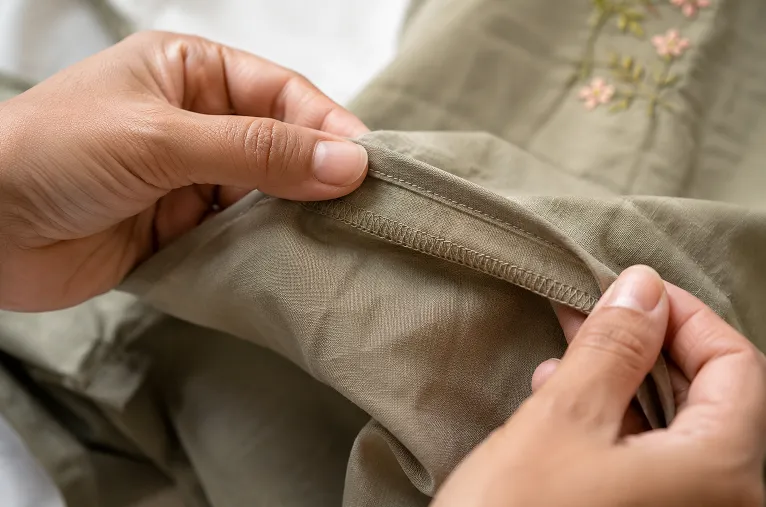
We say this with some confidence because this is exactly what we deal with at our manufacturing unit in Surat every day, and it is the difference we look for before any Patiala design leaves the floor.
Conclusion
If you remember one thing from this entire article, remember that the punjabi suit vs salwar kameez debate was never really about two different garments. It was always straight cut versus Patiala, festive versus practical, and fabric weight versus how long you will actually be wearing it that day. Pick based on your event, your day’s schedule, and how much movement you need, not just what looks fullest on a hanger. You know your day better than any trend does.
Explore more styling comparisons like this on the Ethora blog, we break down these real differences so you are not guessing at the store. Our store is launching soon, with pieces manufactured directly at our Surat unit and sourced from Surat’s own textile market, so what reaches you comes straight from the source.
FAQ
Is a Punjabi suit different from a salwar kameez?
No. The punjabi suit vs salwar kameez question comes up mostly because of naming, not garment structure, since a Punjabi suit is simply a salwar kameez that originated from Punjab. What people usually mean to compare is the cut, such as straight salwar versus Patiala salwar, rather than two separate garments.
Which is more comfortable, straight salwar or Patiala salwar?
A straight cut Punjabi salwar is generally more comfortable for long days because it uses less fabric and sits closer to the leg, keeping you cooler. A Patiala salwar looks fuller and more festive but the extra pleated fabric adds warmth and weight over a long event.
Can I wear a Patiala suit to college or office?
You can, but a lighter cotton Patiala with fewer, softer pleats works better for daily wear than a heavily pleated georgette one, which suits festive or wedding occasions more. For office wear, a straight cut suit in cotton or a cotton silk blend is usually the easier choice for a full working day.
How do I know if a salwar kameez fabric is good quality before buying online?
Check whether the fabric has enough body to hold its shape, georgette and good quality cotton silk blends hold pleats and structure far better than very thin, cling-prone fabrics. At Ethora, we manufacture directly at our own unit in Surat and source everything else from Surat’s local textile manufacturers, so you are getting factory level fabric knowledge without the usual middleman markup.
What is the difference between a Punjabi suit and a Pakistani suit?
A Punjabi suit usually has a shorter kameez with a fuller salwar and more concentrated embroidery around the neckline, giving it a festive feel. A Pakistani suit has a longer, flowier kameez with a straighter trouser or churidar and embroidery spread across the fabric, giving it a more elegant, evening wear feel.
Trying to decide between a straight Punjabi salwar and a Patiala for your next function? The pleat count and fabric weight matter more than the print, and that is exactly what we focus on. We manufacture at our own unit in Surat, and for pieces outside our range, we source directly from Surat’s local textile manufacturers, so every detail comes from people who actually work with these fabrics daily. Our store launches soon, built entirely around that kind of quality.
Pingback: Palazzo Suit Vs Salwar Kameez: 3 Honest Differences | Ethora