
The anarkali vs straight salwar kameez question sits in the back of every Indian woman’s mind the moment she opens her wardrobe for a function. The salwar kameez you reach for is probably one of two things: a flowy anarkali you pull out when you want to feel dressed up, or a straight kurta you grab when you need to look put together without thinking too hard. Most Indian women navigate their entire ethnic wardrobe through these two silhouettes without ever really understanding why one works for some occasions and the other does not, or why the same outfit that looked stunning on a mannequin felt completely wrong the moment you put it on.
This is not about body type rules. It is about understanding what each silhouette actually does, how the fabric behaves, and which one genuinely serves you depending on where you are going, what season it is, and what you need to feel comfortable in.
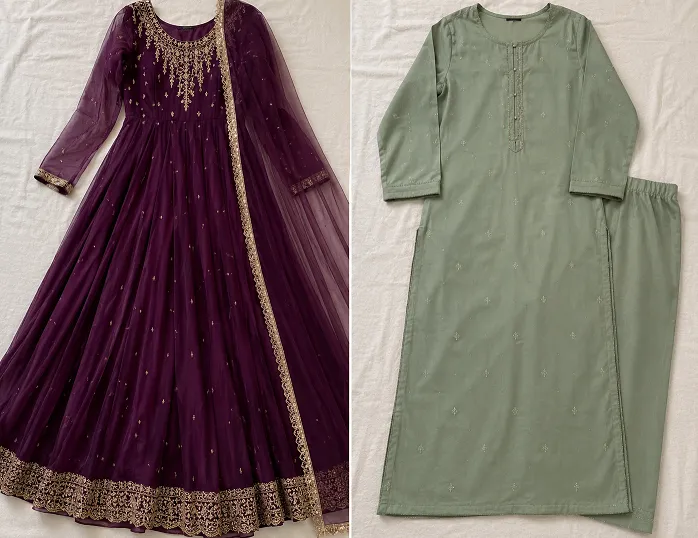
Table of Contents
The Real Difference Between Anarkali and Straight Cut (It Is Not Just the Flare)
Most people think the anarkali vs straight salwar kameez difference is just about the bottom silhouette. Anarkali flares out, straight kurta falls straight. Simple. But that is a surface-level reading of what these silhouettes do to how you look and feel throughout the day.
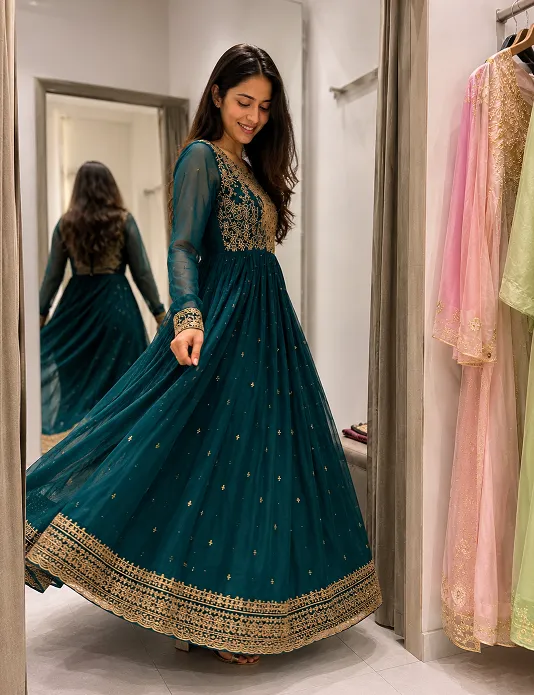
An anarkali creates volume from the waist or chest downward. Depending on where the flare begins, it can completely transform the proportion of your torso to your lower half. A high-flare anarkali, one that opens from just under the bust, creates the illusion of a defined waist even when you have not cinched anything. A mid-flare anarkali, which opens from the hip, gives you more of a princess silhouette and works better if you have narrower hips and want to add visual balance.
A straight salwar kameez does something entirely different. It draws the eye in a clean vertical line from shoulder to hem. There is no expansion, no drama. What you see is what you get, which is exactly why fit matters more in a straight cut than in any other silhouette. A slightly-off straight kurta shows immediately. An anarkali forgives a lot.
This is not a flaw in the straight cut. It is a feature. That clean line is precisely why straight salwar kameez for office settings became the default: it reads as polished, controlled, and effortless when the fit is right.
What Fabric Does to Each Silhouette (And Why This Matters More Than You Think)
Here is where most fashion advice goes wrong. It tells you which silhouette to choose but says nothing about what fabric that silhouette needs to actually look good.
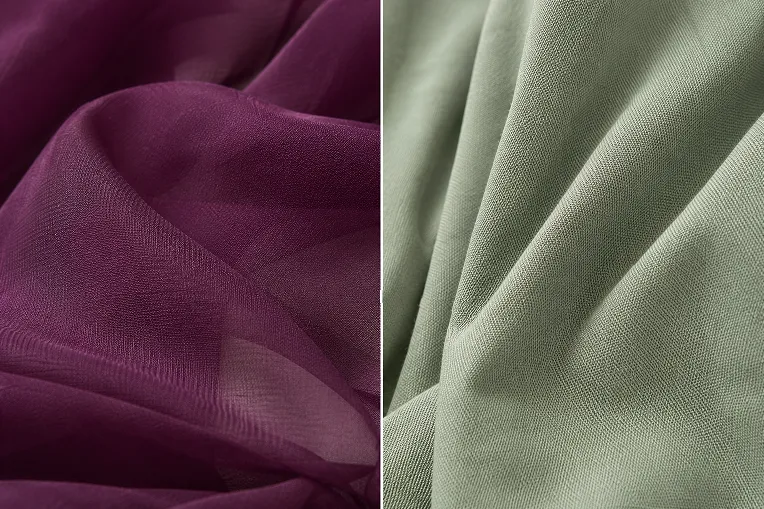
An anarkali depends entirely on how the fabric moves. Georgette holds the flare better than chiffon because it has more body. There is a slight weight to it that lets the pleat fall cleanly when you walk rather than clinging to your legs or going flat. Chiffon anarkalis can be beautiful, but they need a good underlining or they collapse. If you have ever bought an anarkali that looked full and dramatic in the shop and then came home to something that deflated the moment you moved, the fabric is why.
If you want to understand exactly why georgette drapes differently from chiffon at a fabric level, this georgette fabric guide breaks it down clearly.
For straight kurtas, the stakes are different. Cotton and linen are workhorses for a reason. They fall cleanly, they breathe, and they do not cling in the kind of humidity you deal with in Surat or Mumbai through June and July. But here is the thing nobody tells you: modal and rayon look almost identical on the hanger, but they behave completely differently on the body. Rayon clings in the heat. Modal does not. If you have ever worn a straight kurta in summer and spent the whole day tugging it away from your body, check the label. Chances are it was rayon.
Which One Actually Works for Which Occasion
Anarkali suit styles come into their own at celebrations: Navratri garba nights where the flare catches the light and moves with you, Diwali parties where you want to look festive without the effort of a saree, wedding functions where you need something that photographs beautifully. There is a reason the anarkali became the default choice for mehendi ceremonies across North and West India. It is a silhouette that performs.
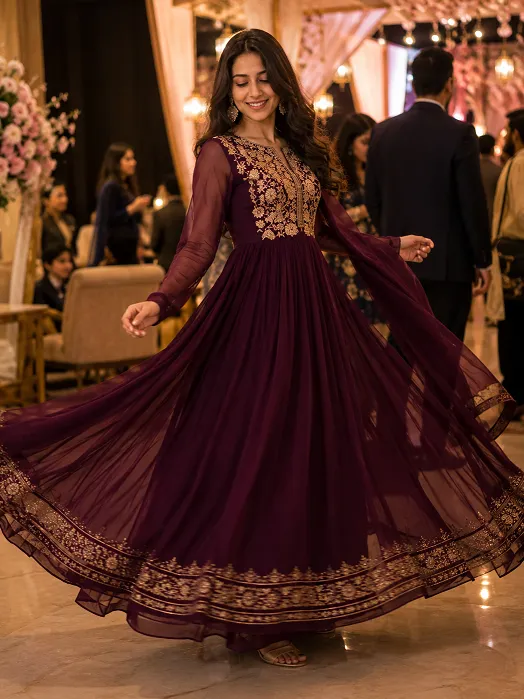
But the anarkali has limits. A floor-length anarkali at a daytime office in July is uncomfortable in a way that has nothing to do with style. You are managing fabric in the heat, you are careful going up stairs, and by afternoon the hem has seen better days. This is a practical point, not a fashion judgment.
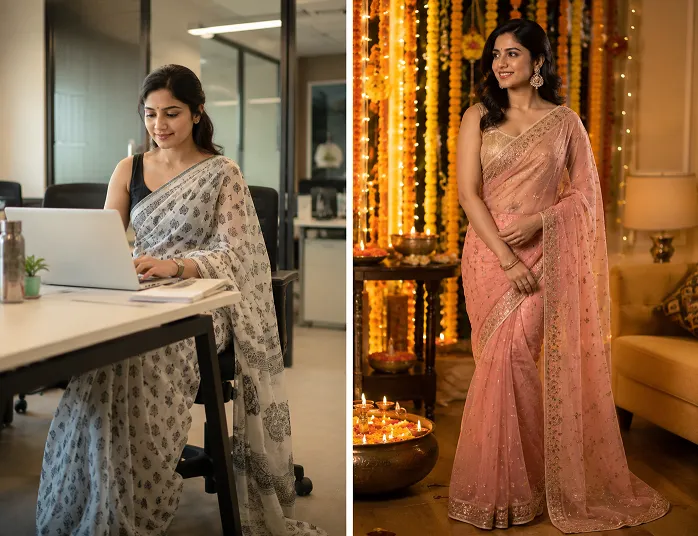
Straight salwar kameez for office settings works because it does not demand your attention once you put it on. You can sit at a desk, move around, attend a meeting, grab lunch, and the outfit stays exactly where you left it. For college, for work, for casual family visits, the straight cut carries you through the day without effort.
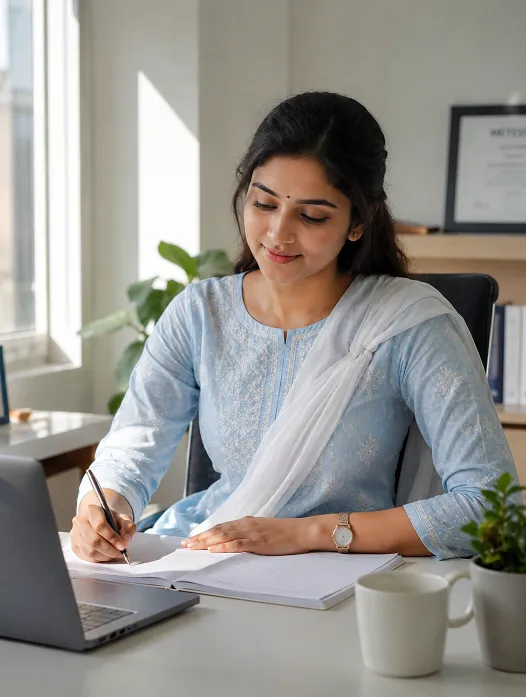
One genuinely useful rule: if you will be sitting for most of the day, go straight. If you will be standing, moving, and being seen, go anarkali.
The Mistake Most Women Make When Choosing Between the Two
Most women choose a salwar kameez based on how it looks when they are standing still in front of a mirror. That is the wrong way to do it.
Walk in it. Sit down in it. If you are buying an anarkali, check how the flare sits when you are seated. Some cuts bunch up awkwardly at the front. If you are buying a straight kurta, check that the side slits are high enough that you can actually take a normal stride without the fabric pulling across the thighs.
I have seen women buy beautiful straight kurtas that were cut too narrow at the hem, and they spend the whole day taking tiny shuffling steps. I have seen anarkalis chosen because they looked dramatic, worn once to a wedding, and then never touched again because the floor-length style turned out to be completely impractical for every other occasion in the woman’s actual life.
Buy for your real life, not your best case scenario.
The Unpopular Opinion About Anarkalis and Body Type
Every fashion article will tell you that anarkalis are universally flattering and straight cuts work best for certain body types. Here is my actual opinion: a poorly fitted anarkali is more unflattering than a well-fitted straight kurta on literally any body type.
The anarkali’s forgiveness has a limit. If the waist seam sits in the wrong place on your body, too high, too low, or not where the garment’s waist is supposed to be, the entire silhouette becomes formless. You look like you are wearing a bell, not like you are wearing a beautifully draped outfit.
And the idea that straight cuts only work for slim women is genuinely outdated. A straight kurta in the right length, with the right neckline and a well-chosen bottom, palazzo pants rather than a churidar if you want a relaxed silhouette, works on every body. The length matters. Mid-thigh hits differently than hip length, and both hit differently than a longer tunic cut. [Internal link: complete guide to kurta lengths by occasion]
The silhouette is not the determining factor. The fit and the length are.
The same logic applies to sarees too. If you have ever struggled to figure out which saree works for your body, this guide on choosing a saree for your body type is worth reading.
How to Build a Wardrobe That Includes Both
You do not have to choose one and stick with it forever. The practical answer for most Indian women with a real wardrobe and real occasions is to own both, but to be intentional about which you invest in.
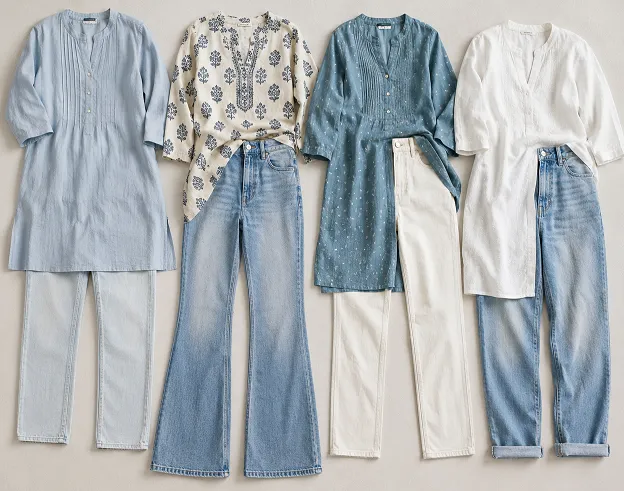
If your life involves regular office or college days and occasional functions, two or three well-fitted straight kurta sets that you can dress up or down will serve you more than a wardrobe full of occasion-wear anarkalis. Straight kurtas pair with churidar, with palazzo, and if you want to wear them with jeans, we have a full guide on how to style a kurti with jeans without it looking thrown together. The versatility is real.
If you have more functions and fewer regular daily occasions in ethnic wear, one or two quality anarkalis in occasion-appropriate fabrics, a heavier embroidered one for weddings, a lighter printed one for daytime functions, is enough. You do not need ten.
And if you are buying just one piece right now? Think about where you will wear it in the next three months. Be specific. The answer to anarkali vs straight salwar kameez is always: which one fits your actual calendar, not your ideal one.
[Internal link: best salwar kameez styles for office wear]
Conclusion
When it comes to anarkali vs straight salwar kameez, the silhouette you choose matters less than the fit, the fabric, and the occasion you are actually dressing for. An anarkali in the right georgette with the right waist placement looks extraordinary. A straight kurta in good cotton with proper side slits is quietly unstoppable for everyday wear. Know what you are walking into, know what the fabric is doing, and make the choice from there. For more honest, fabric-first fashion thinking from people who actually understand how Indian clothes are made, keep reading on the Ethora blog.
FAQ
Which is better for a wedding, anarkali or straight salwar kameez?
For weddings as a guest, an anarkali in a richer fabric such as net, georgette, or embroidered silk is almost always the more appropriate and photograph-friendly choice. If you are attending a daytime outdoor wedding in summer, a straight anarkali (floor-length but with minimal flare) in a breathable fabric like chanderi silk gives you the elegance without the weight. Save heavy embroidered floor-length anarkalis for indoor evening functions.
Can a short girl wear an anarkali?
Yes, but length and flare placement matter. A floor-length anarkali with a high flare creates a long vertical line that works well for petite frames. Avoid wide horizontal embroidery bands at the hem, as they visually cut the silhouette. Pairing with slight heels helps, but it is not required.
What is the most comfortable salwar kameez style for office in summer?
A straight cotton or linen kurta, slightly below the knee, with wide-leg pants or a cotton palazzo. Avoid synthetic blends regardless of how they look. They trap heat in a way that becomes unbearable by afternoon. If your office is heavily air-conditioned, a light chanderi straight kurta is a good middle ground: it breathes but also looks polished.
Can I wear an anarkali without a dupatta?
Depends on the occasion and the neckline. Anarkalis with higher necklines such as boat neck, round neck, or mandarin collar wear cleanly without a dupatta, especially for daytime occasions. For more formal or religious settings, a dupatta is usually expected. If you are skipping it for comfort, a statement earring or neckpiece fills the visual space the dupatta would have occupied.
Which salwar kameez style is best for someone who sits at a desk all day?
Straight kurta, without question. An anarkali bunches and creases when seated for long periods, and the fabric, especially if it is layered net or embroidered, becomes uncomfortable. A mid-thigh straight kurta in cotton or modal with a slim churidar or straight pants is the most practical desk-work outfit in Indian ethnic wear. One detail most people miss: make sure the side slits on the kurta are at least 10 to 12 inches high. Anything shorter and you are tugging at the fabric every time you cross your legs.
Pingback: Kurta Styling For College: 10 Easy Ways To Wear A Plain Kurta | Ethora
Pingback: Colour Combinations For Ethnic Wear That Actually Work | Ethora
Pingback: Best Navratri Outfit Ideas: Your Complete Garba Night Guide | Ethora
Pingback: Punjabi Suit Vs Salwar Kameez: 3 Genuine Terms Explained | Ethora
Pingback: Kurti For Pear Shaped Body: 4 Proven Cuts That Work | Ethora
Pingback: Salwar Kameez For Apple Shaped Body: 3 Honest Fixes | Ethora
Pingback: Salwar Kameez For Rectangle Shaped Body: 7 Confident Cuts | Ethora