
It is 6:40 in the evening, the function starts at 7, and you are standing in front of the mirror with six metres of fabric in your hands and no one around to help with the pleats. This is the exact moment that makes women start asking about pre-stitched sarees. Not because they do not love the traditional saree. Because they have been burned by the clock one too many times.
This article is not going to tell you one side of the pre-stitched saree vs traditional saree debate is simply better than the other. That would be lazy. Instead, we are going to look at what genuinely changes between a pre-stitched saree and a traditional saree when it comes to comfort, how it looks in photos, how it holds up through a long day, and what it actually costs you in the long run. By the end, you will know which one fits your body, your event and your patience level, because those three things matter more than any generic styling advice.
What a Pre-Stitched Saree Actually Is
A pre-stitched saree, sometimes called a ready to wear saree, is not a completely different garment. It is the same saree fabric, but the pleats and the pallu have already been stitched into place at the factory or by a tailor, and the whole thing is attached to a waistband, almost like a skirt with a pallu hanging off it. You step in, you pin it at the shoulder, and you are done in under two minutes.
The pleats you see are permanent. They do not move, they do not need adjusting through the evening, and they will look exactly the same at 11pm as they did at 7pm. That consistency is the entire selling point.
The trade off is that you lose control. With a traditional saree, you can adjust the pleats tighter or looser depending on how you are feeling that day, or make the pallu sit a certain way for a certain neckline. With a pre-stitched saree, what you see in the box is what you get. If the fit is slightly off at the waist, you cannot fix that the way you can with a traditional saree tucked into a petticoat.
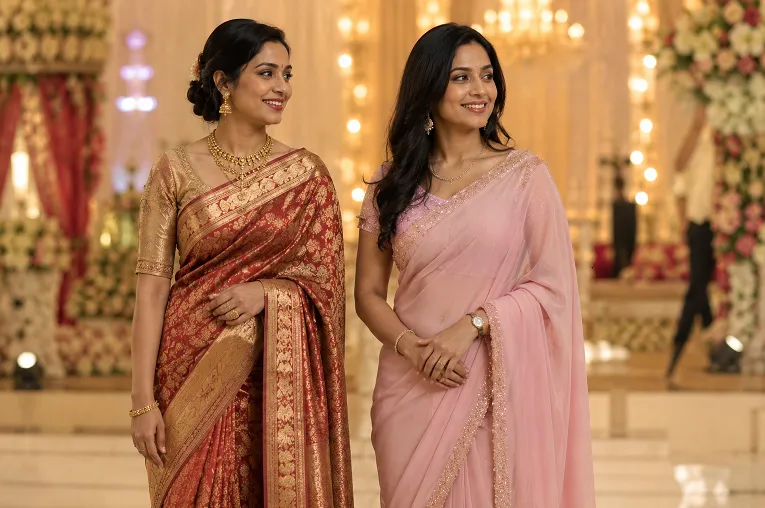
Pre-Stitched Saree vs Traditional Saree: Where Fabric Behaviour Matters Most
Here is something most articles on this topic get wrong. They treat this as purely a convenience question. It is not. The fabric you choose changes how well each style actually works, and this is where actual textile knowledge matters more than styling opinion.
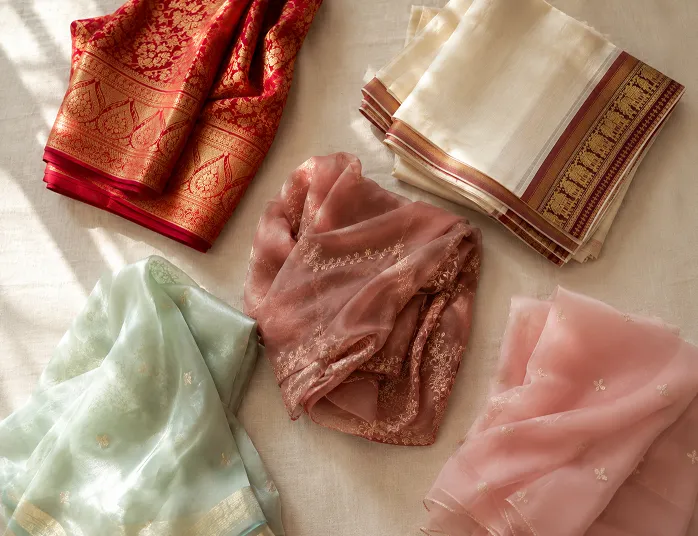
Georgette has more body than chiffon, which is exactly why it holds a pleat better when you are walking through a crowded mandap or standing for long stretches at a sangeet. This makes georgette a genuinely good choice for a pre-stitched saree, because the pleats were set once and need to survive the whole event without shifting. Georgette’s crinkled, high twist weave is actually what gives it this structure, as explained in this overview of georgette as a fabric, if you want to understand why it behaves so differently from chiffon.
Chiffon, on the other hand, is beautiful in a traditional drape because it flows and catches light in a way that looks effortless even when the pleats are not perfectly even. But that same softness works against it in a pre-stitched saree. Chiffon pleats stitched into a pre-stitched saree can start to look slightly limp by the second half of the event, especially in humid weather, because the fabric does not hold structure the way georgette or a silk blend does.
Banarasi silk is heavier than people expect, and this matters for both styles but in different ways. In a traditional drape, you feel that weight settle on your shoulder through the pallu, and by evening at a full day wedding function, that weight starts to show, your shoulder genuinely gets tired. In a pre-stitched version, the weight is more evenly distributed through the waistband, which is actually one of the few places where pre-stitched wins on comfort over a long day.
So the real question is not pre-stitched versus traditional in the abstract. It is which fabric you are choosing it in, because that decides whether the format will even work the way you want, and if weather is still your main worry, our guide on the best saree fabric for summer breaks down which ones actually breathe.
Where Traditional Saree Still Wins, No Argument
We will be honest here because pretending otherwise would not help you. A well draped traditional saree, done properly, looks better than a pre-stitched one in almost every case. There is a fluidity to a hand draped pallu that a stitched one cannot fully copy. The pleats fall with tiny natural irregularities that photograph beautifully, especially in golden hour lighting at outdoor functions, which is common at Gujarati and Rajasthani weddings. It helps to remember there are more than 80 recorded ways to drape a traditional sari, so the version most of us grew up watching our mothers tie is just one of many regional styles.
A traditional saree also adjusts to your body on the day. If you have had a heavy lunch before an afternoon function, or if your weight has shifted slightly since you last wore it, a traditional drape adjusts. A pre-stitched saree with a fixed waistband does not forgive the same way. This is exactly why people who frame the pre-stitched saree vs traditional saree choice as one having a clear winner are usually thinking about only one occasion, not the full range of situations a saree actually gets worn in.
This is the mistake most women make with pre-stitched sarees. They buy the size based on their usual blouse size without checking the actual waist measurement of the stitched skirt portion, and then wonder why it feels tight after a heavy meal at a wedding lunch. That is on the sizing, not the fabric.
There is also something to be said for the ritual of draping a saree yourself, or having your mother or grandmother do it for you before a big function. That is not something we can measure in comfort scores, but if that moment matters to you, no pre-stitched version replaces it.
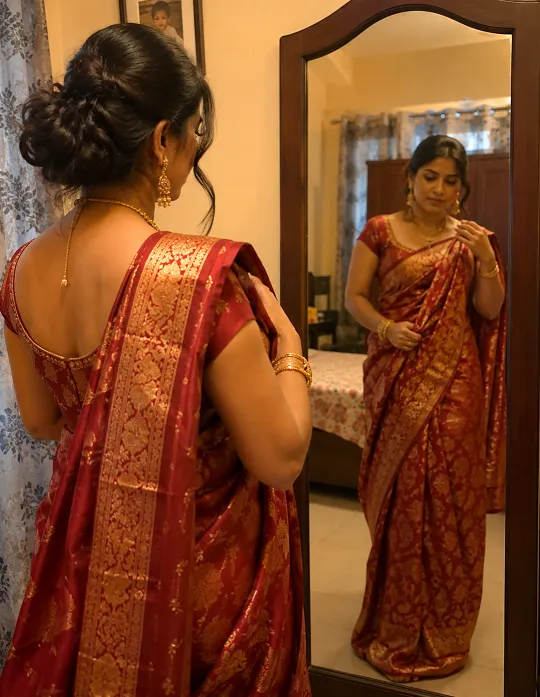
The Unpopular Opinion: Convenience Is Not a Compromise
Most fashion content treats pre-stitched sarees as the lesser option, something you settle for when you cannot manage a real drape. We think that is outdated thinking, especially for how Indian women actually live now.
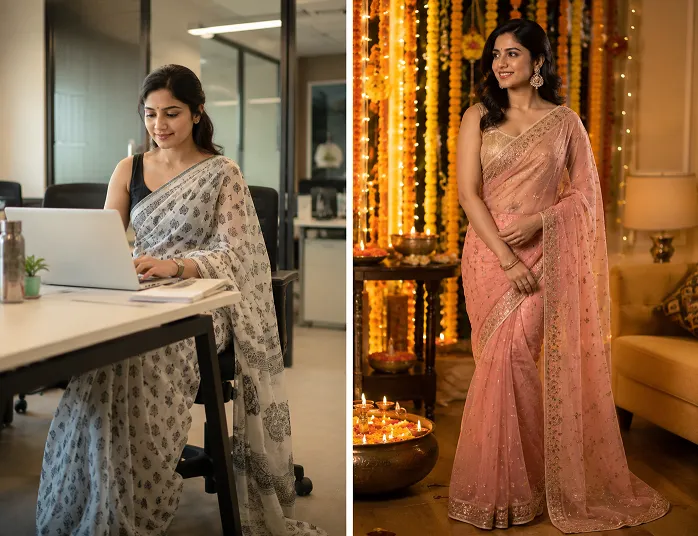
A working woman in Mumbai who has to leave the office, fight through evening traffic, and reach a Diwali party looking presentable does not have thirty minutes to drape and repin through the evening. For her, a pre-stitched saree that holds its shape from 7pm to midnight is not a compromise. It is the smarter choice. A college student attending three Navratri nights back to back at a garba event does not want to be adjusting her pallu mid dandiya. She wants it to stay put so she can actually dance.
Convenience is a valid reason to choose something. You do not owe anyone a harder version of getting dressed just because it looks more traditional. A confident woman in a well fitted pre-stitched saree that she is not fidgeting with all night will always look better than someone constantly readjusting a traditional drape out of nervousness, which is exactly the kind of situation we cover in our Navratri outfit ideas for garba night if dandiya season is what brought you here.
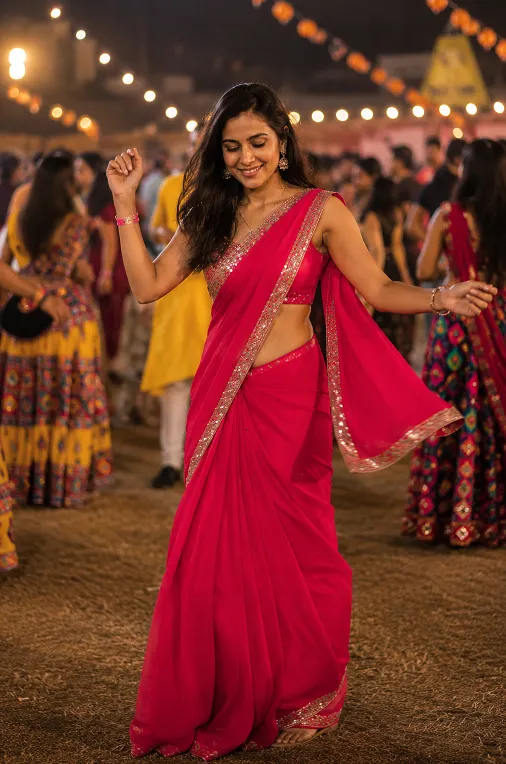
Comfort Over a Full Day Event
This is where the pre-stitched saree vs traditional saree comparison stops being about looks and starts being about your body. If you are choosing between the two for a function that runs several hours, here is what actually happens to you physically, not just to your outfit.
- A traditional saree tucked tightly at the waist can start to feel restrictive if you are sitting for long ceremonies, since the fabric bunches up at the tuck point every time you bend or sit down.
- A pre-stitched saree with a properly fitted waistband distributes pressure more evenly, which some women find more comfortable for seated functions like a puja or a long reception dinner.
- Both styles will feel heavier as the evening goes on if the fabric itself is heavy, silk and zari work being the main culprits, so fabric weight matters more than the format itself.
- Standing for hours in either style feels similar once the initial pleats are set, the real difference shows up in how much readjusting you need to do.
What to Look For When You Buy
Whichever style you go with, the fabric quality is what decides whether it survives more than two wears. Check the fall of the fabric first. Good quality georgette or silk blend will have a slight weight to it even before stitching, cheap versions feel papery and see through under light. Look at the stitching on the pleats closely if you are buying pre-stitched, uneven stitch spacing or visible thread pulls are a sign of rushed factory work, not careful tailoring. And always check the blouse fabric separately, since many sellers pair a decent saree fabric with a thin, poorly lined blouse piece to cut costs.
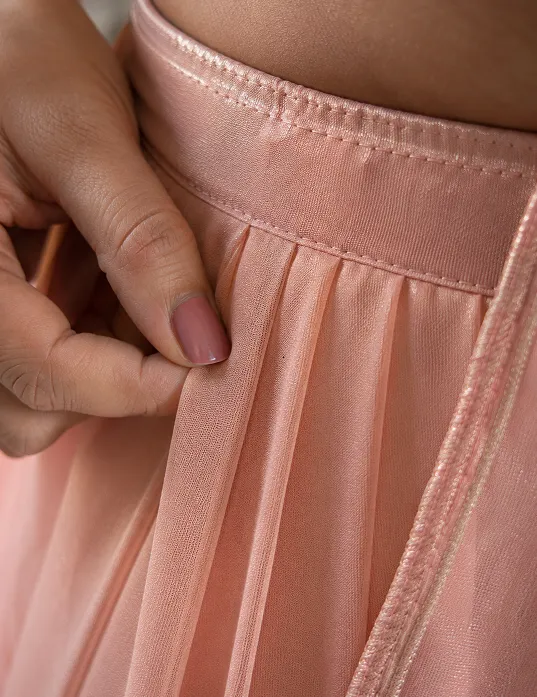
We manufacture our sarees directly at our unit in Surat, and for pieces outside what we make ourselves, we source directly from Surat’s local textile market, which happens to be India’s largest textile hub. That means this advice comes from people who actually handle these fabrics daily, not from a styling blog repeating what everyone else says.
What Actually Matters More Than the Format
Honestly, after all of this, the format matters less than people think. What matters more is whether the saree fits your body properly, whether the fabric suits the weather you are wearing it in, and whether you feel like yourself in it. A traditional saree in the wrong fabric for a humid Mumbai evening will cling and crease no matter how beautifully it is draped. A pre-stitched saree in a good quality georgette can genuinely hold up better through a long Diwali night than a poorly draped traditional one.
Pick based on the event, the weather and how much time you realistically have that day. Not based on which one feels more “authentic,” because both are real sarees, one just saves you the pins. If you are still exploring what suits you beyond this format question, our breakdown of types of sarees in India is a good next stop.
There is no version of this decision that is right for every woman or every occasion, and that is fine. If you remember one thing from this pre-stitched saree vs traditional saree comparison, remember this: know what you are trading when you choose either one, so the choice actually works for your day instead of fighting against it.
Conclusion
There is no version of this decision that is right for every woman or every occasion, and that is fine. If you remember one thing from this pre-stitched saree vs traditional saree comparison, remember this: know what you are trading when you choose either one, so the choice actually works for your day instead of fighting against it.
Our blog has more fabric guides like this one if you want to go deeper before your next big function. Our store is launching soon, and everything on it will come directly from our own manufacturing unit and Surat’s textile market, with nothing routed through a middleman first.
FAQ
Is a pre-stitched saree as good as a traditional saree for weddings?
It depends on the wedding and the fabric. For a long, multi ceremony wedding where you need to move around a lot, a pre-stitched saree in a structured fabric like georgette or silk blend holds up well and saves you from constant readjusting through the day.
Can a pre-stitched saree be altered later if my size changes?
To a limited extent, yes. The waistband and the length can usually be adjusted by a tailor, but the pleats themselves are stitched permanently and cannot be widened or narrowed without redoing the entire pleat structure, which most local tailors will not attempt.
How do I know if a saree fabric is good quality before buying?
Hold the fabric up to light first, cheap synthetic blends are often too sheer and show every seam underneath. Check the pallu edge for loose threads and run your hand along the pleats if pre-stitched, since good stitching feels flat and even, not bunched. Ethora manufactures sarees at its own Surat unit and sources everything else directly from Surat’s local manufacturers, so you are getting factory level fabric knowledge without paying middleman markups.
Which saree style is better for humid weather like Mumbai or Chennai?
Georgette and modal blends handle humidity better than pure silk or heavy zari work, since they breathe more and do not cling the same way against the skin. Modal in particular looks similar to rayon but does not stick to the body in humid conditions the way rayon tends to.
Are pre-stitched sarees more expensive than traditional sarees?
Generally yes, by a small margin, because of the additional stitching labour involved in setting the pleats permanently. The difference is usually modest though, and many women find the time saved on every wear makes up for the slightly higher upfront cost.
Trying to decide between a pre-stitched saree and a traditional drape for your next event? Every saree we make comes straight from our own manufacturing unit in Surat, and for anything outside that range, we source directly from Surat’s local textile manufacturers so you get real fabric quality without the markup. Our store is launching soon, built entirely around that idea.
Pingback: 7 Stunning Diwali Outfit Ideas For Every Generation | Ethora
Pingback: Saree For Destination Wedding: Effortless 3-Fabric Guide | Ethora