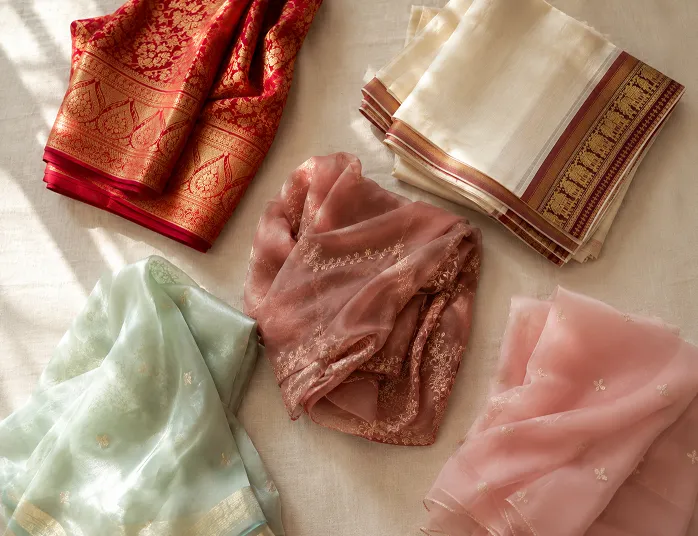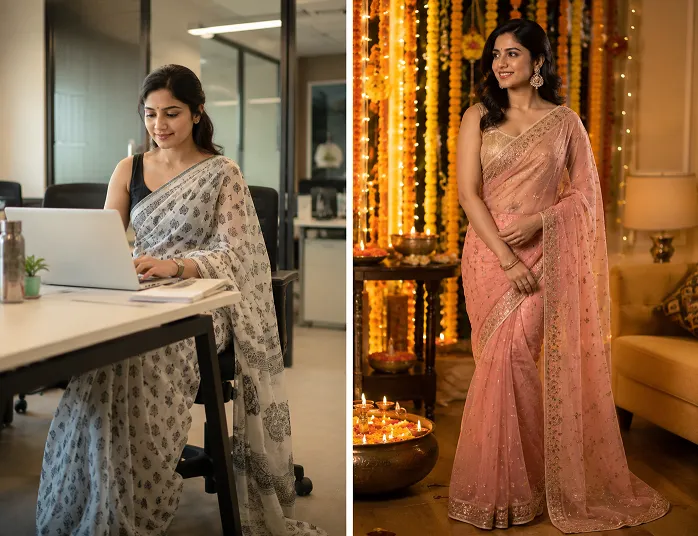
Your suitcase is open on the bed, half packed, and you are staring at three sarees wondering which one survives a flight, a beach, a sangeet under fairy lights, and a Sunday brunch, without you having to iron anything in a hotel room at 7 am. This is the real problem with picking a saree for destination wedding functions. It is not really about which saree looks best in isolation. It is about which one survives contact with an unfamiliar place.
Most guides tell you to pack light fabric and call it done. That advice is not wrong, it is just incomplete. A saree that behaves beautifully in a Delhi banquet hall can fall apart, literally and visually, at a beach wedding in Goa. This article is going to get specific about why, and what actually to check before you settle on a saree for destination wedding travel.
Table of Contents
Why “Just Pack Something Light” Is Not Enough
Lightweight fabric is the starting point every wedding shopping guide gives you, and it is not bad advice. Georgette, chiffon, and organza travel better than heavy silk because they crease less and pack into a smaller space. Georgette has more body than chiffon, so it holds the pleat better when you are walking, which matters a lot at outdoor functions where you are constantly moving between the mandap, the photo corner, and your seat.
But “lightweight” is where most articles stop, and that is the problem. Two destination weddings can both need a lightweight saree and still need a completely different one from each other. A saree that is right for a Udaipur palace wedding in April heat is not automatically right for a Goa beach wedding in November, even though both are technically destination weddings and both call for something light.
Let the Destination Decide the Fabric, Not Just the Weight
This is the part nobody talks about properly, and it is the single biggest mistake women make while shopping for a saree for destination wedding events: they shop by weight instead of by place.
A humid coastal destination wedding, like Goa or Thailand, needs a fabric that handles moisture in the air without clinging or going limp by evening. Modal and certain crepe blends work well here because they hold their shape even when the air is thick. Modal fabric looks similar to rayon but it does not cling to the body the same way in humidity, which is exactly why it survives a full day near the coast better than plain rayon does. If you want a deeper breakdown of which fabrics actually cope with heat and moisture, this guide on the best saree fabric for summer covers it well.
A dry heat palace wedding, like Udaipur or Jaipur, is a completely different climate problem. The air is hot but not humid, so fabric does not go limp, it goes stiff and starts to feel heavy against the skin by afternoon. Cotton silk blends and lighter tussar work better here than pure chiffon, because they breathe without losing structure in dry heat.
A cooler hill station wedding, like Shimla, Nainital, or a winter Coorg function, flips the entire equation again. Here you actually have room for slightly heavier fabric, and this is where a Banarasi or a soft silk can work if the event is indoor. Banarasi silk is heavier than you expect. If you are wearing it for a full day event, the weight on your shoulder from the pallu will start to show by evening, so even in cool weather, save your heaviest silk for the one function that matters most, not for the entire trip.
If you take one thing from this article, take this: stop asking “is this saree light enough to travel.” Start asking “does this saree match the actual climate of the actual place I am going.”
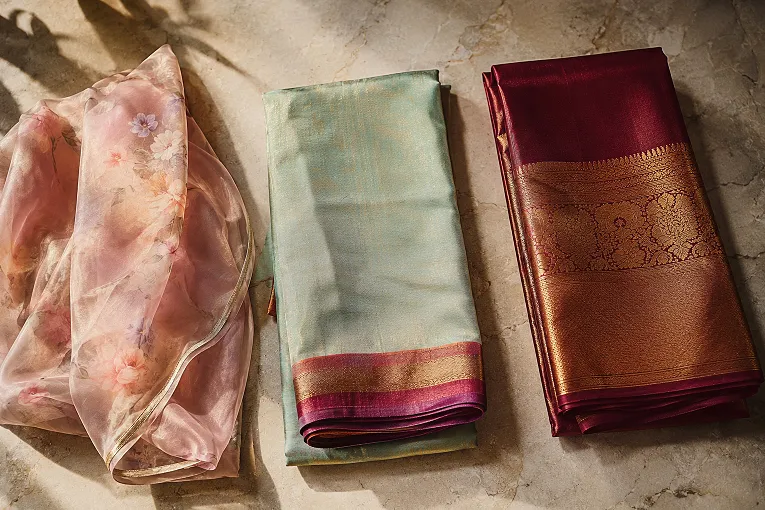
The Venue Problem Nobody Warns You About
Here is the part that genuinely surprises most people, including women who have attended plenty of weddings. It is not just about heat or humidity. It is about whether the wedding happens indoors or outdoors, and what the wind does to your saree.
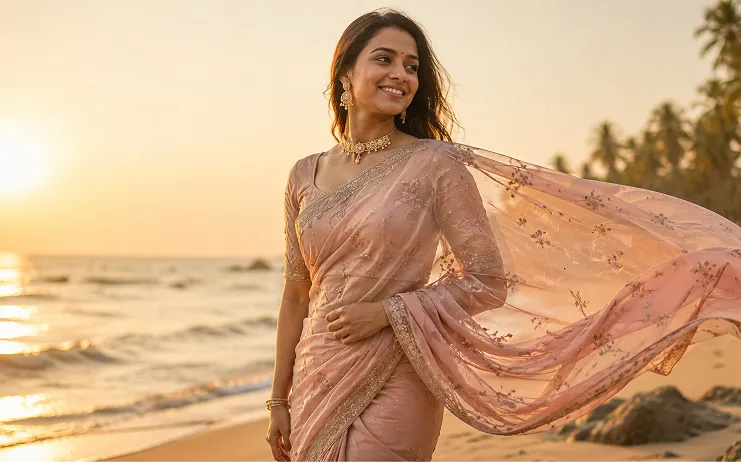
A flowy chiffon or georgette pallu looks stunning in every reference photo you have saved on your phone. It also does not stay where you put it during an outdoor beach ceremony. Wind picks up a loose pallu constantly, and you will spend half the ceremony readjusting it instead of enjoying the vows. Certain lighter fabrics also pick up sand at the hem on a beach, which is not something anyone mentions until it happens to you and you are brushing grains out of pleats an hour before the reception.
An indoor palace hall or a banquet venue simply does not have this problem. No wind, no sand, no fighting with your own outfit mid-photo. So if your itinerary has a mix, and most destination weddings do, plan your fabric choice function by function instead of picking one saree style for the whole trip. Save your most delicate, flowy fabric for the indoor sangeet or reception. Save something with slightly more structure and a shorter, tucked pallu style for the outdoor beach ceremony, where you actually need the fabric to behave, not just look pretty in stills.
This single shift, matching fabric to venue instead of just to the trip in general, is the difference between photos where you look effortless and photos where you are visibly holding your pallu down with one hand.
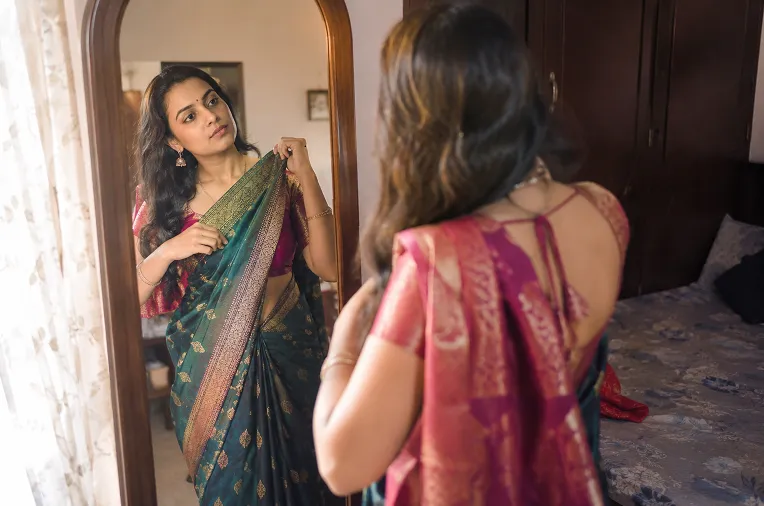
Practice the Drape Before You Travel
This one is simple, and almost nobody does it. If you are planning to wear your saree in a style you do not wear often, a pre draped style, a Bengali style, a butterfly pallu, anything beyond your usual everyday drape, practice it at home. Twice, at least, before you leave.
Here is why this actually matters and it is not about vanity. You will not have your regular tailor, your mother, or your usual mirror set up in a hotel room. You will have thirty minutes before the function starts, shaky wifi if you are trying to watch a tutorial, and possibly a roommate who also needs the mirror. Learning an unfamiliar drape for the first time under that pressure is how good sarees end up looking rushed in every photo.
Pre stitched sarees solve this problem for some women, and honestly, they are a smart choice for a destination wedding if draping stresses you out. But even a pre stitched option benefits from a trial run at home, just to check the fit and the pallu length before the actual day.
If you are going the traditional route, do one full dry run at home in the exact blouse and petticoat you plan to wear, not a similar one. Fit changes the way a drape sits, and you want zero surprises in a hotel room three time zones away from your regular support system.
What to Look For When You Buy a Saree for Destination Wedding Trips
Buying a saree for a destination wedding is different from buying one for a local function, and the biggest thing to check before you purchase is whether the fabric actually matches your destination’s climate, not just whether it looks light on a hanger. A saree that feels breezy in an air conditioned store can behave completely differently in real coastal humidity or real dry desert heat. Ask specifically what the fabric does in the kind of weather you are travelling into, not just how it feels in your hand.
At Ethora, this is something we can actually speak to directly, because we manufacture our sarees at our own unit in Surat, and everything outside our own range is sourced directly from Surat’s local textile market, which is India’s largest textile hub. That means the fabric guidance here is not styling opinion borrowed from somewhere else, it comes from people who handle these fabrics every single day.
The Small Things That Actually Save the Trip
A few things worth saying honestly, because most guides skip them.
- A well fitted bright saree photographs better than a safe neutral one at most destination weddings. Everyone tells you to go neutral for outdoor lighting, but a confident colour against a beach or a desert backdrop usually does more for how you feel and how you look in photos than beige ever will.
- Iron before you leave, not after you land. Crease patterns set differently in humidity, and a saree that looked fine folded in your Mumbai flat can look wrinkled the moment coastal air gets to it.
- Carry safety pins and fabric tape regardless of how confident you are in the drape. Even experienced saree wearers use them at outdoor events with wind.
- Do not pack your heaviest saree for the first function. You will be tired from travel, and comfort on day one sets the tone for how you enjoy the rest of the trip.
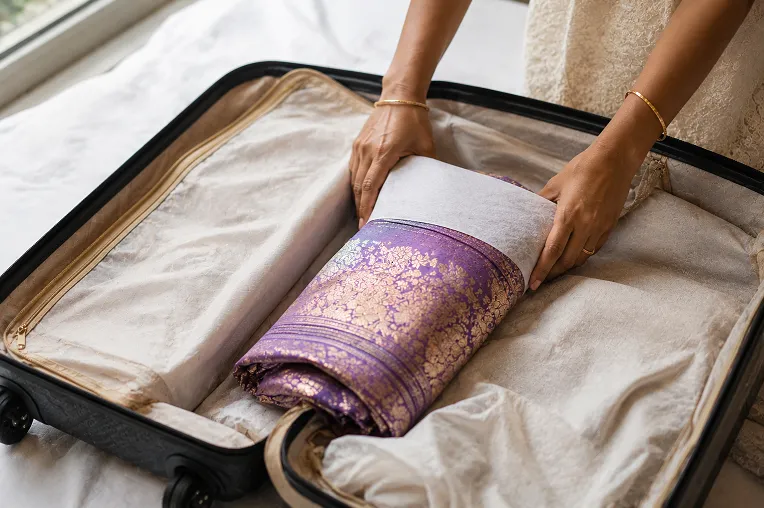
Roll your saree instead of folding it flat, with a sheet of tissue paper between the layers. A rolled saree resists sharp crease lines far better than a folded stack over a long flight or car ride, and it takes up roughly the same suitcase space either way.
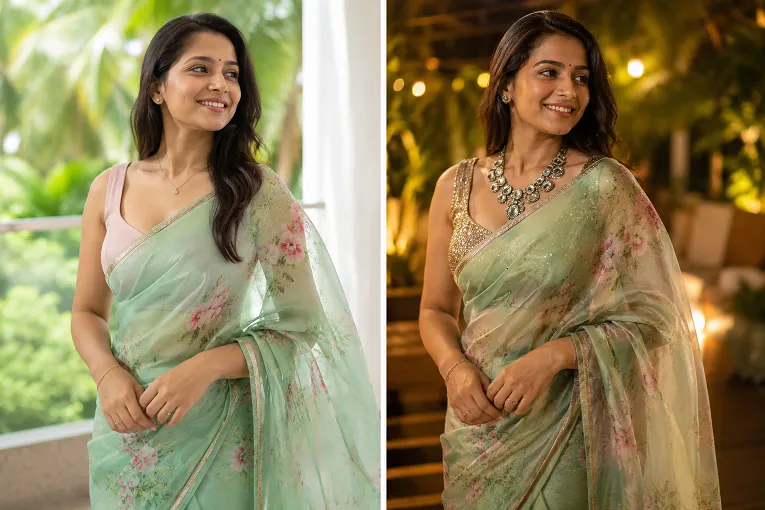
You do not need a separate saree for every single function on the itinerary. One good saree, restyled with a different blouse and a slightly heavier piece of jewellery for the evening, easily covers a daytime function and a night one without looking repeated in photos, and it saves real suitcase space on a multi day trip.
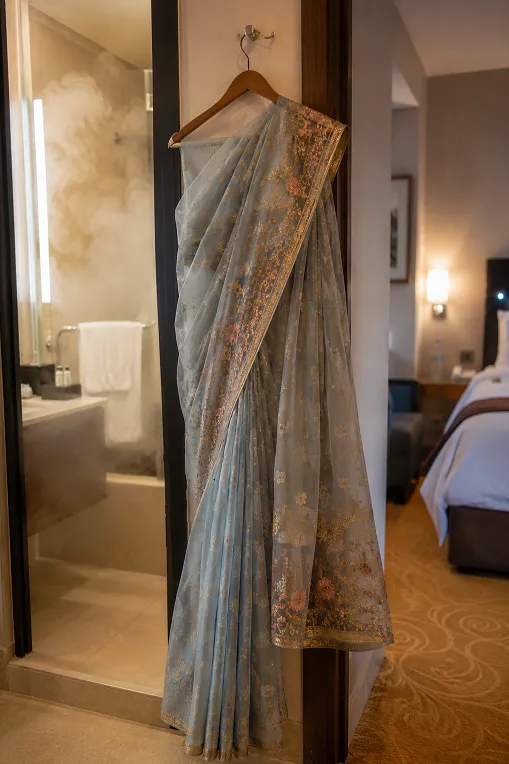
If a saree comes out creased after the flight, hang it near a running hot shower for fifteen minutes instead of hunting down an iron in an unfamiliar hotel. The steam relaxes most creases on its own, though this works better on cotton, georgette and chiffon than on very structured, heavy silk.
Not every tip here works for every body type or every comfort level with sarees, and that is fine. Some women feel most confident in structure, some feel most confident in flow. Know which one you are before you shop, not after.
Conclusion
A saree for destination wedding travel is not just about the fabric feeling nice in the store. It is about how that fabric survives your actual itinerary, your actual venue, and your actual weather, three things most shopping advice never asks about. Get those three right and everything else, the draping, the styling, the photos, tends to fall into place on its own. If you found this useful, there is more on the Ethora blog worth reading before your next function. Our store is launching soon, and everything on it comes directly from our own manufacturing unit and Surat’s textile market, so you are getting the source, not the middleman.
FAQ
How many sarees should I pack for a 3 day destination wedding?
Three to four is usually enough if you plan by function instead of by day. Pack one flowy option for an indoor evening event, one structured cotton silk or crepe for a daytime or outdoor function, and one heavier silk for the main ceremony, with a backup blouse in case anything does not fit right after travel.
Can I wear chiffon sarees for a beach wedding?
Yes, but tuck the pallu more securely than usual, since chiffon is light enough to catch wind constantly at a beach venue. A shorter, pinned pallu style works better outdoors than a long loose one that looks great standing still but not while walking on sand.
What is the best saree fabric for humid weather?
Modal, crepe, and certain cotton silk blends handle humidity better than pure chiffon or georgette because they resist clinging and hold their shape through moisture in the air. Pure silk can feel heavier and warmer in coastal humidity specifically, so save it for indoor, air conditioned functions during a humid destination trip.
Where can I buy good quality sarees for a wedding online?
whether the seller can tell you specifically how the fabric behaves in different weather, not just how it looks in photos, since that tells you if they actually understand the product. Ethora manufactures sarees at its own Surat unit and sources everything else directly from Surat’s textile manufacturers, which means the fabric knowledge behind each recommendation comes from people who actually handle these materials, at factory level quality without middleman pricing.
Should I choose a pre stitched saree for a destination wedding?
A pre stitched saree is a genuinely good option if you are not confident about draping or know you will be short on time before the function. It still needs a trial fit at home before your trip, since the placement of pleats and pallu is fixed and cannot be adjusted last minute the way a traditional drape can.
Planning what to wear across a multi day wedding in another city is its own kind of packing puzzle, and getting the fabric right for each function makes the whole trip easier. Ethora sarees are manufactured directly at our own unit in Surat, and everything else in our range is sourced from Surat’s local textile manufacturers, so you are always getting fabric knowledge from the source. Our store is launching soon, built around exactly this kind of practical, function by function thinking.