
Picture this: it is late April, you have a morning puja at a relative’s place, and by 10 AM the temperature is already 38 degrees. You pulled out your favourite silk saree the night before because it looks beautiful. By the time you finish the ceremony, you are wilting. The silk is sticking to your blouse, the pallu feels like a weighted blanket, and you spend the rest of the function trying to look composed while quietly dying inside.
If that sounds familiar, you are not alone. Choosing the wrong saree fabric for summer in India is one of the most common wardrobe mistakes women make. Not because they do not care, but because nobody ever told them what actually changes when temperature and humidity enter the picture.
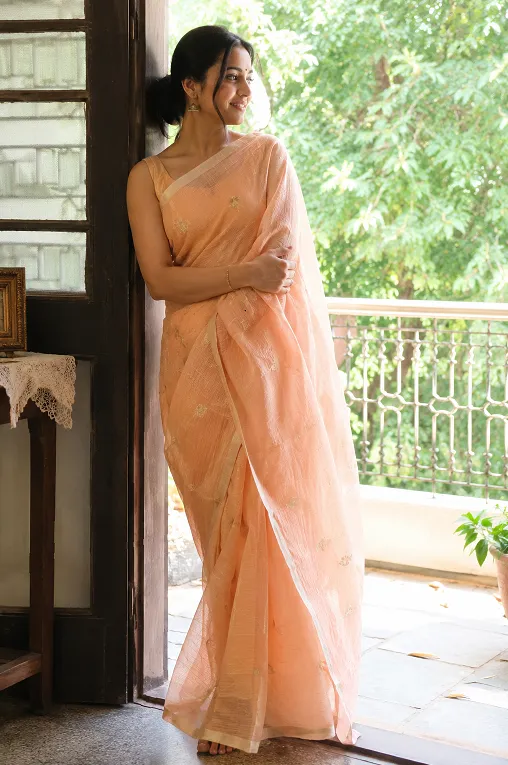
This is not a list of “top 5 summer sarees” you have already seen everywhere. This is what I have learned working around fabric in Surat for years: what weaves breathe, what clings, and what looks good on the hanger but punishes you outdoors.
Table of Contents
Why Saree Fabric for Summer Deserves More Thought Than You Are Giving It
Most women choose a saree based on colour or embroidery and treat fabric as an afterthought. That is the wrong order to go in.
In Indian summers, particularly in cities like Surat, Hyderabad, or Mumbai where humidity compounds the heat, the right saree fabric for summer is not just a comfort decision. It is how long you can actually function in what you are wearing. A cotton saree in Rajasthan’s dry heat behaves differently from a cotton saree in coastal Odisha during a June afternoon. The right light saree fabric for hot weather does three things: it lets air move, it absorbs moisture without showing it, and it stays structured enough to hold a decent drape even after two hours.
None of these things are visible when you pick a saree off a shelf. You have to know the fabric.
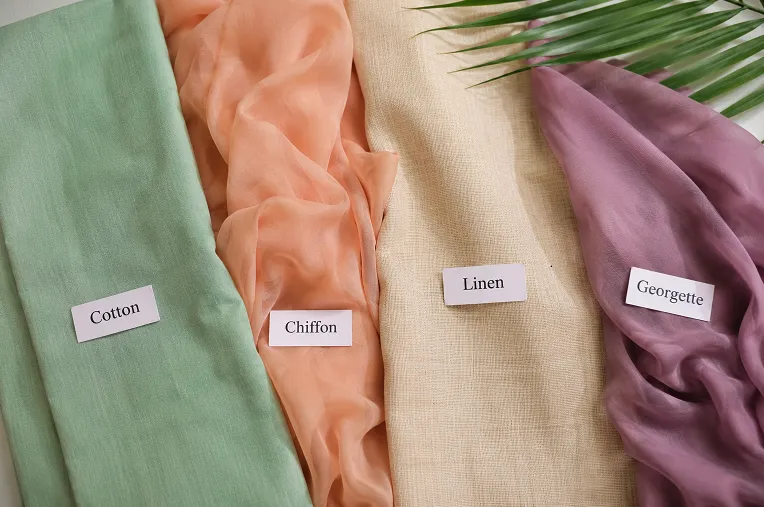
Cotton Sarees: The One That Actually Works
Cotton is the obvious answer, but the obvious answer is obvious for a reason.
A pure cotton saree for summer does something synthetic fabrics cannot: it absorbs sweat and then releases it. You might feel the dampness briefly, but it dries out. Polyester traps moisture against your skin, which is why you feel worse in a synthetic saree after an hour than you did at the start.
What most people do not know: not all cotton is equal. Chanderi cotton is lighter than regular handloom cotton and has a slight sheen that reads as festive without the weight. Kota Doria cotton has an open weave (you can almost see through it) which means air moves through it remarkably well. If you want to understand what makes this fabric so special, The Saree Blog has a detailed guide on everything you need to know about Kota Doria sarees that is worth reading before you shop. If you are wearing a saree to a daytime wedding in May, Kota Doria is the best saree fabric for summer weddings in India, hands down.
The one downside of cotton is creasing. Cotton sarees wrinkle if you are sitting for long stretches, and in a family function where you spend three hours on a plastic chair, that shows. If this bothers you, blended cotton with a small percentage of modal or viscose holds the drape better while still breathing.
Chiffon and Georgette: Know the Difference Before You Choose
These two get lumped together constantly, and it drives me a little crazy.
Chiffon is lighter. It floats. When you walk in a chiffon saree, the pallu catches the air and moves with you, which is why it photographs so beautifully outdoors. There is a softness to the way chiffon moves that looks effortless even when you have barely managed the drape. For summer, pure silk chiffon is actually cooler than it sounds. It does not trap heat the way heavier silk weaves do.
Georgette has more body than chiffon, so it holds the pleat better when you are walking. This matters. If you are attending a mehndi function where you will be on your feet most of the evening, a georgette saree will stay neater than chiffon, which tends to fly about. Georgette also falls more predictably when you tuck the pleats, which is useful if you are not an expert draper.
Both work in summer. The question is what you are doing in the saree. Standing still at a photo session? Chiffon. Moving around at a function? Georgette.
Linen Sarees: The Unpopular Opinion Section
Here it is: linen is underrated for sarees, and most Indian women ignore it.
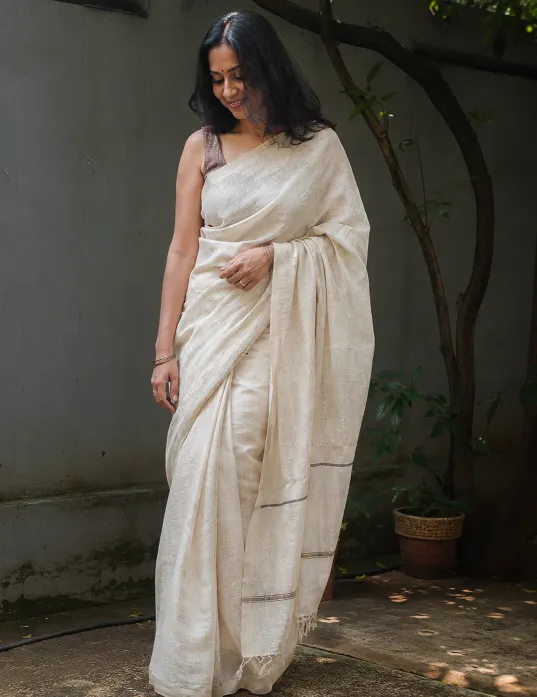
Linen is one of the oldest natural fibres in the world and one of the best performers in heat. It gets softer with every wash. It does not cling. It has a natural texture that looks effortless rather than overdressed. A linen saree in an earthy tone for a summer office day or an informal daytime gathering looks considered without looking like you tried too hard.
The reason linen has not caught on widely for sarees in India is that it wrinkles aggressively. But honestly? The rumpled quality of linen is part of its character. It is not a festival fabric. It is a fabric for a woman who knows what she wants and does not need everything to be pristine.
What to Actually Avoid in Indian Summer Heat
Silk gets a lot of love, and rightly so for cooler months and evening occasions. But Banarasi silk is heavier than most people expect. If you are wearing it for a full-day summer event, the weight of the pallu on your shoulder will start to tell by noon. By evening, that weight becomes genuine discomfort. Silk also does not breathe the way cotton or linen does. It holds heat close to the skin.
Synthetic fabrics (polyester, nylon blends, anything that feels slippery and perfect fresh off the hanger) trap heat and moisture. They may photograph beautifully but the moment you step into direct sunlight, you will regret it.
And tissue sarees, which have a metallic finish and are popular at festive occasions, are essentially wearing a thin sheet of heat-absorbent material in summer. They are gorgeous. As a saree fabric for summer daywear, they are not for 40-degree afternoons.
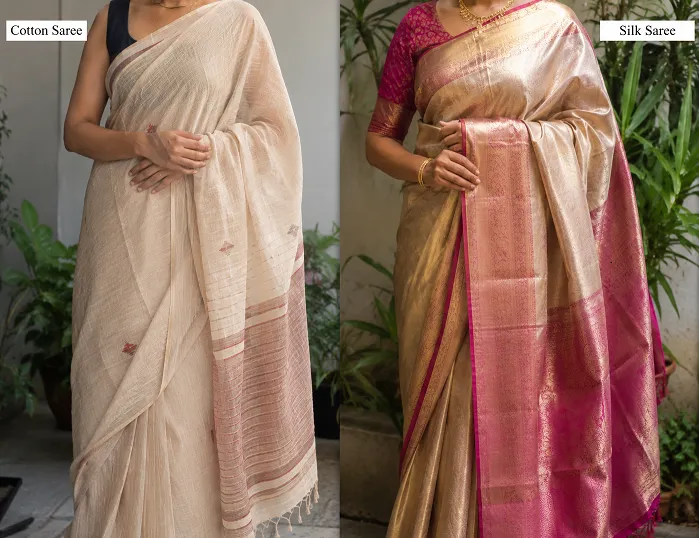
If you want to understand the full range of saree options before deciding what works for you, the guide on types of sarees in India is a good place to start.
One Last Thing Nobody Mentions
The blouse fabric matters as much as the saree fabric.
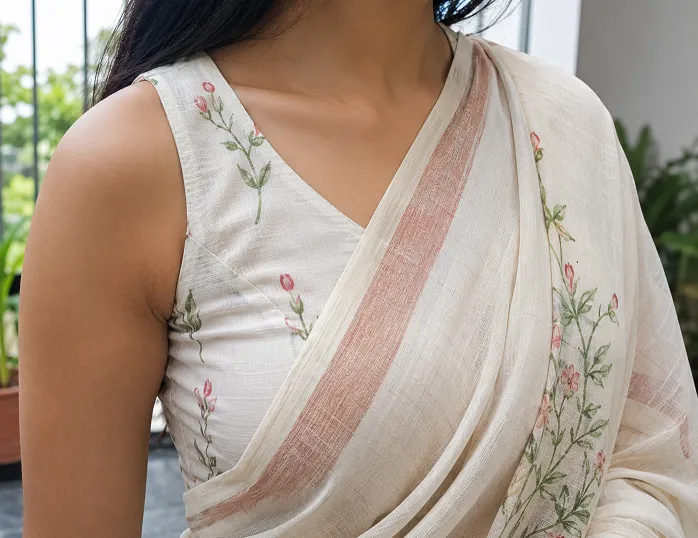
You could be wearing a perfectly breathable cotton saree and pair it with a heavy silk blouse that does not let your upper body breathe at all. The result is still uncomfortable. For summer, match the logic of your blouse fabric to your saree. Cotton blouse with cotton saree. Lightweight crepe or chiffon blouse with a georgette saree. Do not let the blouse undermine the whole effort.
And while you are thinking about what works for your body, it is worth reading our guide on choosing a saree for your body type, because fabric weight plays a big role there too.
Conclusion
Summer in India is not a minor inconvenience. It is months of serious heat, and your saree should work with that, not against it. Start with cotton and linen for day wear, move to chiffon or georgette for evening functions, and save your silks for the cooler months or late-night occasions when you will genuinely enjoy them. The best saree for summer is the one you are still comfortable in three hours after wearing it. That is the only real test.
For more on fabric, drape, and dressing well in every season, keep reading on the Ethora blog. A good next read is our breakdown of sarees by body type if you want to match both fabric and silhouette to what actually works for you.
FAQ
Which saree fabric is best for a hot and humid climate like Mumbai or coastal cities?
Cotton, especially Kota Doria or Chanderi cotton, handles humidity better than most options because it absorbs moisture and releases it rather than trapping it. Chiffon is a close second for evening wear since it is light and lets air move. Avoid polyester blends entirely in coastal humidity. They will feel unbearable within the hour.
Can I wear a silk saree in summer?
For an evening event or an air-conditioned venue, yes. For outdoor or daytime summer events, it depends on the weight of the silk. Silk chiffon and lightweight crepe silk can work. Heavy silk like Banarasi or Kanjeevaram is genuinely uncomfortable in peak summer heat and should be saved for cooler months or cooler times of day.
What is the coolest saree fabric for direct sun exposure like outdoor weddings or temple visits?
Kota Doria cotton is the best answer here. Its open, almost net-like weave lets more air through than any other saree fabric. It is also sheer enough to feel light without being difficult to manage. Wear a well-fitted petticoat in a breathable cotton to keep the full outfit comfortable.
Does the colour of the saree affect how hot you feel in summer?
Yes, but less dramatically than people think. Darker colours absorb more heat in direct sunlight. Light pastels and whites reflect it. But the fabric matters far more than the colour. A white polyester saree will be hotter than a deep blue cotton one. If you are going to be outdoors for an extended time, light colours in breathable fabric is the best combination. But if you must choose between the two, always prioritise fabric over colour.
How do I keep a cotton saree looking neat in summer when it tends to wrinkle?
Iron it sharp right before wearing and use a petticoat that fits snugly so the fabric does not shift. Blended cotton with a small percentage of viscose or modal holds its shape longer through a long event. Avoid sitting on rough surfaces for extended periods. If you know it will be a long day, a slightly heavier cotton like handloom is actually better than a very fine cotton. It wrinkles less because it has more structure.
Pingback: Pre-Stitched Saree Vs Traditional Saree: 4 Honest Truths | Ethora
Pingback: 5 Best Sarees For Office Wear That Actually Last A Day | Ethora
Pingback: Saree For Destination Wedding: Effortless 3-Fabric Guide | Ethora
Pingback: Natural Dye Vs Chemical Dye: 3 Honest Truths | Ethora