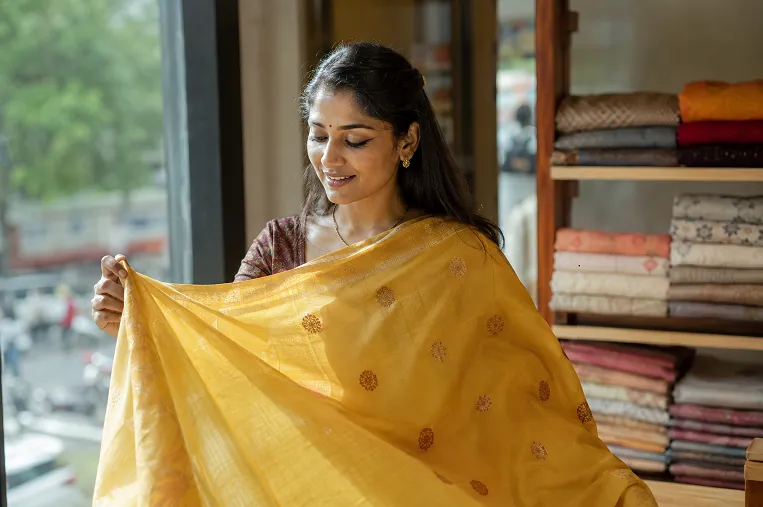
You are standing in a Surat textile showroom, and the shopkeeper tells you this saree is naturally dyed, vegetable colour, the softest thing your skin will ever touch. You want to believe him. But you have been fooled before by a label that meant nothing once the saree faded after two washes.
This is exactly the confusion around natural dye vs chemical dye that most articles never actually resolve. They tell you natural is good and chemical is bad, and stop there. This one goes further, into what to actually check before you pay, what suits your real wardrobe, and why the fabric itself should make this decision for you, not a rule you read online.
There is a specific weight to how a genuinely dyed piece of silk settles on your shoulder, and a specific rustle cotton makes as it brushes against a chair. Those small physical details tell you more than any tag ever will, and that is really what this guide is about.
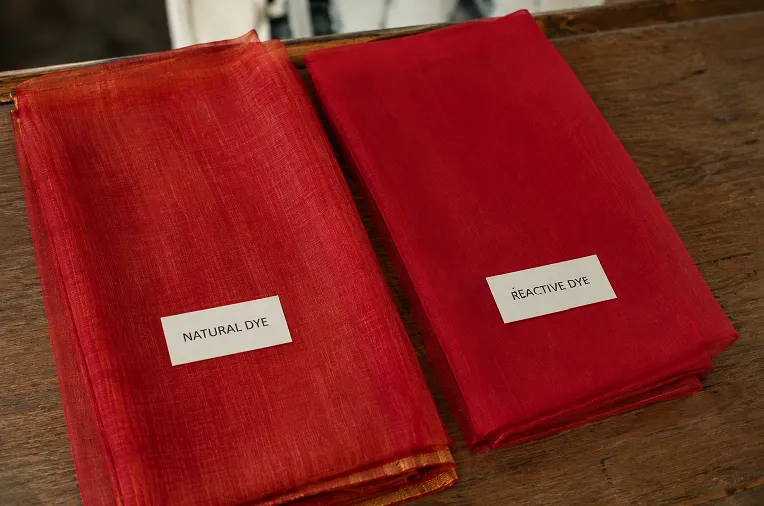
Table of Contents
Natural Dye vs Chemical Dye: What These Terms Actually Mean
Natural dye comes from plants, roots, bark and sometimes even insects. Indigo for blue, madder root for red, turmeric and marigold for warm yellows. The colour is pulled out through soaking, boiling and a mordant like alum that helps it bind to the fibre.
Chemical dye, most commonly reactive dye today, is made in a lab to hit an exact shade every single time. It bonds to the fibre through a controlled chemical reaction, not through hours of soaking in a natural extract.
Neither one is automatically the villain or the hero here. Vegetable dye sarees carry a batch to batch personality that chemical dye simply was never built to have, and that difference is the whole point of this article.
Run your hand over a naturally dyed cotton saree and you will notice a slightly drier, rawer texture at first. Reactive dyed cotton almost never has that, because the finishing process smooths it out completely before it ever reaches a store.
How to Actually Tell If a Saree Is Genuinely Natural Dyed
Here is something almost nobody tells you plainly. Natural dye is never perfectly even. Each batch depends on the season the plant was harvested, the water used, how long the fabric sat in the dye bath.
That slight colour variation across the fabric, a shade that looks marginally deeper near the border or in one fold compared to another, is not a defect. It is one of the more reliable signs you are looking at a genuinely natural dyed piece.
Chemical dye is built for exact repeatability instead. A reactive dyed saree shows a completely flat, uniform colour from pallu to border, batch after batch, because that consistency is the entire point of using it commercially.
So before you trust a natural or vegetable dye claim on a label, hold the fabric up in natural light and look closely for that gentle unevenness. If the colour looks machine perfect throughout, be a little skeptical of the story you are being sold.
Which Dye Actually Suits How You Wear Your Saree
This is where most articles get dishonest. They tell you natural dye is simply the better, more ethical choice, full stop. It is not that simple once you think about how you will actually wear the saree.
Natural dye fades faster with each wash and needs gentle hand washing, shade drying, and genuine patience. Leave it out in the Ahmedabad summer sun or toss it in a washing machine, and the colour visibly dulls within a few wears.
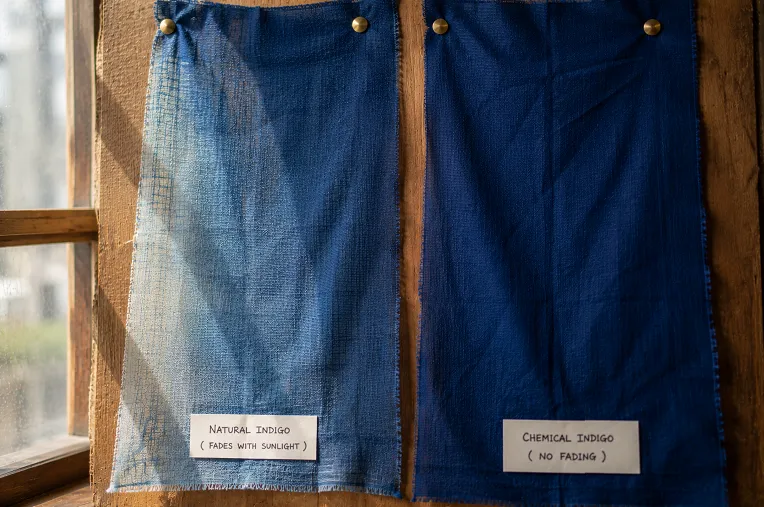
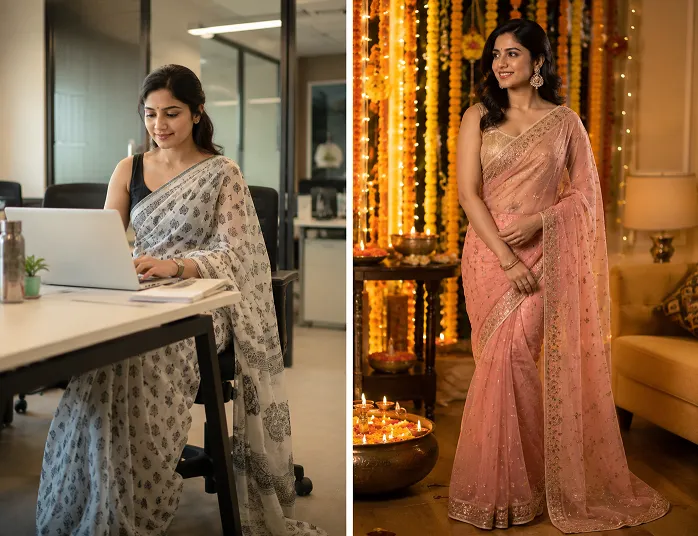
If this saree is for an occasional wear, a wedding, a Diwali evening, a special puja, that slower fade barely matters because you are not washing it every week anyway.
But if you want a cotton saree for your regular office days or a Sunday market run, in and out of an auto rickshaw, ironed the same morning, washed every couple of weeks, a reactive dyed cotton saree is honestly the smarter, more practical pick. It holds colour through far more washes without demanding the careful hand washing routine natural dye needs.
Most women buy a natural dyed piece assuming it will behave exactly like their everyday chemical dyed cottons, then feel cheated when it fades faster. That mismatch in expectation, not the dye itself, is usually the real problem behind most natural dye vs chemical dye regrets.
And here is the opinion I will state plainly. Natural dye is not automatically superior. A reactive dyed saree you actually wear often does more for your wardrobe than a natural dye piece sitting folded in the cupboard because you are scared to wash it.
If you want more on which fabrics genuinely hold up for regular wear and washing, our guide on the best saree fabric for summer breaks down exactly what handles heat and repeated washing well.
Why the Fabric Should Decide the Dye, Not a Blanket Rule
Cotton and linen are cellulose fibres. Reactive dye bonds chemically and strongly with cellulose, which is exactly why a reactive dyed cotton or linen saree holds colour so well through repeated washing.
Silk behaves differently. Silk is a protein fibre, and mordant based natural dyeing has traditionally suited silk far better, because the dye binds to the protein structure in a way that gives real depth, not just surface colour.
This is why the smarter question is never natural versus chemical as a blanket rule. It is which dye actually matches the fibre sitting in front of you.
A Banarasi silk in natural dye can develop a richness over the years that chemical dye rarely achieves on the same fabric. Banarasi silk also carries real weight once you factor in the zari work, and at a full day wedding, from the morning function through the evening reception, that pallu weight on your shoulder starts to show by the time you are seated for dinner.
A linen saree in natural dye, on the other hand, tends to fade unevenly and lose its crispness faster than the same linen in reactive dye. If you are weighing this exact trade off, our linen saree fabric guide walks through what to check on the fabric before you buy.
Because natural dye on silk can also shift slightly with humidity and prolonged folding, proper storage matters even more here. Our guide on how to store silk sarees covers exactly how to protect that colour between wears.

The Environmental Side Nobody Explains Properly
Chemical dyeing at scale uses far more water, and without proper treatment, the wastewater can genuinely harm rivers and groundwater near dyeing units. The chemical dye fabric risks here are less about the saree in your hands and more about what happens upstream, at the units where the fabric was actually dyed.
Natural dye avoids most of that, though it is not entirely without footprint either, since growing dye plants at scale still needs land and water of its own.
The Indian government has actually put real weight behind this shift. Recent measures from the Ministry of Textiles include pilot projects to eliminate hazardous chemicals from apparel supply chains and dedicated funding for natural and vegetable dye clusters, which tells you this is no longer just a niche, feel-good choice.
For a fuller dye fastness fabric guide than any saree label will ever give you, the internationally used colour fastness rating scale explains exactly how ratings for wash, rub and light fastness actually work. It is a far more useful way to judge a fabric than any marketing claim.
None of this cancels out the natural dye fabric benefits. Lower chemical runoff and biodegradability are real advantages, they just come with the maintenance cost this guide has already been upfront about.
What Actually Matters Before You Purchase
Getting the natural dye vs chemical dye question right before you buy comes down to one simple, checkable habit. Hold the saree up in good light and look closely at the colour.
Genuine natural dye shows slight, honest unevenness across the fabric, never a completely flat, machine perfect colour. That small variation is your most reliable real world check, more trustworthy than any label or story a shopkeeper tells you.
Also ask directly how the piece should be washed. If the seller cannot answer that clearly, take it as a sign.
This is the same check we rely on ourselves. Ethora manufactures its sarees, salwar kameez, kurtas and lehenga choli directly at its own Surat unit, and for everything else we source straight from Surat’s local textile market, so this advice comes from people who actually handle these fabrics every single day.
Conclusion
The real decision here is simpler than most articles make it sound. Let the fabric and how often you will actually wear the saree guide you, not a blanket rule about natural being automatically better.
Check for that honest, gentle unevenness before you trust any natural dye claim, and be honest with yourself about how much hand washing you are actually willing to do every month.
If you want more real, practical guidance like this, there is plenty more waiting on the Ethora blog. Our store is launching soon, with every piece made directly at our own Surat unit or sourced straight from Surat’s textile manufacturers.
Frequently Asked Questions (FAQs)
Does natural dye fade faster than chemical dye?
Yes, in most cases. Natural dye typically loses some depth after 8 to 10 washes if not handled gently, while a well fixed reactive dye can hold its colour through years of regular washing. This is exactly why the fade rate matters more for pieces you plan to wear often.
Is chemical dye bad for skin?
Poorly fixed or low quality chemical dye can irritate sensitive skin, especially untreated azo dyes. Reputable manufacturers use AZO-free, properly tested reactive dyes that are safe for regular wear, so the real risk depends more on dye quality than on the natural versus chemical label alone.
Does the weave of the fabric affect how the dye looks once applied?
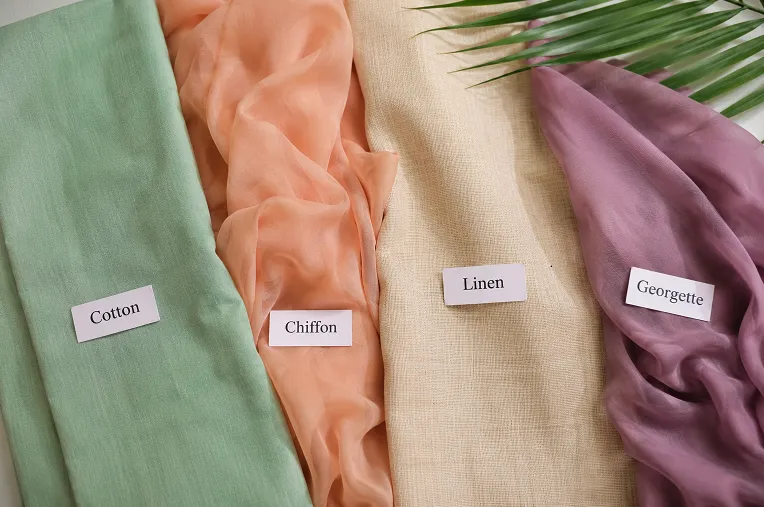
Yes, and this rarely gets mentioned. A tightly woven fabric like fine cotton takes dye more evenly than a loosely woven one, while georgette, which already has more body and texture than chiffon, holds a pleat and catches colour differently once dyed because of how the weave catches light.
How do I know if a saree fabric is genuinely good quality before buying online?
Look closely for that slight, honest unevenness if it claims to be natural dyed, and ask the seller directly how it should be washed. Ethora manufactures its sarees, salwar kameez, kurtas and lehenga choli directly at its own Surat unit, and sources everything else straight from Surat’s local textile manufacturers, giving you genuine fabric knowledge and factory level quality without middleman pricing.
How should I wash and store a naturally dyed saree at home?
Hand wash it in cool water with a mild detergent, away from direct sunlight, and dry it in shade rather than out on a balcony railing at noon. Fold it along different lines each time you store it, so the colour does not settle into permanent crease lines over a season of Surat humidity.
Once you know what to actually look for in a natural or vegetable dye saree, buying one stops feeling like guesswork. Ethora makes its sarees, salwar kameez, kurtas and lehenga choli directly at its own manufacturing unit in Surat, and sources everything else straight from Surat’s local textile market. Our store is launching soon, bringing that same fabric knowledge straight to you.