You finally get the blouse stitched, the saree draped, and every pleat pinned right for your cousin’s sangeet. In the mirror, something is close, but not quite there. The waist you actually have does not show up the way you expected.
This is one of the most common frustrations with a saree for hourglass figure, and it is rarely the drape’s fault. It usually comes down to three details most style guides skip completely.
For a complete guide covering all four body types including pear, apple and rectangle, our saree for body type guide covers every shape with fabric and draping advice.
This article goes deeper into what actually decides whether your waist shows up in the saree: how precisely the blouse is fit, where the petticoat sits before you even start draping, and the real trade-off between maximum flattery and comfort through a long event.
Table of Contents
Why a Saree for Hourglass Figure Needs More Precision, Not Less
An hourglass figure means your bust and hip measurements sit close to each other, with a noticeably narrower waist in between. Most guides will tell you the Nivi drape is naturally built for this shape. That part is true.
But here is what most guides leave out. Other body shapes work with illusion. A structured blouse on a rectangle frame creates a waist that is not fully there. A busy border on a pear shape redirects attention. There is room for the eye to be gently misled, and a small imprecision barely registers.
An hourglass body shape saree is different. You are not creating an illusion. You already have the waist. The saree and blouse only need to reveal it accurately, which means a blouse fit even slightly off at the waist seam fails more visibly here than the same imprecision would on almost any other shape.
Understanding this difference is really the whole point of getting a saree for hourglass figure right, instead of following generic body-shape advice written for a different problem entirely.
If you are not fully sure which shape you actually are, Ethora’s free ethnic wear body type calculator works it out from your real measurements in under two minutes, and covers kurtas and lehengas too, not just sarees.
The Blouse Fit Precision Point Nobody Explains
Most advice for this shape stops at “avoid a structured or padded blouse.” That is not wrong, but it does not explain why fit matters so much more here.
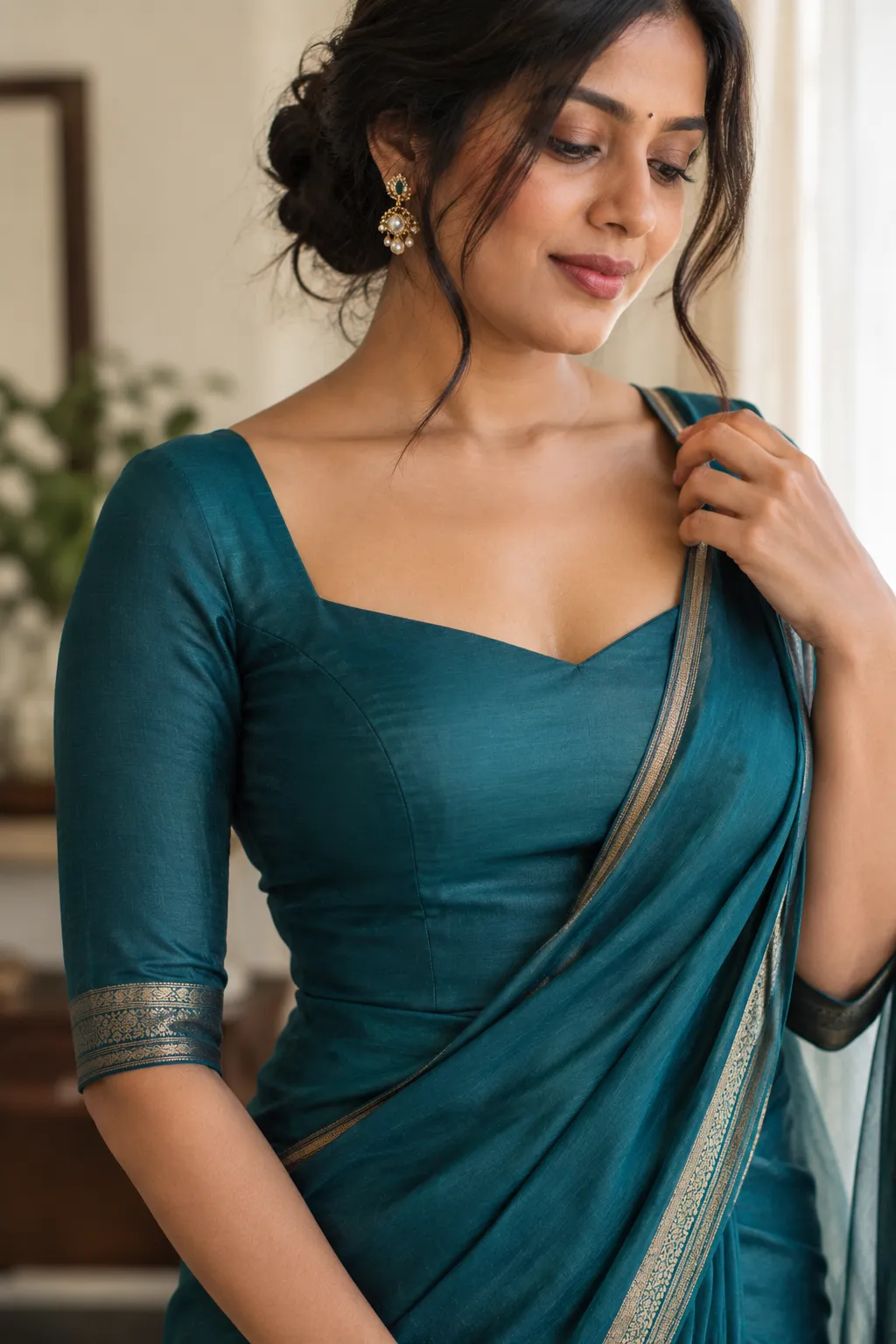
A blouse dart is not decorative. It is what turns a flat piece of fabric into something that follows a curved body. On an hourglass frame, the dart has to land exactly at the point where the waist narrows, not slightly above it, not slightly below it.
Move that dart by even a centimetre and the fabric stops following your actual waistline. It starts creating its own line instead, one that does not match the shape underneath it. From three feet away, this reads as “something looks a little off,” even to someone who could not tell you why.
The waist seam matters just as much. A blouse cut a touch loose at the waist will bag slightly at exactly the point you want to look sharpest.
Actually, this is the single most common reason a saree looks less flattering on a real hourglass body than it did on the shop mannequin. The mannequin has no waist to get wrong.
How the Petticoat Tie Point Decides Your Hourglass Figure Saree Draping
Here is the part almost nobody mentions when they talk about hourglass figure saree draping. The entire waist-emphasis effect of the Nivi drape depends on where the petticoat is tied, not where the saree is pleated.
Think about it this way. Everything else, the pleats, the pallu, the blouse, is built on top of the petticoat’s position. If the petticoat sits even slightly above or below your actual natural waist, the whole drape shifts with it, no matter how carefully everything else is done.
Tie the petticoat too high, and the saree’s waist emphasis lands above your real waist, on the narrower part of your ribcage, where it looks pinched rather than defined. Tie it too low, and the emphasis drops onto your upper hip, which flattens the exact curve you are trying to show.
The fix is almost embarrassingly simple once you know it. Find your natural waist first, the point where your torso is narrowest when you bend slightly to one side, and tie the petticoat there before you touch the saree. If you want the complete technique, our petticoat length guide for a saree walks through this step by step.
This single detail, done right, does more for an hourglass body shape saree than switching fabrics or borders ever will. The Nivi drape and its many regional cousins, documented in detail by projects like Border&Fall’s Sari Series, all still rely on this same tie point to make the waist emphasis actually register.
The Real Trade-off Nobody Talks About
Here is an opinion I will state plainly. Fitting for maximum flattery on this body type genuinely means a closer fit than illusion-based styling asks for on other shapes. That is a real trade-off, and pretending otherwise does the reader a disservice.
A rectangle body can wear a blouse with a little extra ease at the waist and still look defined, because the definition is coming from the cut, not the body. An hourglass figure loses definition the moment there is extra ease at the waist, because the waist itself is the whole story.
So the fit that looks best is, by definition, snugger through the waist and ribcage than a looser cut would be. Across a six hour wedding function, that snugness is going to be felt by evening. There is no styling trick that removes this trade-off entirely.
That is the real trade-off nobody mentions when they hand out generic advice on choosing a saree for hourglass figure. What you can do is manage it, not eliminate it.
A well-designed back, a deep U-back or a tie-back rather than a fully closed one, gives the ribcage a little breathing room without loosening the waist seam that is doing the actual work. Our guide to saree blouse back designs for every body type covers which back styles genuinely help here.
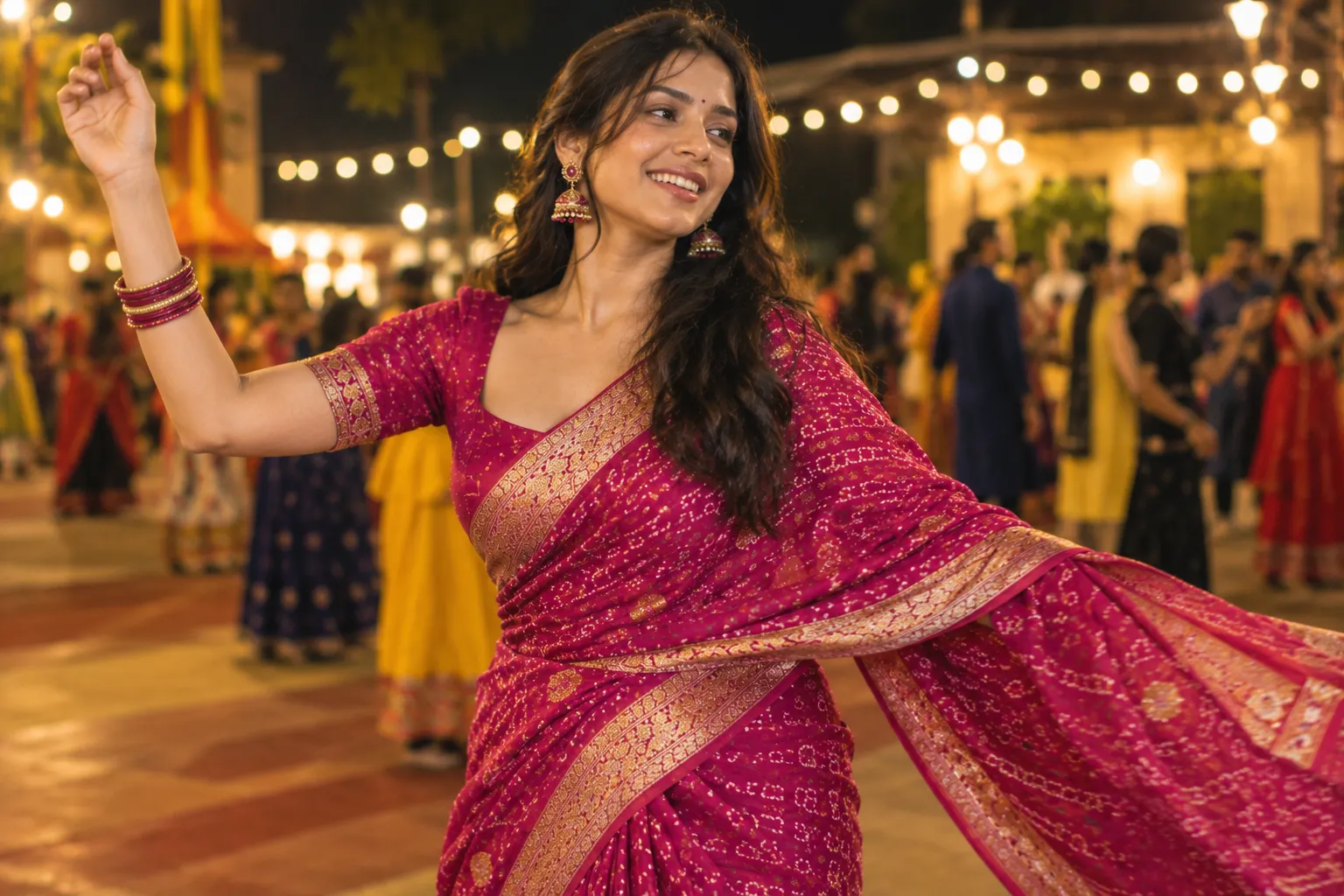
And honestly, if you know you will be standing and dancing for hours, at a Navratri garba night for instance, it is worth choosing a slightly less extreme fit than you would for a seated dinner. A saree that flatters perfectly for the first photo but has you adjusting it all night is not actually doing its job.
Fabric Choices That Actually Work for This Shape
Fabric weight changes how forgiving your fit needs to be, which is part of why the saree fabric for hourglass shape question matters as much as the cut.
Lightweight georgette and chiffon follow the body naturally, which is why they are the easiest starting point. Georgette has slightly more body than chiffon, so it holds pleats better through a few hours of standing and walking, while chiffon moves more freely and catches the light with a softness that photographs beautifully even when the drape is not perfect.
Kanjivaram and Banarasi silk work beautifully here too, but be honest with yourself about the weight. Banarasi silk in particular is heavier than most women expect, and the pallu’s pull on your shoulder will start to show in your posture by evening, especially at a full day wedding function.
When people ask what the best saree for hourglass body actually is for a full day event, fabric weight is usually the deciding factor, not colour or print.
The one real mistake I see constantly: choosing a saree because it looked stunning on the hanger, without ever asking the shopkeeper to drape a length over your shoulder and walk a few steps.
A stiff fabric that looked structured on the mannequin can feel like cardboard once it is actually on a moving body.
Keep heavy borders at the hem, not at the waist. A thick, stiff border sitting right at your narrowest point draws a horizontal line exactly where you do not want one, flattening the waist definition the drape and petticoat just worked to create.
What Actually Matters Before You Buy or Get Your Blouse Stitched
Before you commit to a saree for hourglass figure, or hand your blouse piece to a tailor, check two things specifically. Ask where the waist dart will sit relative to your actual natural waist, not a generic size-chart waist, and insist the tailor mark it on your body, not just on paper.
Second, ask for a trial fitting before the final stitches go in, specifically standing and turning at the waist, not just standing straight in front of a mirror. A blouse that looks fine standing still can still pull wrong the moment you move, and for this body type, that difference shows.
This is the kind of check that matters more here than for shapes built on illusion rather than accuracy.
Ethora manufactures its sarees, blouses and kurtas at its own unit in Surat, and sources everything else from Surat’s local textile market. This advice comes from people who actually cut and stitch these fabrics every day, not just style them.
Conclusion
The single biggest lesson here is that the drape gets too much credit and the foundation gets too little. Your petticoat tie point and your blouse’s waist seam decide more about how your hourglass shape reads in a saree than the fabric or the border ever will.
Get those two details right, then choose fabric and comfort trade-offs based on your actual event, not a generic rule. If this kind of honest, detail-first fashion writing is useful to you, there is more of it waiting on the Ethora blog. And our store, stocked directly from Surat’s manufacturing units, is launching soon.
Frequently Asked Questions (FAQs)
Which saree fabric is best for an hourglass figure?
Lightweight georgette and chiffon are the easiest to work with because they follow the body’s natural shape instead of holding a stiff line of their own. Kanjivaram and Banarasi silk also work well, but plan for the pallu’s weight on your shoulder if you are wearing it for a full day event.
Do I need a padded blouse to look good in a saree if I have an hourglass figure?
No, and it usually works against you. Padding adds bulk around the bust that pushes the visual waist definition downward. A precisely fitted, unpadded blouse with the dart landing exactly at your natural waist does far more for this shape than structure or padding ever will.
Where should I tie my petticoat for the best hourglass effect?
Tie it at your actual natural waist, the narrowest point of your torso, not at your navel and not at your hip bone. Bend slightly to one side to find it if you are unsure. Getting this one detail right changes how the entire drape sits more than any fabric or border choice will.
Where can I buy good quality saree blouses online?
Check whether the seller mentions dart placement and lining, not just fabric and colour, since those two details decide the actual fit. Ethora manufactures its blouses and sarees at its own Surat unit, and sources everything else from Surat’s textile manufacturers, giving factory-level fabric knowledge without middleman pricing once the store is live.
Is the Nivi drape the only option for an hourglass figure?
It is the most reliable starting point since it was built around a defined waist, but it is not the only one. Regional drapes like the Bengali or seedha pallu style work just as well once your petticoat tie point and blouse fit are already accurate. The foundation matters more than the draping style layered on top of it.
Getting the waist right in a saree is rarely about the drape you choose. It usually comes down to two details that happen before you even start pleating. Ethora manufactures its sarees and blouses directly at its own unit in Surat, where we see firsthand how a fraction of a centimetre in dart placement changes a fit. For everything outside our own production, we source directly from Surat’s local textile manufacturers, so quality never depends on a middleman. Our store is launching soon, built on exactly this kind of hands-on fabric knowledge.