
Your mother in law is holding a bowl of wet turmeric paste and heading straight for your collar. Somewhere behind her, three cousins are lining up with their own fistfuls, and your phone is already buzzing with someone asking if the photographer has arrived. This is roughly how every haldi ceremony actually goes, no matter how many Pinterest boards promised a soft, dreamy morning in pastel yellow.
Picking the right haldi ceremony outfit is not really about matching a colour palette. It is about surviving two hours of turmeric, oil and rose petals while still looking put together for the photos that come right after. This guide covers the basic ground, plus one layering trick almost nobody writes down for women, even though grooms have been quietly using a version of it for years.
Table of Contents
What Actually Works for a Haldi Ceremony Outfit
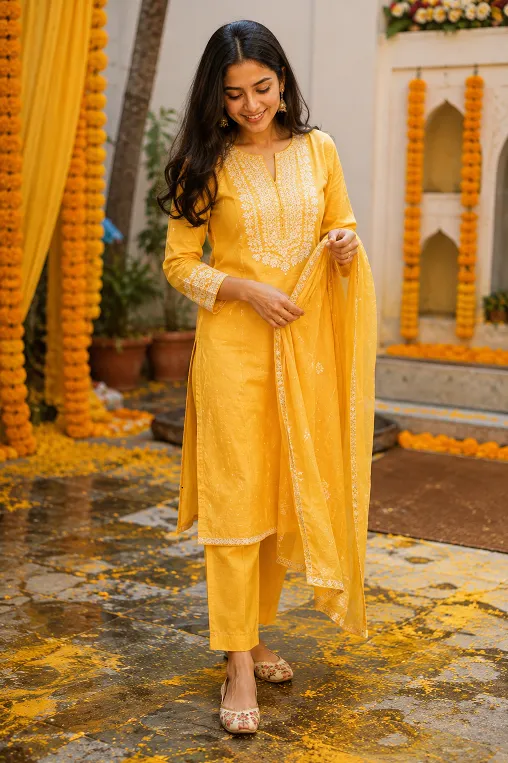
Yellow is the obvious colour, and for once the obvious choice is also the right one. Marigold, mustard, lemon or a warm sunflower shade all read well in photos and tie into the ceremony itself.
But colour is the easy part. The outfit that actually works for this function is one you can sit on the floor in, get turmeric on, and still move around a crowded verandah without holding your dupatta with both hands the entire time.
A simple cotton or georgette kurta set does this better than a heavily worked lehenga.
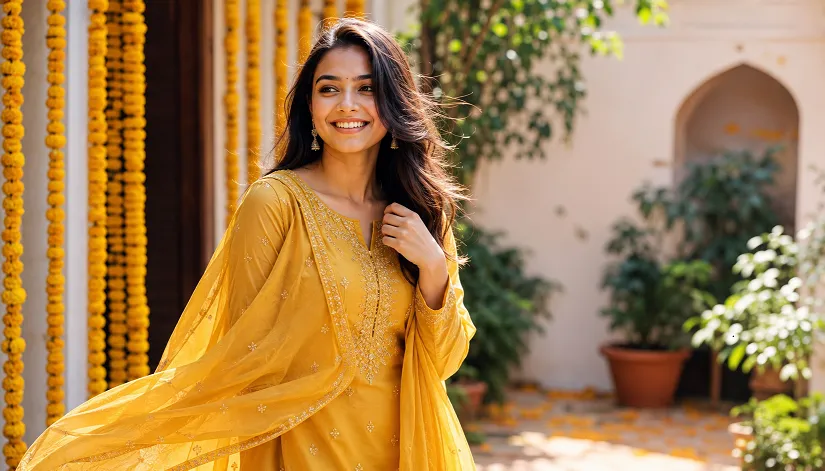
Georgette in particular has enough weight to hold a soft pleat when you are walking, without clinging the way a stiffer silk sometimes does in Gujarat’s humidity by late morning.
If you are the bride, a pre draped saree or a light lehenga without heavy zari work also works, as long as the fabric is something you are genuinely willing to sacrifice a little.
If a saree is the plan, Ethora’s free saree colour matching tool pulls together blouse and jewellery pairings once you have picked a shade.
The Protect Then Reveal Trick Nobody Tells Women About
Grooms have been doing this for years and almost nobody talks about it for women. A groom often wears a plain kurta or even a t-shirt through the actual application, then changes into the real outfit right before the photos start. It works because it separates the messy part from the photographed part.
You can do the exact same thing. Wear your real outfit underneath a simple, easily removable layer, a cotton kaftan, an old dupatta, a plain jacket, anything that absorbs the turmeric and oil while your actual clothes stay clean underneath.
I have watched enough functions get ready backstage to know this is not a compromise. The women who look effortless in the evening photos almost always changed out of something right before the camera came out.
If you already own a jacket you layer over kurtas for other occasions, this is honestly the best use for it. Ethora’s guide to layering a jacket over a kurta has more ideas on cuts that pull double duty like this.
Once the ceremony winds down, step aside, peel off the outer layer, and let the real outfit see daylight for the first time. It sounds almost too simple. That is exactly why it works.
Why Breathable Fabric Advice Can Work Against You
Every haldi guide tells you to wear breathable, natural fabric. Cotton, muslin, natural blends, all the usual advice. Nobody explains why that advice quietly works against you at this specific function.
Curcumin, the yellow pigment in turmeric, bonds fast and sinks deep into natural fibres. This is not just kitchen folklore. Research on turmeric’s use as a natural textile dye confirms this strong affinity for natural fibres, which is part of why turmeric has been used historically as a fabric dye and even a lab stain.
The same breathability that makes cotton comfortable on a humid Surat afternoon is also what lets turmeric pigment sink in fastest.
Polyester or a synthetic blend resists staining much better, but it traps heat and can feel unpleasant against your skin once you are sweating under the sun for two hours straight.
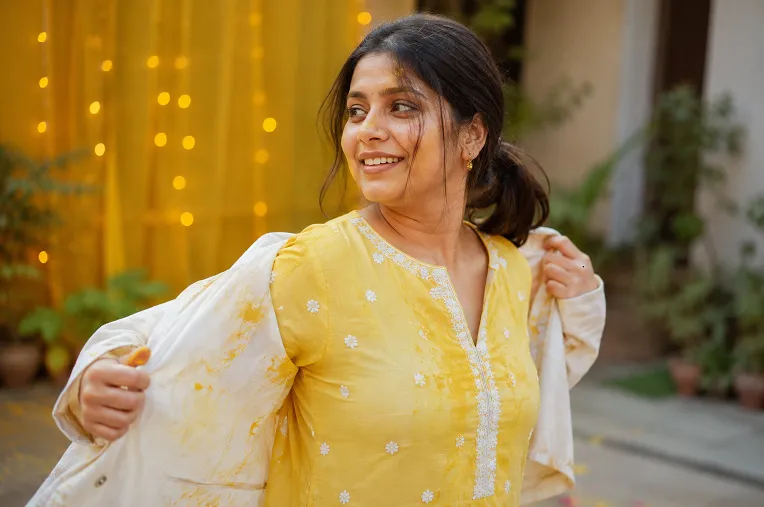
So here is the actual decision you are making. Not fabric versus fashion, but comfort versus stain resistance. Neither choice is wrong. You just need to know which one you are picking, instead of expecting a fabric that quietly does both.
Picking Your Yellow and Getting the Drape Right
Not every yellow suits every skin tone, and choosing a yellow outfit for haldi mostly comes down to warmth versus coolness in the shade itself. A warm mustard tends to flatter deeper skin tones, while a soft lemon or buttercream often works better on lighter, cooler undertones.
If you are wearing a kurta set instead, Ethora’s free kurti colour matching tool maps out a full look, bottom wear, dupatta, jewellery and footwear, once you pick a shade, and mustard specifically shows up as a go to colour for haldi functions.
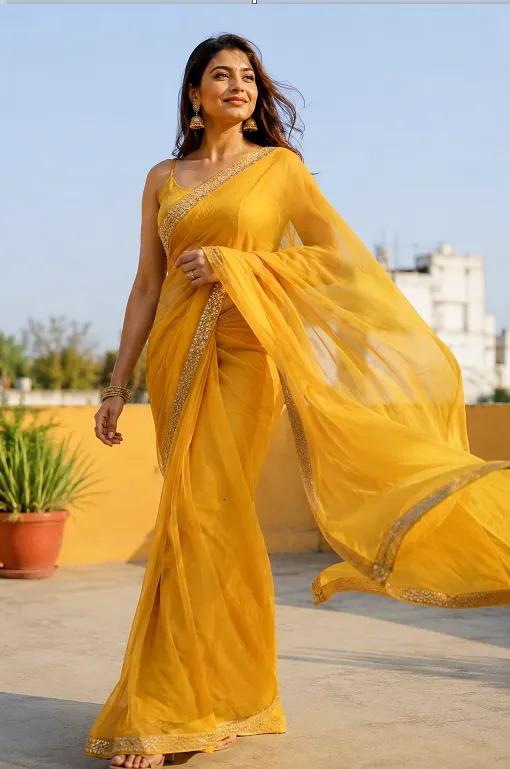
For drape, georgette and soft cotton silk blends move the best. There is a certain way a well pleated georgette dupatta catches light and falls in a single clean line when you walk, instead of bunching at the shoulder the way heavier silk sometimes does by the end of a long function.
Banarasi or heavier silk sarees look stunning in photos, but the weight on your shoulder from the pallu starts to show by the third or fourth hour. If your haldi function runs long, this is worth thinking about before you commit to your best silk saree.
Dupatta, Jewellery and the Small Details That Actually Matter
Most women choose their haldi ceremony outfit based on how it looks on a hanger or in a mirror at the store. That is the wrong way to judge it. The real test is whether you can sit cross legged on the floor in it, get up quickly when someone calls your name, and still look decent doing it.
Skip the heavy dupatta pinning for this one function. A dupatta that stays loosely draped, or one you can tuck at the shoulder and forget about, survives turmeric application far better than an elaborate pinned style that takes twenty minutes to redo if it slips.
Here is an unpopular one. Everyone says wear your dullest, oldest clothes to a haldi so nothing valuable gets ruined.
Honestly, a fresh, well fitted outfit in a colour you actually like does more for how you feel in the photos than an old faded kurta ever will, protect layer or not.
Footwear is the other thing nobody plans for. The courtyard floor gets slippery fast once turmeric water and rose petals start pooling on it, and heels are the first thing to go wrong. Flat juttis or simple flip flops keep you steady and are far easier to wipe clean than embroidered heels caked in turmeric.
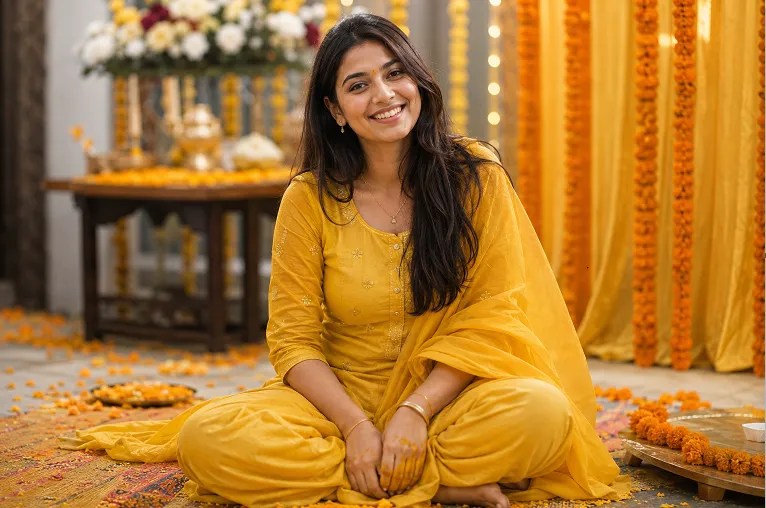
Keep jewellery light. Oil and turmeric paste sit in the crevices of heavy jewellery and take forever to clean properly, especially with any real gold work.
If you are also planning what to wear right after for the next function, Ethora’s guide to mehndi outfit ideas for guests carries the same practical logic forward, just with a little more room for embellishment.
What to Check Before You Buy
Before you buy anything for a haldi function dress, decide upfront which trade off you are making. Are you buying a piece you are fully comfortable seeing stained, or one you genuinely need to protect through the function.
If it is the second one, plan for a removable outer layer from the start rather than hoping the fabric magically resists everything on its own. Check the fabric content on the label too, since a cotton silk blend behaves differently under turmeric than a poly blend does.
We manufacture our sarees, kurtas and lehengas directly at our unit in Surat, and everything else we sell comes straight from Surat’s local textile market. That is the kind of thing you notice once you have actually handled fabric under a working loom, not just styled it for a shoot.
Getting Ready Without the Stress
The outfit that photographs best on a haldi morning is rarely the most expensive one in your wardrobe. It is the one you can move in, sit on the floor in, and are not silently panicking about every time someone comes at you with a fistful of turmeric.
Pick your fabric knowing the trade off, plan a removable layer if you need one, and let the rest of the morning happen without worrying about your outfit.
If this kind of practical, no nonsense styling advice is useful, there is more of it on the Ethora blog. Our store is launching soon, with pieces made and sourced directly from Surat’s textile hub.
Frequently Asked Questions (FAQs)
What should I wear for a haldi ceremony if I am a guest?
Guests can follow the same practical rules as the bride, just with less embellishment. A simple cotton or georgette kurta set in yellow, mustard or coral works well, and skipping heavy jewellery makes cleanup easier afterward.
Can I wear white to a haldi function?
White is genuinely the worst choice for a haldi function since turmeric stains show up immediately and permanently on it. Stick to yellow, mustard, coral, orange, or even a soft green if you want to skip yellow altogether.
Does turmeric stain silk more than cotton?
Silk and cotton both stain, but silk often holds the stain in a patchier way since the fibre does not absorb evenly the way cotton does. Chiffon, being a finer weave, tends to show turmeric stains faster than a thicker georgette simply because there is less fabric surface to spread the pigment across.
Where can I buy good quality haldi function dress fabric online?
Check the fabric content and weave closely before buying anything for a haldi function dress, since a genuine cotton silk blend behaves very differently under turmeric than a synthetic mix. Ethora manufactures sarees, kurtas and lehengas directly at its own unit in Surat, and sources everything else straight from Surat’s textile manufacturers, so you get factory level fabric knowledge without paying middleman pricing.
How do I remove turmeric stains from clothes after the ceremony?
Rinse the stained area with cold water immediately, never hot, since heat sets the pigment into the fibre. Dab the spot with a mix of mild soap and a little vinegar, then let the garment dry in direct sunlight, which helps fade whatever turmeric is left behind.
Getting your haldi outfit right is really about choosing the right trade offs before the turmeric starts flying. Ethora manufactures its sarees, kurtas and lehengas directly at its own unit in Surat, and sources everything else straight from Surat’s local textile manufacturers. Our store is launching soon, bringing that same factory level fabric knowledge to your wardrobe.
Pingback: Wedding Guest Outfit Ideas By Season: 5 Effortless Picks | Ethora