You have just tried on a new patiala suit before a wedding function, and something feels off. The pleats look bulky instead of graceful. The kameez is either swallowing you or too short to feel right.
You checked three fashion blogs before this one and all three told you the same three things. Short kurti. Straight cut. Minimal jewellery. You did all of it and it still does not look the way it does on the model in the photo.
That is because patiala suit styling has a few real variables that most guides skip entirely. This guide covers the basics you already expect, but it also gets into the parts that actually decide whether your patiala suit looks put together or just heavy. Fit by proportion, fabric that behaves as one outfit instead of two, and a dupatta drape chosen for your neckline, not picked at random.
Table of Contents
Getting the Kameez Length Right for Your Frame
Every patiala suit article says the same thing. Wear a short kameez so the pleats show. That advice is not wrong, but it is incomplete, and incomplete advice on a proportion-heavy silhouette like this one can genuinely backfire.
A short kameez is not a fixed length. It is a ratio between your torso and your legs. If you have a longer torso, a kameez that hits at the hip can visually cut you in half and make you look shorter than you are. If you have a shorter torso, that same length can look proportionate and even lengthening. There is no universal number here, and any article that gives you one is guessing.
Here is a simpler way to check it on yourself. Stand in front of a mirror and look at where the kameez ends relative to your natural waist, not your navel. If the kameez ends anywhere between two and four inches below your natural waist, it will usually show the pleats without cutting your silhouette awkwardly. Taller women with longer legs can go slightly shorter. Women with a shorter lower body should let the kameez fall a little longer, closer to mid thigh, so the pleats still peek out without the proportion looking top heavy.
Most women choose a kameez length based on what looks good on the hanger. That is the wrong way to do it. A hanger has no waist, no hips and no legs to throw off the ratio. Try it on, look at yourself sideways, and judge the length against your own body, not the mannequin’s.
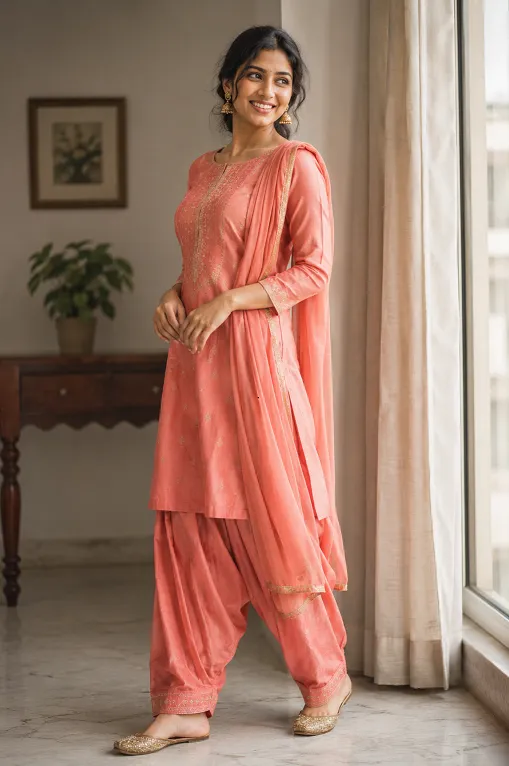
Tip for a Petite Frame: Go Deep on the Neckline, Not Just Short on the Kameez
If you have a petite frame, the instinct is usually to go even shorter to avoid looking swallowed by the volume, but that often backfires. A deep V-neckline does more for a petite frame than a shorter kameez does, because it elongates the upper body instead of just cropping it. Pair that with a dupatta that is a little shorter than usual, draped simply over one shoulder instead of left long and loose, so it does not add visual weight to an already smaller frame. The goal is not to shrink the outfit to match your height. It is to redirect the eye upward.
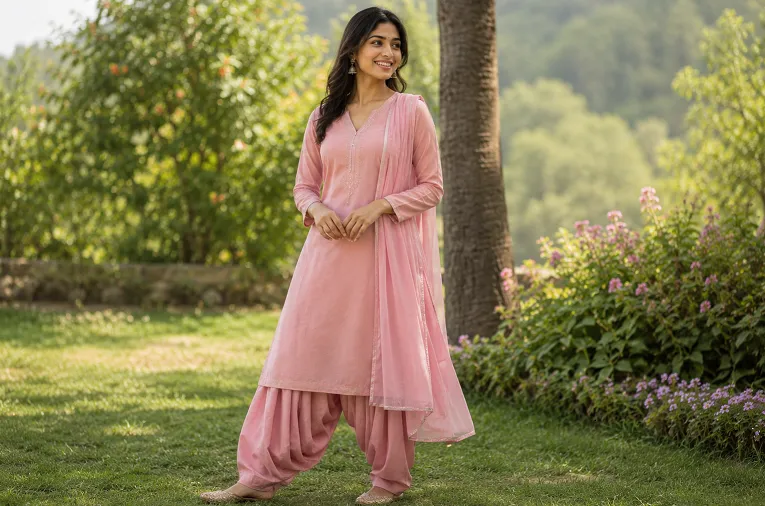
Tip for a Curvier Frame: Let the Pleats Work in Your Favour
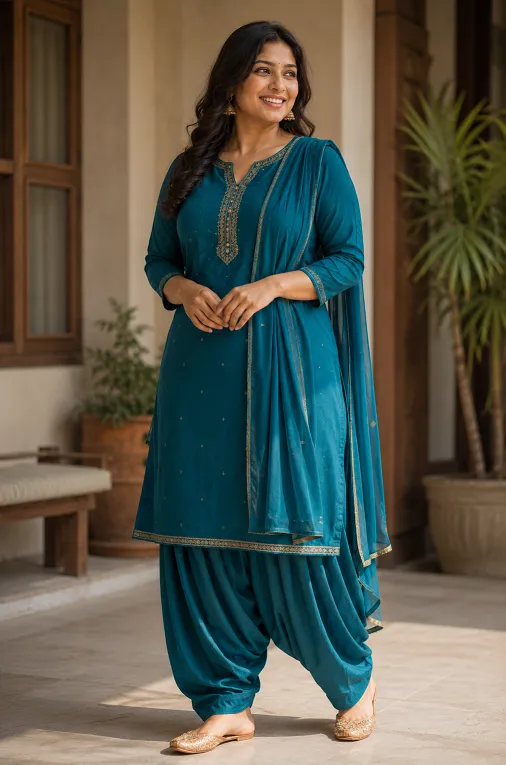
On a curvier or fuller figure, the patiala salwar actually works in your favour more than most silhouettes do, and this is worth saying plainly because so much styling advice for fuller figures defaults to hiding volume rather than working with it. The pleats are already built to move and skim rather than cling, so the salwar itself is rarely the problem.
What matters more is the kameez. A straight cut that skims the body without pulling tight anywhere, paired with a salwar close to it in fabric weight, lets the outfit fall the way it is designed to instead of fighting your shape. Loose is not the same as shapeless here, and a well fitted kameez in a rich colour will do more for you than an oversized one chosen out of caution.
Why the Fabric of Your Kameez and Salwar Need to Match in Weight
This is the part almost nobody talks about, and it is the difference between an outfit that moves like one piece and an outfit that looks like two separate garments stitched together for the day. Patiala salwars have always needed extra fabric to get this effect right. Wikipedia’s entry on the Patiala salwar notes that the garment traditionally takes close to double the material of a regular salwar, which is exactly why the pleats hold that heavy, layered fall instead of sitting flat.
Patiala salwars are usually made in soft, flowing fabrics like cotton, chiffon or crepe, because the fabric needs enough movement to hold all that pleating without looking stiff. If you then pair it with a kameez in a heavier, structured fabric like raw silk or thick brocade, the two pieces will move differently when you walk or sit.
The salwar sways and settles. The kameez holds its shape and barely shifts. Your eye picks up on that mismatch even if you cannot name what feels wrong, and this is exactly where good patiala suit styling separates itself from an outfit that just happens to be worn together.
Banarasi silk is heavier than you expect. If your kameez is Banarasi and your salwar is a soft crepe patiala, the weight difference will show by the time you have been standing and moving for a few hours at a function. The kameez will start to feel like it belongs to a different outfit entirely. Georgette, on the other hand, has more body than chiffon, so it holds its shape a little better through movement, which makes it a smarter kameez fabric to pair with a flowing patiala salwar than something stiffer.
The fix is simple once you know to look for it. Match fabric weight, not just fabric type. A soft cotton patiala salwar pairs naturally with a soft cotton or lightweight chanderi kameez. If you’re still deciding between silhouettes altogether, our anarkali vs straight salwar kameez comparison breaks down how each cut behaves in movement, which matters just as much with a patiala salwar.
When both pieces are close in weight, the outfit reads as one coherent garment instead of a kameez and a salwar that happen to be worn together.
Which Dupatta Drape Works With Which Neckline
Most articles list dupatta drapes like a menu. Pinned one shoulder. Front pallu style. Cowl drape. What they never tell you is which one actually suits your kameez neckline, so you end up picking whichever looks nicest in a photo without knowing if it will work on your own outfit.
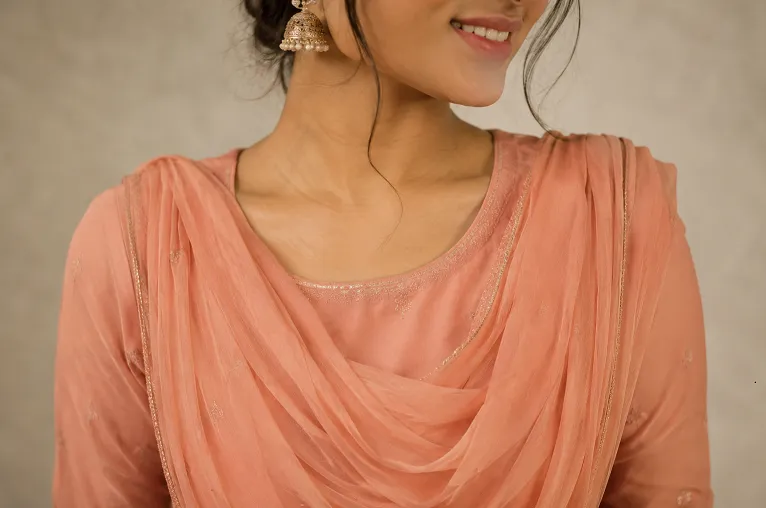
The logic is simpler than it looks once you connect the two. A broad, round neckline exposes more of the collarbone and upper chest area, so a cowl drape or a C-drape across the front fills in that space and balances the neckline instead of leaving it looking bare. If you have a simpler round neckline or a collared kameez, that same cowl drape will look like too much fabric bunched in one place. A pinned one-shoulder drape works better here because the neckline is already balanced on its own and does not need extra volume near the chest.
Think of the dupatta as completing the neckline, not sitting separately from it. That one shift in how you choose your drape changes how finished the whole outfit looks, even before anyone notices the salwar or the jewellery.
Jewellery, Footwear and the Finishing Details
Keep jewellery minimal, this part every guide gets right, but the reason matters. Patiala suits already carry visual weight through the pleats. Heavy jewellery competes with that instead of complementing it. A single statement piece, like jhumkas or a simple choker, does more for the outfit than layered pieces that fight for attention with the pleats already doing their job.
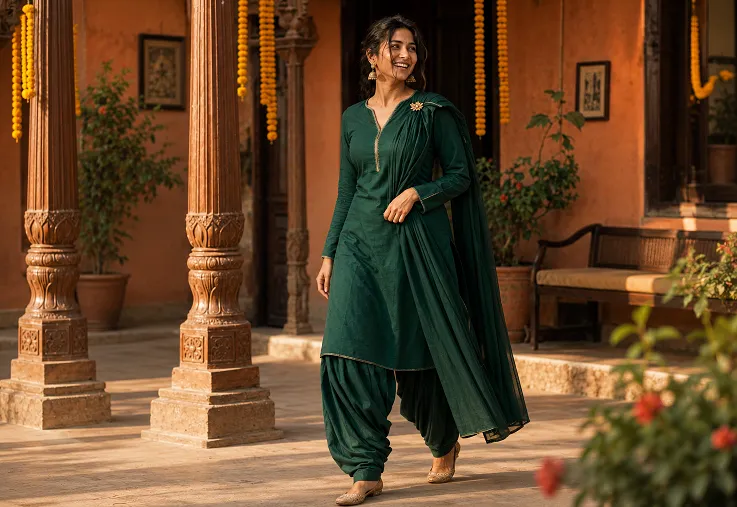
Here is an opinion that will go against most styling advice. Everyone tells you to keep colours toned down with a patiala suit because the silhouette is already dramatic. Honestly, a well fitted patiala suit in a strong colour, a deep maroon or a bottle green, looks far more confident than a muted version of the same outfit. The pleats were made to be seen, not apologised for.
For footwear, juttis remain the most natural pairing because they sit low and let the salwar’s fullness stay the visual focus. Heels work too for evening functions, but avoid anything with heavy embellishment on the shoe itself, since it starts competing with the pleats for attention the same way jewellery does.
If you are wearing this to a Navratri or Diwali function where you will be standing and moving for hours, comfort matters more than most people admit. A cotton or cotton-blend patiala salwar breathes far better through a Gujarat or Rajasthan evening than a synthetic one that traps heat against the skin. If Navratri styling specifically is on your mind, our garba night outfit guide goes deeper into what actually works for hours of dancing.
The Crop Top and Patiala Fusion Trend
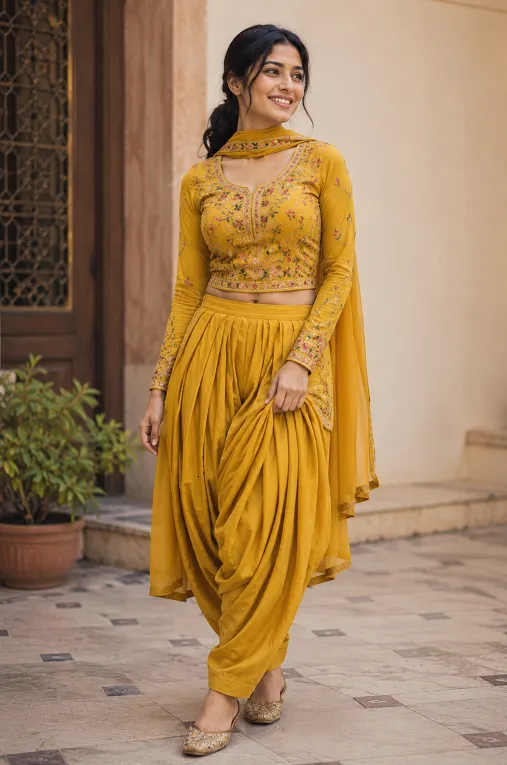
There is a newer way younger women are wearing patiala suits, and it is worth mentioning even though it will not suit every occasion. Instead of a traditional kameez, a fitted, often embroidered crop-style top is paired with a heavily pleated patiala salwar, with the dupatta tied in a modern neck style rather than draped the traditional way. It shifts the visual focus to the waist and lets the pleats carry the outfit on their own, which is a very different effect from the elongated, covered silhouette the rest of this guide is built around.
Honestly, this look works best for college fests, sangeet functions or festive get-togethers where a more relaxed, contemporary styling fits the mood. It is not the version to wear to a formal family function or a workplace event, where the traditional straight kameez still reads as more appropriate. Worth trying once you know where it fits, not something to default to everywhere.
What to Check Before You Buy a Patiala Suit
Before you buy, check the fabric of the kameez and salwar against each other, not just against the price tag. This one check is the difference between smart patiala suit styling and an outfit that looks fine on the hanger but not on you.
Ask if both pieces are close in weight and drape quality, because that single detail decides whether the outfit will move as one piece or feel disconnected the moment you start walking. A soft crepe salwar paired with a stiff, heavy kameez fabric is one of the most common mismatches sold as a set, and it only becomes obvious once you are wearing it out.
Run the fabric between your fingers if you can. It should feel soft enough to fall into pleats naturally, not stiff enough to hold a shape on its own. This is something we notice constantly at our own unit in Surat, where we manufacture salwar kameez directly and also source pieces from Surat’s local textile market when something falls outside what we make ourselves, so this advice comes from people who actually handle these fabrics every day, not just style them for photos.
Conclusion
Patiala suit styling looks effortless when the length suits your own proportion, the fabric weight matches across both pieces, and the dupatta drape actually works with your neckline instead of being chosen at random. Get those three things right and the styling advice everyone else repeats, short kameez, minimal jewellery, becomes a lot easier to apply well. There is more to explore on the Ethora blog if you want to go deeper into fabric and styling choices for other Indian outfits. Our store is launching soon, with pieces made directly at our Surat manufacturing unit and sourced from trusted local textile makers.
FAQ
Can patiala suits be worn for office wear or only for festive occasions?
Yes, a plain cotton patiala salwar with a simple straight kameez works fine for office wear, especially in warmer cities. For more on what holds up through a full workday, check our salwar kameez for office guide. Save the heavier embroidered patiala suits for festive occasions like Diwali or wedding functions where a bit more volume and shine suits the setting.
How much fabric is needed to stitch a patiala salwar?
A patiala salwar typically needs more fabric than a regular salwar because of the extra pleating, usually around 3.5 to 4 metres depending on your height and how full you want the pleats to look. Ask your tailor to account for shrinkage if the fabric is cotton, since cotton often shrinks slightly after the first wash.
What kind of kurti or kameez suits a patiala salwar best?
A straight cut kameez that ends between two and four inches below your natural waist generally works best, adjusted for your torso length. Avoid A-line or flared kameez styles here since they add volume on top of an already voluminous salwar and can make the silhouette look bulkier than intended.
How do I know if the fabric quality is good before buying a patiala suit online?
Check whether the listing mentions the exact fabric for both the kameez and the salwar separately, not just one fabric name for the whole set. Ethora manufactures its salwar kameez directly at its own unit in Surat and sources other pieces straight from Surat’s textile manufacturers, which means the fabric details listed come from actual production knowledge rather than a reseller’s guess, and you get factory level quality without paying middleman markup.
Getting a patiala suit right comes down to details most listings never mention, like whether the kameez and salwar fabric actually move together. We manufacture our salwar kameez directly at our own unit in Surat, and for pieces outside our own production, we source straight from Surat’s local textile manufacturers so quality never gets diluted along the way. Our store is launching soon, built around exactly this kind of fabric-first thinking.