There is a particular kind of frustration that happens around 2 PM when your kurta starts clinging, the fabric has lost whatever structure it had in the morning, and you still have three hours of work left. It is not a big problem. But it is the kind of thing that makes you feel slightly less put together than you wanted to, for no good reason.
That feeling is a fabric problem, not a style problem.
And once you understand that, the way you choose kurtas changes completely. This article is about kurta styles for working women in India that actually hold up through a full workday, what cuts and fabrics to look for, what to check before you buy, and what to quietly retire to the back of your wardrobe.
Table of Contents
The Straight Kurta Is Still the Most Reliable Office Piece You Own
There is a reason the straight kurta for office has survived every trend cycle. It is not boring. It is just honest.
A well-cut straight kurta, ideally hitting between mid-thigh and knee, works across almost every Indian office environment. It layers over churidars, palazzos, straight-fit trousers, and even well-fitted jeans without fighting any of them for attention. The silhouette is clean, the proportions are forgiving, and it reads as put together even when you have barely tried.
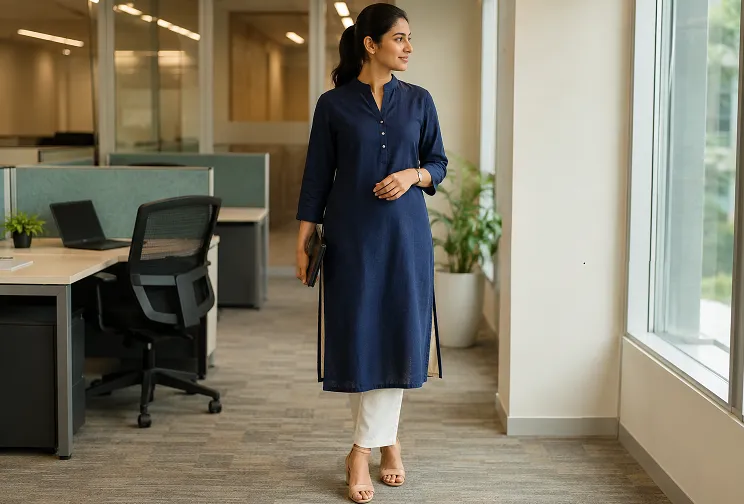
What makes the difference is the fabric. A straight kurta in cotton-linen or a good quality cotton slub will feel genuinely comfortable through a long workday, breathes in the kind of heat that builds up in Indian offices by afternoon, and still looks structured. The same silhouette in a cheap synthetic fabric turns shiny under fluorescent lights and starts clinging by 3 PM. Not the same garment at all, even if it looks identical on the hanger.
This is something you only understand once you have handled both fabrics side by side before production. A cotton-linen blend has a subtle texture to it, a slight resistance when you run your hand across the weave, that tells you it has structure. A synthetic imitating the same look feels smooth in a way that has no character to it. That difference in hand-feel is exactly what separates a kurta that holds its shape by evening from one that does not.
A-Line Kurtas Are More Versatile Than Most Women Realise
The A-line kurta gets overlooked in office wardrobe conversations, and it should not.
Because the kurta flares gently from the waist down, it gives you a little more ease of movement than a straight cut, which matters if you are sitting for long stretches or commuting by local or auto. It also works across a wider range of body types without adjustment.
Pair it with a churidar or slim-fit pants rather than wide palazzos. The A-line already has volume in the lower half of the kurta. Adding a palazzo underneath can make the whole look feel heavy from the waist down. This is one of those small decisions that changes how the outfit photographs in your brain before you leave home.
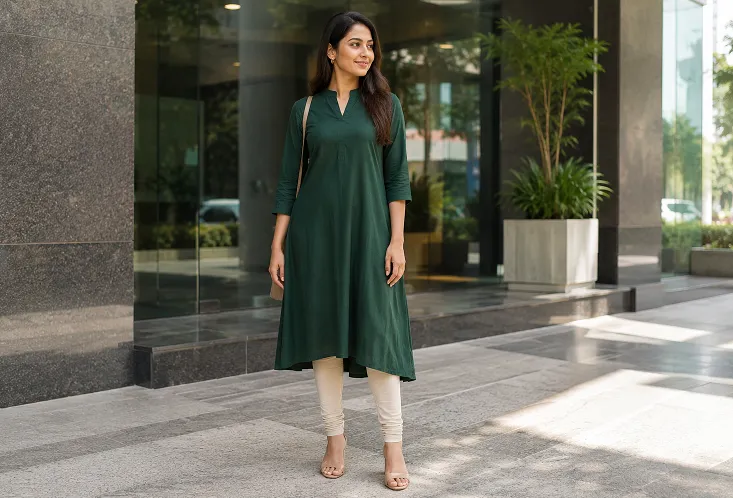
For fabric, modal works particularly well in an A-line silhouette. It has a beautiful drape, feels smooth against the skin in a way that plain cotton does not, and it does not cling in humidity the way rayon does. If you have ever worn a rayon kurta on a Mumbai afternoon and spent the rest of the day adjusting it, you know exactly what I mean. Modal and rayon look almost identical on a hanger and are often confused in the market. The difference is in how the fabric is constructed at the fibre level. Modal holds its shape after washing and does not lose its drape. Rayon softens and stretches over time, which is why that kurta that fit so well in the trial room looks slightly different six months later.
The One Office Kurta Mistake Women Keep Making
Most women choose their office kurta based on how it looks standing still. This is the wrong way to do it.
Sit down in the trial room. Walk to the mirror. Pretend to carry your bag. A kurta that works for a workday needs to work in motion, not just in a static pose.
Specifically, watch for two things. First, does the neckline gap open when you lean forward? A deep keyhole or V-neck that looks elegant upright can become very distracting in a meeting. Second, does the kurta hem ride up significantly when you lift your arm to reach something? A kurta that hits your thigh while standing might be sitting quite high by mid-morning.
These are not hypothetical problems. They are the reason that kurta sits unworn at the back of your wardrobe.
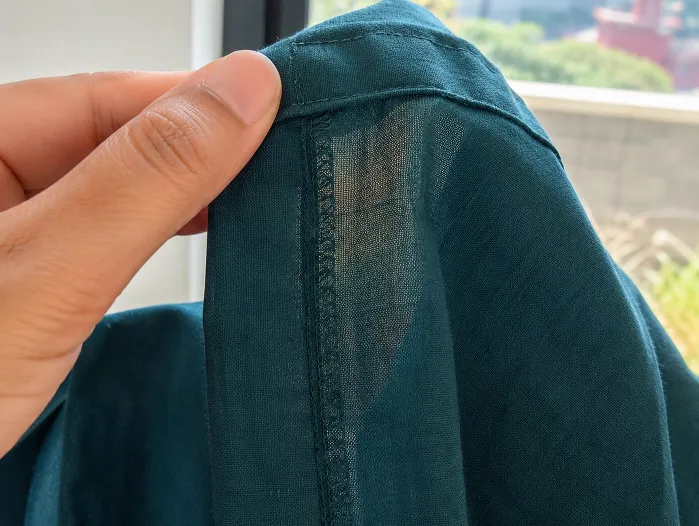
There is also a construction detail worth checking: the seam allowance at the side. Hold the kurta up to light and look at how much fabric is left inside the seam. A generous seam allowance means the garment was cut with some room. A very narrow one means if the seam even slightly opens, there is nothing to work with. This is a basic quality check that takes five seconds and tells you a lot about how carefully the kurta was made.
Formal Kurta Styles for Working Women on Client-Facing Days
There is a specific category of office kurta that the industry calls “formal” but rarely defines properly. For a working woman in India who has client meetings, presentations or senior-level interactions, formal kurta designs need to check a few more boxes than everyday office wear.
Look for:
- Minimal surface embellishment. A small border print or a subtle thread detail at the neck is fine. Heavy embroidery, large block prints, or mirror work read as festive, not professional.
- Structured fabric with some body. Chanderi cotton, khadi, or a fine cotton-silk blend all fall here. They hold their shape through the day and do not develop the soft wrinkles that cotton lawn or mul cotton start showing by noon.
- A longer length. For formal situations, a kurta that falls to or just below the knee tends to read as more considered than a shorter one.
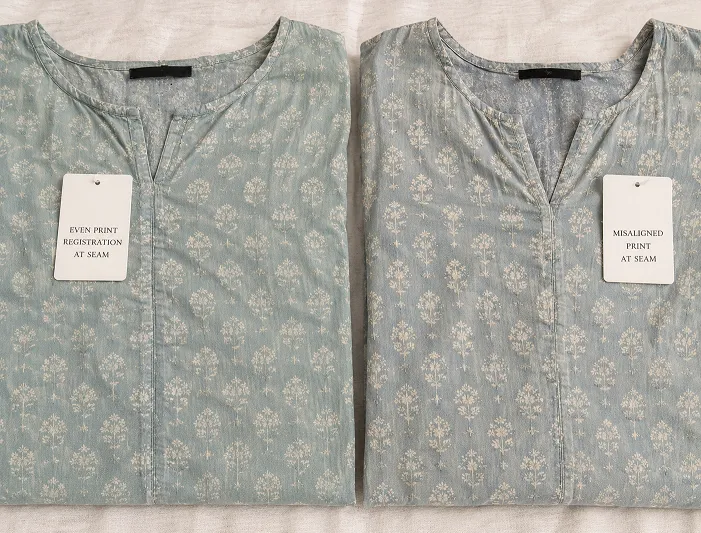
- Consistent print registration. If the kurta has a border or repeat print, check that it runs evenly along the seams and hem. A print that does not line up at the side seam is a sign of rushed production, and it is visible in person even if it is subtle in a photo.
One fabric note from years of working around textile production in Surat: chanderi cotton is often confused with chanderi silk, and they are not the same thing. Chanderi cotton has a gentle sheen but is much lighter in weight and more breathable. Chanderi silk is richer and heavier. For a full day at work, especially through summer, the cotton version is the smarter choice.
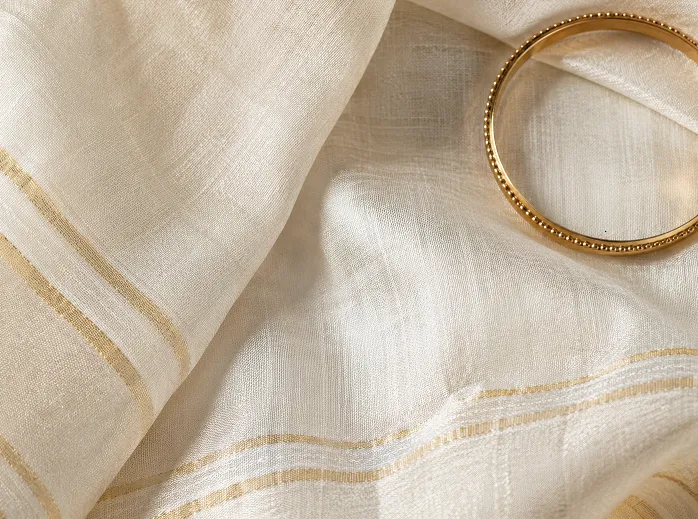
On the question of print quality, it is also worth checking colour consistency across the full width of the fabric, not just the centre. When fabric comes back from a processor, the edges sometimes receive slightly less dye than the middle, which creates a subtle variation that becomes visible once the kurta is cut and stitched. You will not notice it in a shop under artificial light. You will notice it in daylight. Run your eye from the shoulder seam to the side seam before buying.
The Unpopular Opinion on Office Kurta Colours
You have probably read that working women should stick to neutral kurtas. Navy, white, grey, beige. Professional. Safe.
Here is the honest counterpoint: safe colours worn without confidence look forgettable, not professional.
A well-fitted kurta in a deep teal or a warm rust or even a clear mustard yellow makes an impression because the fit is right and the fabric is good, not because it is playing it safe. Colour in a professional context becomes a problem only when the garment itself is poorly cut, the fabric is cheap, or the print is too busy for the setting.
The goal is intention, not neutrality. If you want to build a work wardrobe around colours that actually work together rather than defaulting to safe beiges and navies, this guide on colour combinations for ethnic wear is a good place to start.
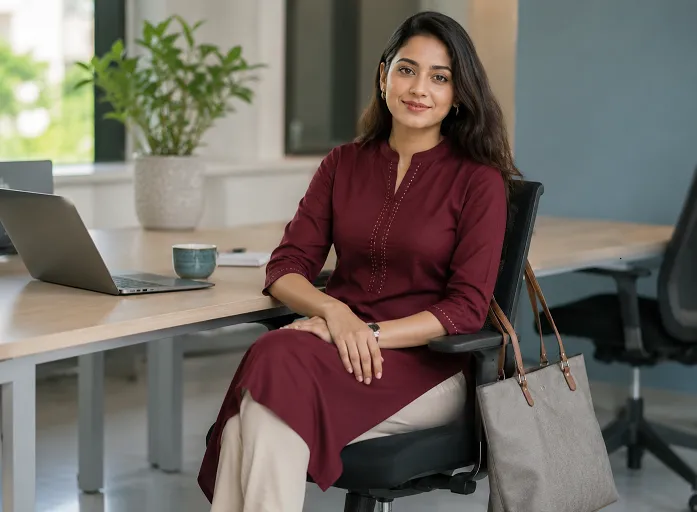
What you actually want to avoid in office situations is not bright colour. It is busy, confused, or overly embellished clothing that reads as underdressed for the occasion or overdressed for a weekday. A plain deep burgundy straight kurta in a structured fabric will almost always look more professional than a faded beige one with an uneven hem.
And on the subject of fading: colour fastness is directly tied to how well a fabric was processed before it reached you. A kurta that bleeds colour in the first wash or fades noticeably after three washes was either dyed in a hurry or not fixed properly during processing. This comes down to a fabric finishing step that most consumers never hear about. Fibre2Fashion’s guide on fabric pre-treatment and shrinkage explains how pre-treatment at the manufacturing stage directly affects how a garment behaves after washing. It is not about the colour being bright. It is about the quality of the work behind it. When you are evaluating a coloured kurta, check the inside seam. If the colour is significantly lighter on the underside of the fabric, the dye did not penetrate fully. That kurta will fade faster than one where the colour looks consistent all the way through.
What to Pair With Your Office Kurtas (and What to Leave at Home)
The kurta is only half of it.
For most Indian offices, the safest and most polished pairing for a formal kurta is straight-fit trousers in a neutral, well-ironed fabric. Not palazzo pants. Not patiala salwar. Those are lovely, but they add volume and informality that shifts the whole look away from professional.
If you want to wear a palazzo, pair it with a shorter, more structured A-line kurta and make sure the fabric of the palazzo has enough body to fall cleanly. Crepe works better than georgette here. Georgette has more movement than crepe, which means it shifts around more as you walk. In an office setting, that constant adjustment gets old quickly.
On the dupatta question: if your office has air conditioning and you are comfortable managing it, a dupatta adds a certain elegance to a straight or A-line kurta. If you are taking an auto, managing a laptop bag, and possibly eating lunch at your desk, skip it or tuck it in. A dupatta that keeps sliding is more distracting than helpful.
The footwear question is simple. Block heels and kolhapuris both work well with kurtas. Stilettos technically match but require a specific kind of energy to pull off for a full workday. Flat mojris are beautiful but work better for shorter kurtas. Choose based on the actual day you are having, not just the outfit. And if you are thinking beyond kurtas, this guide on salwar kameez for office covers everything you need to know about making the full salwar kameez silhouette work in a professional setting.
Conclusion
The best kurta styles for working women are not the ones that look most impressive in the shop. It is the one that holds its shape by 4 PM, does not require constant adjustment, and makes you feel like yourself rather than like you are dressed for someone else’s idea of professional. Fabric quality, construction details, and fit do more work than style alone. Start with one well-cut straight kurta in a fabric that actually breathes, and build from there. There is plenty more on fabric choices and occasion dressing on the Ethora blog if you want to go deeper.
FAQ
What is the best kurta length for office wear?
For most professional settings in India, a kurta that falls between mid-thigh and just below the knee strikes the right balance. Longer lengths read as more formal. Shorter lengths can work in creative or casual offices but may feel underdressed in client-facing roles. The most important thing is that the length is intentional and the kurta is properly fitted through the shoulders and chest.
Which fabric is best for office kurtas in summer?
Cotton-linen blend and khadi cotton are the most practical for Indian summers. Both breathe well, hold their structure better than plain cotton, and do not develop that limp, deflated look by midday. Avoid synthetic blends entirely in high humidity. They trap heat and start to look worn within hours.
Can I wear a printed kurta to work?
Yes, with some judgment. Small geometric prints, fine stripes, and subtle ditsy florals read as professional. Large abstract prints, bold tropical patterns, or anything that looks festival-ready belongs on the weekend. The scale of the print matters more than whether there is a print at all. Also check that the print is evenly registered across the garment, a print that does not align at the seams is a construction issue that will catch the eye in a professional setting.
How do I make a kurta look more formal for an important meeting?
Fabric and fit do most of the work. Switch from a casual cotton to a chanderi cotton or cotton-silk blend. Make sure the kurta is well-ironed with clean seams. Add simple, understated jewellery. Remove the dupatta if it does not stay in place naturally. These four things alone will shift the impression significantly.
Why do some kurtas fade so quickly after washing?
This comes down to how the fabric was processed before the kurta was stitched. Colour fastness depends on how well the dye was fixed into the fabric fibre during processing. A kurta that fades after two or three washes was most likely not given adequate fixation time, or was dyed using a lower quality pigment. A quick check before buying: look at the inside of a seam allowance. If the colour on the underside of the fabric is noticeably lighter than the face of the fabric, the dye did not penetrate deeply. That kurta will fade faster. Dark colours, especially blacks and navies, are the most telling.
What is the difference between a straight kurta and an Anarkali for office wear?
When thinking about kurta styles for working women specifically, a straight kurta falls cleanly from shoulder to hem with minimal or no flare. The silhouette is contained, easy to move in, and reads as professional across most Indian office environments. An Anarkali has a fitted bodice and a dramatic flare below the waist, which gives it a very different presence. It is a beautiful silhouette but it belongs at a festive occasion or a semi-formal event, not a regular workday. It takes up more physical space in a crowded office or on public transport, and the volume at the hem makes it harder to move quickly and practically through a busy day. For everyday office wear, the straight kurta wins without question. If you want a deeper breakdown of how these two silhouettes compare across different situations, this guide on Anarkali vs straight salwar kameez covers it in detail.