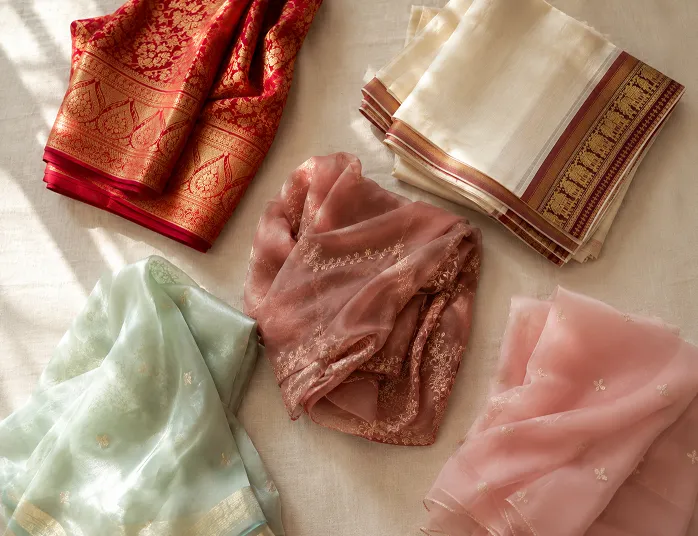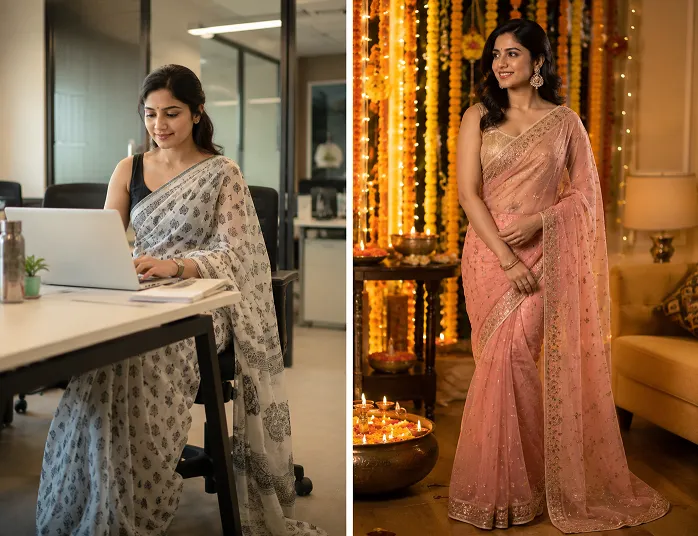
You found an organza saree that looked stunning under the store lighting, sheer, structured, catching the tube light in a way that made you buy it without thinking twice. Then you got home, unwrapped it, and stood in front of the mirror wondering why the pallu would not sit the way it did in the reel you saw before you walked into the shop. That gap between how organza looks in a photo and how it actually behaves once you are wearing it for six hours is where almost all the confusion around this fabric comes from.
This guide is not another list of the same five tips you have already read. It explains why pleating advice for organza sarees contradicts itself online, how to actually tell pure silk organza from synthetic before you order it, and what really happens to this fabric by the time your function reaches hour four. If you have ever bought an organza saree and felt slightly let down by how it wore through the day, this is for you.
Table of Contents
What Makes Organza Different From Every Other Saree Fabric You Own
Organza is a plain weave fabric made from tightly twisted yarns, and that twist is what gives it the crisp, almost paper like body that sets it apart from softer fabrics like chiffon or georgette. Georgette has more body than chiffon so it holds a pleat better when you are walking, but organza goes a step further. It holds its own shape even when you are standing still, which is exactly why it looks structured rather than fluid.
As Wikipedia’s overview of organza notes, a coarser version of silk organza has long been woven in the Bangalore region of India. That is part of why Indian organza sarees often have a slightly different hand feel than the finer French or Italian versions used in Western eveningwear.
This is also the root of the organza vs georgette confusion a lot of women have. Georgette moves with your body. Organza moves around it. Neither is better, they are simply built for different effects. If you want a saree that clings and flows with each step, georgette does that job well. If you want one that holds its silhouette and catches light in sharp, defined folds, that is organza’s territory.
There is also a sound to it. Real organza has a faint, crisp rustle when it moves, almost like the sound of turning a stiff page. Synthetic blends sometimes lose this entirely and just fall flat and silent, which is a small detail most people never notice until they are standing in a fitting room comparing two sarees side by side.
Kora Organza or Soft Organza, and Why the Pleating Advice Keeps Contradicting Itself
Search “organza saree draping tips” and you will find one article telling you to pleat the pallu tightly for a structured finish, and another telling you to leave it open and flowing. Both are right. The problem is that nobody tells you organza is not one fabric, it is a family of fabrics with very different behaviour.
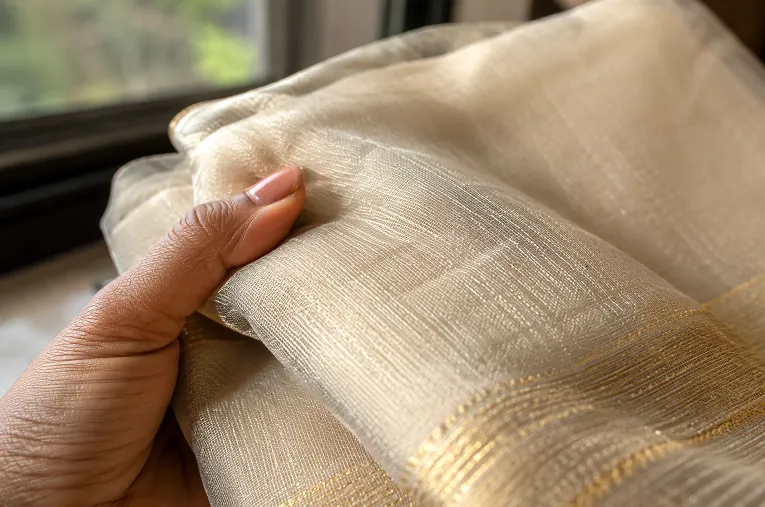
Kora organza is the heavier, stiffer version, often made with a slightly coarser silk yarn. It holds a sharp, structured pleat because the fabric has enough body to keep a fold in place without collapsing. If you have seen a bridal or reception organza saree with crisp, almost architectural pleats on the pallu, that is kora organza doing exactly what it is built for.
Soft organza, sometimes called crush or tissue organza depending on the finish, is lighter and has much less resistance. Try to pin a tight structured pleat into it and it will look stiff and awkward, almost like you fought the fabric into a shape it did not want to hold. This version genuinely looks better with an open, flowing pallu that lets the sheerness do the work.
So the contradictory advice you have read is not actually contradictory once you know which organza you are holding. The mistake most women make is choosing a draping style based on what looked good on someone else’s saree, without checking whether their own fabric is kora or soft first. That is the wrong way to decide, and it is the single biggest reason organza drapes disappoint people who followed generic advice.
Silk or Synthetic, How to Actually Tell the Difference Before You Buy
This is the part almost nobody explains properly, and it matters more online than in a store because you cannot touch the fabric before you order it.
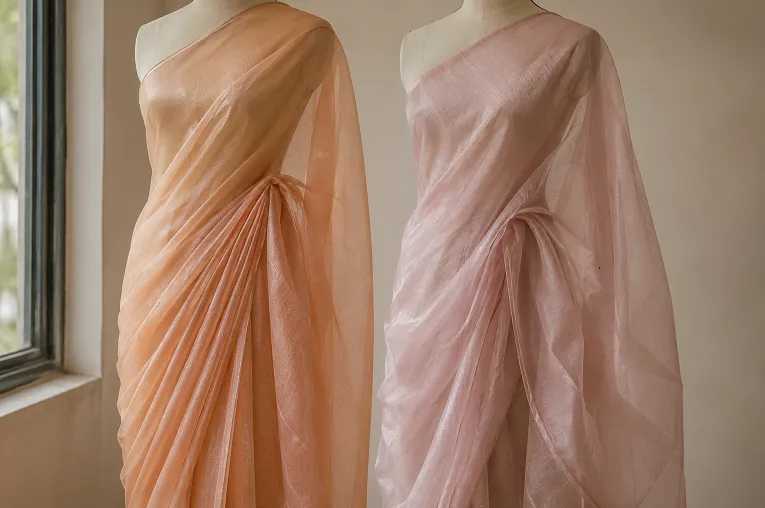
Pure silk organza feels slightly warmer against the skin almost immediately, and it softens faintly the longer you hold it in your hand. Synthetic organza, made from polyester or nylon, feels cooler to the touch and stays that way. There is a faintly plasticky quality to it that does not go away even after you have handled it for a minute. If you rub a small section between your fingers, silk organza has a gentle, slightly textured resistance, while synthetic versions feel smoother and almost slippery.
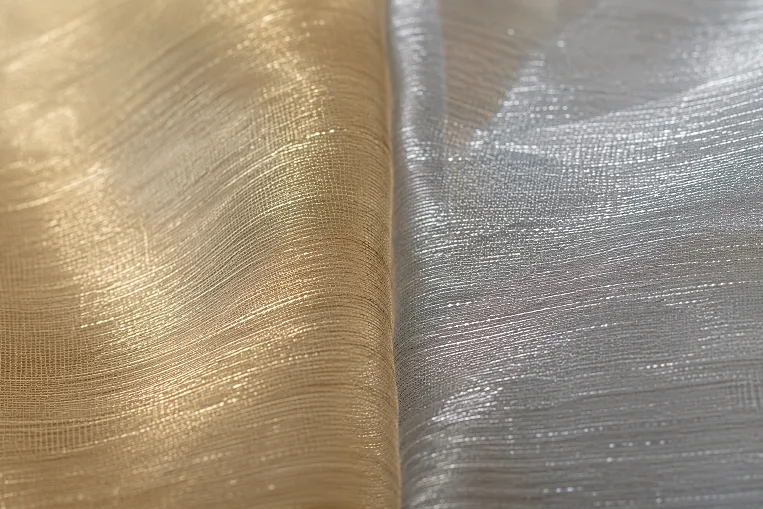
Light behaves differently on each too. Pure silk organza has a soft, slightly muted sheen, it glows rather than shines. Synthetic organza tends to throw a harder, more mirror like reflection under bright light, which is actually why some synthetic sarees photograph as more dazzling in flash photography even though they look flatter and less rich in person.
If you are buying online, check the product description for the yarn content, look closely at close up photos for how the light falls across the fabric, and if the seller allows it, ask for a video in natural daylight rather than studio lighting. If you want a more official check, look for a Silk Mark certification, the Government of India labelling scheme run by the Central Silk Board specifically to confirm a fabric is genuine natural silk. Honestly, a lot of buyers assume a higher price automatically means silk, and that is simply not true. Price alone will not tell you what you are getting.
How Organza Actually Holds Up Through a Full Day in Indian Heat and Humidity
Every article covers how organza looks freshly draped. Almost none of them tell you what happens to it four hours into a Navratri night or a summer wedding in Surat’s own humidity.
Pure silk organza holds its crispness reasonably well even as the evening goes on. It will crease if you sit for long stretches, that is unavoidable with any crisp fabric, but the creases tend to fall out or soften once you stand and move again. Synthetic organza behaves differently in heat and humidity. It can go slightly limp by the second half of a long event, and the edges of the pallu or the border sometimes start to curl inward, especially if you have been near AC vents that dry it out or humid outdoor areas that soften it.
If you are travelling to the function in an auto rickshaw or a crowded local train before the event even starts, that is another hour of creasing before you have even reached the venue. This is exactly the kind of real world detail that decides how good your saree still looks in the last photo of the night compared to the first one. Silk organza generally survives that stretch better. Synthetic organza needs a bit more caution, gentle sitting, avoiding direct AC exposure, and touching up the pleats with your hands rather than an iron if you can manage it discreetly.
None of this means synthetic organza is a bad choice. It is lighter on the pocket and works well for shorter events, day functions, or occasions where you are not sitting through hours of rituals. It simply is not the fabric to choose if you know you are in for a long, humid, seated evening.
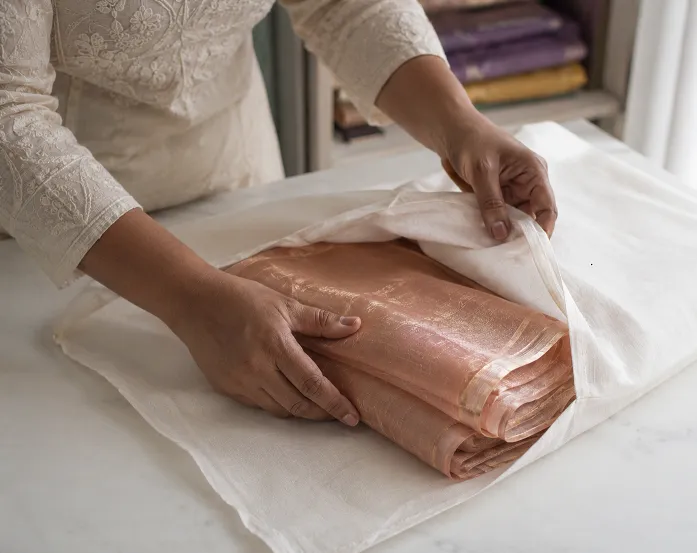
The same crease sensitivity that shows up mid-event also applies to storage. Folding along the exact same line every time creates a permanent crease over months, so shifting the fold slightly each time you store it, and wrapping it in a soft muslin cloth rather than plastic, keeps it closer to how it looked the day you bought it.
Styling an Organza Saree Without Overthinking It
Before jewellery or blouse even enter the picture, the petticoat underneath decides how the saree looks once you are actually wearing it. Organza’s sheerness means a plain cotton petticoat can make the drape look uneven or slightly clingy in humidity, while a smoother satin or shapewear style petticoat keeps the fall clean and lets the pleats sit the way they did in the store. This one change is often the entire reason a saree looks different at home than it did in the trial room.
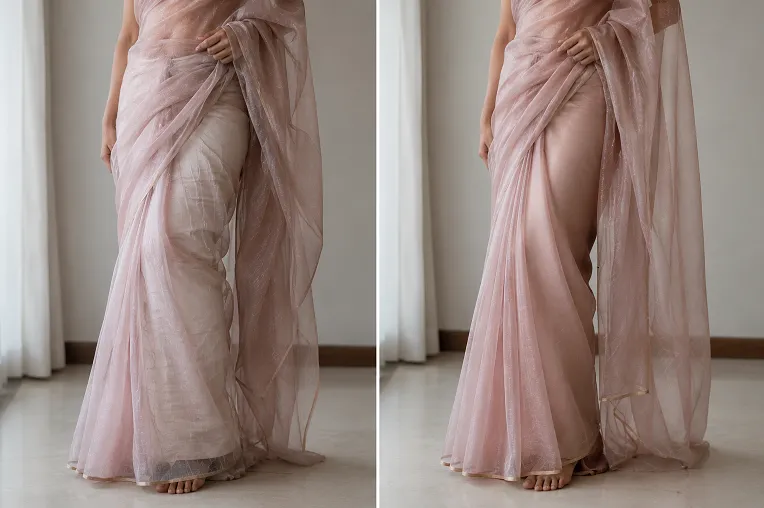
Organza’s sheerness is its biggest styling advantage and also where most women hesitate. The fabric works best with an opaque or lightly contrasting blouse underneath, since the sheer body of the saree needs something solid beneath it to look intentional rather than accidental. Because the pallu is sheer, the back of the blouse shows through more than it would with silk or georgette, so a deep V or embroidered back neck design actually gets noticed here, more than with most other fabrics.
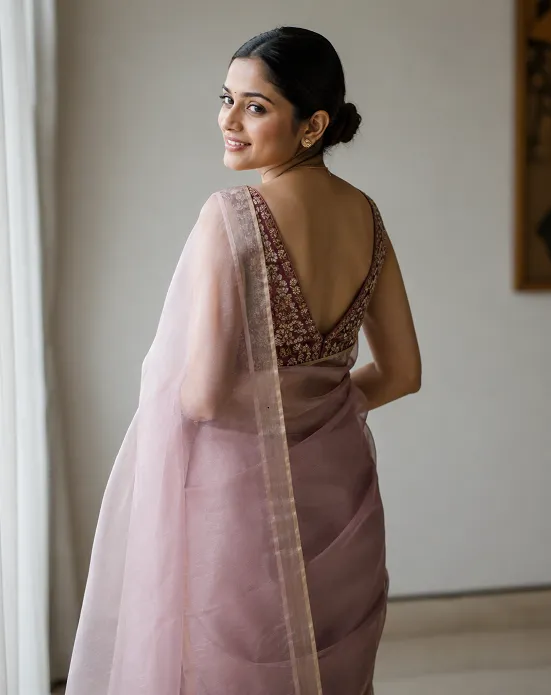
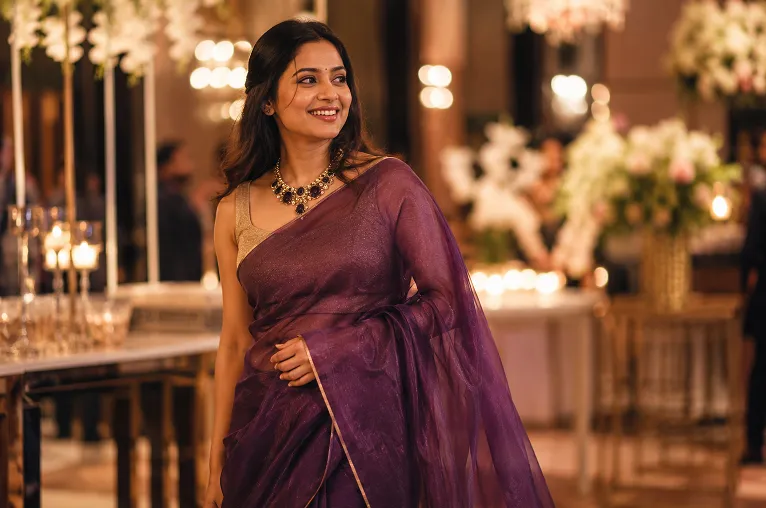
Jewellery works differently here too than the usual “keep it minimal” advice you always hear. Minimal jewellery does suit organza’s crisp, structured look, but that does not mean plain. A single statement piece, a strong choker or a pair of long earrings, actually stands out more against organza’s sheerness than it would against a heavily printed silk saree, simply because there is less visual competition. Layer on too much jewellery and it starts fighting the fabric’s own shine instead of complementing it.
Everyone insists organza needs heavy embellishment to look festive. It genuinely does not. A plain, well draped organza saree in a rich colour with a well fitted contrast blouse often reads as more elegant at an evening function than a heavily embroidered one that competes with the fabric’s natural light catching quality. That is not the popular opinion, but it is the honest one.
For occasions, organza sits comfortably between casual and formal. It works for a Diwali evening at home, a college fest where you want to stand out without overdressing, and lighter wedding functions where you want the shimmer without the weight of a full silk saree. It is not the fabric for a full day Rajasthan summer wedding where you are outdoors for hours, the heat and the structure do not always get along.
If you want to take the drape further, a metallic waist belt cinched over an open pallu turns a traditional organza saree into a cocktail ready look in seconds. It is a styling trick gaining ground at pre-wedding parties and evening dinners, for guests who want something less traditional than a full bridal drape but still want the sheer, structured character organza brings.
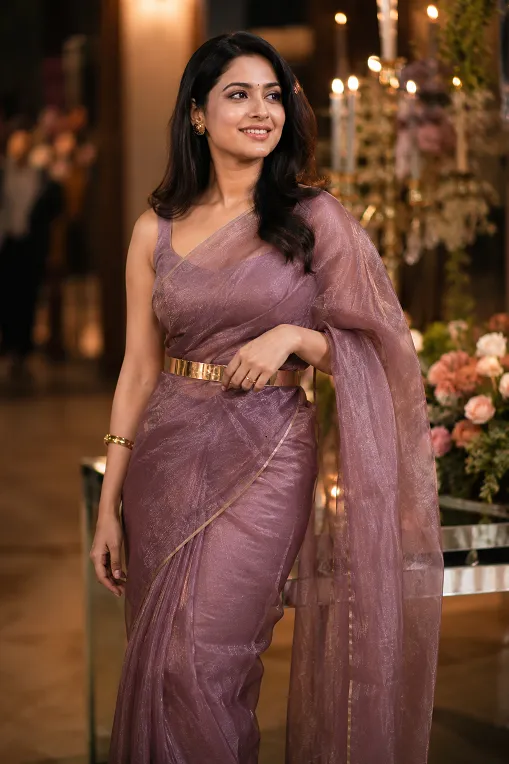
Whether you keep it traditional or add the belt, the version that actually works is the one you forget you are wearing by the second hour. That comfort, more than the styling trick itself, is what makes an organza look last through an entire evening instead of just the first photo.
You can read more on how fabric choice changes by season in our guide to the best saree fabric for summer, and if you are still deciding between organza and a heavier option for a wedding, our piece on saree versus lehenga for wedding functions covers that comparison in more depth.
What to Check Before You Buy an Organza Saree
Buying organza online comes down to one honest check most guides skip. Look past the price tag and the photos and confirm whether you are actually getting silk or synthetic, because the description alone is not always reliable. Ask about the yarn content directly, request a video in daylight if the listing only shows studio shots, and if you can get a fabric swatch or a close up video of the pallu moving, do it. Movement tells you more than a still photo ever will, since silk organza settles differently than synthetic once it is in motion.
We say this because we are not just styling this fabric, we are making it. Ethora manufactures directly at Pahal Silk Mills in Surat, and for anything outside our own production, we source straight from Surat’s textile market, which means the fabric knowledge behind this guide comes from people who actually handle organza on the loom floor, not just style it for a photo.
Conclusion
If there is one thing to take from all of this, it is that organza is not a single fabric with one correct way to wear it. Check whether yours is kora or soft before you decide how to pleat it, check whether it is silk or synthetic before you decide where to wear it.
And plan around how long you will actually be in it before you assume it will look the same at 10pm as it did at 6pm. That is the difference between a saree that photographs well and one that actually holds up through your evening.
If this kind of practical, no nonsense fabric advice is useful to you, there is more of it waiting on the Ethora blog. Our store is launching soon, and everything on it will come directly from our own manufacturing unit and Surat’s textile market, with no middlemen in between.
FAQ
Is organza saree good for summer weather in India?
It depends on which organza and where. Pure silk organza breathes reasonably well and works fine for evening functions even in humid cities like Mumbai, but for a long outdoor summer wedding in places like Rajasthan, a lighter fabric such as cotton or georgette usually holds up better through the day.
Can I wear an organza saree without a petticoat or with a plain one?
You need a proper fitted petticoat underneath, ideally in a colour close to your blouse or the saree’s base shade, since organza’s sheerness means an ill fitting or oddly coloured petticoat will show through. A well fitted petticoat also helps the pleats sit correctly, especially with kora organza.
How do I know if a saree fabric is good quality before buying it online?
Check the yarn content mentioned in the listing, look for how the fabric catches light in close up photos, and ask the seller for a daylight video rather than relying only on studio images. Ethora manufactures directly at its Surat unit and sources everything else from Surat’s own textile manufacturers, which means you are getting factory level fabric knowledge and genuine quality without paying middleman markups.
Why does my organza saree feel stiff and uncomfortable compared to my silk sarees?
That stiffness is normal and it is actually the fabric doing its job. Organza is meant to hold structure rather than drape softly, so if you are used to silk or georgette, the crispness can feel unfamiliar at first. It usually softens slightly with wear and gentle handling over time.
How should I store an organza saree so it does not lose its crispness?
Fold it loosely rather than in tight, repeated creases, and store it away from direct humidity or damp cupboards, since moisture is what makes organza lose its structure fastest. A muslin cloth wrap works better than plastic, which can trap humidity against the fabric.
Once you know the difference between kora and soft organza, silk and synthetic starts to matter a lot more too. Ethora manufactures its sarees and ethnic wear directly at Pahal Silk Mills in Surat, and everything outside our own production is sourced straight from Surat’s local textile manufacturers, so you get genuine fabric quality without layers of middlemen. Our store is launching soon, built entirely around that same promise.