
You spend twenty minutes getting your pleats perfectly even, tuck them in, check the mirror, and by the time you have walked to the car they have already started sliding to one side. The pallu feels heavier than it should. Something under the saree just is not holding up its end of the deal.
That something is your petticoat, and it does more work than almost anyone gives it credit for. When it comes to choosing a saree petticoat, most advice online tells you to pick a fabric close to your saree and cut it a few inches shorter.
That is true, but it barely scratches the surface of what actually makes a saree sit, fall and stay put the way it should. This saree petticoat guide covers petticoat fabric and length basics, but it also gets into the mechanics nobody explains, the stuff you only learn from being around fabric and stitching for years.
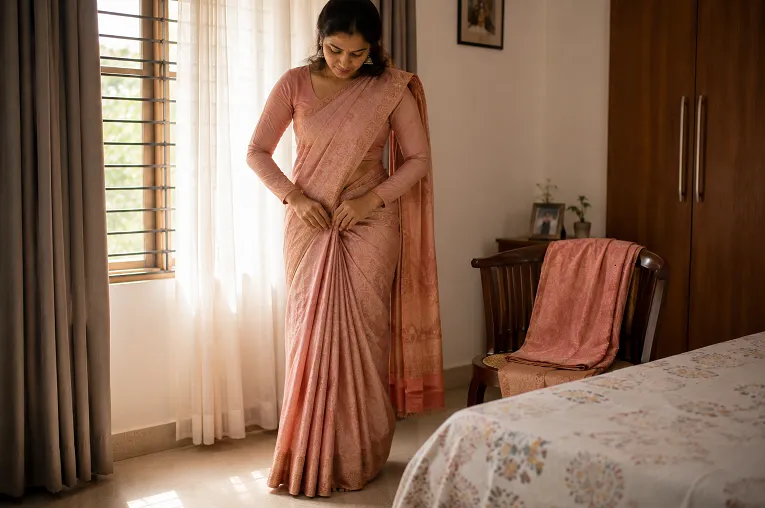
Table of Contents
Saree Petticoat Guide Basics: Fabric, Length and Fit
A petticoat is not just a base layer. It is the structure your entire saree drape depends on. Get it wrong and no amount of careful pleating will save the final look.
A petticoat is also called an inskirt for saree in several parts of India, and the term shows up more often once you start shopping for one online. Start with fabric, because this is where most of the “why does my saree feel off” complaints actually begin.
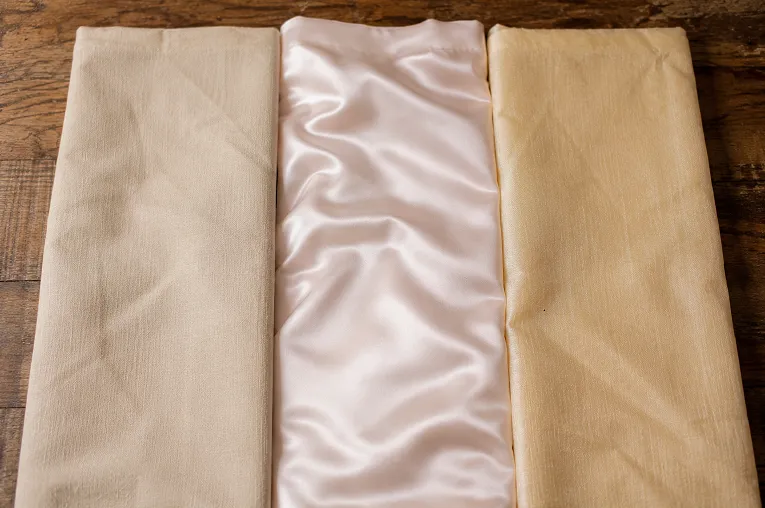
- Cotton petticoats breathe well and are the safest default for daily wear and for humid cities like Mumbai or Surat, but they do lose their crispness by evening. By the time you have been out for six or seven hours, the fabric goes a little soft and loses some of the structure it had in the morning.
- Satin petticoats feel smooth and glide easily, which sounds ideal until you pair one with a chiffon or georgette saree. Two slippery fabrics against each other means less grip, and less grip is exactly what makes a saree slide out of place through the day.
- Silk cotton blend petticoats carry a slight natural grip that plain cotton does not have. This matters more than people realise when you are wearing a silk saree, because silk against silk is one of the most common reasons sarees slip at the waist during weddings.
On length, the rule you have read everywhere is real: your petticoat should sit at your natural waist and fall to your ankle, roughly the same length as your saree or barely shorter, never dramatically shorter. If it peeks out from under the hem when you walk, it is wrong. But length is only half the story, and this is where most guides stop.
How Petticoat Flare Actually Controls Your Pleats
This is the part most saree petticoat guide articles skip entirely, and it is the actual reason your pleats sometimes look thin and cramped and other times fall wide and graceful even in the exact same saree.
The flare of your petticoat, meaning how wide it is at the hem, directly decides how your pleats behave. A narrower petticoat gives your pleats less room to spread, which forces them to sit tighter and thinner against each other. This is fine for some saree styles, but if you are working with a heavier fabric like a Banarasi silk, thin cramped pleats under a heavy pallu just look stiff.
A wider flare gives each pleat more room to open up as it falls, which is why the same six or seven pleats can look full and elegant on one petticoat and pinched on another, even when the saree itself has not changed. Most women choose petticoat size based on waist measurement alone and stop there. That is the wrong way to do it.
Flare width matters just as much, sometimes more, especially with georgette and chiffon sarees that already have less body of their own and rely on the petticoat underneath to hold their shape.
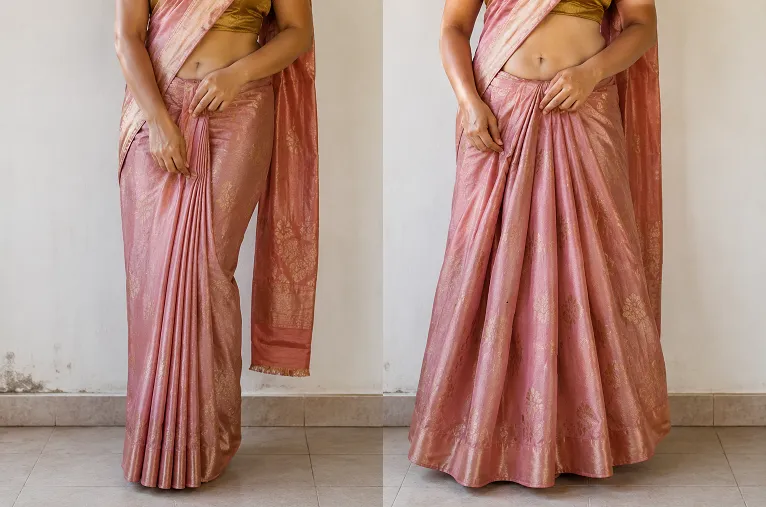
If you are someone who prefers fuller, more traditional looking pleats, go slightly wider in the flare than you think you need. If you like the sleeker, more modern drape that is popular right now, a slightly narrower flare with fewer, wider pleats will actually photograph better. Neither is correct for everyone, and any guide telling you otherwise is guessing.
Different saree styles pull you toward different flare choices too, so if you tend to switch between silk, cotton and georgette drapes, it is worth checking our guide to the different types of sarees in India before you decide how wide to go.
Why Petticoats Slip During Long Functions and How to Stop It
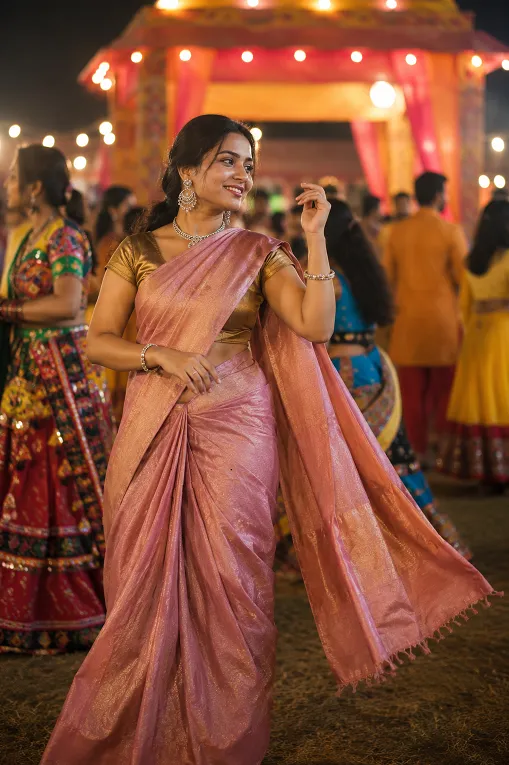
This is the complaint every Indian woman has had at least once, usually at the worst possible time. You are three hours into a wedding function or halfway through a garba night at Navratri, standing for most of it, and your petticoat has quietly started sliding down. If you are still finalising what to wear for garba this year, our Navratri outfit ideas and garba night guide is worth a look before you get to this stage.
This is exactly the situation most saree petticoat guide articles leave out. Two things are usually happening at once. First, elastic waistbands lose tension with heat and sweat far faster than people expect. Elastic that felt snug at home in the morning has already stretched out by the time you have been standing, dancing or sitting through a full day event in Indian heat.
Second, if the petticoat fabric itself is slippery, like a plain satin, there is nothing gripping your blouse or your skin to hold it in place once gravity and movement take over.
Drawstring waistbands solve this better than elastic ever will, and this is not a popular opinion but it is the honest one. A drawstring lets you tighten to your exact waist on the day, adjust after a heavy meal at the function, and it does not fatigue the way elastic does over a six or eight hour stretch. If you are choosing between the two for anything longer than a quick outing, pick drawstring.
Beyond the waistband, fabric choice under sweat matters too. Pure cotton absorbs moisture and can actually grip slightly better than synthetic blends once you are a few hours in, even though synthetics feel cooler at first touch. And a small thing almost nobody mentions: tie the drawstring in a proper double knot, not a simple bow. A bow works loose with movement far quicker than a knot does, especially once you start dancing or moving around at a function.
Choosing by Occasion
Any useful saree petticoat guide has to split recommendations by occasion instead of giving one blanket answer. A college fest saree and a full day wedding saree are asking two different things of what is underneath them.
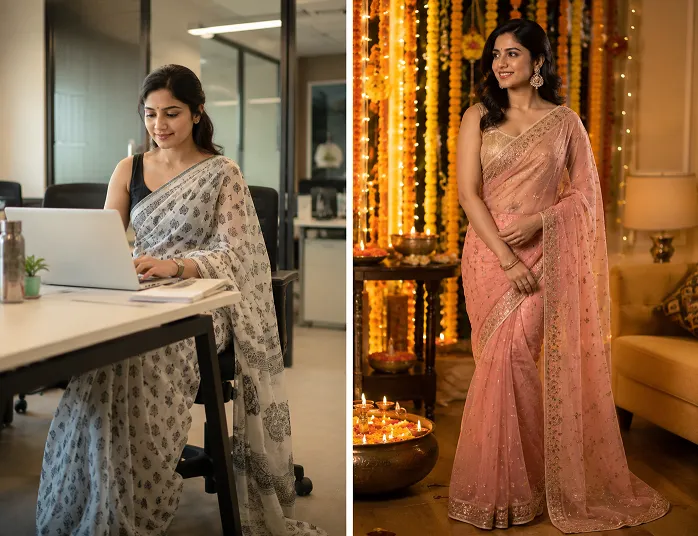
For daily wear or office appropriate sarees, a cotton petticoat with a moderate flare is enough. Nothing dramatic is happening, comfort matters more than structure, and you will likely be sitting at a desk most of the day anyway. If you are still deciding which saree fabric actually holds up in Indian summers, our guide to the best saree fabric for summer covers that separately in more depth.
For festival and function wear, especially anything involving Navratri or a full wedding season event, go with a slightly heavier fabric like a silk cotton blend and a drawstring waist. You are on your feet longer, the weather is often warmer than you plan for, and this is exactly the situation where slipping becomes a real problem instead of a minor annoyance.
For lightweight chiffon or georgette sarees worn to evening events, a satin or shimmer petticoat can actually work well here, since these fabrics are usually not paired with heavy pleating and the slight sheen underneath adds to the effortless look these sarees are meant to have.
Chiffon catches light differently than silk does. There is a softness to how it moves when you walk that makes the whole outfit look effortless even on days you have barely managed the drape yourself, and the right petticoat underneath is part of what makes that possible.
What Actually Matters Before You Purchase
This is the part of a saree petticoat guide that actually saves you money, because quality shows up in details you cannot see from a hanger. Check the seams on the inside first. Loose or uneven seam allowance is the first sign of a poorly finished petticoat, and it usually shows up as puckering along the hem after the very first wash.
Run your fingers along the drawstring channel. It should be stitched flat and even, without loose threads pulling at the fabric around it, because a badly stitched channel wears through faster than the rest of the garment. If the petticoat has any lining, press it gently between your fingers. Good lining holds its shape and springs back. Cheap lining goes limp almost immediately and stops giving your saree the structure it is meant to provide within a few wears.
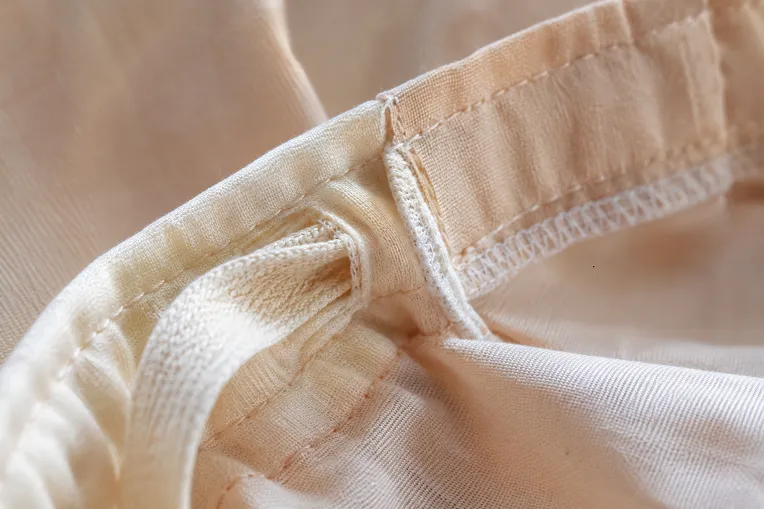
This is the kind of detail you only notice if you have actually handled a lot of fabric, which is where Ethora’s own experience comes in. We manufacture our sarees, salwar kameez, kurtas and lehenga choli directly at our unit in Surat, and for everything else we source from Surat’s local textile market itself, so the advice here comes from people who handle these fabrics every single day, not from a styling blog repeating the same checklist.
The Takeaway
That is the real takeaway of this saree petticoat guide: getting your saree to sit right is rarely about the saree itself. It usually comes down to what is underneath it, the flare that shapes your pleats, the fabric that either grips or slides, and a waistband that can actually survive a long day.
These petticoat fitting tips are less about a fixed formula and more about paying attention to how your specific saree behaves once you are actually wearing it. Get those three things right and the saree does the rest on its own.
There is more on saree fabrics and draping over on the Ethora blog if you want to go deeper into what works for your specific sarees. Our store is launching soon, and everything on it comes straight from our own manufacturing unit and Surat’s textile market, with no middlemen in between.
FAQ
How many inches shorter should a petticoat be than a saree?
A petticoat should ideally be the same length as your saree, falling to your ankle without pooling on the floor. It should never peek out from under the hem when you walk, and it should never be shortened by several inches the way older advice suggests, since that gap shows through with most modern draping styles.
Which petticoat fabric works best under silk sarees?
A silk cotton blend petticoat is usually the better choice under silk sarees rather than plain satin. Pure silk against a slippery satin petticoat has almost no grip, which is one of the most common reasons silk sarees slide at the waist through a long event.
How do I stop my petticoat from slipping during a wedding or garba night?
Choose a drawstring waistband over elastic for anything longer than a few hours, since elastic loses its grip with heat and sweat much faster than people expect. Tie the drawstring in a proper double knot rather than a bow, and pick a cotton or cotton blend fabric over pure satin for better grip against your blouse and skin.
Where can I buy good quality petticoats or sarees online in India?
Look for finishing details like clean seam allowance, a well stitched drawstring channel and lining that holds its shape, since these tell you more about quality than the outer fabric alone. Ethora manufactures directly at its own unit in Surat and sources everything else from Surat’s local textile manufacturers, which means genuine fabric knowledge and factory level quality without middleman pricing once the store is live.
Can I wear a shapewear saree slip instead of a regular cotton petticoat?
Shapewear slips work well under lightweight chiffon and georgette sarees where you want a smoother silhouette and less bulk at the waist. They are not ideal under heavier silk sarees though, since they generally lack the flare needed to support fuller pleats properly.
Getting the right petticoat is a small decision that quietly changes how every saree you own actually looks on you. Ethora manufactures its sarees, kurtas and lehenga choli directly at our own unit in Surat, and everything else we carry is sourced directly from Surat’s local textile manufacturers, so you are always getting genuine quality without a middleman marking it up. Our store is launching soon, and we would love for you to be there on day one.
Pingback: Saree For Rectangle Body Shape: 6 Confident Fixes | Ethora