
You try on ten different kurta sets in a trial room and somehow none of them look different from each other. That flat, straight up and down feeling is the most common complaint from women with a rectangle body shape, where the bust and hip sit close in width with little waist definition either way. Salwar kameez for rectangle shaped body does not need padding or tricks. It needs the right flare point, the right seam placement, and fabric that actually moves when you walk. This article covers seven cuts that genuinely add shape, plus the fabric and buying details most guides skip.
If you have not confirmed your shape yet, Ethora’s free ethnic wear body type calculator sorts you into one of five categories in under two minutes and gives you saree, suit and lehenga recommendations together, not just one garment type.
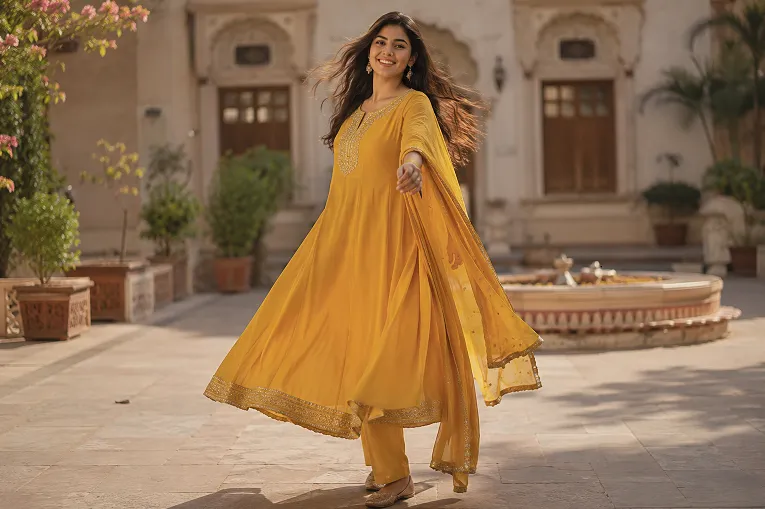
Table of Contents
What Rectangle Body Shape Actually Means
A rectangle body shape means the bust, waist and hip measurements are all fairly close, without a strong inward curve at the waist. It is one of the five shapes ethnic wear stylists actually work with, alongside Pear, Apple, Hourglass and Inverted Triangle.
This is not a flaw to fix. It is simply a canvas that responds well to structure. Kurtas with defined seams, flare, or layering create the visual waist that the body itself does not emphasise on its own.
Salwar Kameez for Rectangle Shaped Body: Where to Add Shape First
Most women pick a kurti based on what looks good on the hanger. That is the wrong way to do it for a rectangle frame. A kurta that hangs beautifully on a stand is often perfectly straight, and perfectly straight is exactly what will not add any curve to your outline once you are wearing it.
The real work happens at three points: where the fabric flares out from your body, where the waist seam sits, and how the sleeves and neckline draw the eye. Get these three right and the rest of the outfit follows.
You do not need a cinched, fitted waist to look shaped, and that goes against most of the styling advice out there. A kurta that flares gradually from just below the bust often creates a cleaner silhouette on a rectangle body than a tightly belted one, because a hard belt on a straight torso can look like a line drawn across a box rather than an actual waist.
Seven Cuts That Add Curves to a Rectangle Frame
These are the salwar kameez cuts that consistently work for a rectangle body type, based on how the flare and seams sit against a straight torso.
- A-line kameez: Fitted through the shoulders and chest, then flares from below the bust downward. This is the single most reliable cut for rectangle body type ethnic wear because the flare does the shaping work the body does not.
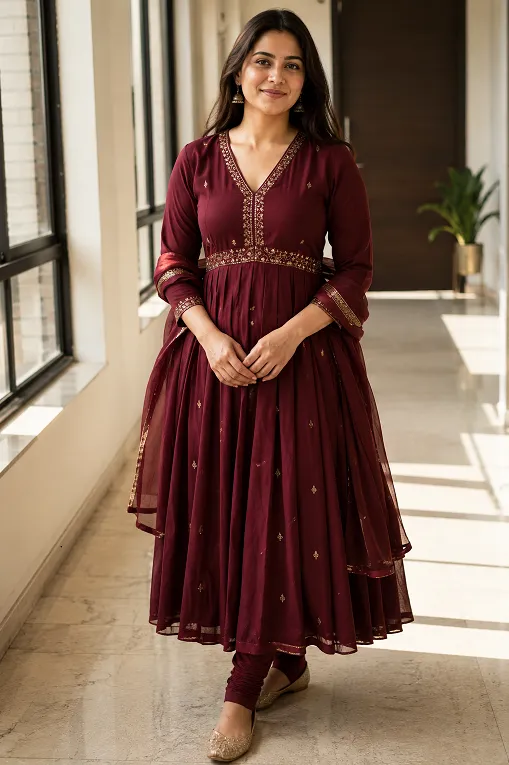
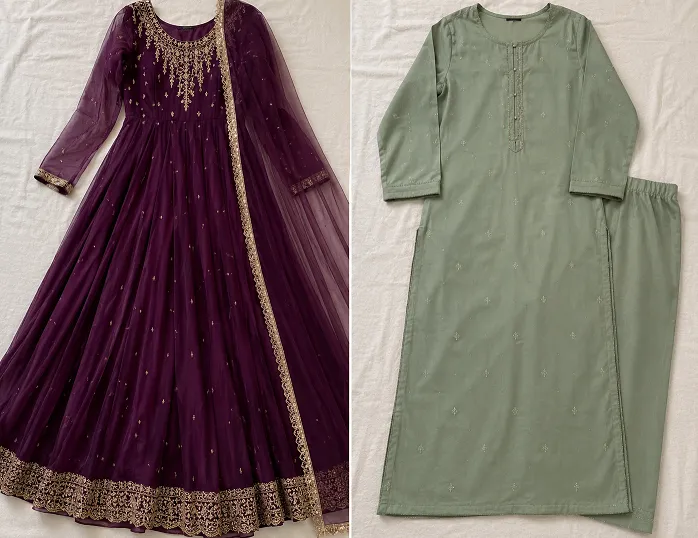
- Anarkali kurta: The fitted yoke followed by a full flare from the waist creates the strongest visual hourglass illusion of any style on this list, especially in a floor length version for functions.
- Angrakha style kameez: The asymmetric wrap-front cross-over creates a diagonal line across the torso, which naturally breaks up a straight silhouette better than a plain front panel ever will.
- High-low hemline kurta: Shorter at the front, longer at the back. The uneven hem draws the eye down in a curved line instead of a flat horizontal one.
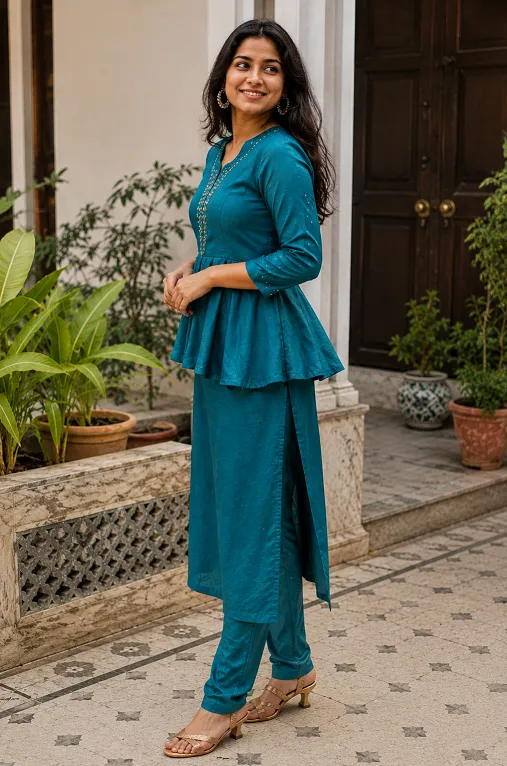
- Peplum style kameez: A fitted bodice with a flared panel stitched at the waist. It is a shortcut to definition without needing an actual fitted waist underneath.
- Front slit straight kurta: A straight kurta with a knee-high front slit and a slight flare below the hip adds movement without going fully Anarkali, good for daily wear.
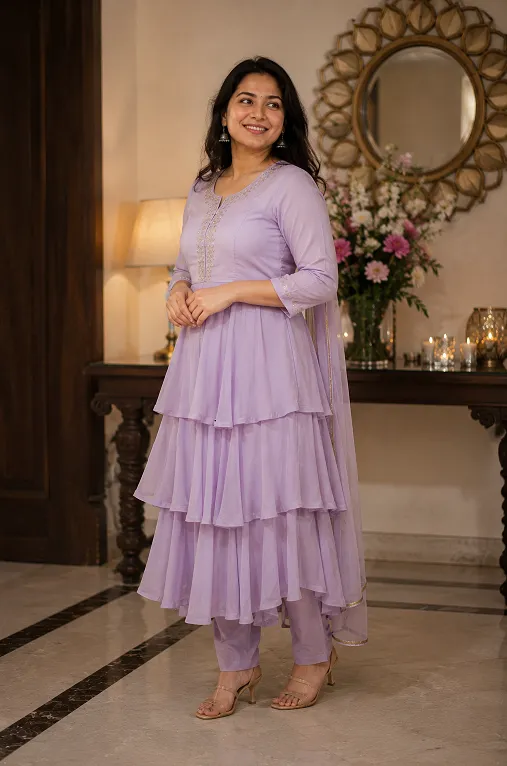
- Layered or tiered kameez: Soft ruffled panels stitched into the lower half add movement and dimension exactly where a flat rectangle silhouette has none, without asking you to introduce a strong waist seam at all.
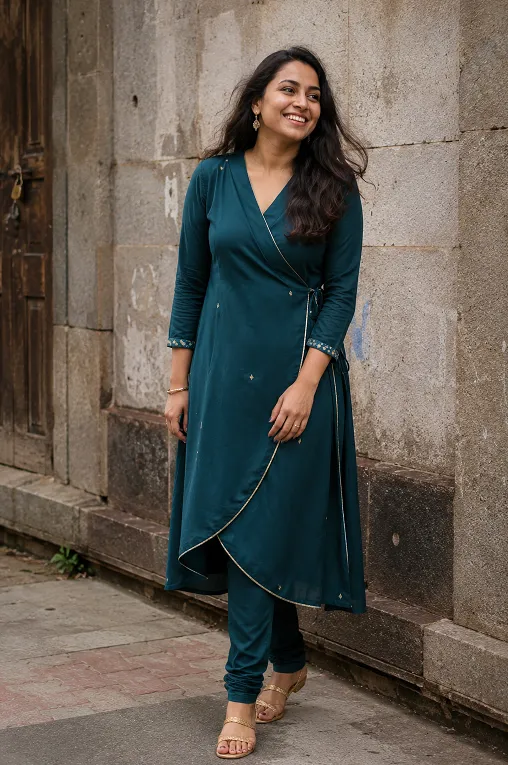
The Anarkali cut deserves a closer look, because most women only think of it as a wedding option. The defined waist seam is what actually creates the shape, and it works in simpler daytime versions too, as long as the seam is cut with a proper curve rather than stitched flat.
Peplum works a little differently. Instead of a full flare, a small structured panel sits right at the waist and does the same shaping job in a shorter length. That makes it easier to wear to the office or a day function without the volume a full Anarkali brings.
Tiered styles are the gentlest entry point on this list if flare and structure still feel unfamiliar to you. If you would rather add shape with a structured open jacket instead of ruffled tiers, our guide on layering a jacket over a kurta covers that approach in full.
Fabric Choices That Move With You, Not Against You
Cut matters more than fabric for a rectangle body, but fabric decides whether that cut actually shows up the way it should. Georgette has more body than chiffon, so an A-line hem holds its flare and swing while walking instead of collapsing flat against the legs.
Cotton and cotton-silk blends work well for daily straight or front-slit kurtas because they hold a crease at the seam line, which keeps that visual break clean through a full day at office or college.
Rectangle body shapes often go straight to stiff, structured fabric, assuming it will hold shape better. That is a mistake. It usually does the opposite, since stiff fabric on a straight torso just reads as a bigger straight shape. What you actually want is fabric with enough weight to flare but enough softness to move.
If you are considering something heavier for a wedding season Anarkali, remember that Banarasi silk is heavier than it looks in the store. Worn for a full day event, the weight on your shoulders builds up by evening, so pair it with a lighter dupatta rather than doubling up on heavy fabric everywhere.
Handloom fabric traditions in India go back centuries, and the Office of the Development Commissioner for Handlooms sector page is a good reference if you want to understand how weave and fibre choice actually affect drape before you buy.
Necklines and Sleeve Details Worth Choosing Carefully
A boat neck or wide round neck widens the visual line across the shoulders and chest, which balances a rectangle frame better than a deep narrow V that draws a straight column down the centre.
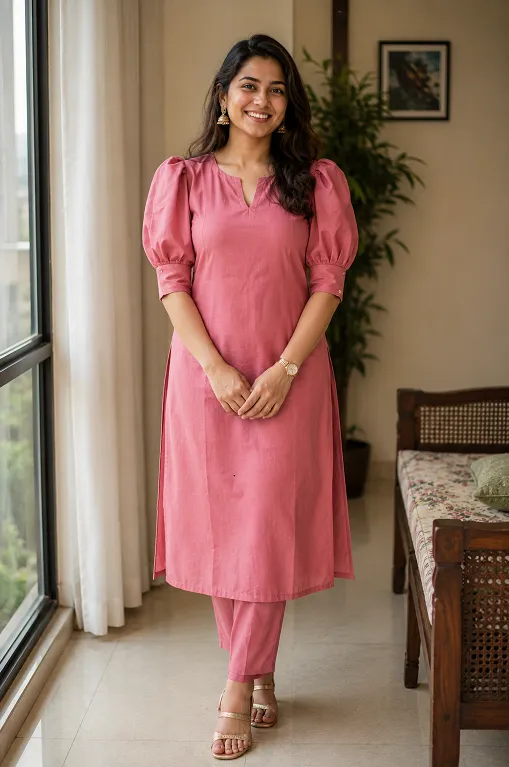
Bell sleeves and slightly puffed sleeves add width at the arm, breaking the straight-line effect that fitted, close-to-arm sleeves create instead. On this body type, a wider shoulder line is actually the goal, not something to minimise, which makes a statement sleeve one of the simplest updates you can make.
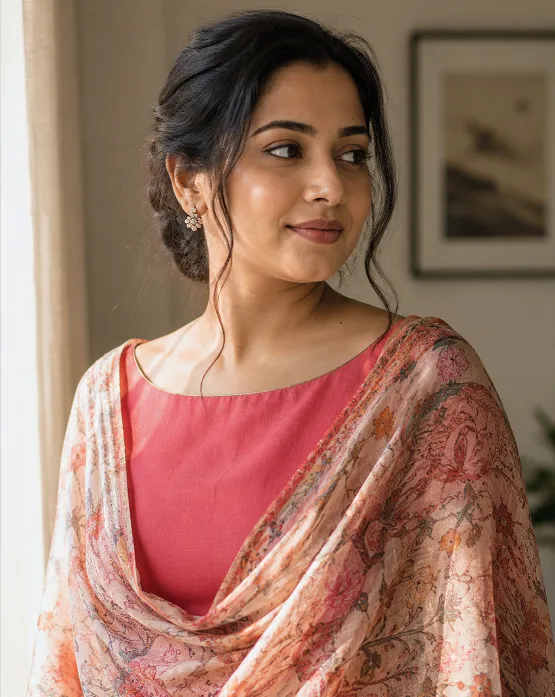
A dupatta draped loosely over one shoulder, rather than pinned flat across the chest, adds the same diagonal movement the angrakha wrap does, and it costs you nothing extra.
If you are heading into Navratri or Diwali season and want the flare and diagonal lines to work even harder, our guide on colour combinations for ethnic wear pairs well with everything covered here.
Salwar Bottoms That Balance the Look
Palazzo pants and Patiala salwars both add volume below the waist, which balances a flared kameez on top instead of competing with it. A straight or cigarette pant under a very flared Anarkali can look top heavy by contrast.
Churidar works too, but pair it only with kameez styles that already have strong flare or diagonal detail above. On its own with a straight kurta, churidar keeps the whole outfit reading vertical and flat.
Rectangle body shape questions come up constantly in our saree styling guide as well, since the same flare-and-structure logic applies there. Our saree for body type guide covers how rectangle body shape saree looks are built using pleats and blouse cuts instead of kurta seams, if sarees are also part of your wardrobe.
If apple shaped dressing is more relevant for someone in your family or friend circle, our salwar kameez for apple shaped body piece covers that shape’s specific fixes in the same detail as this one.
What to Look For When You Buy
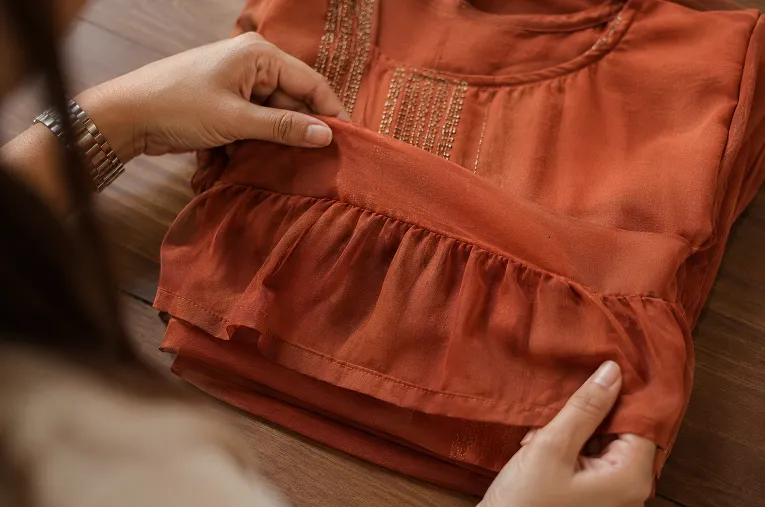
Check the seam at the waist or empire line first when you are shopping for a salwar kameez for rectangle shaped body. On a cheap A-line or Anarkali, this seam is often stitched flat with no actual curve cut into it, so the flare looks stiff instead of falling naturally.
Run your hand along the hem. A properly finished hem has a slight weight to it, sometimes from a hidden lining strip, which is what makes the flare swing instead of flutter awkwardly.
Ethora manufactures salwar kameez and kurtas directly at its own unit in Surat, and sources everything outside that range from Surat’s local textile market, India’s largest textile hub, so this buying advice comes from people who actually cut and stitch these seams every day.
Conclusion
The single most useful thing to remember is this: shape comes from seams and flare, not from tight fitting. A rectangle body shape responds to structure far more than it responds to a fitted waist, so when you are picking a salwar kameez for rectangle shaped body, choose the cut before you choose anything else.
There is more styling detail like this across the Ethora blog if you want to go deeper into fabric and fit for your specific occasions. Our store is launching soon, with everything made or sourced directly from Surat’s manufacturing base.
FAQ
Which salwar kameez style suits a rectangle body shape the most?
A-line and Anarkali kurtas work best because the flare starts from the bust or waist and builds outward, creating a shaped silhouette a straight kurta cannot. Angrakha and peplum styles are close seconds for the same reason.
Should a rectangle body shape avoid straight kurtas completely?
No, but a fully straight kurta with no slit, flare or waist detail will read flatter on this body type. A front slit, side flare, or layered jacket over the same straight kurta fixes this without changing the base style.
Does fabric weight matter more than cut for rectangle body type ethnic wear?
Cut matters more, but fabric decides whether the cut works. Georgette and cotton-silk blends hold flare and movement better than stiff, heavily starched fabric, which tends to flatten the shaping effect a flared cut is meant to create.
How do I know if a salwar kameez fabric is good quality before buying online?
Check whether the fabric has natural drape when you scrunch a small section in your hand and let go. Good fabric falls back into shape smoothly. Cheap synthetic blends stay creased or feel papery. Ethora manufactures at its own Surat unit and sources everything else directly from Surat’s textile manufacturers, which gives buyers factory-level fabric quality without middleman pricing.
Can a rectangle body shape wear a fitted salwar kameez for weddings?
Yes, as long as the fitted portion is paired with flare somewhere else, like an Anarkali skirt or a peplum panel. A fitted top with a fitted bottom on this body type tends to look like one straight column from shoulder to ankle.
Getting your salwar kameez cut right changes how the whole outfit sits, and that starts with fabric that actually holds its shape. Ethora manufactures its salwar kameez, kurtas, sarees and lehenga choli directly at its own unit in Surat, and for everything else, we source directly from Surat’s local textile manufacturers. Our store is launching soon, so you will be able to shop pieces built the same way this article describes, straight from the source.
Pingback: Kurti For Rectangle Body Shape: 4 Confident Fits | Ethora