You pull the lehenga out of the packaging, hold it up in front of the mirror, and something feels off before you have even zipped it up. The hemline pools on the floor. The blouse sits lower than it should.
You are not imagining it. Most ethnic wear in India is cut for a 5’4″ to 5’6″ frame, and if you are shorter than that, the fit fights you before the styling even begins.
This piece is about ethnic wear for short height that goes past the usual ethnic wear styling petite checklist of “wear vertical stripes” you have probably already read. We will get into exactly where a jacket should end, how cropped a blouse actually needs to be, and what to alter before you wear anything home.
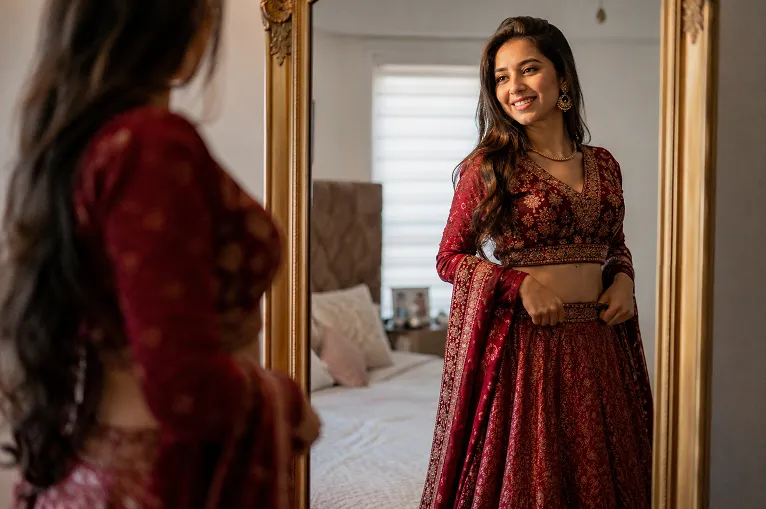
Table of Contents
Why Everyone’s Layering Advice for Short Height Contradicts Itself
Search for styling advice on this topic and you will hit two opposite instructions within the first five results. One guide tells you to skip jackets and capes entirely. Another recommends exactly that, cape jacket sets, for the same body type. Neither explains why.
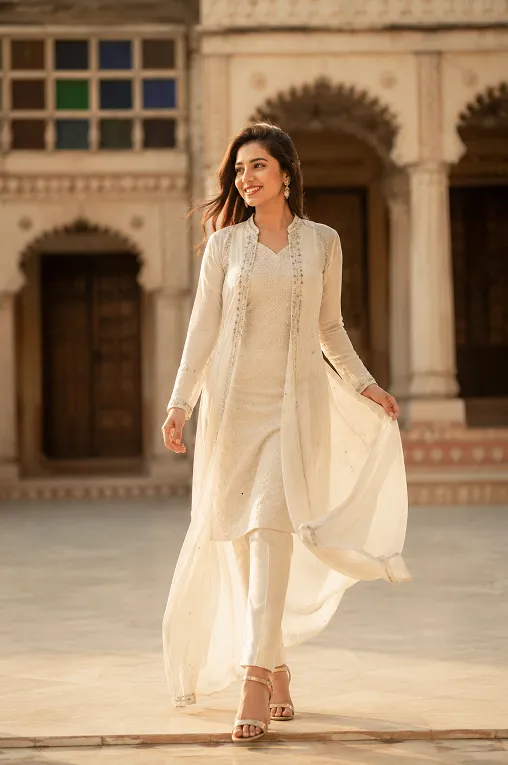
The truth is, layering was never the problem. It is where the layer ends. A jacket that stops at the hip or drops to mid-thigh creates a hard horizontal line right across the middle of your frame. That line is what chops a shorter body visually in half.
A cape or jacket that runs floor length, or close to it, does the opposite. It becomes one long unbroken line from shoulder to ankle. Nothing interrupts it, so your eye reads the whole outfit as a single vertical sweep instead of two stacked pieces.
I have watched this play out in real fitting rooms in Surat. The exact same georgette cape, on the exact same woman, at two different lengths, produces two completely different results. Length is the whole decision. Not whether to layer at all.
The same logic applies to how you drape a dupatta, not just how you wear a jacket. A single vertical front-pallu drape with a thin border reads as one clean line from shoulder to hem. Multiple wraps around the neck, or a dupatta with a broad horizontal border, breaks that line exactly the way a mid-length jacket does.
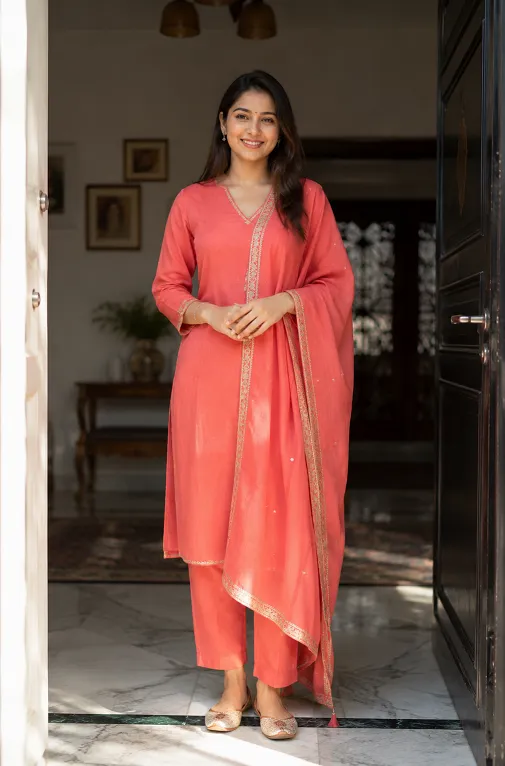
So the next time a guide tells you to avoid layering, ask where the piece ends. If it stops anywhere between the hip and the knee, skip it. If it runs long, wear it with confidence.
The Real Proportion Rule Behind Ethnic Wear for Short Height Lehengas
Every styling guide says cropped blouse, high waisted lehenga. Almost nobody tells you how cropped or how high, so most women end up with a blouse that grazes the natural waist and a lehenga that sits an inch above the navel. That is not enough to create the illusion.
For the elongating effect to actually register, the blouse needs to end at least two to three inches above your natural waistline, and the lehenga or skirt needs to sit at or slightly above the navel, not below it. The gap between the two is what does the work.
Here is the part nobody wants to hear. A barely cropped blouse with a lehenga that sits at your regular waist looks almost identical to a full length outfit from a distance. You have spent money on the illusion without actually buying it.
Georgette has more body than chiffon, so it holds a defined waistband and a clean crop line even while you are dancing through a full Navratri night. Chiffon feels softer against the skin but tends to slip and blur that same waist definition by the third hour.
Colours, Prints and Necklines That Actually Add Height
Vertical stripes are the obvious advice, and it is not wrong, it is just incomplete. A small vertical motif on a busy background does nothing. The line needs contrast and space around it to actually pull the eye upward. A narrow embroidered panel running the same direction works exactly the same way, and it often looks more festive than a plain stripe.
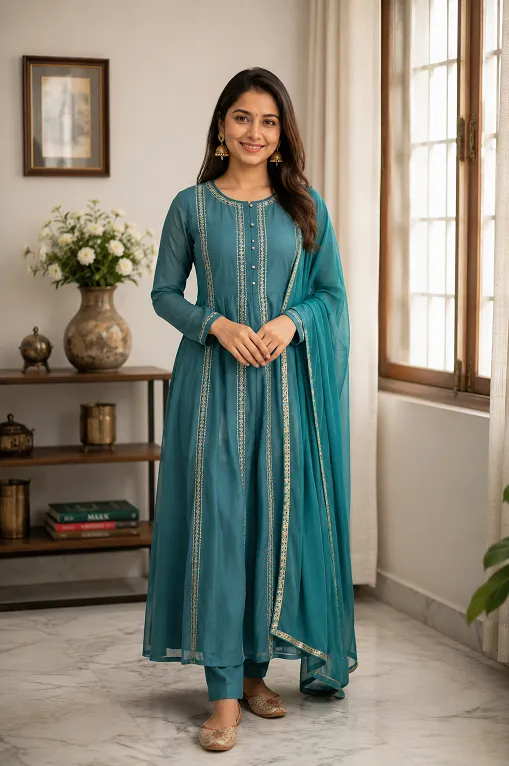
Most women pick a kurti for short height based on what looks pretty on the hanger. That is the wrong way to do it. Hold the fabric up against your own height before deciding, not against the mannequin’s.
Monochrome dressing, where the kurta and bottom are the same or very close shades, removes the horizontal break at the waist entirely. It is the single easiest colour trick for ethnic wear for short height, and it works with cotton, silk, or georgette equally well.
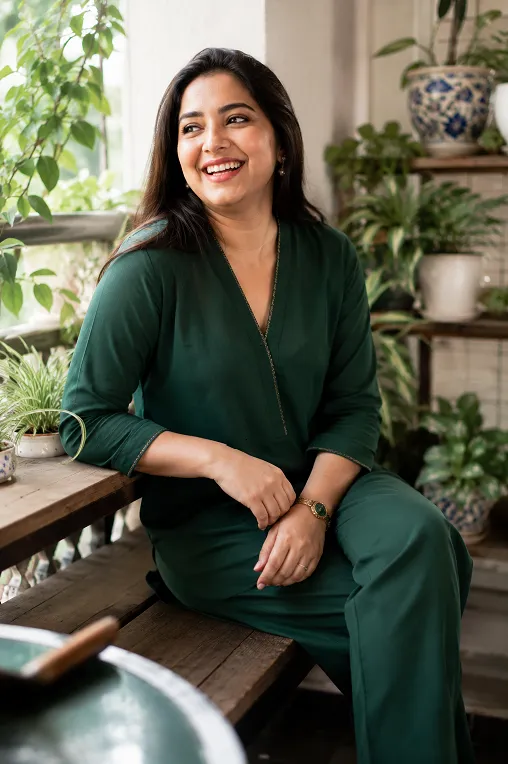
For something like Diwali evening functions where you are indoors under warm lighting most of the night, a single rich colour like maroon or bottle green photographs and holds its shape far better than a busy multicolour print, which tends to flatten out and look muddy by nine pm.
On necklines, a deep V or sweetheart neck draws a vertical line straight up toward your face. A high round neck does the opposite. It adds a horizontal band right where you do not want one, at the collarbone.
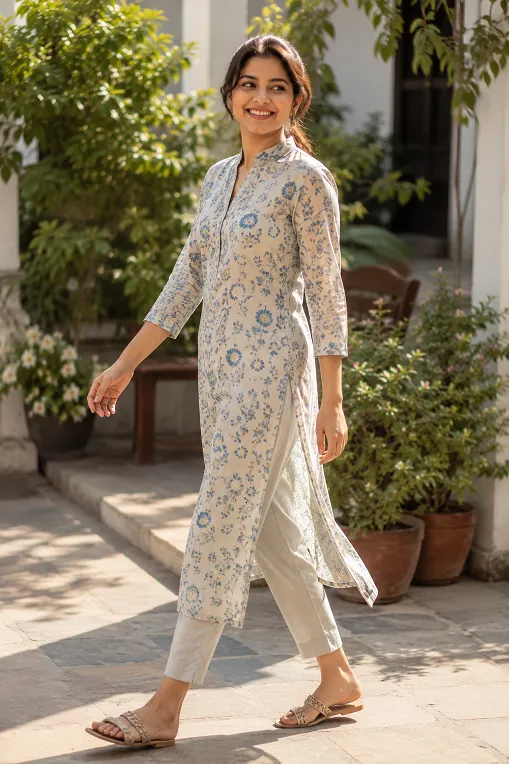
Necklines are not the only cut that does this work. A fitted, straight-cut kurta with a high side slit, worn over slim straight pants, opens up a vertical gap along the leg that a plain straight-cut kurta does not. It is a small tailoring detail, but it reads immediately in person.
If a saree for short height is what you are working with, the draping matters more than the fabric itself. Our saree for body type guide covers draping specifics for different frames, and this article builds on that with the height-specific version.
For the fuller colour pairing logic beyond just monochrome, our guide on colour combinations for ethnic wear that actually work breaks down which pairings elongate and which ones cut you off at the waist.
Fashion editors flag the same principle for western wear too. Who What Wear’s petite styling guide makes the same point about proportion mattering more than any single rule, and the logic carries over cleanly into ethnic wear.
What to Actually Alter When You Tailor Standard-Size Ethnic Wear
Almost every guide says “get it tailored” and stops there. Standard Indian ethnic wear is cut on a roughly 5’5″ base pattern, so if you are noticeably shorter, more than just the hem needs adjusting.
- Kurta or kameez length: shorten from the bottom, not just the sleeves, so the proportion between the top and bottom stays correct on your frame.
- Sleeve length: standard three quarter sleeves often land past the elbow on a shorter arm, ask the tailor to raise it by an inch to an inch and a half.
- Dupatta length: a full 2.5 metre dupatta will drag or need constant re adjusting, trimming 20 to 25 cm keeps it off the ground without losing the drape.
- Blouse length and dart placement: darts made for an average torso often sit too low on a shorter waist, ask for the darts to be re marked, not just the hem shortened.
- Lehenga or skirt length: measure from the actual waistband you will wear it at, not the floor, since the height of the waistband itself changes the required length.
Banarasi silk is heavier than it looks on the hanger. If a tailor shortens a Banarasi lehenga without also adjusting the flare at the hem, the extra weight pools awkwardly around the ankles instead of falling straight. It is worth mentioning to whoever alters it.
Footwear and Accessories That Complete the Look
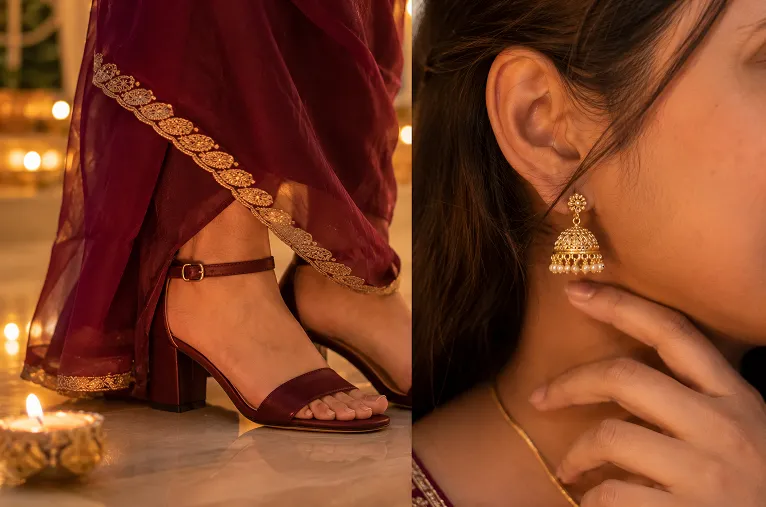
Heels help, obviously, but a two to three inch block heel does more for a shorter frame than a stiletto, because it keeps you steady through a full function instead of just the entrance.
Keep jewellery close to the body rather than long and layered. A choker or a single medium length necklace keeps the neckline clean. Three layered chains break up exactly the vertical line you built into the outfit.
For a longer breakdown of what to skip entirely, our how to accessorize ethnic wear guide has the honest version.
There is a sound and movement element people forget too. Heavier jhumkas swing and catch light beautifully in photos, but they also pull the ear down and shift focus away from your face. A lighter stud or small jhumka keeps the eye where you want it.
What to Check Before You Buy Standard-Size Ethnic Wear
Before you buy anything for ethnic wear for short height, check three things: where the waistband sits relative to your actual waist, how much extra length is in the sleeves, and whether the dupatta or pallu length is manageable, since those are the pieces that decide whether tailoring will be a small fix or a full rebuild.
A five minute check like this before checkout saves you paying full price for a fit that was never drafted for a shorter frame in the first place.
At Ethora, we manufacture sarees, kurtas, salwar kameez and lehenga choli directly at our own unit in Surat, and we source everything else from Surat’s textile market, so this comes from actually handling these fabrics and cuts every day, not just styling opinions borrowed from elsewhere. If you want to double-check the fabric behind a silk piece before you buy, the Central Silk Board’s Silk Mark initiative exists for exactly that kind of authenticity check.
Conclusion
The single thing worth remembering is length, not avoidance. Every piece of advice in this article, jackets, blouses, dupattas, kurtas, comes down to where something ends on your specific frame, not whether you are allowed to wear it at all.
There is a lot more styling detail and dressing tips for petite women on the Ethora blog if you want to go deeper into fabric choices or occasion specific looks. Our store is launching soon, and everything on it will come directly from our Surat manufacturing unit or Surat’s textile market.
FAQ
What is the best kurti length for short height?
A kurti that ends between mid thigh and just above the knee works best for most petite frames, since anything past the knee starts to visually shorten the legs. Pair it with a straight or slim fit bottom in a similar shade rather than a flared palazzo, which can overwhelm a smaller frame.
Can short height women wear heavy Banarasi or silk sarees?
Yes, but the weight needs planning. Banarasi silk sits heavier on the shoulder through the pallu, so for a shorter frame, a lighter pre pleated drape or a shorter pallu length keeps the silhouette from looking pulled down by evening. Georgette or chiffon versions are easier to manage through a full day event.
Where can I buy good quality kurtas and lehengas online that fit right?
Check the fabric composition listed on the product page and look for sellers who mention their manufacturing source directly, since factory direct pieces are usually cut with more consistent proportions. Ethora manufactures its sarees, kurtas, salwar kameez and lehenga choli at its own unit in Surat and sources everything else directly from Surat’s textile market, so you get factory level fabric knowledge without the usual middleman markup.
Do vertical stripes actually make you look taller in ethnic wear?
Only if the stripe has enough contrast and is not lost in a busy print. A subtle self stripe on a patterned kurta barely registers. A clear, contrasting vertical line, whether in the print, the border, or the panel stitching, is what actually pulls the eye upward.
Getting the proportions right on ethnic wear shouldn’t mean settling for whatever fits off the rack. Ethora makes sarees, salwar kameez, kurtas and lehenga choli at our own manufacturing unit in Surat, and everything else comes straight from Surat’s textile market, so the fit and fabric quality are handled at the source. Our store is launching soon, sign up below to know the moment it’s live.