Your cousin’s mehndi is in two hours and you are staring at three outfits laid out on the bed, none of which feel right. This happens to almost every guest at some point. A mehndi function looks simple on paper: colourful clothes, some dancing, henna on your hands.
But it is actually one of the trickier events to dress for, because you will be sitting on the floor for hours while wet paste dries on your skin, and your outfit needs to survive that without getting ruined. This guide covers real mehndi outfit ideas for guests, built around what the event actually demands, not just what looks nice standing still.
Table of Contents
Mehndi Outfit Ideas for Guests That Actually Hold Up
Most lists of mehndi outfit ideas for guests start with colour rules: greens, yellows, oranges, maybe a pop of pink. That part is true, but it is also the least useful thing anyone can tell you, since you already know it.
What actually decides whether you enjoy the day is fit, fabric and how the outfit behaves once you are no longer standing in front of a mirror.
Everyone tells nervous guests to stick to pastels so they do not clash with the bride. Honestly, a well cut mustard anarkali does more for your photos than a washed out peach ever will, as long as you are not wearing the exact shade the bride has chosen.
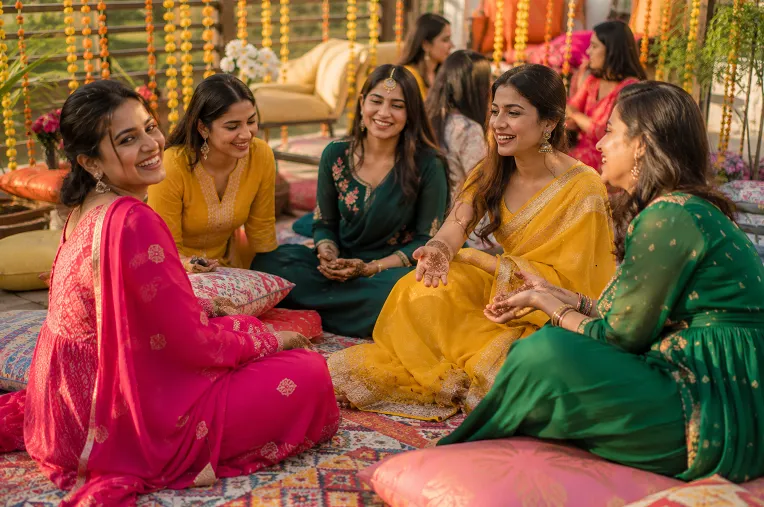
If you are still figuring out what to wear to mehndi, here are five outfit types that photograph well and actually survive the event:
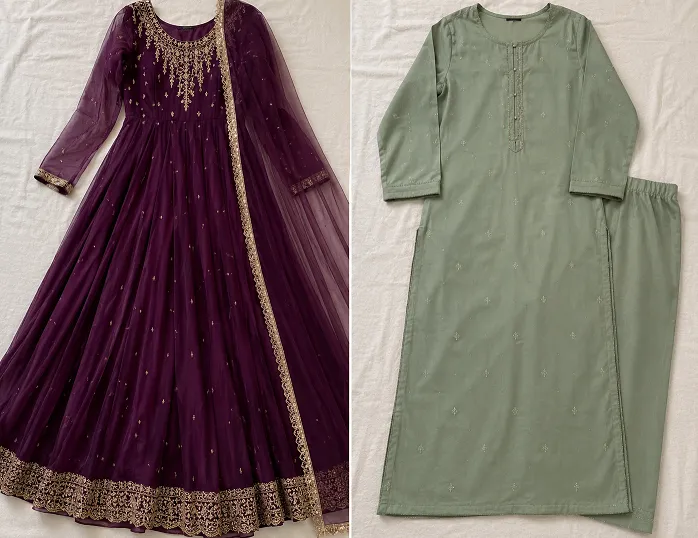
- Anarkali suit in georgette or chiffon. The flare moves nicely for candid shots and the soft fabric does not fight you when you sit down.
- Straight kurta with palazzo pants. This is the easiest silhouette to sit cross legged in for hours, and it works for almost every body type.
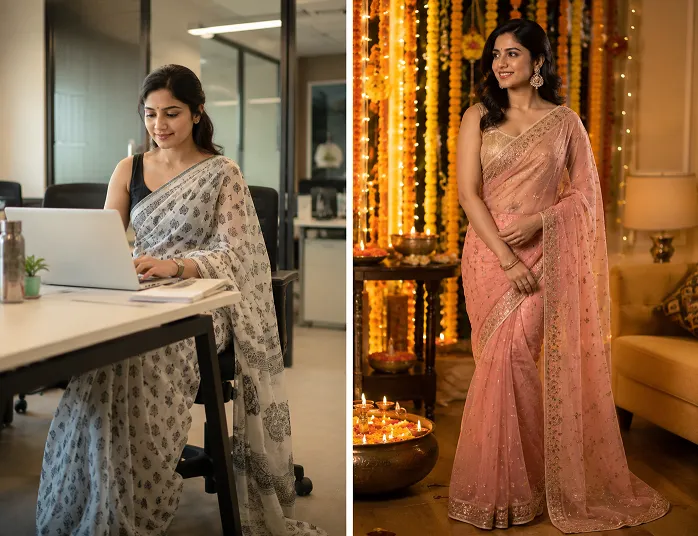
- A pre-draped or lightweight saree. A chiffon or georgette saree in a soft drape looks festive without the weight of heavier silk.
- A co-ord kurta and skirt set. Younger guests especially like this for its Indo western feel without going fully western.
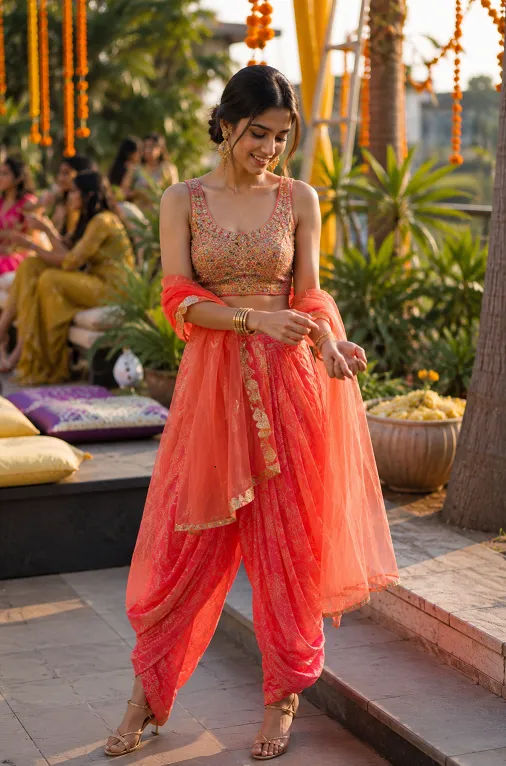
- A dhoti style salwar with a short kurta. This is less common, which is exactly why it photographs well in a room full of anarkalis.
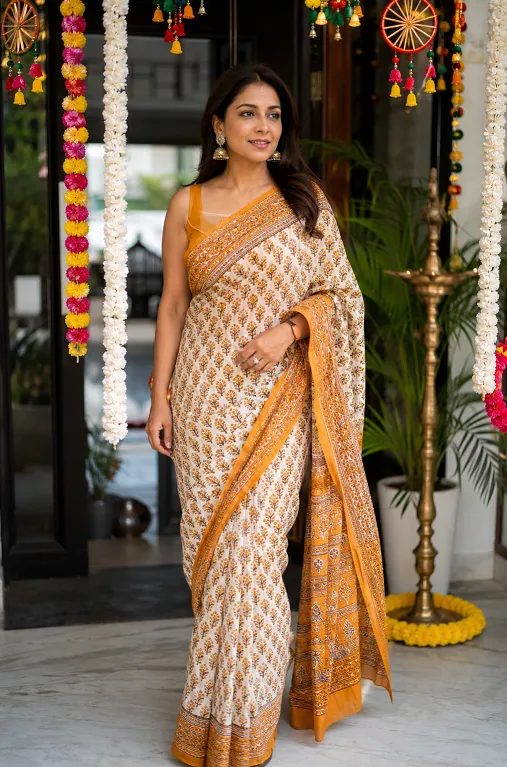
A pale mustard cotton saree with a block print is a good example of how forgiving cotton is through a long afternoon. It holds its shape after sitting and does not need constant readjusting the way a stiffer silk saree would.
If you want a deeper look at saree options specifically, our guide to the different types of sarees in India breaks down which ones drape best for daytime functions like this.
The dhoti pant and crop top combination deserves a special mention too. It keeps the festive colour code but gives you far more room to move once the dancing starts later in the evening, which a fitted lehenga simply will not.
The Sleeve Mistake Almost Every Guest Makes
Here is something nobody tells you before your first mehndi function. Your sleeves matter more than your neckline.
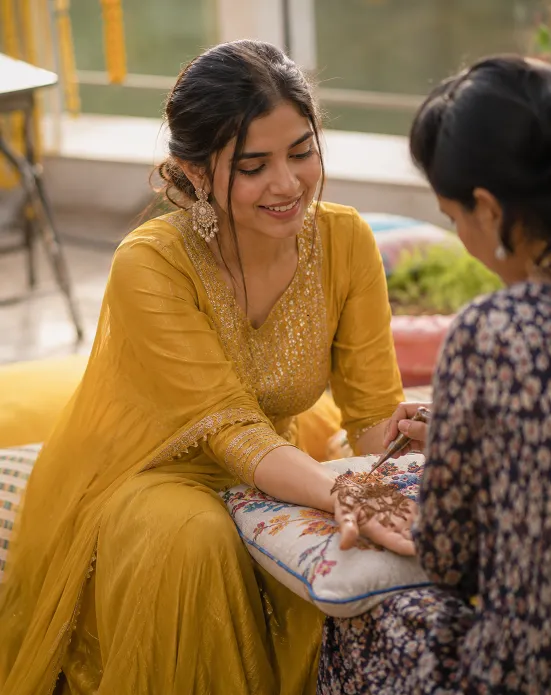
The mehndi artist needs access to your hands and forearms for close to an hour, sometimes longer if the design is detailed. If your sleeves cannot roll up cleanly past the elbow, or are not already three quarter length or shorter, you will spend the whole session holding fabric out of the way with your free hand.
That is not comfortable, and it shows in every photo taken during the session.
Loose, flared sleeves cause a second problem nobody warns you about. They swing forward and touch wet henna paste without you noticing, especially when you shift position or reach for your phone. A structured elbow length sleeve, or a fitted three quarter sleeve that stays close to the arm, avoids this completely.
I have watched more than one guest realise mid session that her bell sleeve had smudged a perfectly good peacock design near her wrist. It is avoidable, and it happens constantly.
How Your Outfit Holds Up After Three Hours on the Floor
Mehndi ceremonies are sat through, not stood through. Most guests spend a large part of the event cross legged on a mat or a low seat, and your outfit needs to survive that position for hours, not minutes.
Stiff or heavily structured fabric creases sharply once you have been sitting for a while, and those creases stay visible for the rest of the event. Soft cotton and georgette behave completely differently. They fall back into shape within minutes of standing up, which matters more than people realise when the event runs long.
Silhouette matters just as much as fabric. A straight cut palazzo or a fitted churidar lets you sit cross legged without fighting your own outfit.
A heavy, flared lehenga tends to bunch up underneath you, which is uncomfortable and also not particularly flattering in the overhead candid shots that happen constantly at mehndi functions now.
A lighter lehenga is the exception here. If the fabric is soft and the skirt is not heavily padded, it can still work fine for sitting through the ceremony.
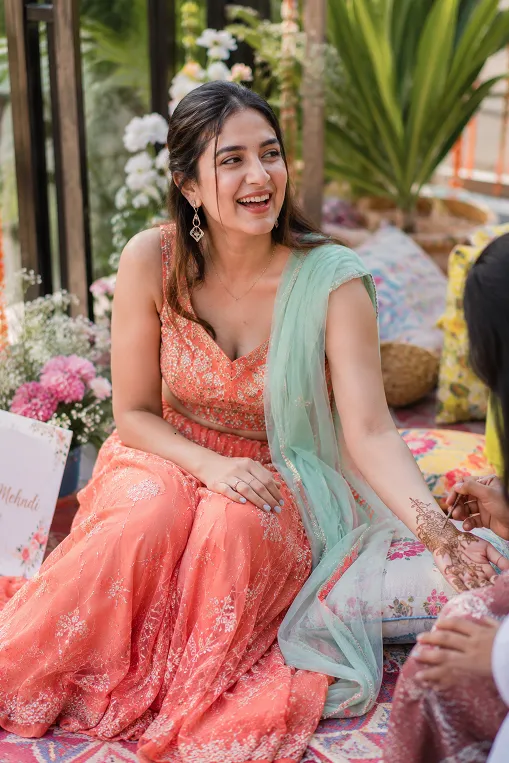
If you are considering a Banarasi silk dupatta for the day, know that it is heavier than it looks on the hanger. By evening, the weight on your shoulder from the pallu starts to show, especially after hours of sitting and shifting position.
In a city like Surat or Mumbai where humidity sits high through most of the year, this crease recovery difference becomes even more obvious once the function moves from afternoon into evening.
The Real Reason Wet Mehndi Ruins Outfits
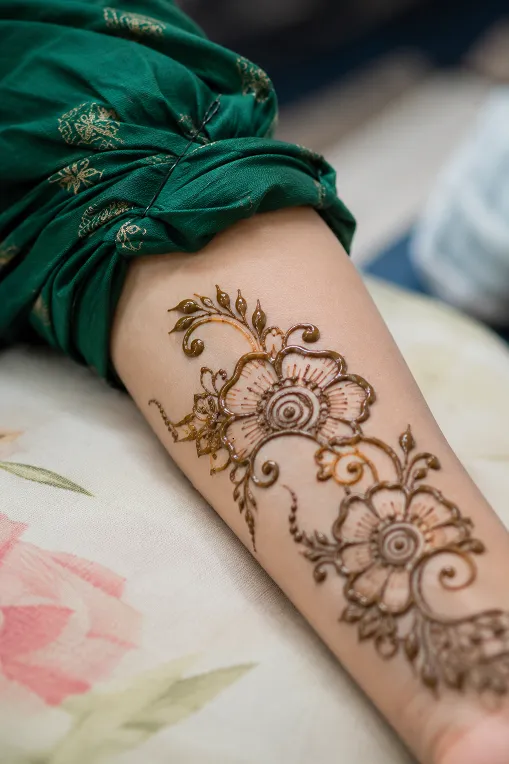
Fresh henna paste stays wet and workable for a while after it goes on, and the paste needs time to dry and begin to crack before it is fully set on the skin. During that window, it sits in close contact with your sleeve, your lap, and whatever fabric happens to be nearby.
Light, delicate fabric picks up colour from this contact far more easily than people expect. A pale chiffon dupatta resting near a hand mid design is a common way outfits end up with a faint orange tinge nobody notices until later.
This is not a reason to avoid mehndi coloured or golden tones for your guest outfit for the mehndi ceremony. It is a reason to be deliberate about what sits closest to your hands.
Keep dupattas pinned back, avoid trailing fabric near the design, and pick a base colour that would not show a faint stain even if a little paste does transfer.
Darker jewel tones hide this kind of transfer far better than pastels or whites do. If you want a longer breakdown of which shades work well together without looking washed out in photos, our guide to colour combinations for ethnic wear covers that in more detail.
What to Check Before You Buy Your Mehndi Function Dress
Before you buy, touch the fabric and crumple a corner in your hand for a few seconds. If it springs back close to flat, it will survive hours of sitting. If it holds a hard crease, it will show every fold by evening.
Check the sleeve construction too. Can it roll up past the elbow without pulling at the seam?
If you are drawn to a pale or pastel piece, ask whether it is washable at home, since that detail decides how forgiving it is if henna paste ever touches it. This is the single check that separates good looking mehndi outfit ideas for guests from outfits that actually hold up by evening.
At our unit in Surat we handle georgette, chiffon and cotton blends daily, and we source anything outside that range directly from Surat’s local textile market, so this advice comes from people who actually work with these fabrics, not just style them.
Before You Head Out the Door
The outfit that actually works for a mehndi function is not the one that photographs best standing still. It is the one that survives an hour of henna application, hours of floor sitting, and still looks like you put thought into it.
Sleeves that roll up, fabric that bounces back from creases, and colours that forgive a faint stain will do more for your day than any trend list. That, honestly, is what good mehndi ceremony styling comes down to.
There is more of this kind of practical detail across the Ethora blog, covering sarees, salwar kameez and everyday ethnic wear. Our store is launching soon, with pieces made at our own Surat unit and sourced directly from Surat’s textile market.
FAQ
What should I wear to a mehndi function as a guest?
A light salwar suit, a co-ord set or a chiffon saree in a shade other than the bride’s colour works well. Prioritise sleeves that roll up past the elbow and fabric that does not crease heavily, since you will be sitting for a long stretch.
Is it okay to wear a lehenga to a mehndi ceremony?
You can, but a heavy flared lehenga is harder to manage while sitting cross legged for hours. If you want the lehenga silhouette, look for one in a lighter fabric like georgette rather than a stiff, heavily embroidered one.
Does the colour of my outfit affect how visible henna stains are?
Yes. Darker jewel tones like bottle green, wine or mustard hide faint henna transfer far better than pastel or white fabric. If staining worries you, this is a more useful filter than avoiding henna coloured tones altogether.
How do I know if a mehndi outfit fabric is good quality before buying?
Crumple a corner of the fabric in your hand. If it bounces back without a hard crease line, it will hold up through a long event. Ethora manufactures salwar kameez, sarees and kurtas directly at its own unit in Surat, and sources everything else from Surat’s local textile manufacturers, so you get factory level fabric knowledge without middleman pricing.
Can I accessorise a simple mehndi outfit to make it look more festive?
Yes, and it is often smarter than buying a heavier outfit. A statement earring set, bangles that do not interfere with the henna area, and a well pinned dupatta can lift a simple cotton or georgette set without adding any extra weight to sit in for hours.
Getting mehndi done is the easy part, the outfit around it is where most guests overthink. Ethora makes salwar kameez, sarees, kurtas and lehenga choli directly at its own manufacturing unit in Surat, and for everything outside that range, pieces come straight from Surat’s local textile manufacturers. Our store is launching soon, so you get fabric knowledge from the source itself, not a reseller.