You’ve probably tried on three different kameez cuts this month alone, hoping one of them would finally sit right at the waist instead of pulling across the middle. That frustration is real, and it usually isn’t your body’s fault.
Most guides to salwar kameez for apple shaped body styling repeat the same three cuts on loop, A-line, straight-cut, empire waist, each one crowned as the single right answer. None of them explain why the same cut looks completely different on two women with the same body shape.
An apple shape usually means a fuller midsection, shoulders that read a touch broader than the hips, and legs that stay comparatively slim. It’s a body that carries most of its weight up top, which changes how fabric should move around you, not just what shape it’s cut into. If you’re not fully sure apple is your shape, our free ethnic wear body type calculator can confirm it in under a minute using just your measurements.
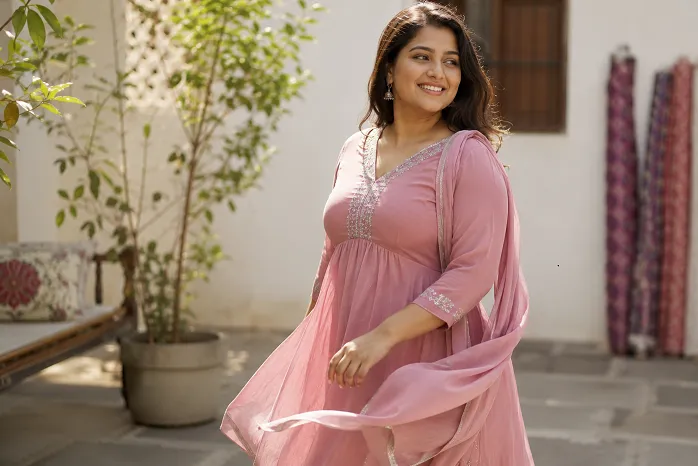
Table of Contents
Salwar Kameez for Apple Shaped Body: What the Cut Should Actually Do
Here’s the part nobody tells you. A-line, straight-cut, and empire waist all contradict each other in every article you’ve read because the writers are answering the wrong question. The real question is where the flare starts relative to your bust, and how stiff the fabric is.
An empire waist that sits right under the bust, cut in a soft fabric like georgette or crepe, skims straight down the midsection without adding a single extra line. It works because there’s nothing there to catch on your fuller part.
Now take an A-line that starts flaring from the natural waist, stitched in a stiffer fabric like cotton silk or raw silk. That fabric holds its own shape instead of falling with your body, so it stands away from you right at the midsection. You end up wider, not slimmer.
The straight-cut kameez follows the same rule. In a fluid fabric it grazes past the body cleanly. In a heavier, structured fabric it can sit like a box around the exact area you’re trying to soften. The cut was never the real decision. The flare point and the fabric stiffness were.
This is also why an anarkali cut can behave so differently from a straight salwar kameez depending on how heavy the fabric underneath is, so it’s worth reading that comparison if you’re torn between the two for a wedding season outfit.
Most women choose a salwar kameez cut based on what looks good on the hanger. That’s the wrong way to do it, because a hanger has no shoulders, no bust, and no bit of tummy to skim over.
One thing I’ll say plainly: a well fitted kameez that follows your actual body line will always skim better than three sizes too big. Bigger fabric is just more fabric, not more shape hidden. Everyone tells apple shapes to go loose and forget the rest, and honestly, that advice alone has ruined more outfits than it’s saved.
Neckline and Sleeve Details Nobody Mentions
Every single article about dressing an apple shape talks about necklines and stops there. Sleeves get maybe one line, if that, and it’s almost always wrong for this body type.
Necklines do matter, so briefly: a boat or scoop neck widens the collarbone line without adding bulk at the shoulder, which works better than a plain round collar for this body type. It also pairs naturally with the sleeve advice below.
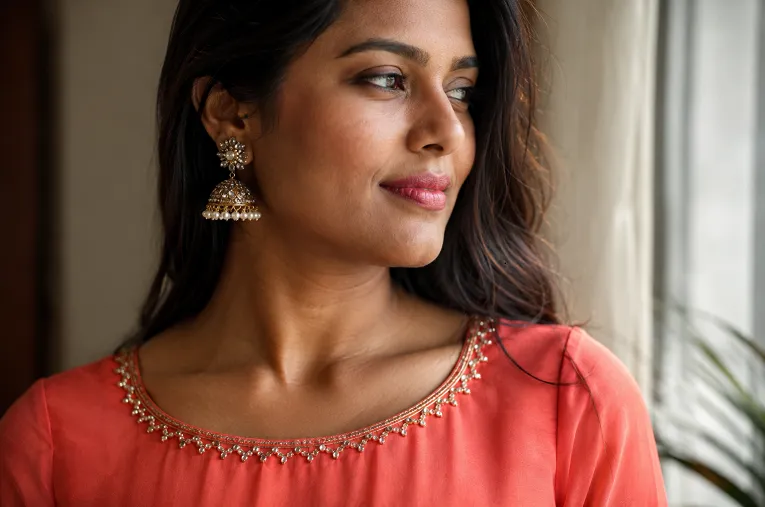
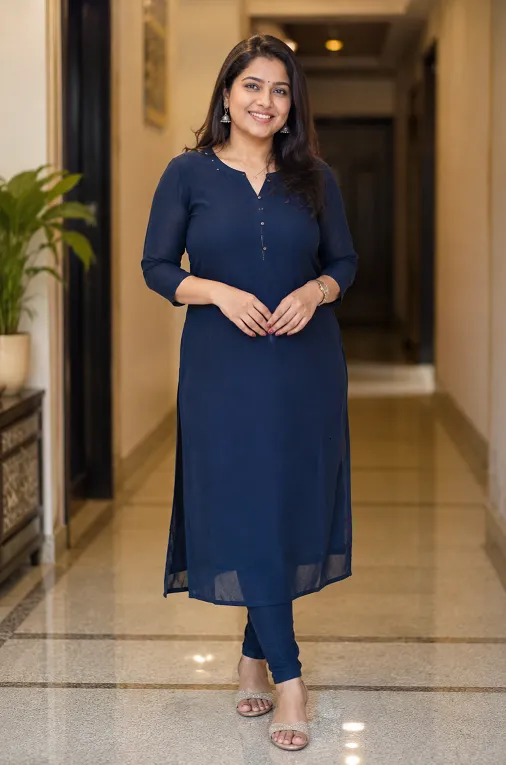
Apple shapes usually have slimmer arms, and that’s a genuine strength worth showing off. Three-quarter sleeves and soft bell sleeves do exactly that. They taper in slightly, draw the eye down the arm, and don’t add anything at the shoulder line where you’re already carrying width.
Puffed sleeves and cap sleeves do the opposite. They sit right at the shoulder and add volume exactly where a broader-shouldered frame doesn’t need it. You end up looking wider across the top even if the kameez itself fits perfectly everywhere else.
If you’re getting a kameez tailored for Diwali or a cousin’s shaadi, ask your tailor to keep the sleeve narrow through the upper arm and let it flare gently from the elbow down. It’s a small change that does more work than most neckline advice you’ll read anywhere else.
Getting the Dupatta to Work For You, Not Against You
I’ll be honest, this is the part I think about the most, because the dupatta gets almost zero attention in every apple shape guide despite being part of nearly every outfit you’ll wear.
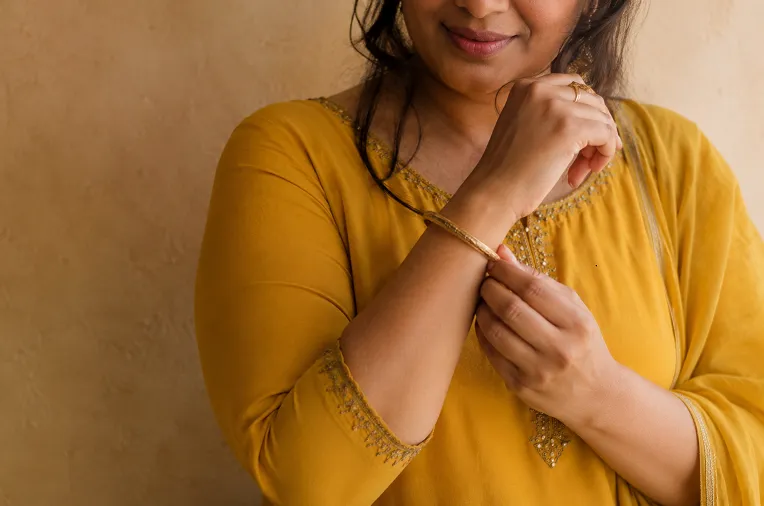
A dupatta bunched up and wrapped around your neck, the way most of us do it out of habit at a function, adds real width right at the chest and shoulders. It sits exactly on top of the area you’re already trying to visually narrow.
A single long drape down the front, or one thrown over just one shoulder and left to fall, does the opposite. It creates one clean vertical line that runs down the body and pulls the eye along with it instead of across it.
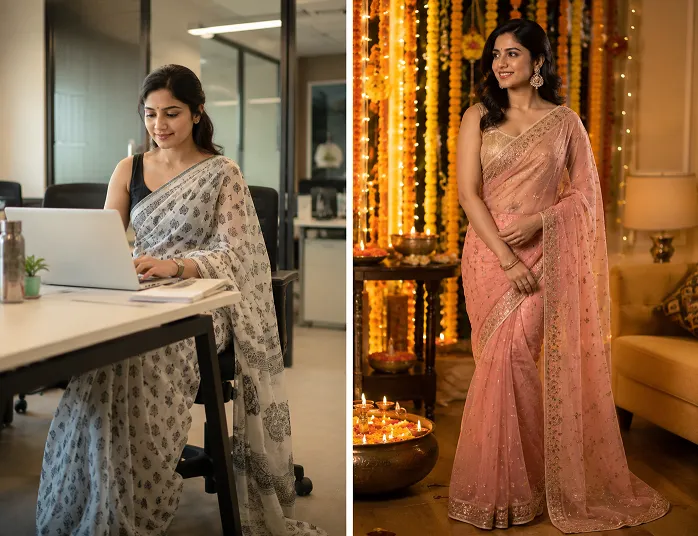
There’s a genuine texture difference here too. A soft chiffon dupatta falls flatter and moves with you when you walk, while a heavier banarasi or zari-worked dupatta holds its own weight and can start to look bunchy by the third hour of a salwar kameez outfit worn to the office or a full day wedding function.
If you’re wearing a heavier dupatta for a festive look, pin it once at the shoulder so it can’t slide into that bunched-up neck position by the time you’re on your second cup of chai.

Colour, Fabric and Everyday Comfort
Fabric knowledge changes more of this than colour ever will, though colour still matters for how the whole outfit reads from a distance.
Georgette has more body than chiffon, so it holds a pleat and a flare better when you’re actually walking, which matters if you’re choosing between the two for a straight-cut kameez. Chiffon looks lovely on a hanger but goes soft and clingy the moment you sit down for two hours at a sangeet.
Modal is another one people confuse with rayon. It drapes similarly, but it doesn’t cling to the body the same way once Mumbai humidity or a Surat afternoon gets involved, which makes it a genuinely better everyday choice for warmer months.
On colour, deep jewel tones and mid-tone shades do read as more slimming, and that’s not untrue. But a well fitted bright kameez in a colour you actually love will do more for your confidence walking into a Navratri function than a dull beige one ever will, and confidence changes how an outfit sits on you more than most styling advice admits.
If you want fabric that breathes through a full day of errands and a rickshaw ride home, the American Cleaning Institute’s fabric care guide is a useful reference for how to actually wash and store georgette and crepe without ruining the drape you paid for.
And if you’re comparing this against how a similar body type wears fitted western silhouettes, our guide on kurti styles for a pear shaped body covers the opposite end of the same fabric-and-fit logic.

What to Check Before You Buy
Before you buy or order a salwar kameez for apple shaped body wear, don’t ask “is this A-line or straight-cut.” Ask where the flare actually starts on your body, and pinch the fabric to see if it falls or holds its shape.
A soft fabric with a high flare point will skim almost any apple shape well. A stiff fabric with a low flare point will add bulk regardless of what the cut is technically called on the label.
This is exactly the kind of detail that only shows up once you’ve handled enough fabric rolls to know the difference by touch. At Ethora, we manufacture our salwar kameez directly at our own unit in Surat, and everything we don’t make ourselves is sourced straight from Surat’s local textile market, so this advice comes from people who actually cut and stitch these fabrics every day.
Conclusion
The real fix isn’t picking the “right” cut off a list. It’s checking where the flare starts on your body and how the fabric behaves once you’re standing, walking, and sitting through an actual day in it.
Once you know that, A-line, straight-cut, and empire waist stop contradicting each other completely.
If this helped, there’s more like it waiting on the Ethora blog for whatever you’re getting dressed for next. Our store is launching soon, with everything coming straight from our own manufacturing unit and Surat’s textile market, no middlemen in between.
FAQ
Is A-line or straight-cut better for an apple shaped body?
Neither is automatically better. What matters is where the flare starts and how stiff the fabric is. A soft-fabric A-line starting near the bust often skims better than a stiff straight-cut.
Do puffed sleeves suit an apple shape?
Generally no. Puffed and cap sleeves add volume right at the shoulder line, which works against an already broader-shoulder frame. Three-quarter or bell sleeves show off slimmer arms instead.
How should I drape my dupatta if I have a fuller midsection?
Avoid bunching it around the neck. A single long drape down the front or over one shoulder adds a vertical line that elongates rather than adding width at the chest.
What fabric is best for salwar kameez in humid weather?
Modal and georgette both perform well because they don’t cling the way rayon or chiffon can once humidity sets in. Georgette also holds pleats better through a full day of movement.
How do I know if a salwar kameez fabric is good quality before buying online?
Check whether the fabric photographed falls or holds a shape in the product video, not just the still image, especially if you’re specifically shopping for a salwar kameez for apple shaped body fit. Ethora manufactures at its own Surat unit and sources everything else directly from Surat’s textile manufacturers, which means genuine fabric knowledge and factory-level quality without middleman pricing.
Getting a salwar kameez right for an apple shape comes down to fabric and flare, not a rulebook of cuts. We manufacture our own salwar kameez range at our unit in Surat, and everything outside our own production is sourced directly from Surat’s local textile manufacturers, so what reaches you carries real fabric knowledge, not guesswork. Our store is launching soon.