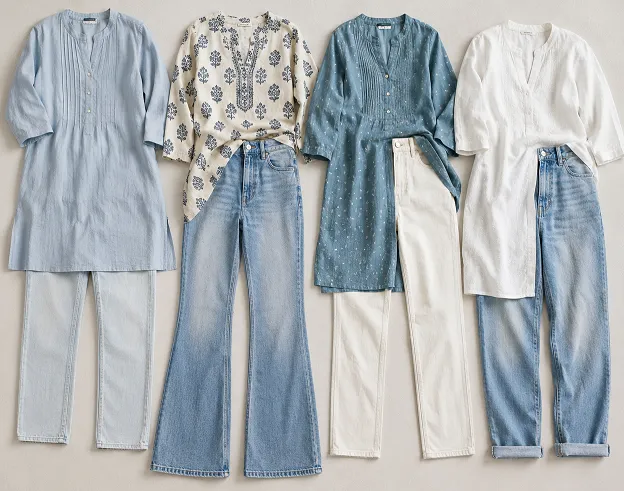
You are standing in front of the mirror ten minutes before leaving for your cousin’s sangeet, and you have added one more piece of jewellery for the fourth time. The bangles are on, the jhumkas are on, the necklace is on, and now you are wondering if the maang tikka is one item too many.
Every styling guide tells you less is more, but nobody tells you how to actually know when you have crossed that line. This article covers how to accessorize ethnic wear with a method you can use standing right there in front of the mirror, along with what heavy jewellery really does to your body by the end of a long event.
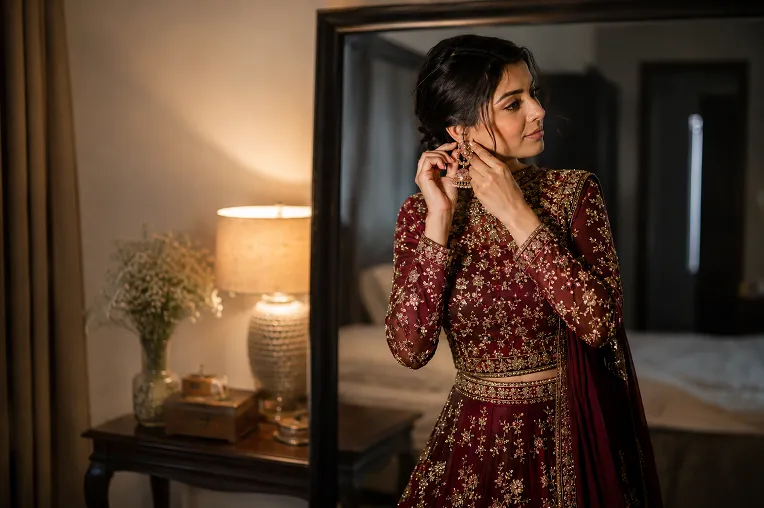
Table of Contents
The Basics of How to Accessorize Ethnic Wear (And Why They Only Get You Halfway)
The basic rule everyone repeats is true as far as it goes. A heavily embroidered lehenga or a zardozi-worked anarkali already has enough going on, so jewellery should recede into the background instead of competing for attention.
A plain cotton kurta or an unembellished saree works the other way. It can carry a bold jhumka or a statement choker because nothing else is asking for the eye’s attention. This works. But it only tells you the starting point, not when to stop.
Most women pick jewellery based on what looks good lying flat in a jewellery box, not on what the outfit is actually asking for. A necklace that looks stunning on its own can completely fight a heavily worked neckline, and you will not notice until you are already at the venue.
If you are dressing for a college fest in a simple kurta, you can experiment more freely, and our kurta styling for college guide breaks this down further. A family wedding function in heavy Banarasi silk asks for the opposite instinct entirely.
A Real Way to Check If You Have Overdone It
Everyone says less is more and stops right there. That is not a method, it is a mood. Here is something you can actually do standing in front of the mirror before you leave.
First, name the job each piece of jewellery is doing. Earrings are framing your face. Bangles are adding movement to your hands. If two pieces are doing the same job, one of them has to go.
Second, take one last look in the mirror before you walk out the door and remove exactly one item on principle. Not because it looks bad. Because there is almost always one piece added out of habit rather than need.
Third, notice if you keep touching or adjusting a piece before you have even left the house. That fidgeting is your own body telling you something the mirror alone will not.
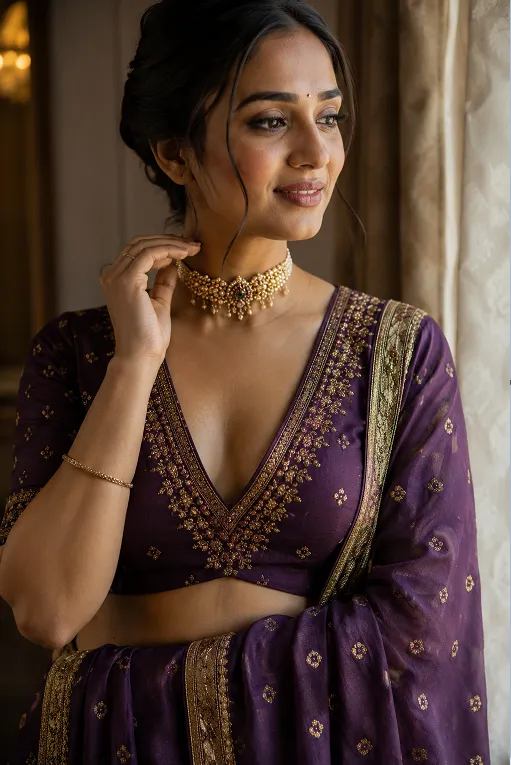
Fourth, look at your neckline before you pick the necklace. A deep V-neckline blouse or a saree blouse cut that low already draws the eye down to the collarbone, so a close choker sits right into that space without a fight. A long statement necklace on the same neckline usually ends up overlapping the V and cancelling both instead of complementing either.
Here is an unpopular opinion: the accessory you add last is usually the first one that should come off. It is rarely load bearing to the outfit. It is just leftover excitement from getting ready.
Why the Fabric’s Finish Decides What Jewellery Actually Works
Heavy embroidery is not the only thing that decides how much jewellery an outfit can carry. The fabric’s own finish matters just as much, and almost nobody talks about this part.
A matte cotton or handloom kurta absorbs light instead of throwing it back. It does not compete with your jewellery, so you can wear something slightly bolder without the outfit fighting itself.
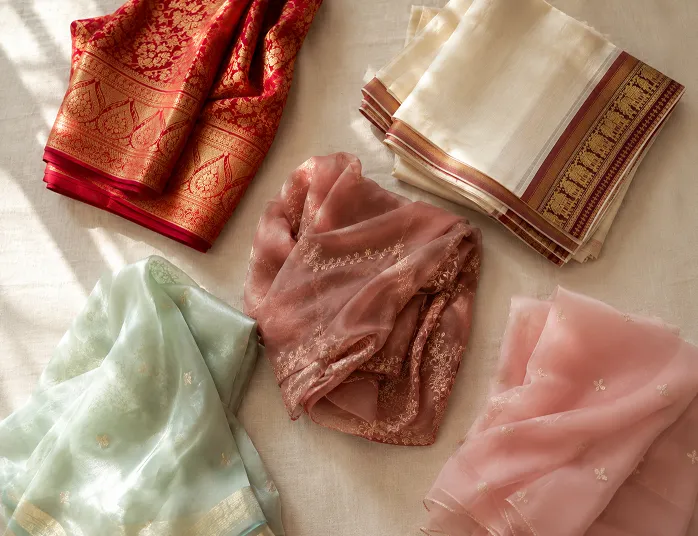
A shiny silk or a sequinned lehenga is already reflecting light on its own. Put an equally reflective, high-shine necklace on top of that, and you get visual noise, not richness. It stops looking rich and starts looking busy.
Georgette has more body than chiffon, so it holds a pleat and a fuller silhouette even while you are walking. That means it can carry slightly more jewellery than softer, clingier chiffon before things start competing for attention.
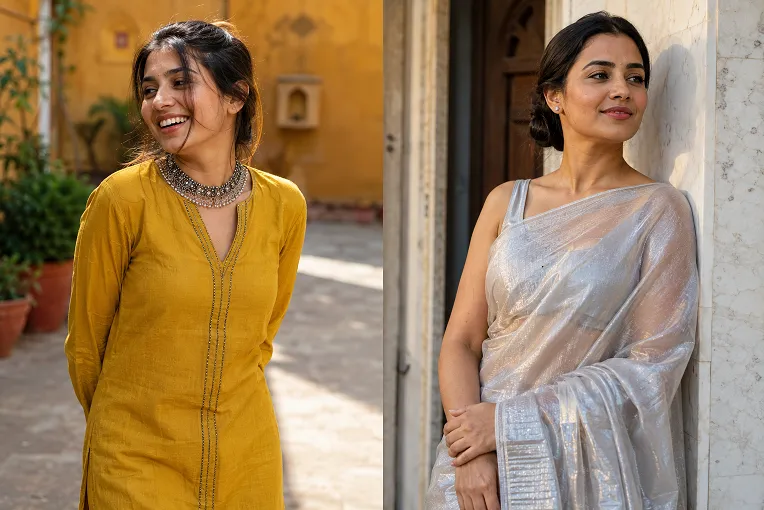
Chiffon catches light very differently from matte handloom cotton. There is a slight shimmer that moves the second you do, and if your jewellery is throwing back light too, everything blurs into one loud shine under function lighting. This is the same reason a fabric that already looks rich on its own needs less help from jewellery, not more.
If you already own a plain saree and are unsure how much jewellery it can take, our guide on how to style a plain saree with jewellery goes deeper into this fabric-first approach.
What Heavy Jewellery Actually Feels Like By the End of a Long Event
Nobody puts this in a styling guide, but by hour four of a wedding function, your ears already know exactly how heavy those jhumkas are.
Big jhumkas look stunning in photos taken in the first hour. By the time the reception dinner starts, that same weight is pulling at your earlobes, and you are quietly wishing you had worn studs instead.
Bangles stacked past a certain point stop being decorative and start restricting how far you can actually bend your wrist. That matters more than you think when you are holding a plate at a buffet table.
A Banarasi silk saree is heavier than it looks folded on a shelf. The official GI record for Banaras Brocades and Sarees notes that the zari work woven into these sarees is exactly what gives them that weight in the first place. Wear the pallu pinned at the shoulder through a full day event, and that weight shows up as real strain by evening, especially if a heavy necklace is sitting on the same side.
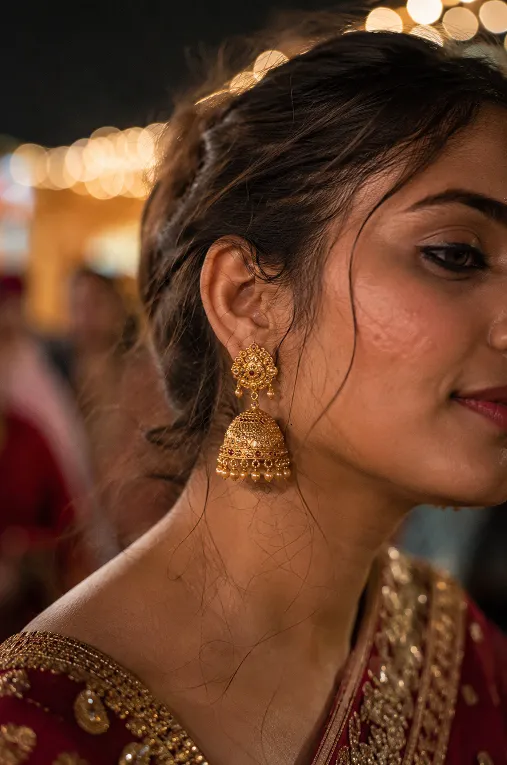
None of this means skip the jewellery entirely for a big function. It means choosing pieces with the same visual drama but a lighter actual build, so you are not silently counting down to when you can take everything off.
Footwear and Bags Are Accessories Too, Not an Afterthought
Jewellery gets all the attention, but your footwear and bag are doing accessorizing work as well, and they should follow the same restraint you just applied above the waist.
A heavily embellished lehenga does not need a fully embroidered potli to match it. A plain block heel or subtle juttis let the outfit stay the star of the look.
For a simple kurta or a plain saree, a colourful potli or a statement clutch can do the visual job a bold necklace might otherwise have to do on its own.
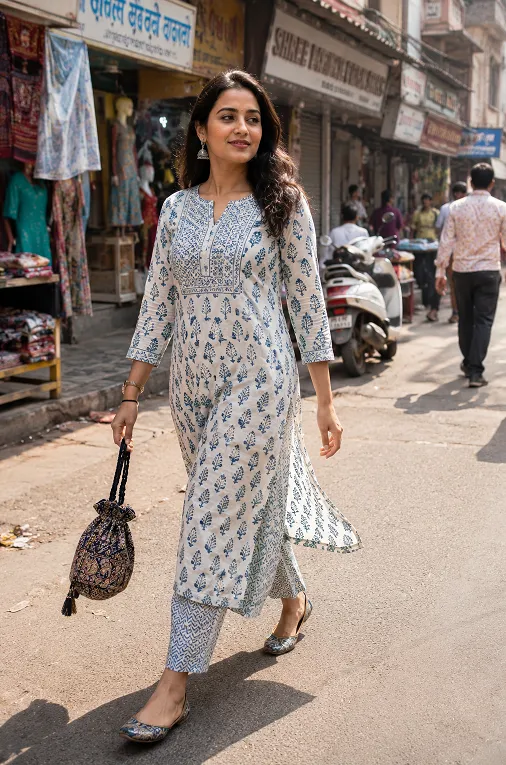
If you are unsure whether a contrasting bag actually works with your outfit’s colour palette, our guide on colour combinations for ethnic wear covers this in more detail.
What to Check Before You Buy Jewellery for an Outfit
Before buying a jewellery piece for a specific outfit, check the fabric’s finish first, not just the embroidery level. A matte handloom piece can handle a bolder buy than a high-shine silk or sequinned fabric, which is already doing the reflecting work on its own.
Hold the piece up next to the actual fabric in daylight if you can, since shine reads very differently under shop lighting than it does outdoors. This is exactly why fabric matters before embroidery when you are figuring out how to accessorize ethnic wear for a specific event.
This is something we think about constantly at Ethora, since we manufacture sarees, suits and lehengas at our own Surat unit and source everything else directly from Surat’s textile market, so the fabric-first thinking here comes from people who handle these weaves every day.
Conclusion
The real skill in accessorizing ethnic wear is not adding well. It is knowing what to take off. Once you start naming the job each piece is doing, the extra ones become obvious on their own.
There is more on fabric-first styling waiting for you on the Ethora blog if this way of thinking about jewellery and outfits interests you. Our store is launching soon, with pieces manufactured at our own Surat unit and sourced directly from Surat’s local textile market.
FAQ
How many jewellery pieces are too many for a saree?
There is no fixed number, but a good check is three points of focus: earrings, one neckpiece, and bangles or a ring, not all four categories stacked at once. If your saree already has heavy zari work on the border, scale one of these three down to something plain instead of skipping it entirely.
What jewellery works best with a plain cotton kurta?
A plain matte cotton kurta can carry a genuinely bold statement piece, like a large jhumka or an oxidised choker, because the fabric itself is not reflecting light back at you. Skip the necklace if the earrings are already large, since one focal point keeps the look from feeling costume-like.
How do I know if a jewellery piece will actually work with an outfit before I buy it?
Check the outfit’s fabric finish before the embroidery level. A high-shine silk or sequinned piece has already done its own reflecting work, so a high-shine jewellery piece on top usually competes rather than complements. Ethora manufactures its sarees, kurtas and lehengas at its own Surat unit and sources everything else directly from Surat’s textile manufacturers, which means the advice here comes from people who handle fabric finish daily and it gets you factory-level quality without middleman pricing.
Do heavy jhumkas actually hurt your ears by the end of a wedding function?
Yes, and this is rarely mentioned in styling advice. Jhumkas past a certain weight start pulling at the earlobe within a few hours, so for a full day event, a lighter jhumka with the same visual drama is the smarter choice over a genuinely heavy one.
Can the same jewellery work for both a saree and a salwar kameez?
Mostly yes, if the neckline and fabric finish are similar. A statement choker that works with a saree blouse can look off with a high-neck salwar kameez, so check the neckline shape before assuming a piece is interchangeable across outfits.
Once you know how to check if you have overdone it, shopping for jewellery and outfits gets a lot less stressful. Ethora manufactures its sarees, kurtas, suits and lehengas at its own unit in Surat, and for everything else, we source directly from Surat’s local textile manufacturers so you get real fabric knowledge without middleman pricing. Our store is launching soon.