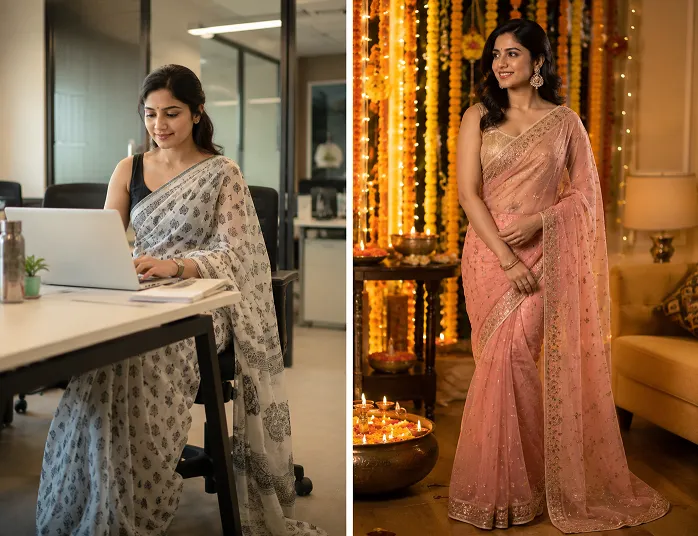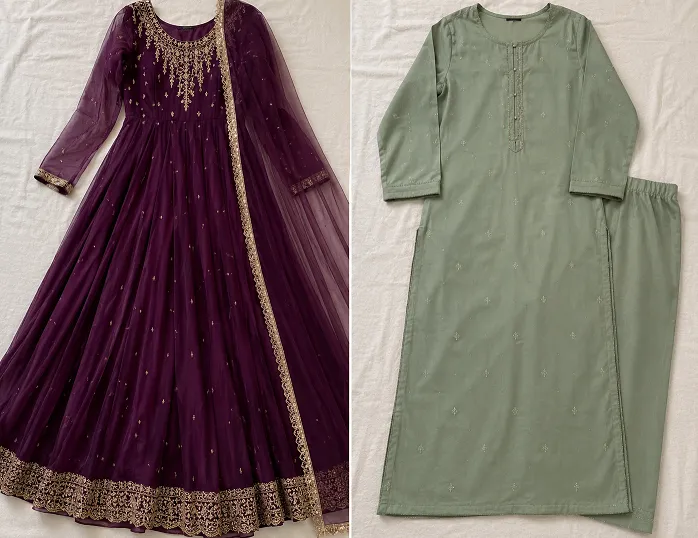
You have been there. A Diwali party invite lands in the group chat three weeks out, and you open five tabs of sarees within the hour. Half of them look identical. Two of them look nothing like their reviews. And somewhere in Leicester or Birmingham, you already know how this ends: the parcel arrives, the colour is off, the fabric feels thinner than the photo promised, and you are back to wearing the same lehenga you wore last year.
This is the real problem with buying indian ethnic wear uk shoppers face every season. It is not a lack of options. It is not knowing which of those options will actually match what shows up at your door. So this article is not another styling roundup. It is what to actually look for, what to ask before you pay, and why the fabric knowledge that most online listings skip is the exact thing that decides whether your outfit works.
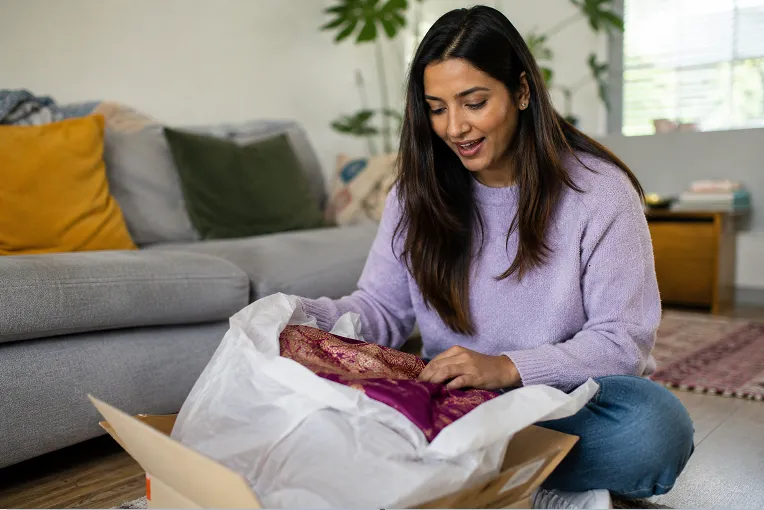
Table of Contents
The Real Reason Indian Ethnic Wear UK Orders Feel Like a Gamble
Most UK based shoppers order Indian ethnic wear the same way they order anything else online: photo, price, reviews, checkout. That works fine for a phone case. It does not work for silk, georgette or embroidered net, because the camera cannot tell you how a fabric behaves. A photo cannot show you weight, drape, or how something feels against skin, and those three things are exactly what separate an outfit that photographs well from one that actually wears well.
Here is the mistake we see constantly. Most women order based on the photo and the price, and that is exactly how you end up with a saree that photographs beautifully online but feels stiff and slightly plastic once you have it on. It is not always a scam. Sometimes it is simply a cheaper synthetic blend styled and lit to look like something richer. The seller is not always lying to you. The listing is just incomplete.
And this is where being in the UK makes the problem worse, not better. In India, you can walk into a shop, touch three sarees, and know instantly which one drapes and which one does not. From Leicester or Coventry, you are relying entirely on a product description written by someone whose job is to sell, not to inform.
What Fabric Actually Tells You (And Most Listings Do Not)
This is the part genuine textile experience actually changes. Georgette has more body than chiffon, so it holds a pleat properly when you are walking through a banquet hall instead of collapsing flat by the second hour. If a listing says “lightweight and flowy” without telling you which of the two you are getting, that is your first red flag.
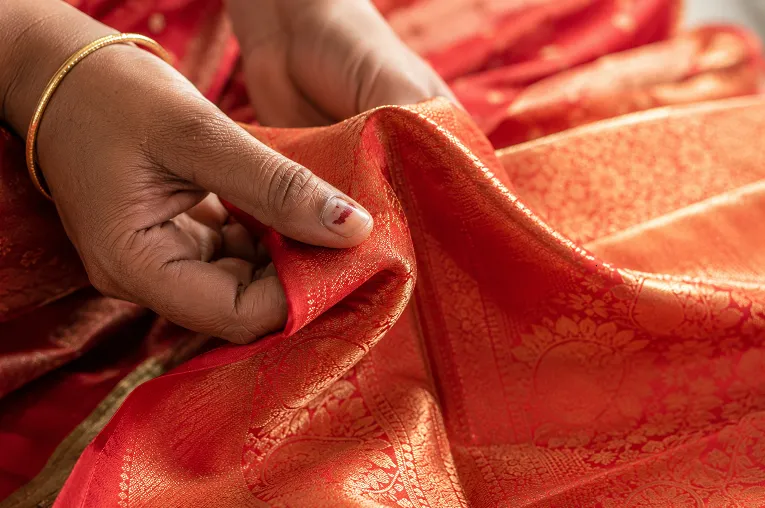
Weight matters more than people expect too. Banarasi silk is heavier than most first time buyers assume, and if you are wearing it through a full day wedding function, you will feel that weight on your shoulder from the pallu by early evening. That is not a flaw in the fabric. It is simply something you should know before you commit to wearing it for ten hours in a British banquet hall in December.
One more thing worth knowing, because almost nobody mentions it: modal fabric looks similar to rayon at a glance, but it does not cling to the body the same way once humidity or body heat comes into play, which makes it a genuinely better pick for indoor events where you will be dancing, hugging relatives, and standing under warm lighting for hours.
None of this is complicated. It is just the kind of detail that only shows up when someone has actually handled the fabric before it became a finished garment, not just sold it, and it is exactly the knowledge most indian ethnic wear uk listings skip entirely.
Southall, Green Street, or Straight From India
If you are near London, Southall and Green Street feel like the obvious answer for indian ethnic wear uk shopping. And they are good for last minute needs, blouse alterations, or trying something on in person. But the stock in those shops is often the same handful of designs circulating across every diaspora market in the UK, priced with UK retail margins stacked on top.
Here is the unpopular opinion. Buying directly from an Indian manufacturer, even without trying it on first, often gets you closer to authentic quality than buying from a local diaspora shop that has already marked the product up two or three times past its origin price. You lose the ability to touch it beforehand. You gain access to fabric and construction quality that was never adjusted for a markup chain. For special occasions where the details matter, that trade tends to be worth it, provided the seller actually tells you what you are buying.
This is also where finding a good blouse tailor in your own city becomes part of the plan rather than an afterthought. A saree bought perfectly still needs a blouse stitched to fit you, and that relationship with a local tailor in Birmingham or Manchester is worth building well before the week of the event, not the day before. Once you have someone you trust, walking in with a clear reference from our trending saree blouse designs roundup makes that conversation far easier than describing what you want from memory.
Dressing for British Weather Without Losing the Occasion
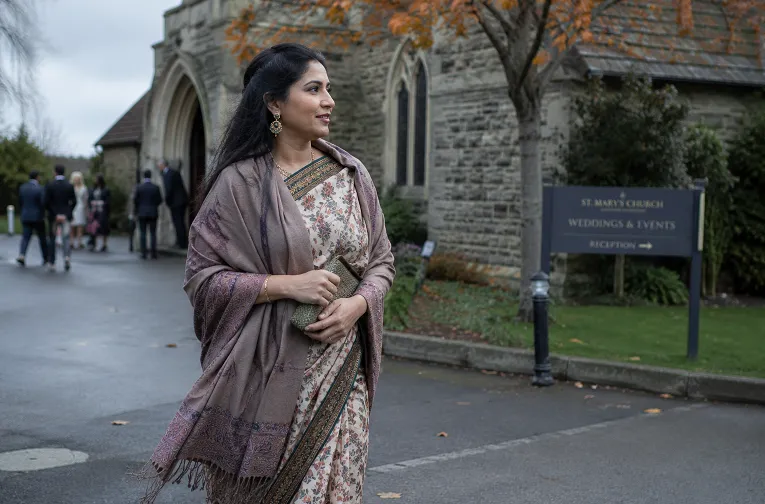
Most of what indian ethnic wear uk shoppers reach for was not designed with British October in mind, and pretending otherwise leads to a lot of shivering in car parks outside wedding venues. A saree in cold weather needs a plan underneath it, not just a shawl thrown over the top as an afterthought. A well fitted thermal layer under the petticoat, sleeves added to an otherwise sleeveless blouse, or choosing a heavier Banarasi over a light chiffon for a winter event all change how wearable the outfit actually is once you step outside.
This is also where layering with a proper shrug, jacket, or even a well chosen shawl in a complementary colour becomes genuinely useful rather than just decorative. Do it right and it barely reads as a compromise. Do it wrong and the whole look feels like it is fighting the weather instead of working with it. And if you are dressing several generations for the same event, a grandmother in heavier silk and a niece in something lighter, our Diwali outfit ideas for every generation guide walks through balancing exactly that across ages and climates.
The Practical Details That Rarely Get Mentioned: Sizing, Customs and Alterations
Getting the fabric and the occasion right still is not the whole picture. Three things trip up UK based buyers more than anything else, and almost no listing walks you through them properly.
Measure in Centimetres, Not Your UK Dress Size
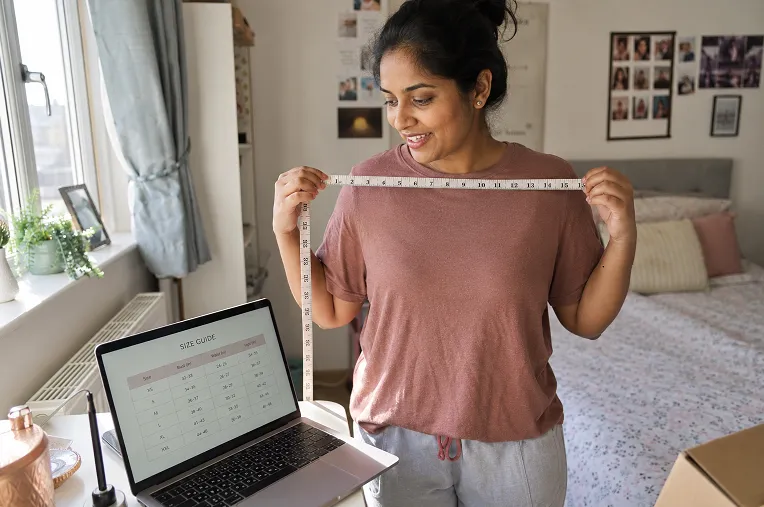
This is the single most repeated tip for a reason, and most people still skip it. Indian ethnic wear sizing does not map cleanly onto UK dress sizes, so a UK size 12 assumption will let you down more often than it helps. Measure your shoulder width, bust and waist in centimetres yourself, and match those numbers against the seller’s own size chart, not a generic conversion table you found elsewhere. Every manufacturer cuts slightly differently, and this is the one step that prevents almost every fit disappointment before it happens.
What Actually Happens at Customs and Delivery
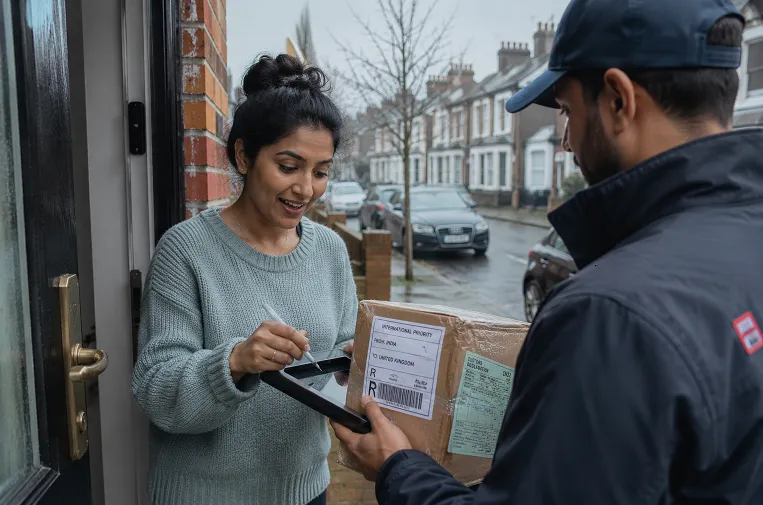
Here is where people get confused, understandably. The India-UK CETA has removed the export duty that used to sit on Indian textiles, and that is real and it does bring prices down. But it does not automatically mean nothing is charged at your door.
Depending on how the seller ships, you may still see import VAT or a courier handling fee added on delivery. Ask the seller directly whether shipping is arranged as delivered duty paid, where everything is settled before it reaches you, or delivered duty unpaid, where the courier can charge you on arrival. That one question avoids an unpleasant surprise on your doorstep.
What a Tailor Can and Cannot Fix Once It Arrives
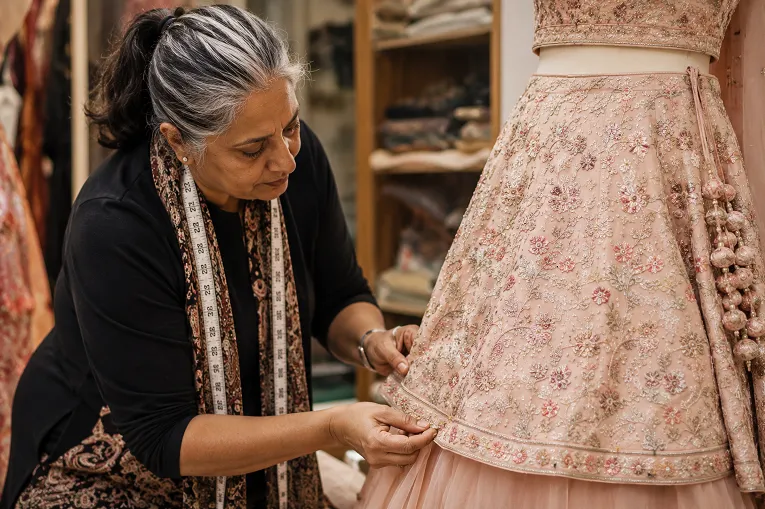
A hemline is an easy fix. Blouse darts, sleeve length and a slightly loose waist are all things a decent tailor sorts out in a single visit. What a tailor cannot easily fix is a shoulder seam or bust measurement that is fundamentally wrong, which is exactly why getting your own measurements right before you order matters more than trusting alterations to rescue a poor fit later. Think of a tailor as the finishing step, not the safety net.
What to Check Before You Order From India
Before you pay for anything, ask the seller three things: the exact fabric composition, not just a style name; whether the blouse is stitched, unstitched, or needs alteration once it arrives, worth reading our breakdown of pre-stitched saree vs traditional saree if you are choosing between the two for the first time; and whether the colour shown is studio lit or shot in natural daylight. Genuine sellers answer these without hesitation. Vague or delayed answers are usually a sign the listing is dressed up more than the product itself.
The good news is that this has gotten more straightforward recently for indian ethnic wear uk buyers. With the India-UK CETA now in force as of 15th July 2026, tariffs of up to 12 percent that used to sit on Indian textile and garment exports to the UK have been removed, which means buying directly from Indian manufacturers is now more accessible and often better priced than it was even a year ago.
At Ethora, we manufacture sarees, salwar kameez, kurtas and lehenga choli directly at our own unit in Surat, and everything outside that range we source directly from Surat’s local textile market, which happens to be India’s largest textile hub. That is not a sales pitch. It is simply why the advice in this article comes from people who handle these fabrics every day, not from a general fashion blog repeating what everyone else has already said.
Conclusion
If there is one thing indian ethnic wear uk shoppers should take from all of this, it is that a good outfit is decided long before it arrives at your door, in the questions you ask and the fabric details you actually check, not in how good the photo looks. Get that part right and everything else, the fit, the drape, the way it moves at the event, tends to follow.
There is more on the Ethora blog if you want to go deeper into specific fabrics and occasions before your next order. And our own store is launching soon, with everything coming straight from our manufacturing unit and trusted partners in Surat.
FAQ
Where can I buy authentic Indian sarees in the UK?
For indian ethnic wear uk shopping, you can find sarees through diaspora markets like Southall or Green Street, but those are usually marked up two or three times past origin price. Ordering directly from an Indian manufacturer, and asking specifically about fabric composition and blouse construction before you pay, tends to get you closer to genuine quality for the price.
How do I order ethnic wear from India to the UK?
Most Indian manufacturers and sellers now ship internationally, and with the India-UK CETA in force since 15th July 2026, tariffs on Indian textiles have been removed, making direct orders more affordable than before. Look for sellers who list exact fabric type and blouse stitching detail, not just a style name.
Is it safe to buy Indian clothes online from India?
It can be, provided you check for clear fabric details, real customer photos rather than only studio shots, and a seller who answers direct questions about composition and construction quickly. Ethora manufactures at its own Surat unit and sources everything else directly from Surat’s textile market, which means UK buyers get factory level quality without several layers of middleman pricing.
How do I find a saree blouse tailor in the UK?
Look within local Indian community groups in cities like Leicester, Birmingham or Manchester, since word of mouth tends to find the tailors who actually understand ethnic wear construction rather than general alteration shops. Building that relationship ahead of your next event, not the week before, makes a real difference to fit.
What fabric is best for a winter wedding in the UK?
Heavier fabrics like Banarasi silk or a well structured georgette hold up better through a full day event in cold weather than lightweight chiffon, which tends to feel thin once you step outside for photos. Pairing either with a proper layer underneath, rather than just a shawl on top, keeps you warm without changing the look of the outfit.
Getting your next outfit right starts with knowing exactly what you are ordering, not hoping the photo matches reality. Ethora manufactures sarees, salwar kameez, kurtas and lehenga choli at our own unit in Surat, and for everything else, we source directly from Surat’s local textile manufacturers, so what reaches you comes without layers of middleman pricing. With the India-UK CETA now in force, Indian textiles reach UK buyers at zero duty, making genuine quality more accessible than before. Our store is launching soon, built entirely around that promise.