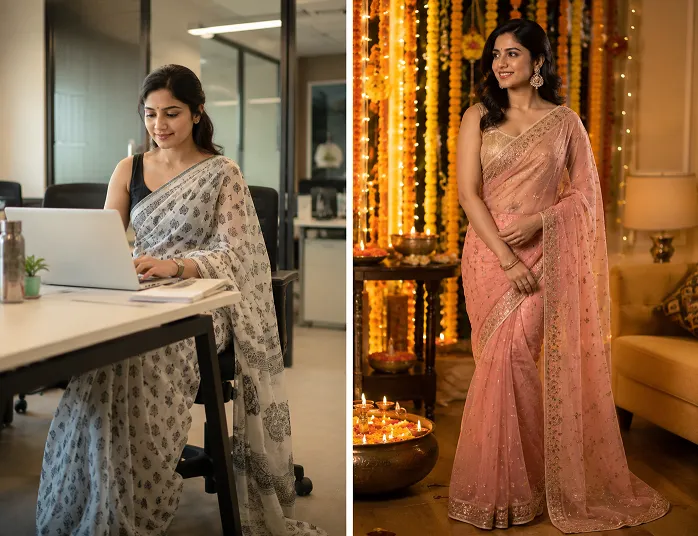
You are standing in front of your wardrobe at seven in the morning, the sarghi is done, and you are holding up two options. One is the red Banarasi your mother in law gifted you last year. The other is a lighter georgette suit you bought for yourself. You already know which one photographs better. You are not sure which one you can actually survive the day in.
That is the real question behind most karva chauth outfit ideas you will find online. Most articles will tell you to wear red or maroon and pick a fabric that breathes. True, but incomplete. This one goes further, into why comfort matters more on this specific day than on any other festive occasion, and what your outfit actually has to do, physically, from morning puja to moon sighting.
Before any of that outfit debate even starts, there is the sargi. In the pitch dark hour before sunrise, most women eat in whatever they slept in or in the softest cotton kurta they own, not the outfit they plan to wear all day. That choice already tells you something. Comfort was the priority before the styling even began, and it deserves to stay that way once the sun is up.
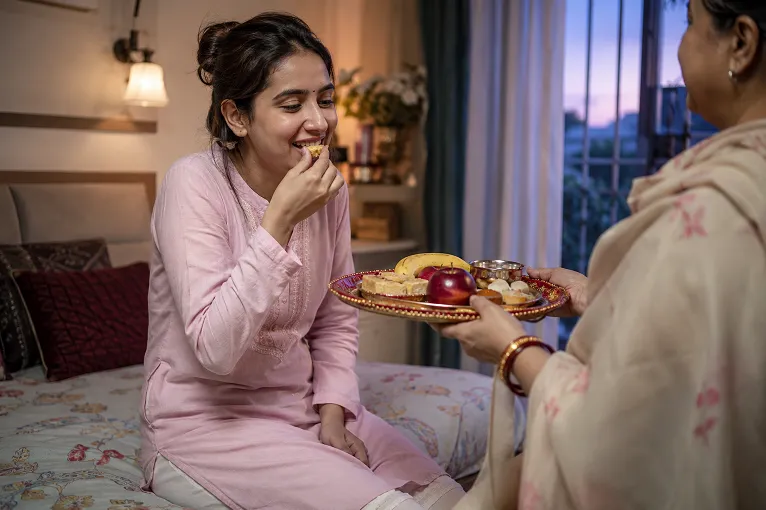
Table of Contents
Karva Chauth Outfit Ideas: Colours, Fabrics and Outfit Types That Actually Work
Red, maroon and deep pink remain the obvious choices for karva chauth, and there is a reason beyond tradition. These shades photograph beautifully under both daylight and the warm indoor light most karva chauth evenings are lit with. But you do not have to stay boxed into just these three. A rani pink lehenga, a bottle green saree with gold zari, or even a mustard suit with a red dupatta all sit well within the spirit of the day.
For outfit type, here are the three ideas actually worth building your look around.
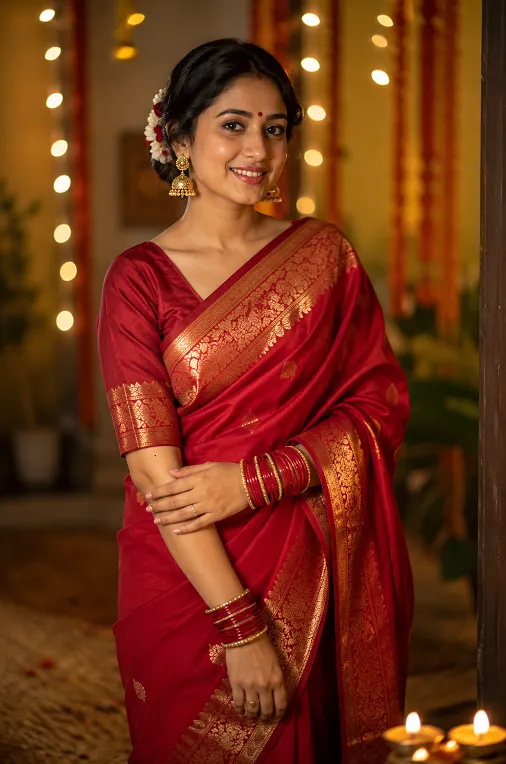
Idea 1: The Rich Red Saree
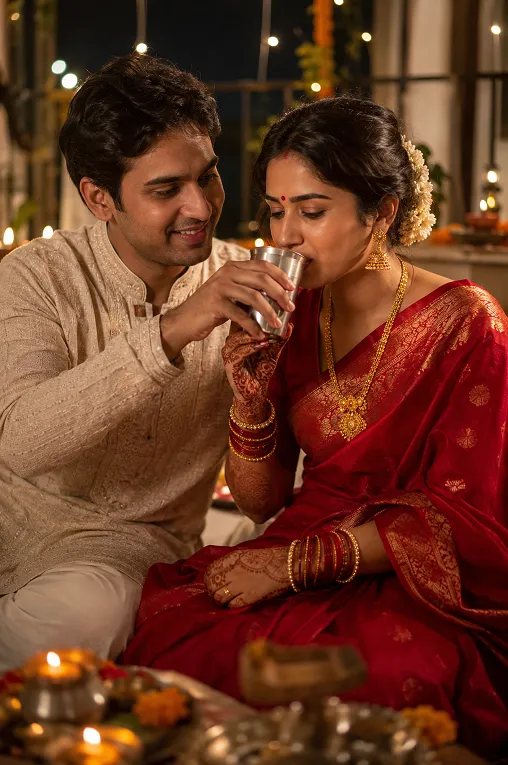
A sindoori red silk-blend saree with a gold zari border is the classic choice for good reason, and it earns that reputation honestly. It photographs beautifully under both daylight and diya glow, and a lighter silk blend gives you the same richness without the stiffness of a heavier Banarasi. The trade-off is managing the pallu through several hours of standing and sitting, so this idea works best if you are already comfortable handling a saree for a full day.
Idea 2: The Forgiving Lehenga Choli
A rani pink or mustard lehenga choli earns its place if your evening is heavy on standing photographs and family gathering. It sits more forgivingly around the waist than a fitted saree petticoat, which genuinely matters on a fasting stomach, and the flared silhouette gives your legs room to move when you sit down for the katha without pulling at the fabric.
Idea 3: The Lightweight Anarkali Suit
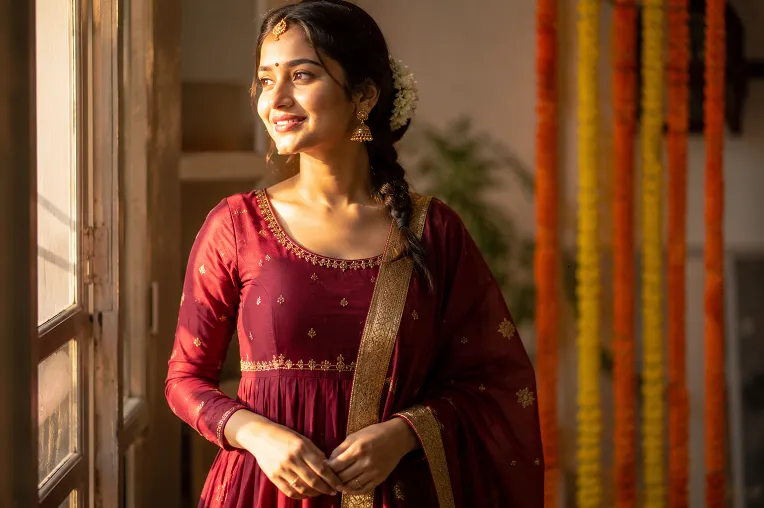
A maroon anarkali suit in a soft, fluid fabric is the most underrated of the three. It hides waistline discomfort well, moves easily when you sit cross legged, and still photographs as festive as a saree or lehenga once you add the right dupatta and jewellery. If you want one outfit that genuinely does not fight you through the whole day, this is usually it.
Here is an unpopular opinion. Everyone pushes you toward the heaviest, most bridal looking outfit in your wardrobe for karva chauth, as if comfort is something you deal with next year. A well fitted, mid weight anarkali in a rich colour will look just as complete in photos as a heavy lehenga, and you will actually enjoy wearing it. Nobody in the room is measuring the grams of embroidery on your dupatta. They are looking at whether you look happy and put together, and that is easier to pull off in something you are not silently fighting with by six in the evening.
If you are still deciding between the two, our saree for body type guide breaks down which silhouette actually suits you before you commit to either.
Why Fabric Comfort Matters More on Karva Chauth Than on Any Other Festive Day
This is the part most fashion articles skip entirely, and it is the most important one.
On Diwali or a wedding function, you have eaten, you are hydrated, and your body is regulating its temperature normally. On karva chauth, you are fasting without food or water from sunrise to moonrise. That changes how your body responds to heat, how your skin reacts to friction, and how tolerant you are of anything tight against your waist or throat.
A structured, boned blouse that felt fine at a wedding reception can feel genuinely uncomfortable by hour ten of a fasting day. So can a heavily embellished neckline that sits stiff against your collarbone, or a waistband cut for how you look standing still rather than how you feel sitting down.
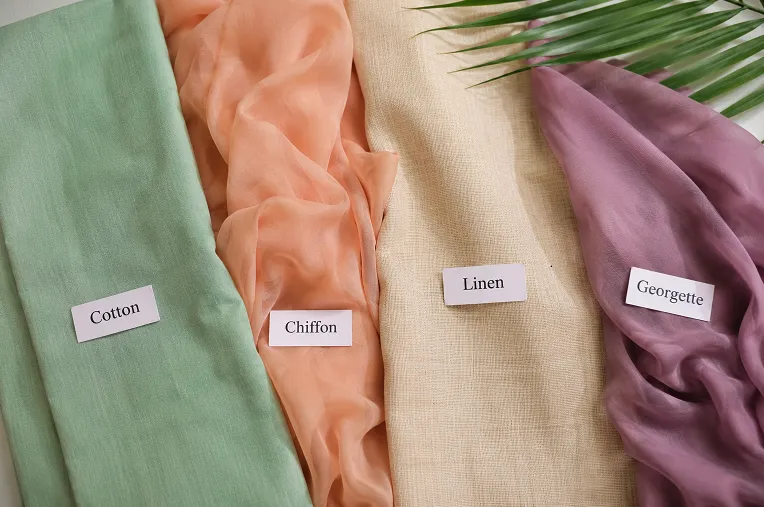
This is not a minor styling note. It is the actual reason breathable, non restrictive fabric matters more today than on almost any other occasion in the festive calendar. Georgette has more body than chiffon, so it holds a pleat cleanly when you are walking between rooms, but it also does not sit tight against the skin the way a stiffer silk blend can. Modal fabric looks similar to rayon on the hanger, but it does not cling to the body the same way once the day gets warm, which matters a lot if your karva chauth this year falls during a spell of unseasonal heat.
You genuinely need to think about this before you pick your outfit, not after.
What Your Outfit Actually Has to Survive During the Day
Here is where most karva chauth outfit advice stops short. Nobody tests these clothes against what the day actually demands physically, and that is the real gap.
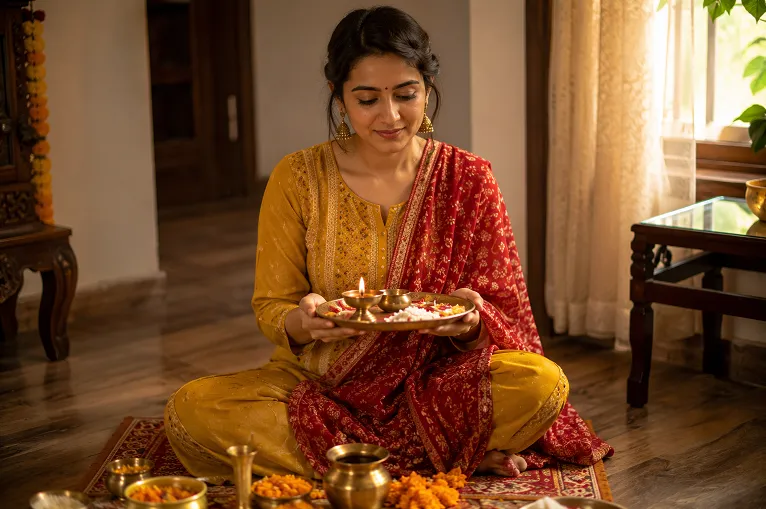
Think through the sequence. You stand through the morning puja. You sit cross legged on the floor, sometimes for thirty minutes or more, during the katha. Later in the evening, you stand again, both arms raised overhead, holding the sieve and diya, looking at the moon through the strainer. That is three completely different physical positions in one outfit, and most festive wear is never actually tested against all three.
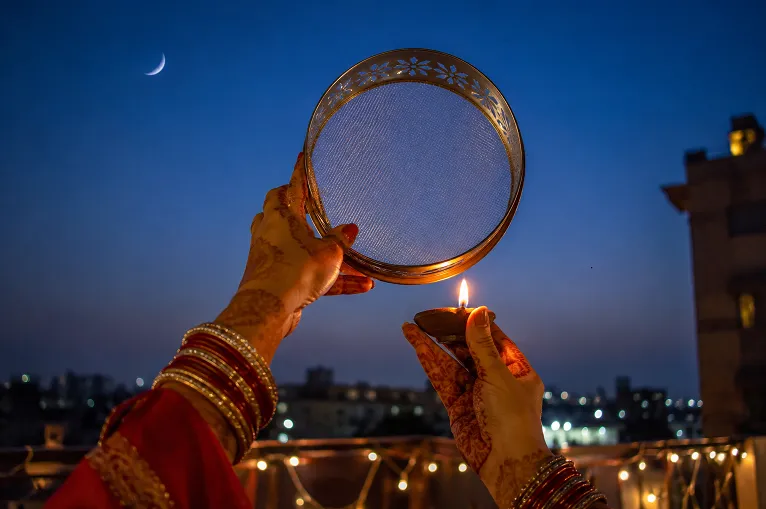
A stiff, heavily structured lehenga blouse can restrict your arm movement exactly at the moment you need to raise both arms comfortably for the moon sighting. A saree with a tightly pinned pallu can shift or come loose when you sit cross legged for the katha, and pinning it back mid ritual is not something you want to be doing in front of family. A suit with a slightly higher waist and softer, pleated palazzo instead of a fitted churidar gives you room to sit on the floor without pulling at the fabric across your legs.
So actually try this before the day itself. Sit down cross legged in your chosen outfit at home. Raise both arms overhead the way you would while holding the sieve. If either movement feels restricted or the outfit shifts uncomfortably, that is your answer, not the mirror.
Let This Year’s Actual Date and Weather Decide Your Fabric
Karva chauth follows the lunar calendar, so it lands on a different date every year, sometimes in early October, sometimes closer to late October or November. That single detail changes your fabric decision more than any blanket styling rule does.
Most articles will tell you silk for evening, always, as if the weather is identical every year. It is not. If karva chauth falls during a warm, humid stretch in your city, a heavy Banarasi or Kanjivaram silk is going to feel very different by evening than the same outfit would in a genuinely cool October. Check what this year’s actual date lines up with in terms of weather in your region, ideally against the India Meteorological Department forecast, before you lock in fabric. A lighter Chanderi or organza silk gives you the same festive richness with far less weight and heat retention if the evening is still warm. Save the heavier silks for a year when the date lands during a proper cold spell.
For a deeper look at how lighter silks behave through a full day, see our organza saree guide.
Jewellery and Styling Details That Complete the Look
Once the outfit is decided, jewellery is where most of the visual richness comes from, and this is also where restraint pays off more than people expect.
- Maang tikka and jhumkas in a matched set instantly lift a simpler outfit without needing heavier embroidery on the clothes themselves.
- A single statement necklace works better with a plainer neckline than layering multiple pieces, especially if your outfit already has embellishment at the collar.
- Bangles in an odd number, five or seven, traditionally photograph and sound better than an even count when your hands are raised for the moon sighting.
- Bindi and sindoor in a shade that complements your outfit’s dominant colour rather than defaulting to plain red every time.
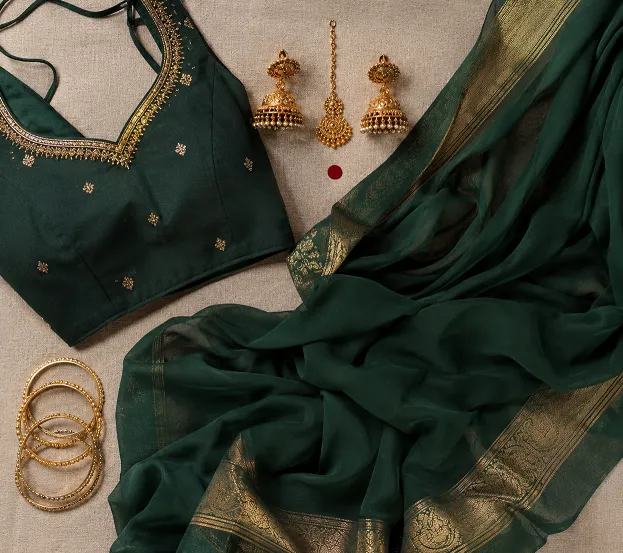
Chiffon and georgette sarees catch light differently from silk. There is a softness to the way chiffon moves that makes it look effortless even on a day when you have barely had time to manage the drape perfectly, and that quality works in your favour on a day this physically demanding.
If you want the full breakdown, check how to style a plain saree with jewellery for different outfit shades.
One real mistake to avoid. Most women pick their karva chauth outfit based purely on how it looks hanging or on a mannequin in the store. That is the wrong way to choose for this specific day. Try it on, sit down in it, raise your arms, and only then decide. An outfit that photographs perfectly still but restricts you the moment you move is not the right choice for a day built entirely around movement and ritual.
What to Check Before You Buy
The best karva chauth outfit ideas are the ones that survive a simple physical check, not just a good look in the mirror. This is the one thing to actually verify before you purchase, not after.
Check the waistband construction first. Is it a soft elastic or drawstring, or a rigid hook and zip? A rigid waistband is the first thing that becomes uncomfortable on a fasting stomach by afternoon.
Run your hand across the inside of the blouse or kurta neckline too. If the embellishment or lining feels stiff or scratchy against your fingers, it will feel worse against fasting, more sensitive skin through a long day.
A soft cotton or silk blend lining at the neck and waist makes a bigger difference on karva chauth than it would on any other festive day.
At Pahal Silk Mills in Surat, we manufacture sarees, suits, kurtas and lehenga choli directly at our own unit, and everything else we stock is sourced straight from Surat’s local textile market, which happens to be the largest one in the country. That means this advice comes from people who actually handle these fabrics before they ever reach a hanger.
Still torn between the two silhouettes? Our salwar kameez vs punjabi suit comparison covers the practical differences.
The Outfit That Actually Serves the Day
The best karva chauth outfit ideas are never about looking the most bridal in a photo. The right one is the outfit you forget you are wearing by the time you are standing with both arms raised, looking through the sieve at the moon. Pick colour and richness first, but let comfort against a fasting body, and the real physical sequence of the ritual, make the final decision on fabric and fit.
There is more like this on the Ethora blog if today’s outfit decision has you thinking about your wardrobe more broadly. Our store is launching soon, with everything either made at our own Surat unit or sourced directly from Surat’s manufacturers, so quality comes straight from the source.
FAQ
What colour is considered auspicious for karva chauth?
Red, maroon and deep pink are the most traditional choices, but bottle green, rani pink and mustard are also widely worn and considered festive. There is no single fixed rule for karva chauth outfit ideas, so choose a shade that suits your skin tone and the outfit style you are most comfortable moving in.
Is saree or suit better for karva chauth?
Both work well, and the better choice depends on how much sitting and standing your day involves. A suit generally gives more ease of movement for the katha and moon sighting, while a saree offers a more traditional, richer look if you are confident managing the pallu through the day.
How do I know if a blouse or suit fabric is good quality before buying?
Feel the inside lining first, not just the outer fabric, since a rough or stiff lining will bother your skin more on a fasting day than any other time. Genuine silk and cotton blends have a slight coolness and softness to the touch, while cheaper synthetic blends often feel warm and slightly plasticky even in an air conditioned store. Ethora manufactures directly at its own Surat unit and sources everything else from Surat’s local manufacturers, so you are getting factory level fabric knowledge and quality without paying middleman markup.
What jewellery goes best with a simple karva chauth outfit?
A matched maang tikka and jhumka set does most of the visual work if your outfit itself is fairly simple. Add bangles in an odd number and keep the necklace to one statement piece rather than layering several, especially if your neckline already has embellishment.
Can I wear western or fusion outfits for karva chauth?
Yes, though most families still lean traditional for the puja portion of the day. If you want a fusion element, save it for the evening celebration after the rituals are done, and keep the puja and moon sighting outfit in a traditional silhouette that lets you sit and stand comfortably.
Getting your karva chauth outfit right this year comes down to choosing comfort with intention, not settling for it as an afterthought. Ethora manufactures sarees, suits, kurtas and lehenga choli directly at our own unit in Surat, and everything else we offer is sourced directly from Surat’s local textile manufacturers, so you get real fabric quality without the usual markup. Our store is launching soon, and we would love for you to be among the first to shop it.