Your mother is refolding the third saree back into the cupboard because it “photographs too plain,” your grandmother already ironed her cotton silk two days in advance and hung it behind the door, and you are still switching between two lehengas at eleven at night trying to decide which one will not need constant adjusting on stage during the evening aarti. Every house with more than one generation goes through some version of this the week before Diwali.
Most diwali outfit ideas articles solve this the lazy way. They tell you grandmother wears elegant, mother wears traditional, daughter wears trendy, and leave it there. That is not advice, that is a description. What actually helps is understanding what each woman in your family is physically going to be doing on Diwali day, because that decides the fabric and the silhouette far more than age ever does. This article gets specific about that, and about how to make a family look coordinated without forcing everyone into the same outfit.
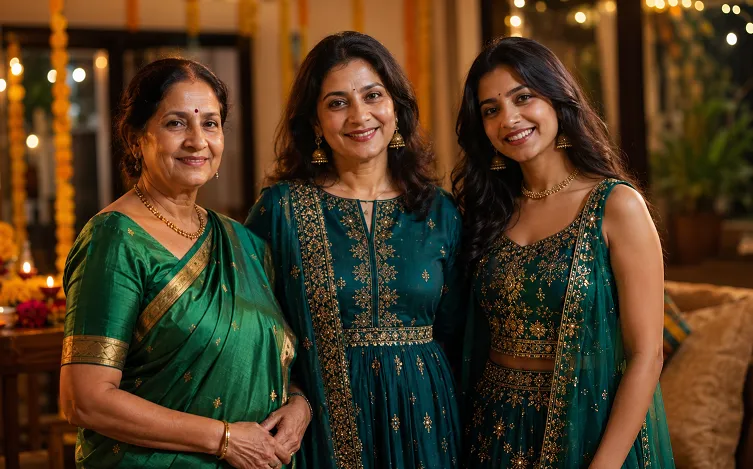
Table of Contents
What Actually Works for the Women Standing Through the Whole Aarti
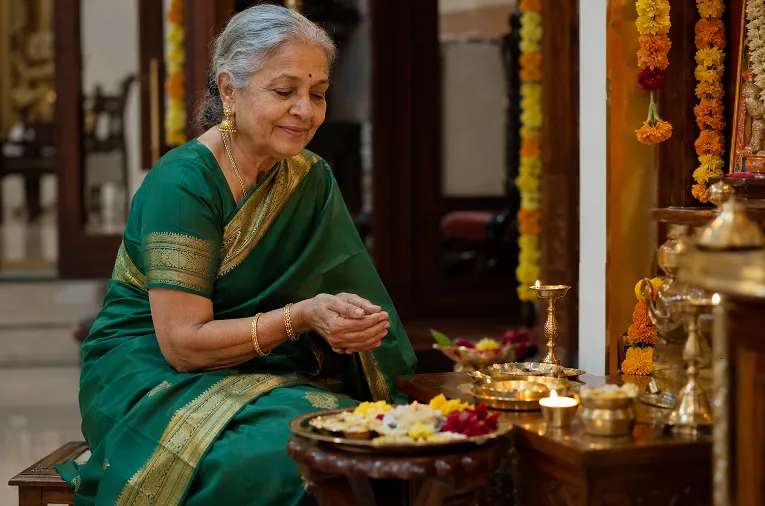
If there is one mistake families make every single year, it is buying the older women in the house a heavy Banarasi or Kanjeevaram silk saree because it “looks the most Diwali.” Banarasi silk is heavier than you expect, and if she is standing through a full aarti and then moving around for guests after, the weight of the pallu pulling on one shoulder starts to show by nine at night. Nobody says anything, but you will notice her adjusting it every few minutes, and that is the outfit failing her, not her failing the outfit.
What actually works is a lighter zari-woven silk or a soft Chanderi, something with body and shine that still photographs rich, but without the drag weight of a heavy handloom Banarasi. If standing for long stretches is genuinely difficult for her, it is worth understanding the real pre-stitched saree vs traditional saree difference before you buy, since a pre-stitched drape removes the constant pallu management that makes older women tired faster than the actual standing does.
For silhouette, straight-cut Anarkalis in a mid-weight cotton silk are underrated here. They give the same festive drape as a saree without needing constant readjustment, and the flare sits comfortably whether she is seated on the floor for puja or standing to greet guests at the door.
What the Mother Managing Both Puja and Hosting Actually Needs
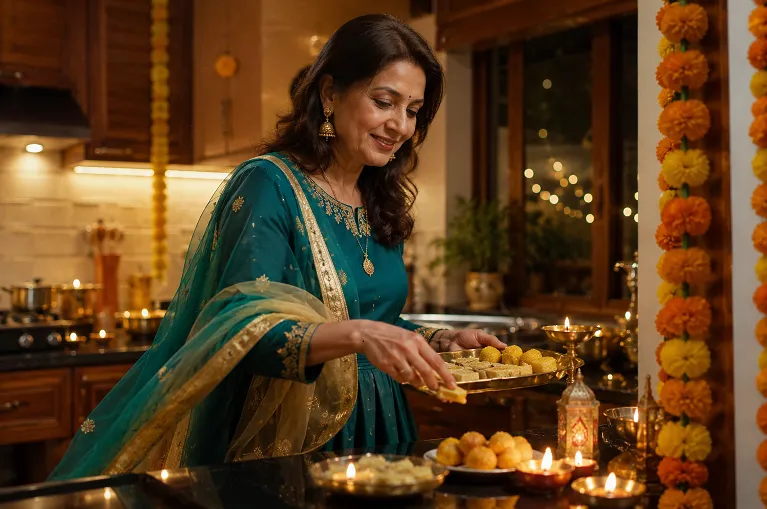
This is the generation everyone forgets to plan for properly, because she is doing the most work and gets the least say in her own outfit. She is lighting diyas in the kitchen, plating mithai, checking if the rangoli powder spilled near the entrance, and greeting relatives, sometimes all within the same twenty minutes.
A heavy lehenga is the wrong call here, no matter how good it looks in the catalogue photo. What she needs is a georgette or crepe Anarkali suit, something that moves easily and does not restrict her arms when she is reaching into a kadhai or bending to touch an elder’s feet.
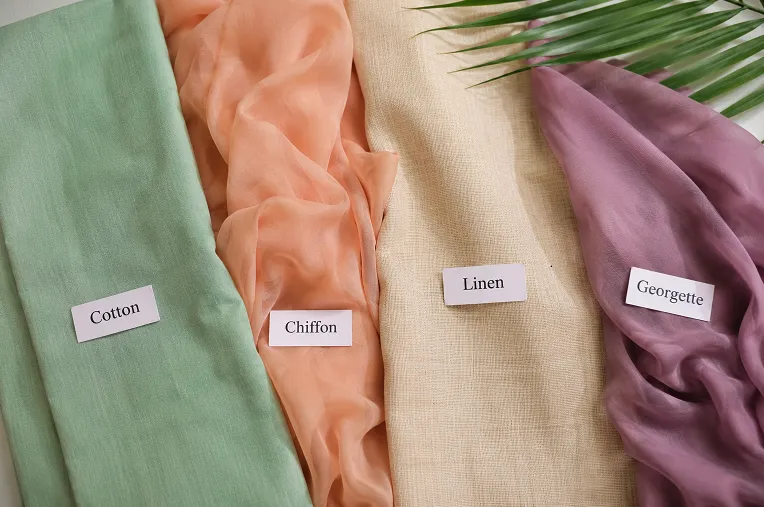
Georgette belongs to the crepe family, woven from tightly twisted yarns that give it more structure than chiffon, which is exactly why it holds a pleat better when you are walking briskly between rooms, and that matters more than people realise when you are the one actually running the house that evening. A straight-cut kurta with a flared palazzo is another honest option, less photographed but far more functional, and it still reads as festive with the right dupatta and jewellery.
Here is the real mistake most families make. They buy the mother of the house the most elaborate outfit in the family because she is hosting, assuming elaborate means respect. It actually means she spends the whole evening uncomfortable while everyone else enjoys theirs.
What Works When You Want to Dance and Still Look Good in Photos
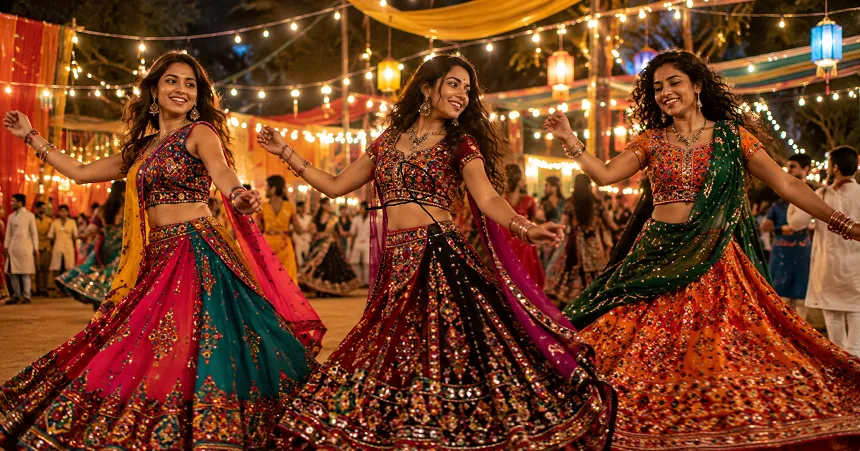
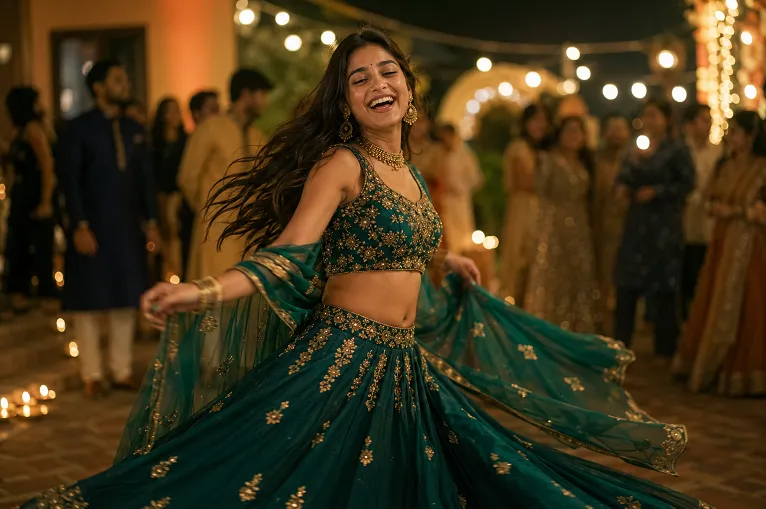
Younger women want two things that occasionally fight each other: movement and photos. A stiff, heavily embroidered lehenga looks stunning standing still and photographs poorly the moment you actually move in it, because the embroidery weight kills the flare’s swing.
Georgette and organza lehengas with a flared silhouette are your best bet if dancing at a Diwali party is genuinely part of your plan. There is a softness to the way georgette moves that makes it look effortless even when you have barely managed to hold the pleats together, and it catches diya light differently than a stiffer fabric, giving you that slight shimmer in photos without needing heavy sequin work.
Here is an unpopular opinion: everyone tells you to wear rich jewel tones for Diwali because they photograph well against the lights, and mostly that is true. But a well-fitted bright kurta set with the right accessories does more for how confident you feel walking into a room than a “safer” maroon or navy you picked because it felt appropriately festive. Fit beats colour choice almost every time, and nobody talks about that enough.
For those who prefer sarees, a georgette or organza drape with a contrast blouse gives you movement without the maintenance a silk saree demands through a night of dancing and photos. If you want a sense of what other young women are actually reaching for this season before you decide, our roundup of saree trends for young women is worth a look.
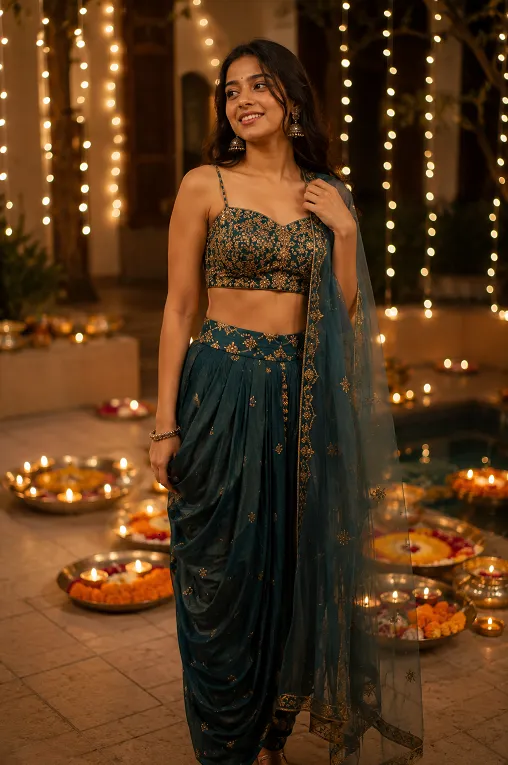
A growing number of younger women are skipping the saree and lehenga altogether for at least one Diwali function, and going fusion instead. Think a cropped embroidered top with flowing dhoti-style pants, or a lehenga worn with a sheer cape instead of a dupatta.
This works for the same reason the georgette lehenga does, the fabric is light and the silhouette does not fight your movement, but it photographs less traditional and more editorial, which is exactly what some of you are actually looking for on a night this dressed up. It is not for every function, your grandmother’s aarti probably is not the moment for dhoti pants, but for the evening party after, it holds up.
Family Diwali Outfit Ideas That Coordinate Without Everyone Matching
This is where most Diwali styling advice goes wrong. Every article tells you to put the whole family in identical outfits, same colour, same fabric, sometimes even the same print. It looks nice for exactly one photo and uncomfortable for everyone in it, because the outfit that suits a twenty-two-year-old’s frame rarely suits her grandmother’s, and vice versa.
A shared colour palette does the same visual job without the compromise. Pick two or three colours, say emerald green and gold with a hint of ivory, and let each woman wear her own silhouette within that palette. Grandmother in an emerald silk saree with gold zari border, mother in an emerald and gold Anarkali, daughter in a gold-detailed emerald lehenga. In photos, the family reads as coordinated and intentional. In real life, everyone is actually wearing something suited to their own comfort, movement and age.
This works because Diwali photos are usually taken in warm diya and fairy light, and jewel tones within one family respond to that light consistently even when the fabrics and cuts are completely different. You get the coordinated look without anyone sacrificing how they actually want to feel in their own clothes. If you are not sure which shades actually sit well together, our guide to colour combinations for ethnic wear breaks down pairings that work beyond just Diwali.
Who Actually Needs to Change Outfits During the Day
Diwali is not one event, and it does not even fit inside one day. The festival traditionally spans five days, from Dhanteras through Bhai Dooj, and that is exactly why outfit planning should follow the day’s real shape instead of assuming everyone dresses once or everyone changes twice.
Older women, in most homes, wear one outfit through the entire day. Morning puja, afternoon guests, evening aarti, all in the same comfortable saree or suit, because changing multiple times through the day is genuinely tiring and rarely worth it for someone who values comfort over photo variety.
Mothers usually fall somewhere in between. A comfortable outfit for the morning puja and daytime hosting, sometimes a lighter dupatta swap or jewellery change for evening if guests are still around, but rarely a full outfit change.
Younger women are the ones most likely to switch outfits, a simpler kurta set for morning puja and rangoli, then something more elaborate for evening parties and photos. If that is your plan, build it around fabric weight. Cotton or cotton-silk for daytime so you are not overheating while helping with decorations, and georgette or organza for evening so you can move freely once the dancing starts.
What to Check Before You Buy for Each Generation
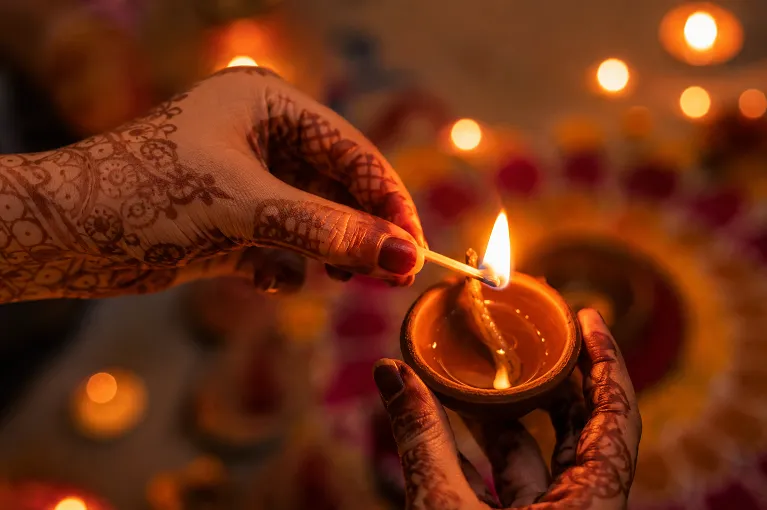
Buying for a multi-generation Diwali means checking fabric weight against what each woman is actually going to be doing, not just how the outfit looks on a hanger. Good diwali outfit ideas on paper still fail in real life if that one check gets skipped.
For grandmothers standing through long pujas, check that the saree or suit fabric has body without excess weight, a mid-weight silk or Chanderi rather than a heavy handloom. For mothers managing hosting duties, prioritise fabrics that hold shape while allowing arm movement, georgette and crepe over stiff brocade. For younger women planning to dance, check the flare and embroidery weight together, since heavy embroidery on a light base fabric can throw off how the outfit actually moves.
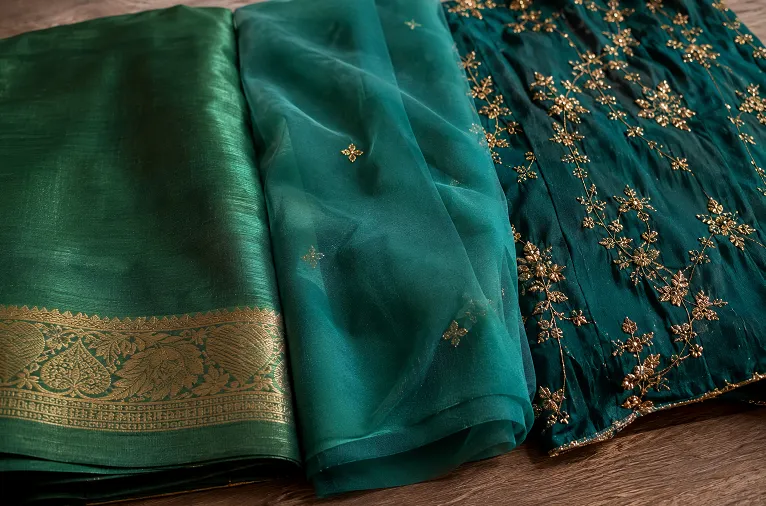
This is exactly the kind of detail that only shows up once you have handled these fabrics through actual production, not just styling shoots. Ethora manufactures sarees, salwar kameez, kurtas and lehenga choli directly at its own unit in Surat, and sources everything outside that range from Surat’s local textile market, so the fabric guidance here comes from people who have actually worked with these weights, not guessed at them.
Quick Recap: 7 Diwali Outfit Ideas by Generation
If you are scanning back through this before you shop, here is everything above in one place.
- Zari-woven silk or soft Chanderi saree, for grandmothers standing through a long aarti, lighter than Banarasi without losing the festive shine.
- Straight-cut Anarkali in mid-weight cotton silk, the low-maintenance saree alternative for older women who want the drape without constant readjusting.
- Georgette or crepe Anarkali suit, for mothers managing both puja and hosting, moves easily and does not restrict the arms.
- Straight-cut kurta with a flared palazzo, the more functional, less photographed option for mothers on their feet all evening.
- Georgette or organza lehenga, for younger women who plan to dance, holds a flare without fighting the movement.
- Georgette or organza saree with a contrast blouse, the saree option for younger women who want movement without silk’s upkeep.
- Fusion look, cropped top with dhoti pants or a cape lehenga — for the evening party, when a more editorial, less traditional silhouette fits the moment.
Conclusion
The real trick to dressing a family for Diwali is not finding one outfit style everyone agrees looks festive. It is matching what each woman is actually going to be doing that day to a fabric and silhouette that will still feel good by nine at night, then tying it together with colour instead of forcing sameness. That is the thread running through every one of these diwali outfit ideas. Get that right and the photos take care of themselves.
If you want more ideas on styling specific pieces for the festive season, our blog has more on that. And if you are close to buying, our store is launching soon with pieces made and sourced directly from Surat’s manufacturing units.
FAQ
How many outfits does a family actually need for Diwali?
Most families overbuy. One comfortable outfit per person covers the full day for older and middle generation women, and younger women who want an evening look separately need just one additional outfit, not three or four.
What fabric is best for a Diwali saree if I will be standing for hours?
Look for a mid-weight silk, Chanderi or a soft Kanjeevaram blend rather than a heavy handloom Banarasi. The heavier the pallu, the more the shoulder strain builds up over a long puja and evening combined.
How do I coordinate outfits for a family Diwali photo without everyone matching exactly?
Pick a shared two or three colour palette and let each person choose their own silhouette within it. This photographs just as coordinated as identical outfits but is far more comfortable for everyone involved.
Where can I buy good quality ethnic wear online without overpaying?
Check the fabric weight and stitching finish before ordering, since photos online can hide a lot. Ethora manufactures sarees, salwar kameez, kurtas and lehenga choli at its own Surat unit and sources everything else directly from Surat’s local textile manufacturers, which means genuine fabric knowledge and factory-level quality without the usual middleman markup.
Is it better to buy a lehenga or saree for a younger woman attending a Diwali party with dancing?
A georgette or organza lehenga generally handles movement better than a heavily embroidered one, since lighter fabric with a good flare moves more naturally on the dance floor and photographs well under warm party lighting.
Getting three generations dressed for one Diwali evening is its own kind of project, and the right fabric choice makes it a lot easier than most people expect. Ethora manufactures sarees, salwar kameez, kurtas and lehenga choli directly at its own unit in Surat, and for everything outside that range, pieces are sourced directly from Surat’s local textile manufacturers. Our store is launching soon, bringing that fabric knowledge straight to your festive wardrobe.