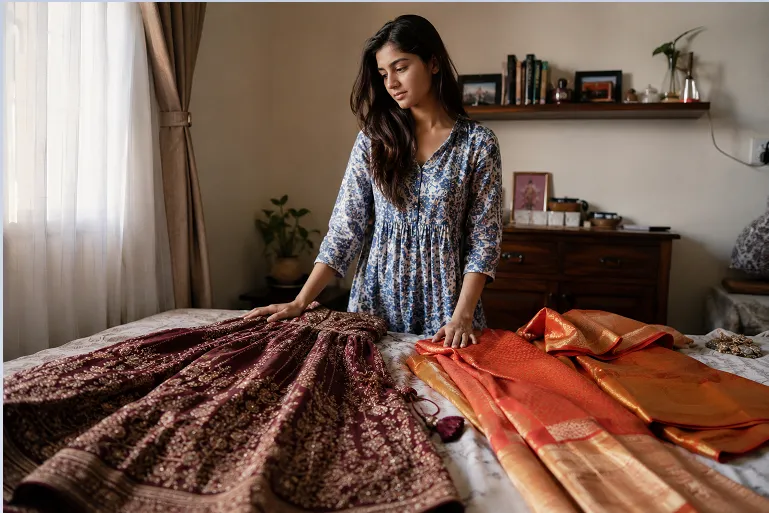
It is the night before the mehndi. Your suitcase is open on the bed, one lehenga is still in its dry cleaner’s plastic, and you have just noticed that the invitation lists six events over three days. A good wedding outfit planning guide starts with that exact number.
That small panic is why most women plan badly. They count days, not events. This guide fixes that first, then shows you how to sequence outfits so you are not worn out by day two, and how to rewear and pack when there is no washing machine anywhere near you.
Just planning logic, from people who spend their days around fabric.
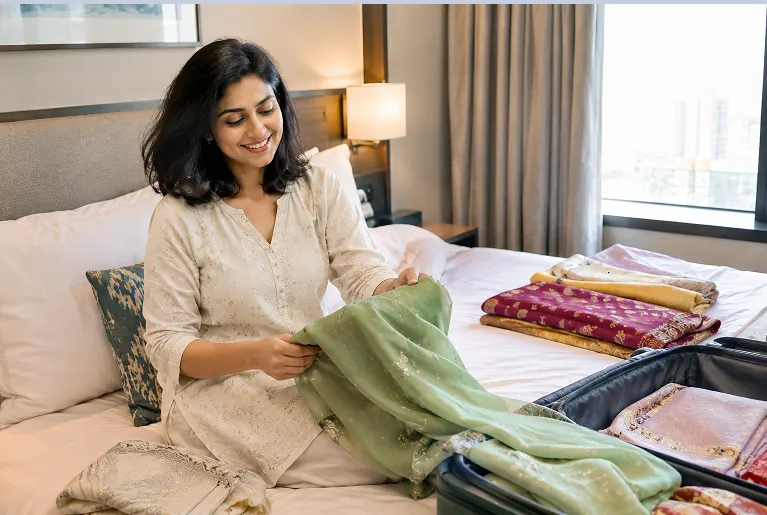
Table of Contents
A Wedding Outfit Planning Guide That Starts With Events, Not Days
A three day wedding almost never means three outfits. Most days hold two events, and some hold three. A haldi at 10 am and the pheras at 9 pm are two separate outfits, even though the calendar calls it one day.
So before you decide what to wear each wedding function, count events. Read the whole invitation, then add the small ones nobody prints, like the welcome lunch and the farewell breakfast.
Here is how a typical three day wedding breaks down:
Day 1: Mehndi (Afternoon)
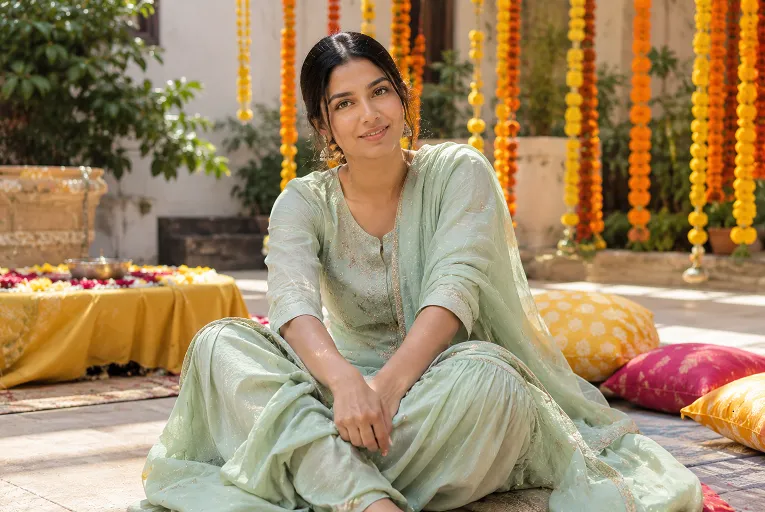
You will sit on a floor cushion for hours, so choose something soft that does not fight you when you sit. A light cotton silk sharara set beats anything stiff or heavily lined.
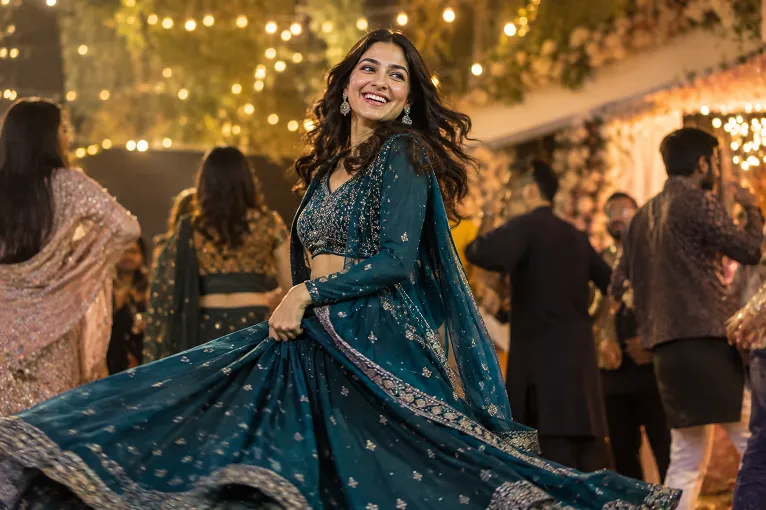
Day 1: Sangeet (Night)
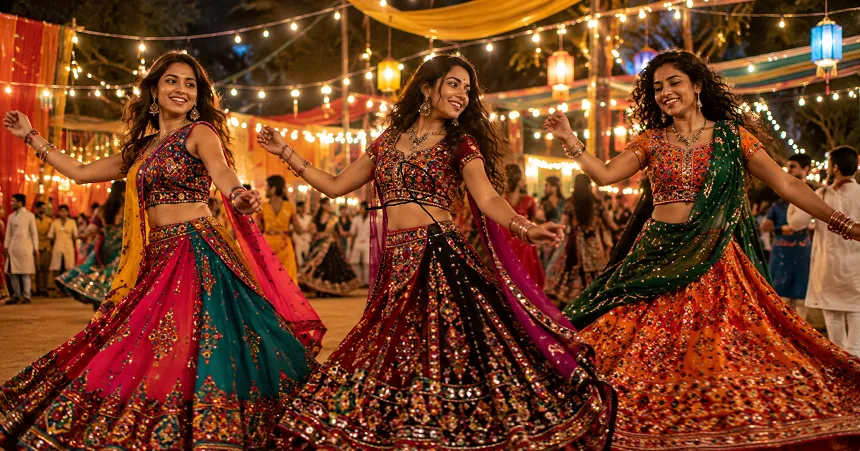
This is the dancing outfit, where how it moves matters more than how much it sparkles. You want flare and freedom in the hem, not weight.
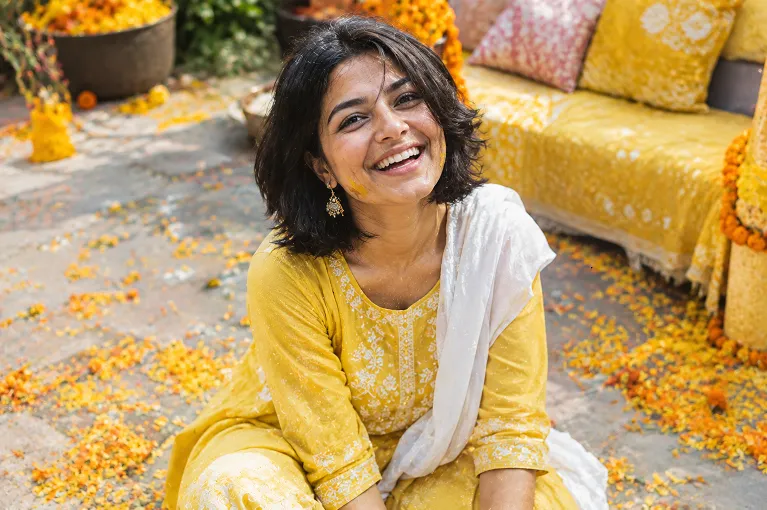
Day 2: Haldi (Morning)
Pick something you are ready to lose to turmeric, because a yellow splash never fully leaves a pastel. Washable cotton in yellow or white is the sensible choice.
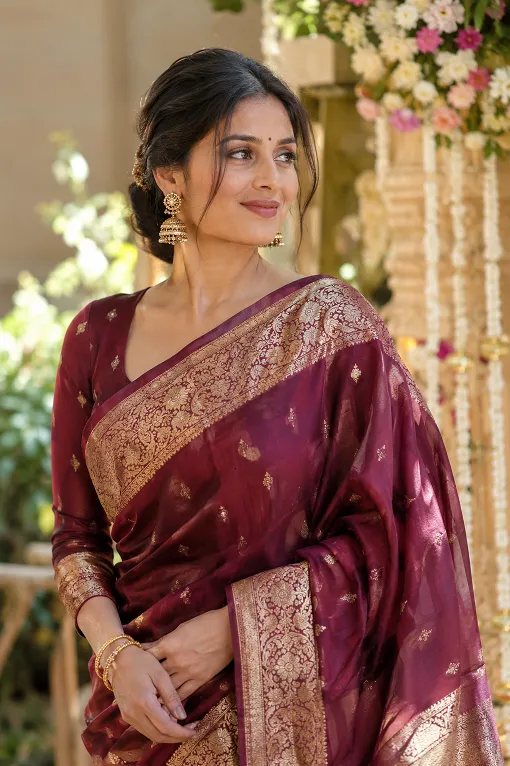
Day 2: Wedding Ceremony (Evening)
This is the heaviest and most formal piece of the whole trip, worn for the longest stretch. Zari, silk and a well fitted blouse matter most here.
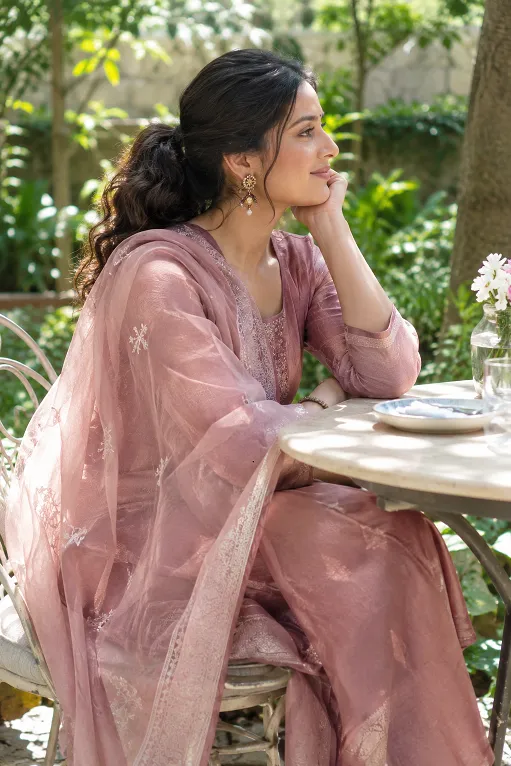
Day 3: Farewell Lunch (Afternoon)
The quiet outfit, usually the most comfortable of the lot. A soft cotton silk kurta set with a dupatta you can rewear works well.
Day 3: Reception (Night)
The glamorous one, where you will be photographed with everyone. Organza or light georgette gives you the shine without another heavy day.
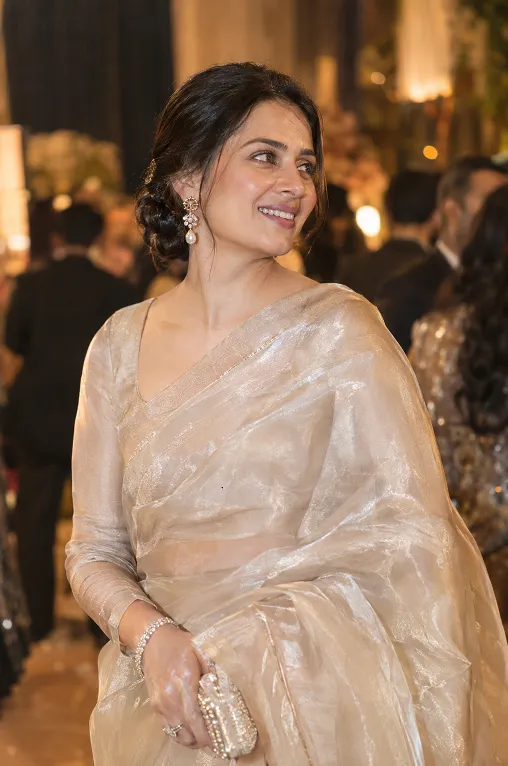
That is six outfits for three days. A grah shanti or a cocktail night pushes it to seven, so plan for the count and the suitcase stops being a surprise.
Families and regions sequence these differently. Haldi, for instance, often lands on day 1 beside the mehndi. Treat this as a working example and move events around to match your invitation, because the planning logic stays the same.
Here is the mistake I see most often. Women spend weeks choosing the wedding day outfit and then buy everything else in the final week, in a panic. That is the wrong way round. The showpiece is the easy decision. The five outfits around it decide whether you enjoy the trip.
Sequence Your Outfits by How Tired You Will Be
Every wedding outfit planning guide I have read treats each function as its own separate decision. Your body does not. By the third event, your shoulders, feet and patience are running on borrowed energy, and the outfit has to cooperate.
Banarasi silk is heavier than you expect. Worn from evening into midnight, the weight of the pallu on your shoulder starts to show, and you feel it most when you finally pull the safety pins out.
So the rule is simple. Never stack your two heaviest outfits back to back, and put something light right after the most elaborate one.
Multi day wedding outfits work best when they follow a rhythm. Start with a light mehndi look, then a medium weight sangeet outfit that lets you move.
For the sangeet, choose georgette over chiffon. Georgette has more body, so a flare or a pleat holds its shape when you spin, while chiffon collapses against your legs. If you want more cuts that survive hours of dancing, these sangeet outfit ideas for dancing are a good next read.
Give the haldi morning the lightest fabric you own, because it doubles as recovery before the wedding evening. Then comes the heavy piece, followed by the softest, easiest outfit you have for the farewell lunch. Only after that do you put on the reception glamour.
Whatever you choose for the wedding evening, do not try anything new that day, no new blouse and no new shoes. Wear the blouse at home for two hours first. If a hook digs in at hour two, it will hurt at hour six.
What You Can Rewear and What Is One Time Only
Here is my unpopular opinion. Rewearing is not the mistake. Buying six brand new outfits is. Nobody at your reception remembers the saree from the farewell lunch if the blouse, dupatta and jewellery are different.
Rewearing is also where a wedding outfit planning guide usually goes quiet, so let me be specific. Silk sarees, dupattas and skirts you did not dance in usually survive, because the fabric barely touches your skin. Sweat lands on the blouse and petticoat, not on the saree.
One time only: every blouse, anything you danced in, and the haldi outfit. Organza and other crisp fabrics need extra care too, because organza creases the moment you sit and stays creased until it is steamed.
The airing itself is simple. Hang the piece in shade, outside the closed wardrobe, for a few hours. In Surat or Mumbai humidity, silk left inside a shut hotel wardrobe picks up a damp smell overnight, and open air fixes that faster than any spray.
Then use steam, and hold the iron just above the fabric instead of pressing down. Fabric care specialists also suggest steaming and airing a worn garment between washes, which is far gentler on delicate silk than a full wash.
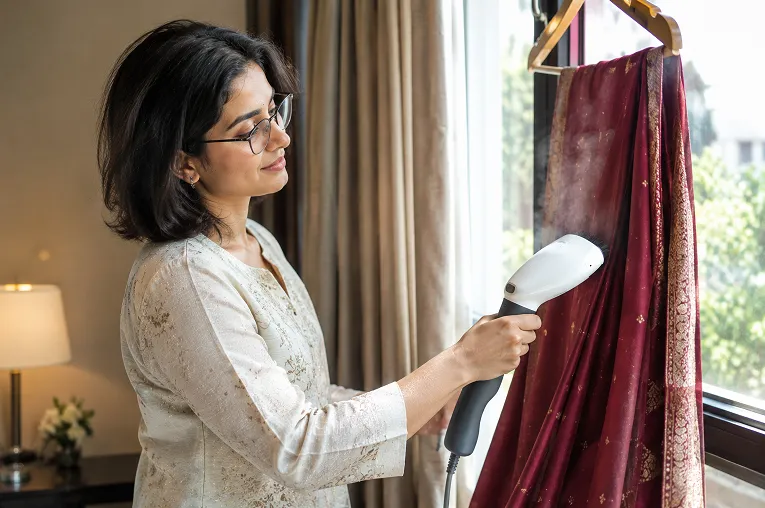
A dupatta is the easiest rewear of all. The net dupatta from your mehndi can sit over a plain kurta set at the farewell lunch and look like a completely different outfit.
You can also make one saree do two jobs. Wear it simply pinned at the lunch, then re-drape it with a heavier blouse and more jewellery at the reception. If you are unsure which blouse and jewellery colours pair with your saree, Ethora’s free saree colour matching tool gives you ideas in a couple of minutes.
The blouse must change, though. It is the one piece that sits against your skin for hours. And when the wedding is over, this guide on how to store silk sarees shows you how to put them away properly.
How to Pack So Worn and Clean Never Touch
I have watched enough family weddings from the sidelines to know how suitcases fail. By day two, everything smells like everything, and nobody can tell the blouse worn to the sangeet from the one saved for the reception.
The fix is physical separation, not memory. Treat the bag list below as your Indian wedding outfit checklist and set up these zones before you leave home:
- A clean bag for unworn outfits, packed in event order so you can pull the next one without unpacking everything.
- An airing bag for pieces you may rewear, made of soft cotton or muslin (a spare dupatta works), never plastic, which traps damp.
- A laundry bag for one time pieces, including every blouse, so nothing worn ever rests against a clean saree.
- A separate pouch for jewellery and shoes, since zari and metal edges can snag lighter fabrics like chiffon when they share a corner.
- A strip of masking tape and a pen, so you can label each pouch with the event name and stop guessing at 7 am.
You will not remember which blouse went where by day three. Label everything.
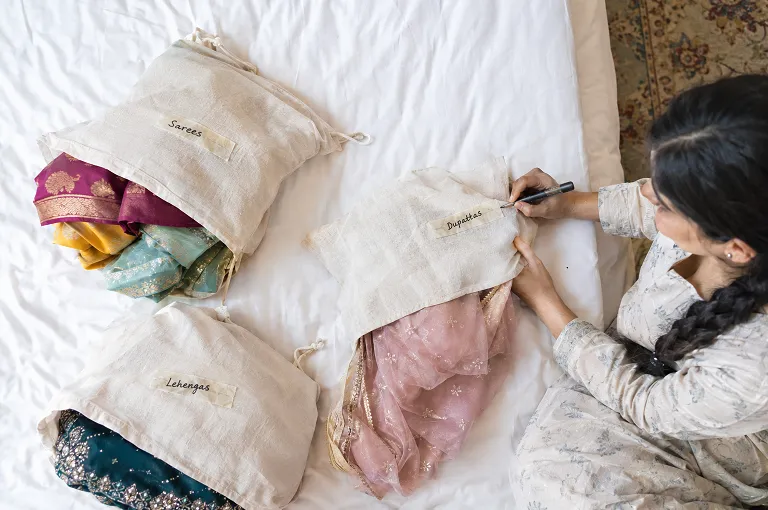
On arrival, hang the wedding outfit first and ask the front desk for a steamer or an iron before you need it. Hang airing pieces on a door hook, not inside the closed wardrobe. Small habits, but they keep a suitcase honest for three days.
What to Sort Out Before You Buy or Pack
Before you buy anything, decide which pieces will work twice. A silk saree with a well fitting plain blouse and a second contrast blouse gives you two looks for one purchase. Buy the haldi outfit cheap, and buy the wedding piece last, after wearing it in front of a mirror for ten minutes to feel the weight.
Check that every blouse has a cotton lining, because that lining takes the sweat you cannot air out. Ethora manufactures at its own Surat unit and sources everything else from Surat’s local textile market, so this advice comes from people who actually make and handle these fabrics every day.
Conclusion
Write your six events on one page, mark the two heaviest, and let everything else be light. That single sheet is the whole wedding outfit planning guide in practice, because it decides your shopping, your packing and how much energy you have left for the pheras. Wedding function dressing gets far calmer once the plan is on paper. And if something changes the night before, you will know at a glance which outfit to swap and which to leave alone.
Explore more wedding and festive dressing guides on the Ethora blog.
Our store is launching soon, with products coming straight from our Surat manufacturing source.
Frequently Asked Questions (FAQs)
How many outfits do I need for a 3 day wedding?
Usually six, and sometimes seven. Count events instead of days, since most days hold two functions. Keep one simple spare outfit for surprise events like a welcome lunch.
Can I wear the same saree twice at a multi day wedding?
Yes, if you air it in shade between wears and change the blouse, dupatta, jewellery and drape. Silk and georgette sarees rewear well because the blouse takes most of the sweat. Keep zari borders away from chiffon in the suitcase, since metallic threads can snag soft fabric.
How do I pack a heavy lehenga without ruining the embroidery?
Fold along the natural panel lines and place muslin or a cotton dupatta between embroidered layers so the embellishments do not rub against each other. Keep it flat on top of the bag, not at the bottom under shoes. Hang it as soon as you reach the hotel.
What should I check when ordering ethnic wear online for a wedding?
Look at the lining, the stitching around the underarms, and whether the blouse has extra seam allowance for alterations. Order early enough to leave time for tailoring. Ethora manufactures at its own Surat unit and sources other products directly from Surat manufacturers, which gives you genuine fabric knowledge and factory level quality without middleman pricing.
Once your six events are mapped, the harder part is finding pieces that can work twice. Ethora manufactures at its own unit in Surat, and everything else is sourced directly from Surat’s local textile manufacturers. Our store is launching soon.