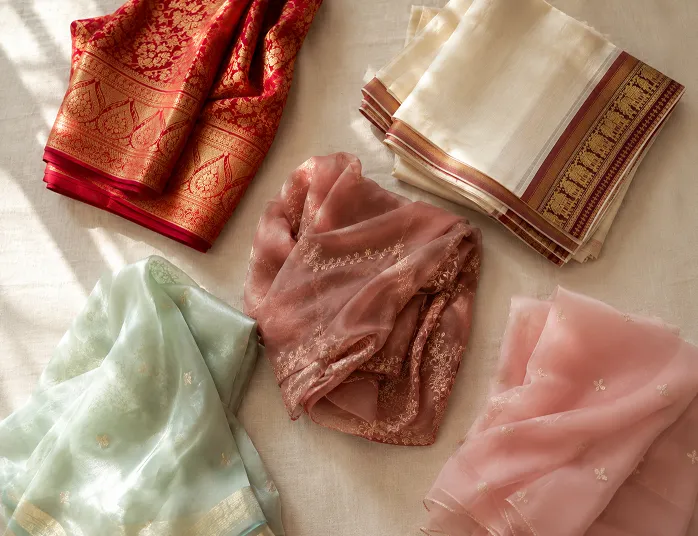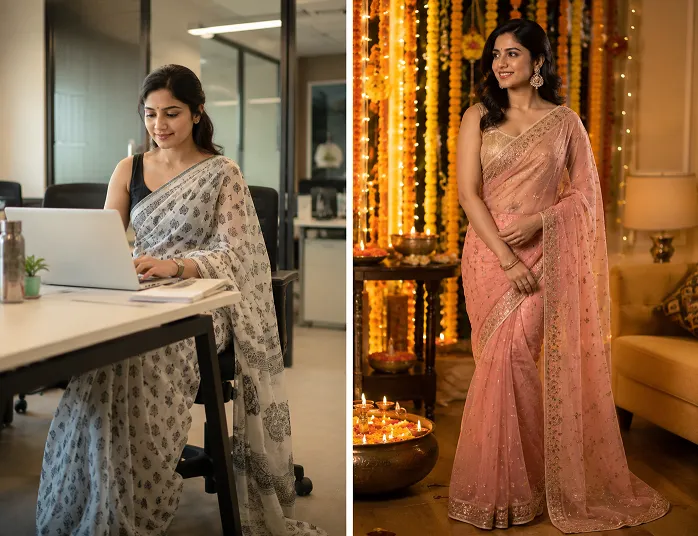
Your petticoat is ironed and hanging on the hook. The shapewear you ordered last week is still in its packet, tag on, because you cannot decide if today is the day you finally try it.
This is the actual dilemma before every big Indian wedding, and it rarely gets talked about honestly. Every article says shapewear “smooths everything” or a petticoat is “traditional and safe,” and neither answer tells you what six hours in Mumbai humidity under a heavy Banarasi saree actually feels like.
This piece breaks down saree shapewear vs petticoat comfort by saree type, sweat, bathroom logistics and all, so you can pick the one that will not ruin your evening.

Table of Contents
What a Petticoat Actually Gives a Saree That Shapewear Cannot
A well cut petticoat does something shapewear was never built to do. It gives a saree room to flare from the waist down, which is exactly what heavy pleated silk needs to hang properly.
Georgette has more body than chiffon, so it holds a pleat better when you are walking. But even georgette needs a petticoat with enough flare underneath it, or the pleats collapse inward by the second hour.
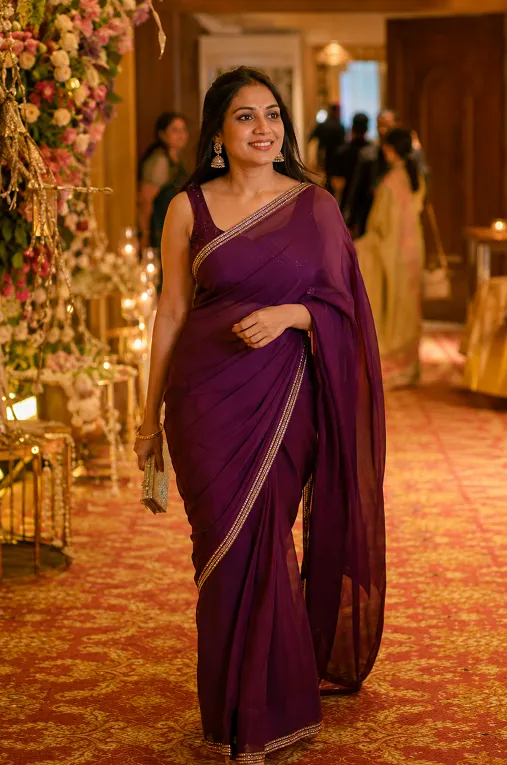
Chiffon behaves differently. It is the lightest, most slippery fabric on this list, and its pleats shift more than any other fabric if the petticoat underneath has no grip. A non-slip petticoat or a light shapewear base, paired with a few extra pins at the waist, is usually the only way chiffon holds its shape through a full event.
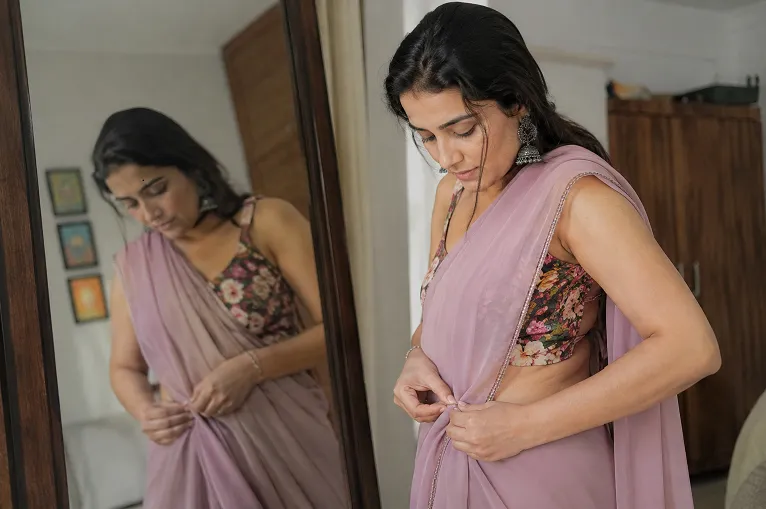
Whatever the specific fabric, shapewear itself works the same way everywhere. By design, it is compression first, hugging the leg from waist to knee or ankle. That snugness works directly against a saree that needs air and movement to fall correctly.
We already covered how to wear a petticoat correctly, along with the right petticoat length and the drawstring versus elastic debate, in our saree petticoat guide. Here we are focusing purely on when a petticoat wins and when it does not.
Here is the part most people skip. A petticoat lets the saree pleats fall the way the fabric naturally wants to fall. That is why bridal Kanjeevaram and Banarasi drapes almost always go with a proper petticoat, and rarely with shapewear alone.
The Real Sweat and Chafing Experience Under Shapewear in Indian Summer Heat
Let’s talk honestly about the sweat side of saree shapewear vs petticoat comfort, because nobody selling shapewear will tell you this part.
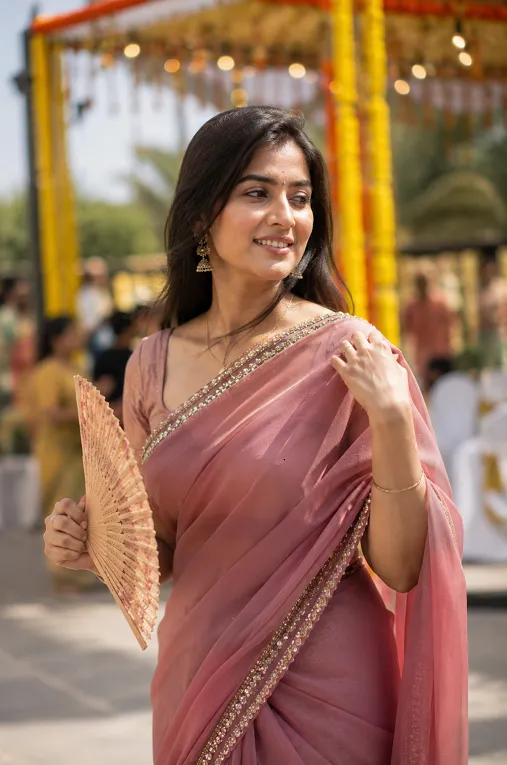
Nylon and spandex blends trap heat close to the skin. In air conditioning, this is barely noticeable for the first hour. Outdoors, at a Navratri function or a daytime wedding ceremony, sweat builds up fast and has nowhere to go.
By hour three, most women notice the waistband area feels damp and sticky rather than smooth. This is when chafing usually starts, especially along the inner thighs and the waistband seam.
Chafing itself is simply skin breaking down from repeated friction, and heat and moisture speed up that breakdown considerably. That is exactly the combination a full day event in humid weather creates under tight synthetic fabric.
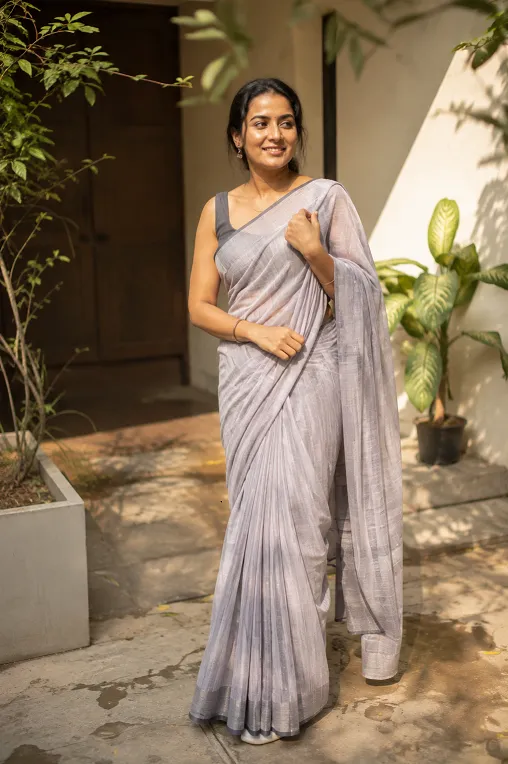
Cotton, by contrast, breathes. A cotton petticoat under a heavy silk saree feels warmer to put on but stays more comfortable through a long, sweaty afternoon than tight shapewear does. The same logic applies even more directly to an everyday cotton or linen saree, where cotton under cotton is barely a debate at all.
This is not a popular opinion in an industry that mostly sells shapewear. But it is an honest one, and your skin will thank you for hearing it before the wedding season, not during it.
If you are still choosing shapewear for a summer event, pick one with a wider waistband and some mesh or moisture wicking panelling, and change out of it the moment the event ends.
The Bathroom Logistics Problem Nobody Admits To
Here is the part every existing shapewear comparison conveniently skips. Using the bathroom in tight, full length compression shapewear at a wedding is genuinely inconvenient, and it is a real reason many women quietly go back to a petticoat.
Most saree shapewear does not have an open design at the bottom. You either pull the whole piece down and back up under a draped saree, undo pins, and manage six yards of fabric in a cramped venue restroom, or you specifically buy the open-bottom version made for this.
A petticoat has none of this problem. It is essentially a skirt with a drawstring, so bathroom breaks stay quick, even mid function.
You know your own event schedule better than any article does. If you are dealing with pins, dupatta management, and multiple bathroom trips across a six to eight hour wedding, this alone might decide the comfort question before fabric even enters the picture.
Saree Shapewear vs Petticoat Comfort: What Actually Suits Your Blouse and Waist
When people say shapewear makes you look slimmer, what is actually happening is structural, not magic. A well made shapewear waistband, at least two to three inches wide, holds the compression fabric in place so it does not roll or fold. That is what keeps the waistline looking smooth.
Cheaper shapewear uses a thin elastic band instead. That thin elastic is exactly why a saree shapewear rolling down fix usually starts with the waistband, not the size. If your shapewear keeps sliding under a fitted blouse by evening, the waistband width is almost always the actual problem.
A mermaid silhouette petticoat, cut narrow through the hip and flared only from the knee down, gives a similar smoothing effect through the waist and hip without any compression. It suits fitted, embroidered blouses well.
A regular straight cotton petticoat has more room throughout. It works better under looser blouses or everyday cotton sarees, where you are not chasing a sculpted waist.
The mermaid silhouette petticoat vs cotton petticoat choice really comes down to your blouse cut, not just personal taste. Fitted and backless blouses show every ripple, loose blouses hide most of it.
This decision genuinely depends on your body and your blouse fit, not just your saree. If you are unsure which body type category you actually fall into, Ethora’s free body type calculator gives you a read in under two minutes based on your real measurements. Our saree for body type guide goes further into what flatters a rectangle, hourglass, pear or apple shape specifically.
The Hybrid Trick: Shapewear Plus a Thin Petticoat for Heavy Silk
For heavy silk sarees specifically, there is a middle option nobody frames as an actual option. Some women wear a fitted shapewear piece first for structure, then layer a thin silk petticoat over it before draping.
Kanjeevaram silk in particular is a geographical indication craft of the Kanchipuram region, and its dense zari weight is exactly the kind of fabric this hybrid layering was built for.
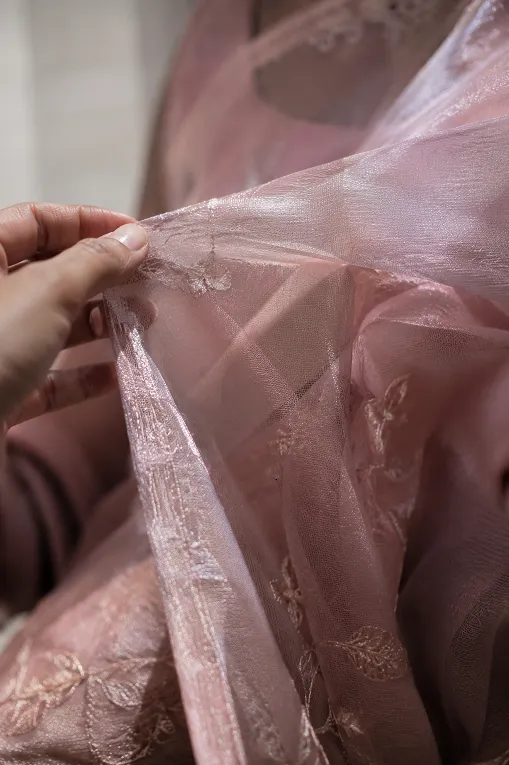
This combination works because the shapewear controls the waist and hip line, while the thin silk petticoat gives the outer fabric something equally smooth to move against. Silk against nylon shapewear alone can drag slightly when you walk. Silk against silk glides.
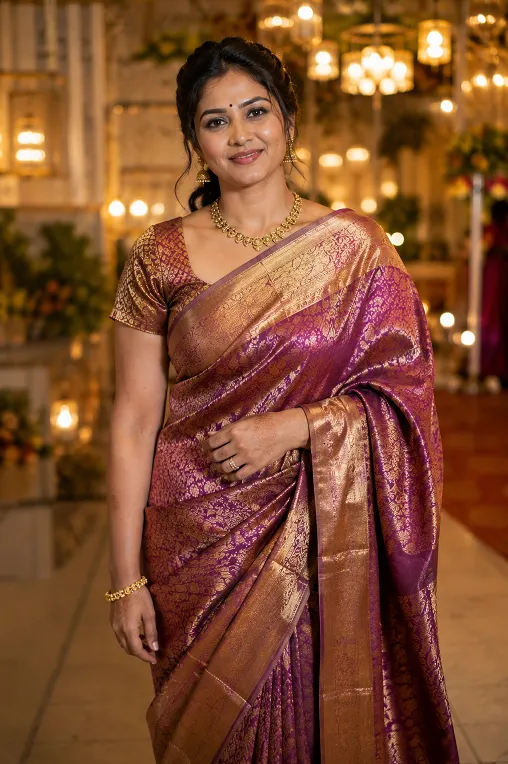
Banarasi silk is heavier than most people expect. Worn for a full day event, the pallu weight on your shoulder starts to show by evening regardless of what is underneath, so comfort at the waist matters even more by that point.
If you are choosing the best shapewear for heavy silk saree specifically, prioritise a wide waistband and an ankle length underskirt, not a calf length one. Heavy silk pools oddly if the underskirt beneath it is too short.
This hybrid approach costs a few extra minutes during dressing. For a five hour wedding reception in a Kanjeevaram or Banarasi drape, it is worth every one of them.
How to Match Your Underskirt to Your Saree Fabric
Which underskirt works best genuinely depends on the saree fabric in front of you, not a blanket rule. Sheer fabrics like organza need support without showing through, while heavy silk needs enough structure to hold pleats for hours. Use this before you buy anything.
| Saree Fabric | Best Underskirt | Why |
|---|---|---|
| Cotton or Linen | Cotton petticoat | Breathes best and matches the fabric’s everyday weight |
| Georgette or Chiffon | Lightweight nylon petticoat or light shapewear | Needs body without added bulk under a soft drape |
| Organza | Soft, thin cotton-blend petticoat | A stiff cotton petticoat for organza saree shows lines through the sheer weave; a soft one does not |
| Kanjeevaram or heavy silk | Petticoat, or the hybrid shapewear plus thin silk layer | Needs both structure and flare for the pleats to hold |
| Banarasi or heavily embroidered silk | Wide-waistband petticoat, ankle length | Even weight distribution matters more with dense zari work |
This table comes from years spent handling these fabrics at the loom and the cutting table, not styling opinion borrowed from somewhere else. Ethora manufactures its sarees, salwar kameez, kurtas and lehenga choli directly at its Surat unit, and sources everything else from Surat’s own textile market, so this fabric-first approach is not a marketing line.
Comfort Should Not Be an Afterthought Under Your Saree
The real saree shapewear vs petticoat comfort answer is not a blanket rule. It’s matching the underskirt to your specific saree fabric, your event length, and how honest you’re willing to be about heat and bathroom breaks. A heavy Kanjeevaram needs structure. A sheer organza needs something soft underneath.
There is more on saree fitting and drape waiting for you on the Ethora blog. Ethora’s own store is launching soon, with sarees made at our Surat unit and everything else sourced directly from Surat’s textile market.
Frequently Asked Questions (FAQs)
Can I wear a cotton petticoat under an organza saree?
Only if it is a soft, thin cotton blend, not a stiff starched one. Organza is sheer enough that a stiff petticoat’s seams and drawstring show through as visible lines, especially in bright daylight or flash photography. Our organza saree guide covers the fabric’s other styling quirks in more detail.
Why does my saree shapewear keep rolling down?
Almost always the waistband. A waistband under two inches wide cannot hold the compression fabric in place through hours of sitting, walking and dancing. Look for a waistband of at least two to three inches, ideally with a soft internal grip lining.
Is shapewear or a petticoat better for a Kanjeevaram saree?
A petticoat alone usually wins for comfort, but the hybrid combination of shapewear plus a thin silk petticoat gives you both structure and smooth draping for a heavy, dense weave. Straight shapewear alone tends to lack the flare a Kanjeevaram’s pleats need.
How do I know if a petticoat or shapewear fabric is good quality before ordering online?
Check the fabric composition listed, not just the product photos. A genuine cotton petticoat should list close to 100 percent cotton, and shapewear should specify its spandex percentage since that number affects both stretch and how hot it runs. Ethora manufactures at its own Surat unit and sources everything else directly from Surat’s textile manufacturers, which is why we can tell you exactly what a fabric is made of rather than guessing from a listing, and it means genuine fabric knowledge and factory-level quality without middleman pricing.
Can I wear compression shapewear if I know I will need the bathroom often at an event?
It is not impossible, but it adds real time and hassle to every bathroom trip, since most designs are not open at the bottom. If frequent bathroom breaks are likely, a petticoat or an open-bottom shapewear style will save you a lot of frustration over a long event.