Your dupatta has slipped off your shoulder for the third time before you have even left the house. You pin it, it slides, you pin it again, and somewhere between the mirror and the front door you have started to resent the piece of fabric that was supposed to finish your outfit. If this sounds familiar, the problem is rarely you. It is usually the drape you picked without checking whether it actually suits your fabric, your neckline or your day.
This guide covers seven dupatta draping styles that genuinely work for real Indian days, not just for photographs. These are easy dupatta drapes and honest ways to wear dupatta that hold up once you are actually moving around.
We will also get into why some fabrics hold a pleat and others refuse to, which drapes survive a full day of walking and sitting, and which neckline actually pairs with which style. Nobody usually tells you this part, and it is the part that matters.
Table of Contents
What Actually Decides How Your Pleats Hold
Every styling article tells you to pleat your dupatta narrower for chiffon and wider for cotton. Almost none of them tell you why, so you end up guessing every time you drape a new one.
Thin fabric like chiffon or net has no body of its own. It has nothing to hold a fold in place, so a wide pleat collapses within minutes and starts looking crumpled instead of crisp.
A fabric with natural stiffness, like raw silk or heavier cotton, holds a wider pleat because the fibre itself has some structure to resist the fold opening up. That is the whole mechanic. It has nothing to do with tradition or trend.
Georgette sits somewhere in the middle. It has more body than chiffon, so it holds a pleat reasonably well even when you are walking, which is one reason tailors in Surat reach for it so often when a customer wants something dressy that still survives a full function.
7 Dupatta Draping Styles for Salwar Suits and Kurtas
These seven cover almost everything you will actually reach for, from a Tuesday at the office to Navratri night. Fabric behaviour and daily wearability are built into each one, not tacked on as an afterthought.
1. The Classic One-Shoulder Drape
Centre the dupatta on one shoulder and let both ends fall front and back. This is the drape most of us learned first and it still works because it is forgiving of fabric.
Cotton and silk hold this shape with a defined pleat at the shoulder. Chiffon and net work here too, just keep the pleat narrow so it does not bunch up near your collarbone.
2. The Both-Shoulder Pinned Drape
Pin the dupatta at both shoulders so it lies flat across your chest and drapes down your arms. Georgette and silk chiffon look genuinely lovely in this style because the fabric catches light evenly across a flat surface.
This one asks for a plain or low neckline underneath. A high collar fights with the flat drape and ends up looking bulky instead of elegant.
3. The One-Side Stack Drape
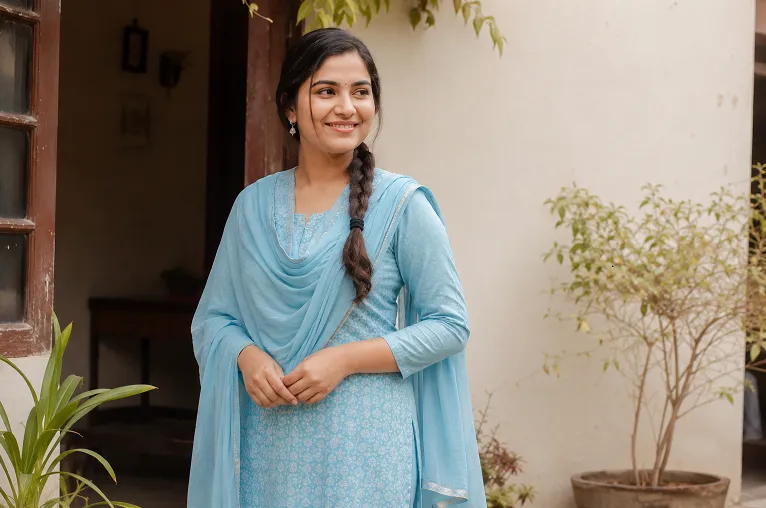
Pleat the dupatta neatly and pin it stacked over one shoulder, letting it fall down your back. Wider, structured pleats work best here, so reach for cotton, chanderi or silk over anything sheer and thin.
This is genuinely one of the most practical drapes for a working day. It stays put through sitting, reaching and walking because there is only one pin point to manage.
4. The Front Open Fall
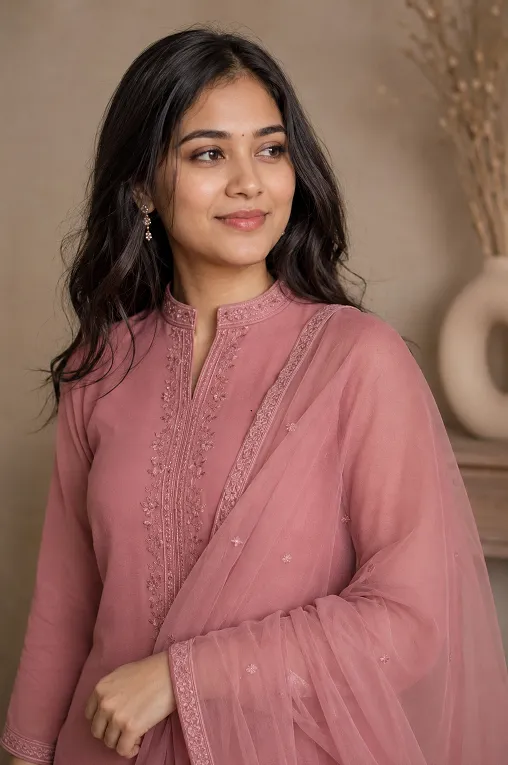
Let the dupatta fall loosely down the front of your kurta with no pinning at all. Net and chiffon are made for this look, since the sheerness lets your kameez or kurta print show through instead of being hidden.
Honestly, this is the drape that looks best in photos and struggles the most through an actual day. It slips constantly, and you will find yourself adjusting it every few minutes once you start moving around.
5. The Neck Scrunch
Scrunch the dupatta loosely and loop it around your neck like a soft stole, letting the ends hang unevenly. Light chiffon and mul cotton work beautifully because the fabric needs to bunch without feeling stiff or heavy.
This suits a plain round or boat neckline. It adds volume near the neck, so a high collar underneath will look crowded rather than styled.
6. The Waist-Belted Drape
Drape the dupatta around your neck normally, then tie a thin belt or dupatta strip at the waist over both ends to hold everything in place. This is a newer, more fusion-leaning style that works especially well over palazzo sets.
It holds up through an entire day because the belt physically stops the fabric from sliding. If you are someone who is constantly re-pinning your dupatta, this drape solves that problem outright.
7. The Saree-Style Pallu Drape
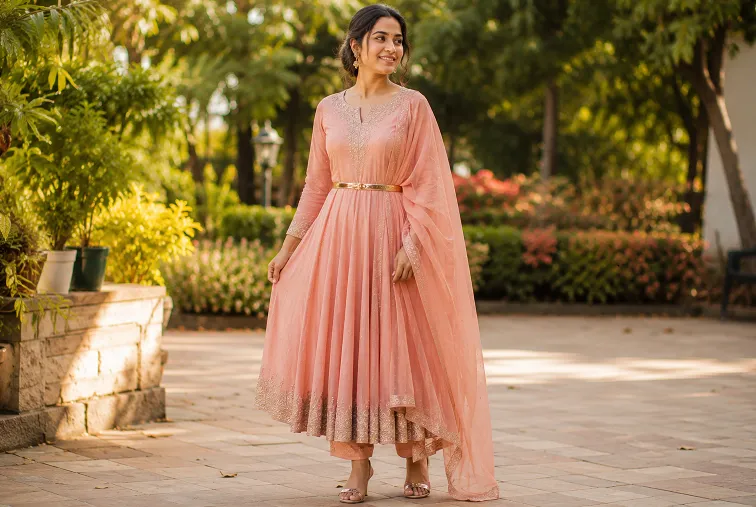
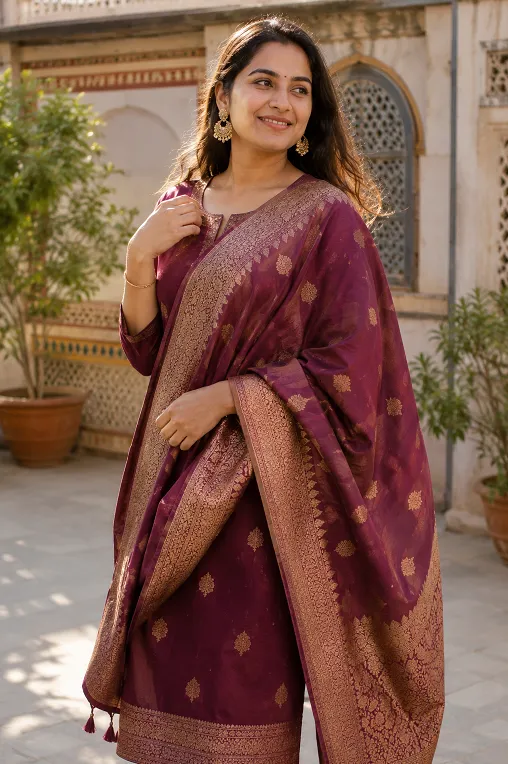
Wrap the dupatta around your body the way a saree pallu sits, tucking one end at the waist and letting the rest fall over your shoulder in soft pleats. Banarasi silk and heavier chanderi hold this shape with real structure.
Banarasi silk is heavier than most women expect. If you are wearing it through a full wedding function, the weight on your shoulder starts to show by evening, so factor that into how long you plan to keep it draped this way.
Which of These Drapes Actually Survives a Real Day
Most articles give you occasion tags and stop there. What they do not tell you is that some of these seven dupatta draping styles are built for standing still and photographs, while others genuinely hold up through movement.
The one-side stack drape and the waist-belted drape are the two most practical choices for an actual working day, festival crowd or college fest, because both are physically anchored and do not depend on constant readjustment.
The front open fall and the loose neck scrunch look wonderful in a photo but need frequent adjusting the moment you start walking, sitting in an auto rickshaw or reaching for something on a shelf.
Most women pick a drape based only on how it looks in the mirror before stepping out. That is the actual mistake. You should be asking whether the drape will still look the way you want it to three hours and one crowded bus ride later.
Match Your Drape to Your Neckline
This is the part almost nobody connects, and it changes how put together your outfit looks more than the drape itself does.
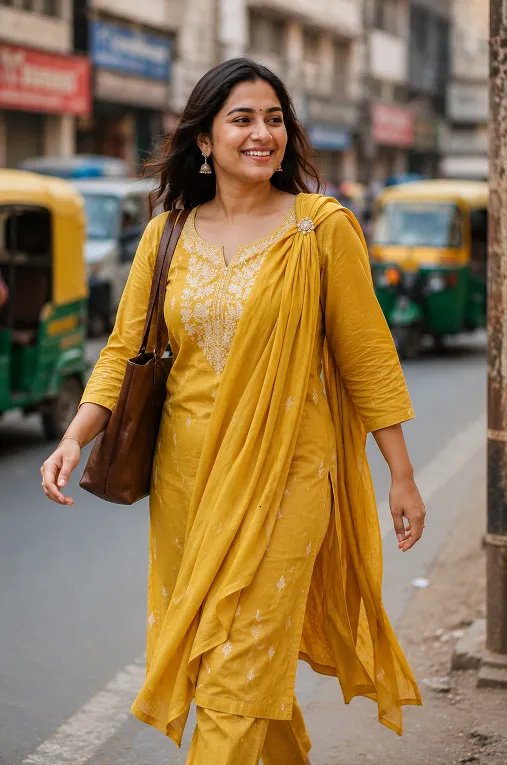
A high neck or collared kurta already covers your chest, so it does not need a drape that covers it again. The one-side stack or a one-shoulder asymmetric style works far better here and lets the neckline stay visible instead of getting buried under fabric.
A plain round or V-neck kameez benefits from more coverage, so the both-shoulder pinned drape or the classic one-shoulder style fills that gap and finishes the outfit properly.
If you are pairing your dupatta over a kurta with jeans for a college look, the same neckline logic still applies, and you can see it laid out in more detail in our kurta styling guide for college.
What to Look For Before You Buy a Dupatta
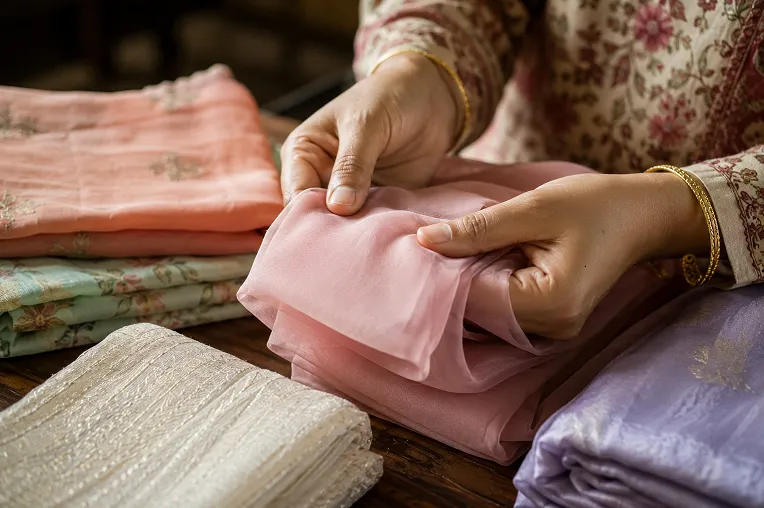
Everyone tells you to check colour and embroidery first, and honestly, that is the wrong place to start. Check the fabric before anything else, because the fabric decides which of these drapes it can actually hold.
A dupatta that is too thin for the drape you want will never sit the way it does on the mannequin or in the reference photo, no matter how carefully you pleat it. This is really the whole logic behind good dupatta draping styles, the fabric decides the pleat, not the other way round.
If you are shopping for something you will wear for a full office day, our guide on salwar kameez styling for office wear covers fabric choices that hold up through long hours too.
Regional weaves like phulkari, bandhani and chanderi each behave differently on the body, and the Ministry of Tourism’s page on Punjab’s Phulkari is a genuinely useful place to see how this heritage is documented and preserved.
We manufacture dupattas and salwar kameez sets directly at our unit in Surat, and for everything outside that range we source from Surat’s local textile market. So when we say check the fabric first, it comes from actually handling these weaves every day, not from a styling checklist someone else wrote.
Final Word
Pick your dupatta drape by asking what your day actually looks like, not what looks best standing still in a mirror. A structured cotton or silk earns its wider pleat, a sheer chiffon needs a narrower one, and your neckline decides the rest.
Explore more dupatta styling tips and outfit specific advice on the Ethora blog, starting with colour pairing in our piece on colour combinations for ethnic wear.
Our store is launching soon, and every piece will come straight from our manufacturing unit and Surat’s textile market, with nothing routed through a middleman in between.
FAQ
Which dupatta drape is best for daily wear?
Among all the dupatta draping styles covered here, the one-side stack and the waist-belted drape hold up best through a full working day. Both are anchored at a single point, so they need far less readjusting than an open front fall.
How much fabric do I need for a dupatta?
Most dupattas run between two and two and a half metres in length. Sheer fabrics like chiffon and net are usually cut slightly longer than cotton or silk, since the lighter weight needs extra length to drape with any volume.
How do I know if a dupatta fabric is good quality before buying?
Rub the fabric between your fingers. A good chiffon or georgette should feel slightly textured, not slick and plasticky, and it should not smell strongly of synthetic dye. We manufacture at our own unit in Surat and source everything else directly from Surat’s textile manufacturers, so you are buying at factory level quality without a middleman marking up the price.
Can I wear a dupatta over a kurti and not just a salwar suit?
Yes, a dupatta works over a kurti too, especially the neck scrunch or front open styles for a casual look. Just keep the fabric lighter, since a heavier dupatta can overwhelm a simple kurti silhouette.
Found your drape but not sure where to find fabric that actually holds it? We manufacture dupattas, salwar kameez and kurta sets directly at our own unit in Surat, and for everything outside that range, we source directly from Surat’s local textile market, India’s largest textile hub. Our store is launching soon, so sign up below to know the moment it opens and get fabric that comes straight from the source.