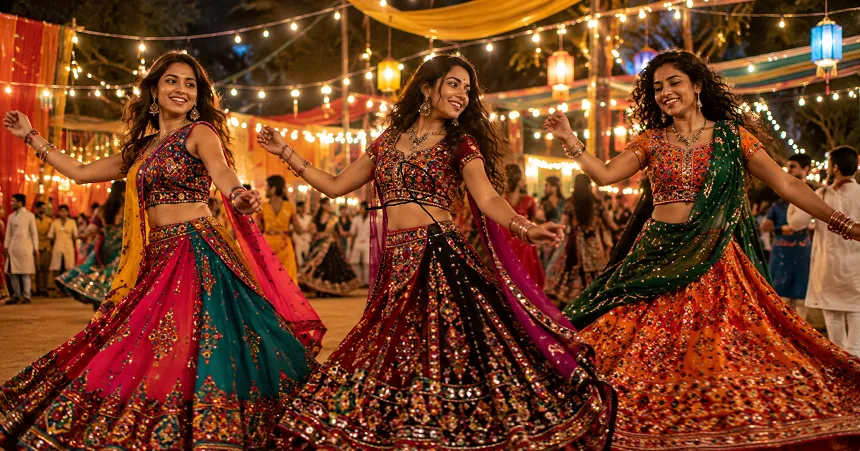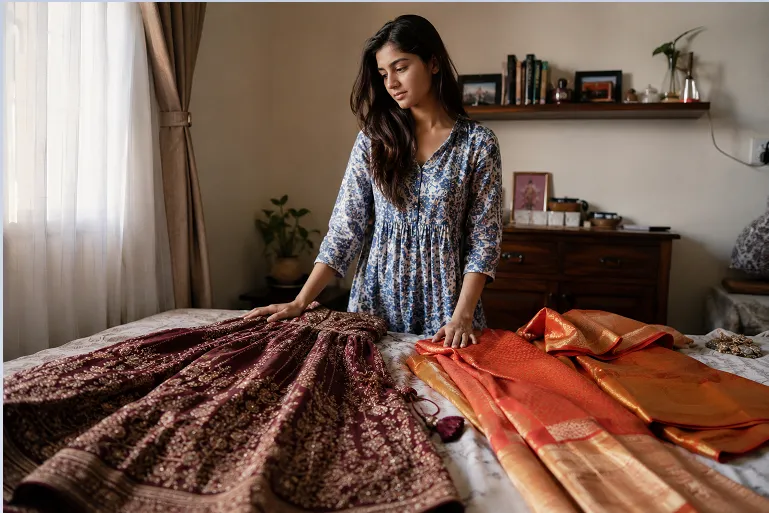
Your cousin’s wedding card arrived two months ago and you still haven’t picked what to wear. Every online store shows lehengas in colours you love, but the moment you picture standing next to the bride in family photos, doubt creeps in. Will this shade look like you’re trying to outdo her?
Getting the lehenga colour for wedding guest choice right isn’t about memorising a banned list. It’s about understanding why certain colours read as a threat to the bride’s spotlight and others don’t, so you can trust your own eye instead of second guessing every function.
This piece covers the colours to skip, the one principle that settles every grey area, and exactly what to do when you have no idea what the bride is wearing.

Lehenga Colour for Wedding Guest: What to Rule Out First
Start with the basics, because skipping them is the fastest way to make family photos awkward. Red is the bride’s colour in most Hindu and Sikh weddings, and showing up in a solid red lehenga next to her is not stylish, it’s confusing. People will genuinely ask which one of you got married.
White carries similar weight for the opposite reason. In many Indian communities it is worn at funerals, not celebrations, so a stark white lehenga at the mandap can feel more like a mismatch than a fashion statement. Black is softer territory now, more acceptable at evening receptions than at a daytime pheras, but it still reads as sombre in a hall full of marigold and gold thread work.
That’s the short version of what colour lehenga to avoid at a wedding. But here’s the actual mistake most guests make with this rule.
They think avoiding red, white, and black is the whole answer, so they play it completely safe with beige or pale blush and end up looking washed out in every single photo. Avoiding the wrong colours does not automatically mean you have picked the right one.
Once you understand these three, you’ve covered the baseline for non bridal lehenga colours. The more useful skill is understanding the exceptions, because they exist for almost every rule here.
The One Principle That Solves Every Borderline Colour Doubt
Most colour-avoidance advice treats red as a special case and stops there. Actually, the same logic applies to almost every colour guests worry about, and once you see the pattern, you stop needing a list at all.
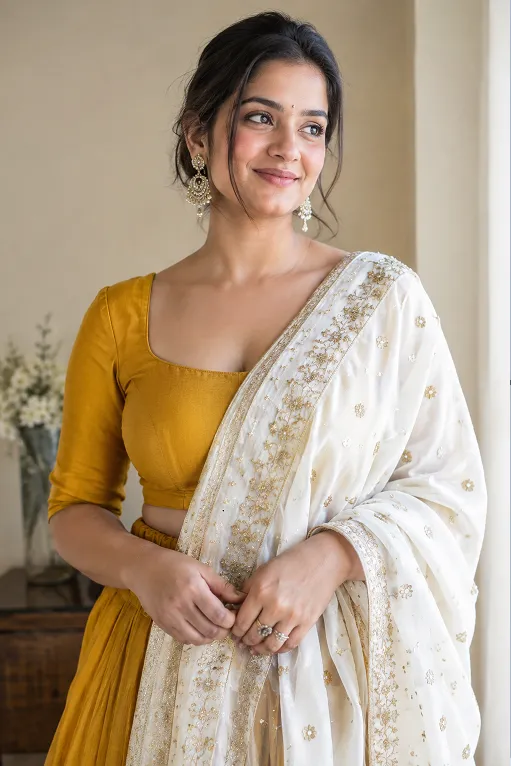
Here’s the principle. A colour reads as a threat to the bride only when it dominates the outfit. The same colour used as an accent, a border, a dupatta shade, an embroidery thread, barely registers the same way.
A lehenga with a white dupatta and gold embroidered blouse over a mustard skirt is nothing like a lehenga that is white from the waist down. The first is a styling choice. The second is a costume mix-up waiting to happen.
This is true for red too, but it’s also true for deep pink, for very pale ivory, and for black in communities where it still carries weight. Ask where the colour sits, not just what the colour is, and most of your doubt disappears.
So the next time you’re standing in front of a mirror wondering if a shade is too close to the bride’s, don’t just check the colour name. Check how much of your silhouette it actually covers. That’s the real answer to the lehenga colour for wedding guest question, more than any single list of names ever could be.
How a Lehenga’s Three Pieces Give You a Safety Net a Saree Doesn’t
This is the part nobody explains properly, and it’s specific to a lehenga in a way a saree simply cannot copy. A saree is one continuous length of fabric, so the colour you choose is the colour you’re wearing, more or less, from shoulder to ankle.
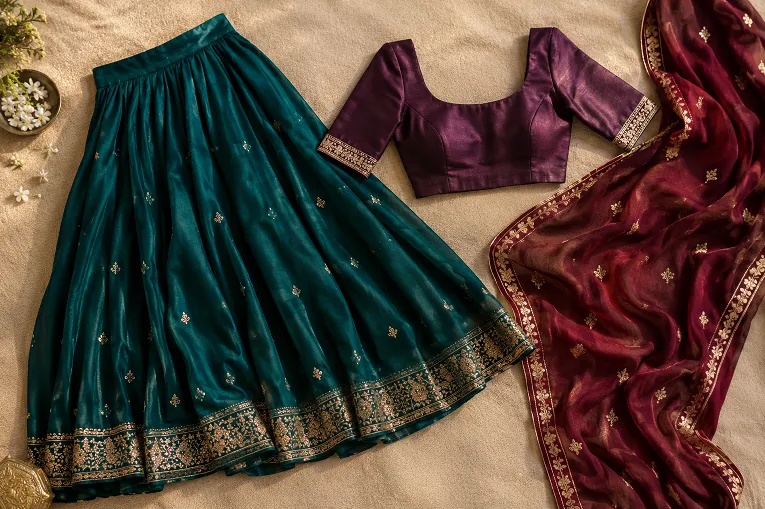
A lehenga comes in three separate pieces: the skirt, the blouse, and the dupatta. The skirt dominates your silhouette because it’s the largest piece and the one people see first, from across a hall or in a wide camera shot.
That gives you room to experiment. If you’re drawn to a colour you’re not fully sure about, a deep wine that edges toward bridal red, a very pale champagne, even a soft ivory, keep it confined to the dupatta or the blouse. Let the skirt carry a safely festive jewel tone instead.
You still get to wear the colour you love. You just don’t let it dominate the read of your outfit from a distance, which is the only thing that actually matters here.
If you’ve been weighing a saree versus a lehenga for a wedding specifically because of this kind of colour flexibility, this three-piece structure is a real point in the lehenga’s favour.
There’s a fabric detail worth knowing here too. Georgette holds a pleat with far more structure than chiffon, so a georgette skirt keeps its shape and colour saturation while you’re walking through a decorated hall, where chiffon tends to soften and lose definition by the second hour.
When You Have No Idea What the Bride Is Wearing
Checking the wedding hashtag or messaging a close friend of the bride works when you actually have access to that information. It doesn’t help much when you’re a distant cousin invited through a group chat, or attending a three-function destination wedding where the bride might change her palette every single day.
Here’s a fallback framework that works even with zero information. Default to colours that are statistically unlikely to be a bride’s actual choice, because these carry almost no risk of an accidental clash no matter what she’s wearing.
Seven colours consistently sit in this safe zone across Indian wedding traditions:
- Emerald green, rich enough to hold its own under both daylight and stage lighting
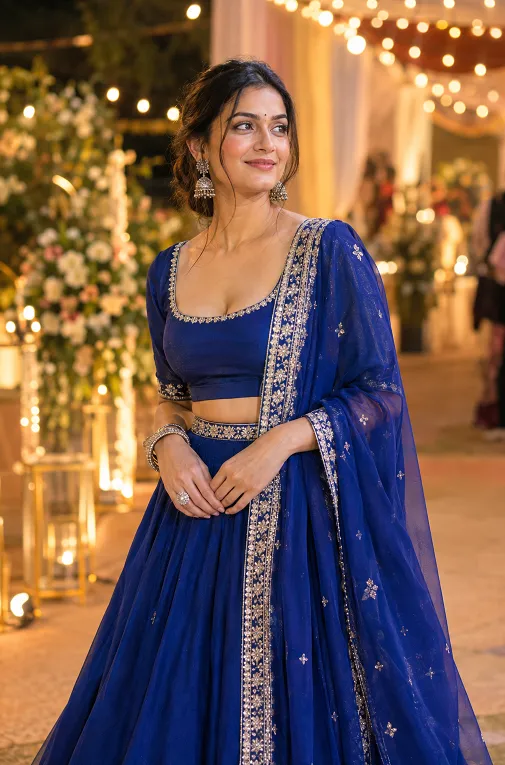
- Cobalt blue, a colour brides rarely centre a bridal look around
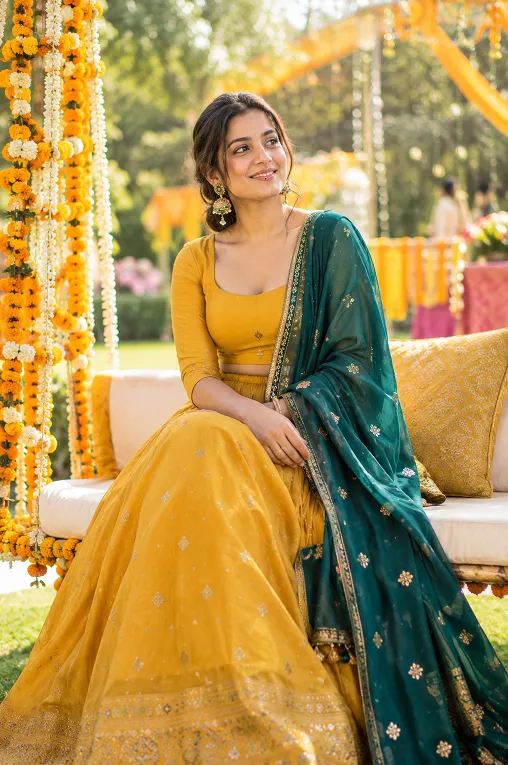
- Mustard yellow, festive without leaning into haldi territory
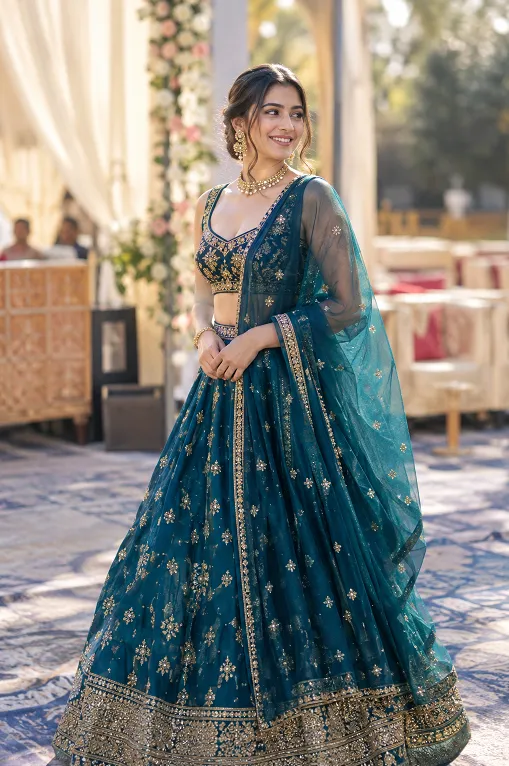
- Deep teal, flattering in photographs and easy to accessorise
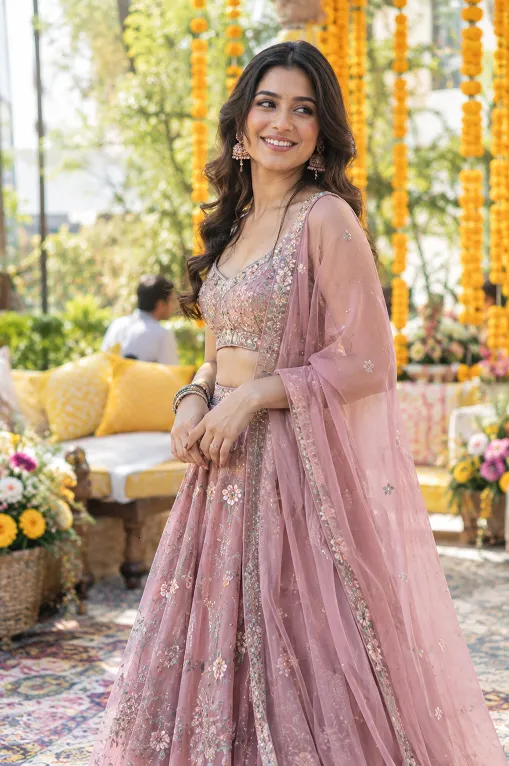
- Dusty rose, soft enough for daytime, dressy enough for evening
- Plum, close to bridal shades in warmth but nowhere near as saturated
- Burnt orange, a strong, unmistakably non-bridal statement colour
This is your guest lehenga colour guide for the moments when you truly cannot ask anyone. Pick from this list, confirm it against the venue’s likely lighting if you can, and stop second guessing the rest.
A few of these shades are easier to picture than describe, so here’s what several of them actually look like on.
Cobalt blue is probably the most versatile of the seven. It holds its saturation whether it’s caught under harsh afternoon sun or the warm string lights of an evening function, which is rare for a colour this deep.
Deep teal sits in its own lane entirely, close enough to blue and green to feel unmistakably festive, but far enough from everything on the avoid list that it never raises a second glance.
Dusty rose works when you want warmth without going anywhere near bridal red. It reads soft in daylight and slightly richer once evening lighting comes on, which makes it genuinely flexible across a multi-day wedding.
Burnt orange is the boldest pick on this list, and it earns that boldness. It photographs beautifully at strong daylight functions like a daytime haldi or an outdoor mehendi, where paler shades tend to wash out.
Plum is the one to reach for when a function calls for something more formal. It reads rich and composed at an evening reception without tipping into the deep maroon territory that can be mistaken for bridal wear.
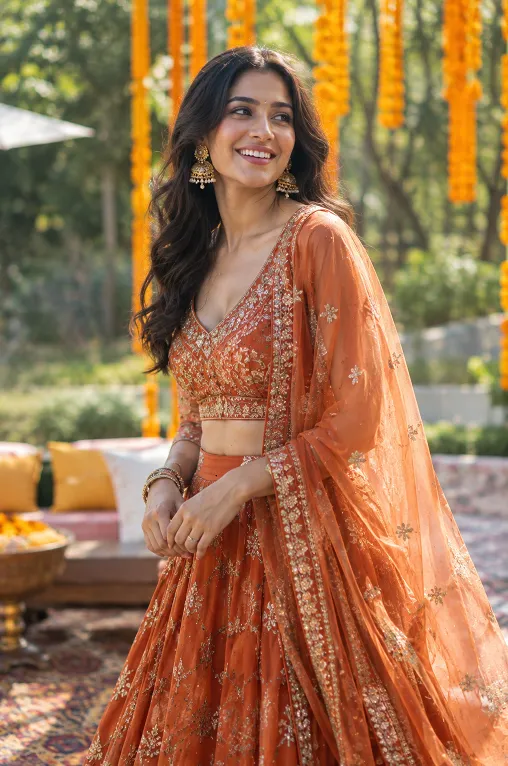
Mustard earns its spot for daytime functions especially. It’s festive without dipping into the shade reserved for haldi, and it holds its warmth even under harsh midday light, which is exactly the setting you’ll usually find at a mehendi.
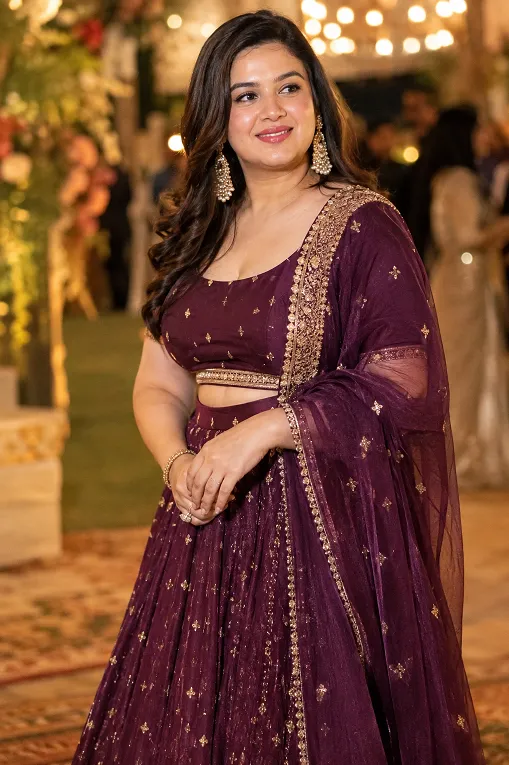
For a mehendi function specifically, where the setting is usually daytime and outdoors, this same jewel tone logic still applies. Our mehndi outfit ideas for guests breaks down which of these shades photograph best under natural light.
Which Colour Works for Which Wedding Function
Not every function calls for the same energy, even once you’ve settled on a safe palette. These occasion notes round out the lehenga colour for wedding guest picture, function by function.
For the haldi, skip yellow if you can, since it’s usually reserved for the couple that day, and turmeric stains show up fastest on light, plain fabrics anyway. Cotton or a sturdy silk blend in coral or peach handles both the colour and the mess better.
For sangeet night, this is where a jewel tone actually earns its keep. Under stage lighting, cobalt blue and emerald catch light in a way that flat, muted colours simply don’t. Since you’ll likely be dancing, a lehenga skirt with some weight to it moves better than one too lightweight to hold shape.
For the main ceremony, stick closest to the rules above, since this is the most photographed and most formal function of the entire wedding.
For the reception, you get slightly more room to be bold, especially with a fitted blouse or a statement dupatta drape and richer, deeper jewel shades that suit evening lighting.
If you’re travelling for a multi-day wedding in peak Gujarat wedding season, packing three or four lehengas in slightly different jewel tones from that safe list solves the outfit question for the whole trip without repeating a single look. And if you’re still unsure which shade actually suits your skin tone once you’re choosing between these seven, Ethora’s free saree colour matching tool applies the same accent-versus-dominant logic to blouse and jewellery choices, and the reasoning carries over cleanly to a lehenga’s dupatta and blouse.
One more honest note, and this goes against fairly common advice. Everyone tells you pastels are the universally safest daytime choice, but a washed out pastel under harsh midday sun or tube lighting at an indoor lunch function looks tired by evening, while a rich jewel tone holds its saturation from the mehendi to the reception and simply photographs better in every single shot.
There’s also a real weight consideration worth knowing if your wedding season runs three or four functions back to back. Banarasi silk is heavier than it looks on the hanger, and if you’re wearing a heavily worked Banarasi-style dupatta for a full day event, the weight on your shoulder will start to show by evening, the same way a silk saree pallu does. Weaves like this carry serious craft history too. Genuine Banarasi brocade has held a Geographical Indication tag for over a decade, which is the government’s way of certifying that the weaving technique behind it is authentic and centuries old, not a machine copy sold under the same name.
What to Check Before You Buy
Before you buy, check exactly where the borderline colour sits on the lehenga, not just what colour it is overall. A wine coloured dupatta over a safely jewel-toned skirt is a completely different purchase decision from a wine coloured skirt with a matching dupatta and blouse, and checking this before you buy solves most lehenga colour for wedding guest doubts before they start.
If you’re also unsure about proportions, sorting out the right lehenga length for your height before you order saves a return later, since colour and fit both need to work together in the final photos.
We manufacture lehenga choli directly at our unit in Surat, and source everything else from Surat’s own textile market, so this advice comes from people who handle these fabrics and colours every single day, not just style them.
Conclusion
The real skill here isn’t memorising which colours to avoid. It’s learning to check where a colour sits on the outfit, on the smallest piece or the largest, before you decide it’s too risky to wear.
Keep that one habit and every future wedding invite gets easier to plan for. These wedding guest lehenga tips work whether you’re two months out or two days out from the invite.
There’s more styling detail like this across the Ethora blog if you want to keep exploring before your next function. Our store is launching soon, with pieces made directly at our Surat unit and sourced from Surat’s own manufacturers, so quality won’t be a guessing game either.
Frequently Asked Questions (FAQs)
What colour lehenga should I avoid at a wedding?
Solid red, stark white, and full black are the three to skip at the main ceremony, since they read as bridal, mournful, or overly formal depending on the community. Beyond those three, be cautious with neon shades too. Under LED stage lighting at night functions, neon pink and neon green can look almost fluorescent in photographs, which pulls attention in a way a rich jewel tone never does.
Can I wear a pastel lehenga to an Indian wedding as a guest?
Yes, pastels work well for daytime functions like a haldi or a morning mehendi, especially in dusty rose, sage, or soft peach. Just avoid very pale ivory or cream shades that can photograph as white under bright daylight, since that’s the one pastel zone that still causes confusion.
Where can I buy good quality lehenga fabric online?
Check whether the seller can tell you the actual fabric name, not just “party wear material,” since that vagueness usually means the quality varies batch to batch. Ethora manufactures its lehenga choli directly at its own Surat unit and sources everything else from Surat’s local textile manufacturers, which means the fabric knowledge behind each product comes from people who actually work with these materials daily, not a reseller repeating a product description.
Is it disrespectful to wear the same colour as the bride’s mother or mother-in-law?
It can create confusion in family photos more than actual disrespect, especially at Punjabi and Gujarati weddings where the couple’s mothers often coordinate their outfits in advance. If you know the family well enough to ask, a quick check avoids the mix-up. If you don’t, sticking to the seven-colour safe list from earlier sidesteps this completely.
What colour lehenga works best for a daytime wedding function?
Mustard, coral, and dusty rose hold their richness in daylight better than deep jewel tones like emerald or wine, which can look almost muted outdoors under the sun. Cotton silk blends in these shades also breathe better through a long daytime function, which matters more than people expect once the guest list runs past a few hundred.
Once you’ve settled on a colour, the fabric and the fit are what actually make it work on the day. Ethora manufactures its lehenga choli directly at its own unit in Surat, and everything else we carry is sourced straight from Surat’s local textile manufacturers, so you’re getting factory-level quality without a middleman marking it up. Our store is launching soon. Drop your email below and be the first to know when it opens.