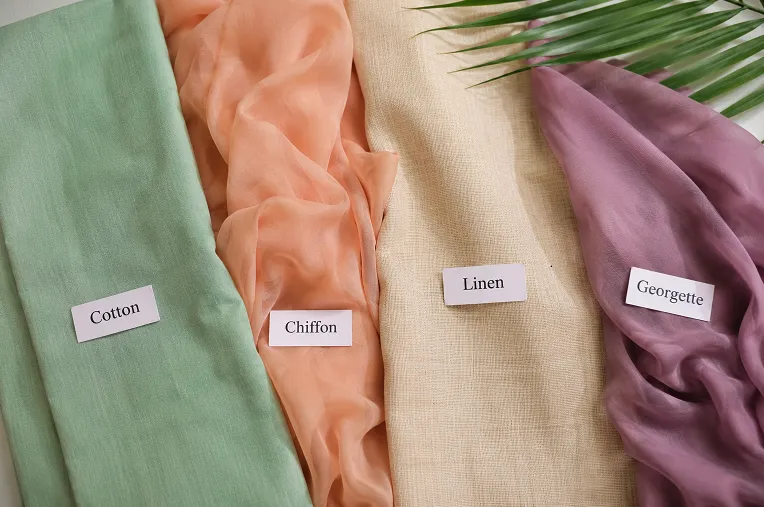
You are standing in a Surat textile shop with two saree samples in your hand. Both are labelled georgette. One costs almost three times the other. The shopkeeper insists pure is the only real choice, but the fabric in your other hand looks nearly identical and feels almost as good.
This confusion is exactly why faux georgette fabric gets such contradictory reviews online. Some sources call it a smart, practical choice. Others warn it dulls and looks tired within a few wears. Both are right, depending on what you actually need the outfit for.
This article walks through the real composition, the honest touch test, and the one question that actually decides whether faux georgette fabric is right for you.
Table of Contents
What Faux Georgette Fabric Actually Is (And How to Spot It)
Pure georgette is woven from twisted silk yarns. That twist is what gives it the crinkled, slightly grainy surface real georgette is known for. Faux georgette swaps the silk for polyester or viscose, woven the same way to copy that texture.
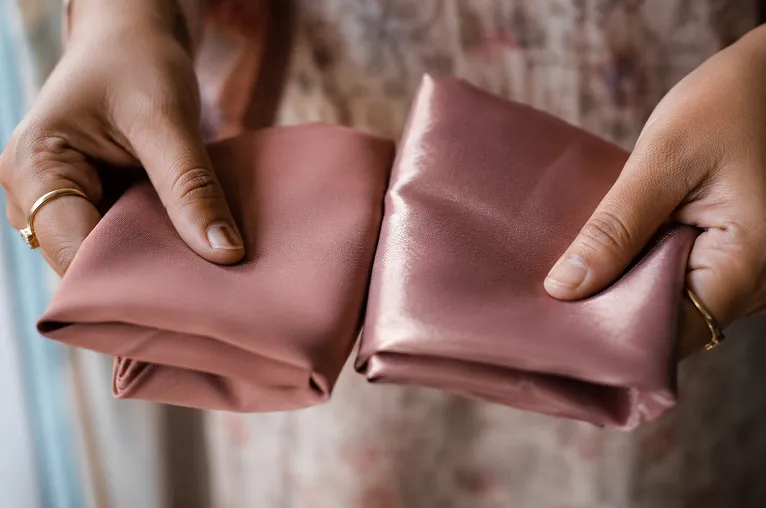
The touch test is the fastest way to answer how to identify faux georgette fabric before you buy. Rub a corner of the material between your fingers. Pure georgette has a soft, warm grain to it, almost like fine sandpaper that has been used a few times. Faux tends to feel cooler and slightly slippery, even when the weave looks identical.
There is a second test almost nobody mentions. Hold the fabric up to natural light, not the tube light in most shops. Pure georgette diffuses light in a soft, matte way. Faux often throws back a faint synthetic sheen along the fold lines, even in fabric marketed as matte finish.
Georgette has more body than chiffon, so it holds a pleat better when you are walking, and this stays true whether you are looking at pure or faux. But faux loses that structure faster, particularly around the waist pleats of a saree, where the same fold gets pressed and released dozens of times through the day.
That’s the real difference. Not good or bad. Just different behavior under repeated wear.
Faux Georgette Fabric and the Question Nobody Answers Honestly
Most articles either praise faux georgette fabric or dismiss it outright. Neither answer is complete. The honest answer depends on one thing: how long do you actually need this outfit to last?
If you are buying for a single wedding function, a college fest look, or anything you will wear once or twice, faux is genuinely the smarter technical choice. It photographs well, holds embellishment, and costs a fraction of pure.
If you are buying a piece meant to last years, or one you plan to hand down, a common practice in Indian families, the calculation changes. Faux georgette ages faster than pure. The sheen dulls, the drape stiffens slightly, and by the third or fourth wear it starts to look tired in a way pure silk simply does not.

Faux is not a downgrade, it is a different tool for a different job. Buy it knowing what you are buying it for, not because you assume pure is always the better fabric on principle.
Why Faux Georgette Is Often the Right Choice for Heavy Embroidery
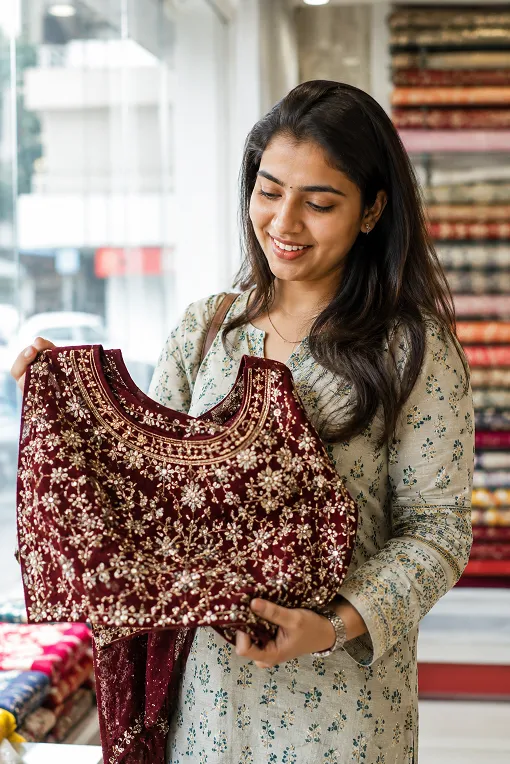
Here is something most buying guides bury as a footnote. Pure georgette sags under heavy sequin, zari, or stone work. The fine silk yarns were never built to carry that much embellishment weight, and by evening the neckline or border starts to droop.
Faux georgette holds that same heavy work steady. This is not a fallback for a smaller budget. It is a genuine technical advantage for anyone buying or commissioning a heavily embroidered blouse, lehenga dupatta, or a faux georgette saree for wedding functions with extensive border work.
If you are choosing between fabrics for a piece with dense zari or sequin work, faux georgette fabric is not the compromise option here. It is often the correct one, and any tailor who has stitched both will tell you the same thing.
For brides still weighing saree against lehenga for the same wedding function, our saree vs lehenga for wedding guide breaks down the same kind of trade off at the full outfit level, not just the fabric level.
Is Faux Actually Cheaper? The Real Cost Per Wear
This is where most comparisons stop short. Faux costs less upfront, sometimes half or a third of what pure asks for. That much is true and fairly obvious.
But cost per wear tells a different story. If a faux piece needs replacing after ten or twelve wears because it has visibly dulled, while a pure piece still looks sharp after fifty wears, the cheaper fabric is not automatically the better value.
Do this math honestly before you buy. A faux georgette saree bought at a lower price, worn four or five times a year for two years, may cost you less overall than a piece you replace twice in the same period. This is the real pure vs faux georgette saree question, and it rarely gets asked honestly in stores.
The same saree in pure, worn steadily across a decade of family functions, spreads its higher upfront cost across far more wears.
There is no single right answer here. It depends entirely on how many times you will realistically wear the piece, not on which fabric sounds more premium at the counter.
Where Faux Georgette Actually Works Best
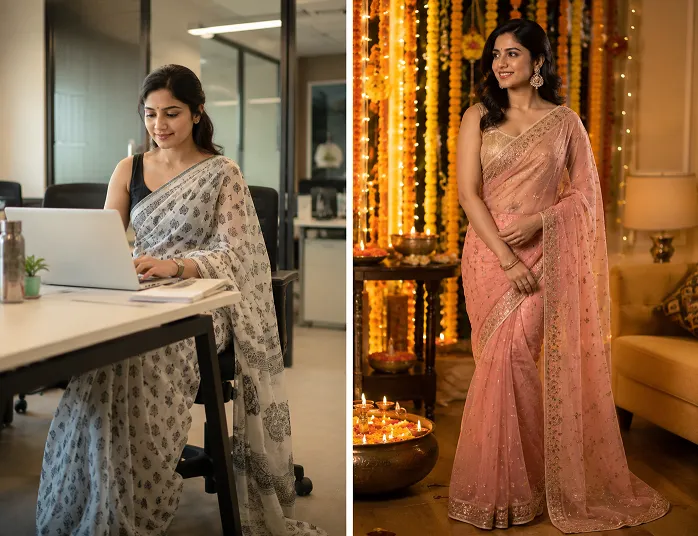
Faux georgette fabric is not tied to one style of outfit, and that is part of why it never really left Indian wardrobes. A printed saree in office pastels and a heavily embroidered one worn to a wedding are doing completely different jobs on the same base fabric.
The fabric’s bounce is what gives an Anarkali or a flared kurta its life. A stiffer material would just hang instead of swinging with each step, which is exactly why georgette shows up so often in Navratri and Garba outfits too.
If you are still finalising a Garba look, our garba night outfit ideas guide covers colour and silhouette choices that pair well with this kind of movement.

It also sits closer to the body than stiffer cottons or heavier silks, which many women find more flattering in a saree or straight kurta. How that actually looks still depends on your cut, blouse fit, and draping style. The fabric alone will not fix a fit issue that a wrong size would still cause.
One more thing worth knowing. Georgette takes dye and digital prints unusually well, which is why you see it in bold prints far more often than plain weaves like cotton. Between a plain and a printed piece in faux georgette, the printed one tends to hide that dulling for longer than a plain, unprinted weave would.
Faux Georgette Fabric Care Instructions
Faux georgette is more forgiving than pure, but it still needs care. Hand wash in cool water with a mild detergent, and avoid wringing the fabric, which stretches the weave out of shape.
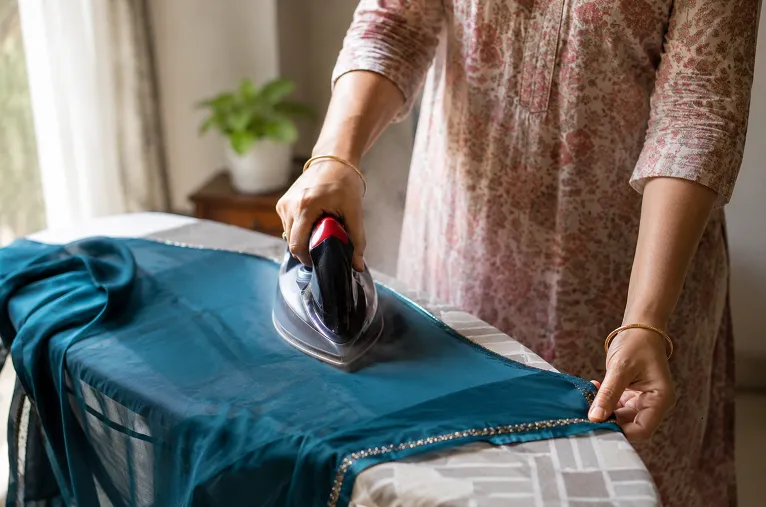
Iron on a low, dry setting from the reverse side. Direct heat on faux fibers can leave a faint shine mark that never fully goes away, especially on darker colours. Laying a thin cotton cloth over the fabric while you press adds one more layer of protection on pieces with embellishment near the seams.
Sunlight is the real enemy here. Faux georgette dulls faster than pure when it dries in direct sun, so hang it in shade even though this takes longer. An established sewing publication’s georgette handling guide covers similar preparation and pressing techniques that apply just as well to faux blends, even though it was written with silk in mind.
If you already own silk pieces alongside faux georgette, our how to store silk sarees guide covers wardrobe habits, like folding along different lines each season and avoiding plastic covers, that extend the life of both.
And here’s the unpopular part. Everyone tells you to dry clean georgette every single time. Honestly, a careful hand wash at home works just as well for faux georgette and saves you a repeat trip to the dry cleaner every festival season.
What to Check Before You Buy
Before you decide between pure and faux, check one thing first: how heavily embellished is the piece? A heavily worked border or blouse genuinely performs better in faux, regardless of your budget. A plain or lightly worked piece is where pure earns its higher price.
Check the fold test under natural light, ask how the piece has been stored, and confirm the return policy before committing to an unfamiliar seller online.
Ethora manufactures its sarees, salwar kameez, kurtas and lehenga choli directly at its Surat unit, and sources everything else from Surat’s own textile market, so this advice comes from people who handle these weaves every single day.
Conclusion
The next time someone asks you whether faux georgette is good fabric, you now have a real answer. It depends on how long you need the piece and how heavily it is embellished, not on price alone.
Explore more fabric and styling guides on the Ethora blog if you are still deciding what to buy for your next function. Our store is launching soon, with every piece manufactured or sourced directly from Surat’s textile market.
Frequently Asked Questions (FAQs)
Is faux georgette good quality fabric?
Faux georgette is genuinely good quality within its category. It will not match the drape or longevity of pure silk georgette, but for one time wear, festive looks, or heavily embellished pieces it performs very well and holds its shape through a full day of movement.
How can I tell if a saree is pure or faux georgette?
Beyond the touch and light tests, try the burn test on a loose thread if the seller allows it. Pure silk georgette curls and smells faintly like burnt hair, while faux polyester melts into a small hard bead instead. Price is also a signal, since pure georgette rarely sells at rock bottom rates because raw silk itself is expensive.
Is faux georgette saree good for a wedding?
Yes, especially for heavily embellished pieces, guest outfits, or functions where you only need one wear. A faux georgette saree for wedding functions holds embroidery and sequin work better than pure, and it photographs just as well under event lighting.
What should I check when ordering georgette sarees online?
Check whether the seller states the fibre content clearly, ask for a close up photo in natural light, and confirm the return window since fabric feel is hard to judge from a screen. Ethora manufactures its sarees directly at its own Surat unit and sources everything else from Surat’s local textile manufacturers, which means genuine fabric knowledge and factory level quality without middleman pricing.
Still deciding between pure and faux for your next function? That decision gets a lot easier once you know how the piece will actually be worn and washed. Ethora manufactures its sarees, salwar kameez, kurtas and lehenga choli directly at its own unit in Surat, and everything else is sourced straight from Surat’s local textile manufacturers. Our store is launching soon, so you can shop fabric that comes with real factory-level knowledge behind it.