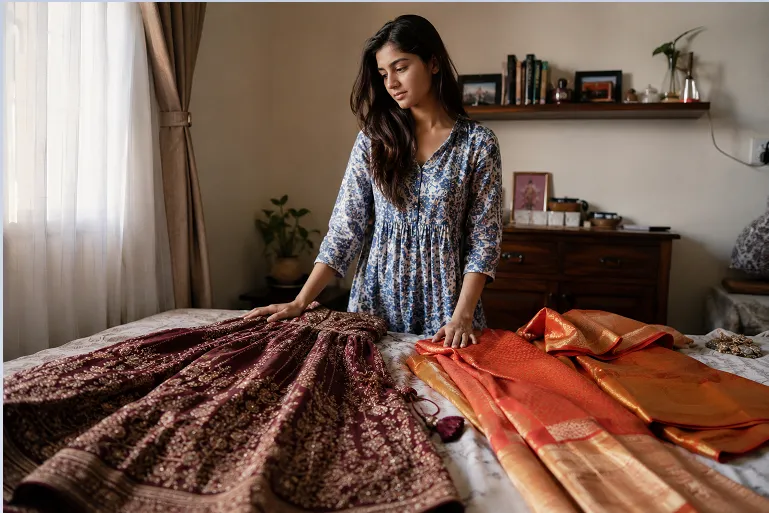
Your engagement lehenga is spread out on the bed, and you are staring at it wondering if you can actually hug your cousins in it without the embroidery scratching their arms. That is the real test most outfit shopping skips. Every store window this season is full of georgette anarkalis and soft organza sarees, and there is a genuine reason behind it.
The right engagement outfit for bride to be is not the one that photographs best standing still. It is the one that survives four hours of ring exchange, hugging, laughing, and a hundred phone camera flashes without you thinking about it once.
This bride to be outfit guide covers what actually changed in engagement dressing, why sleeves and bangles matter more here than at any other function, and why the heaviest outfit in your closet should probably wait.
Table of Contents
The Real Shift in Engagement Outfit for Bride to Be Choices
Walk into any Surat fabric market right now and you will notice the same shift everywhere. Brides are asking for georgette, organza and soft silk blends instead of the heavy zardozi lehengas their mothers wore for their own roka ceremony dress.
Colour has moved too. Dusty rose, sage green, ice blue and soft ivory are showing up far more than the deep reds that used to be the default engagement dress ideas a decade ago. Reds are still there, just lighter in weight.

There is a real fabric reason behind this, not just Pinterest. Georgette has more body than chiffon, so it holds a pleat better when you are actually walking through a hall greeting fifty relatives. Chiffon moves more freely and catches the light in a softer way, but it needs a slip underneath or it clings in Ahmedabad’s April heat.
Most engagement content stops here, at the trend. It tells you comfort is in and moves on. It never explains why comfort suddenly became the priority for one specific ceremony. That answer is worth understanding before you shop.
Why the Comfort Shift Is Really About How You Will Move That Day
Here is what nobody explains when they tell you comfort is trending. Engagement ceremonies today are not the seated, static rituals your parents had. There is a ring exchange everyone leans in for, spontaneous hugging right after, and a couple portrait session that can run for an hour.
A heavy, structured lehenga with a stiff dupatta pinned in three places works against all of that. You cannot hug freely in it. You cannot sit on the floor for a quick family photo without help. And a rigid, boned blouse restricts exactly the arm movement the ring exchange itself needs.
It is not really about comfort as a buzzword. It is about the photos actually working.
Compare that to a haldi or mehendi function, where you are mostly seated and the outfit’s job is to survive turmeric or mehendi paste, not a hundred candid frames of you moving. The engagement asks something different of your clothes, and that is the actual mechanism behind the entire lightweight trend.
The Ring Is the Point. Your Sleeves and Bangles Decide If It Shows.
No other wedding function makes you think about this, but the engagement genuinely does. The ring is the literal reason everyone is there, and it needs to be visible and photograph well the moment it goes on.
Full-length fitted sleeves with a snug cuff can bunch right at the wrist, which is exactly where the camera zooms in during the exchange. A slightly looser cuff, a three-quarter sleeve, or a soft bell sleeve gives your finger room to actually show.
Bangles are the other half of this. A wrist stacked with eight or ten bangles looks stunning in a mirror selfie, but in the close-up ring photo it can visually crowd the exact finger the ring sits on.
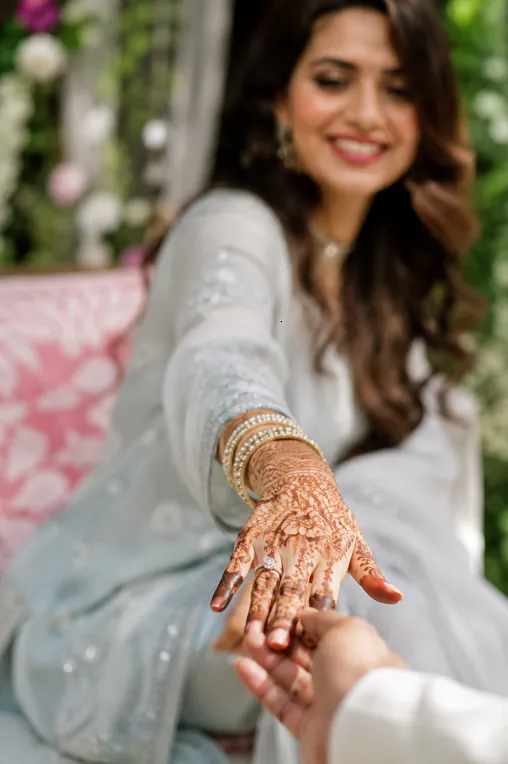
If you love a heavier bangle look, save the densest stack for the hand that is not wearing the ring. Or go with two or three statement pieces instead of a full set on both wrists.
Our recent piece on trending saree blouse designs walks through sleeve and cuff styles that photograph clean without losing the traditional look, worth checking before you pick between elbow-length and full sleeves for a blouse.
You will not think about this until you see your own ring photos and wonder why your hand looks cluttered. By then the outfit is already bought.
Silhouette Ideas Worth Actually Considering
Most women choose their engagement outfit based on how it looks on the hanger, or worse, off one photo saved from Instagram. That is the wrong way to shop for this specific function.
The better test is trying it on and moving in it the way you actually will on the day: sitting, standing, extending your hand for the ring, turning for a group photo. Here are five silhouettes worth trying that specific test with.
- Georgette or organza saree: gives you the drape and pallu photographs love, and georgette specifically holds its pleats through hours of standing and walking better than lighter chiffon does.
- Lightweight lehenga: choose a soft net or organza skirt over heavy raw silk, which keeps the swirl and movement without the shoulder fatigue of a mirror-work dupatta.
- Anarkali suit set: the flared cut moves beautifully in candid shots and hides the churidar underneath, which is genuinely forgiving if you are standing for long stretches.
- Indo-western gown: a soft crepe or organza gown works if your families are open to fusion looks, and it photographs especially well for evening or cocktail-style engagements.
- Sharara or palazzo set: an underrated option for brides who want to sit cross-legged comfortably during rituals without wrestling with saree pleats.
Here’s a closer look at four of these five picks.
Lightweight lehenga
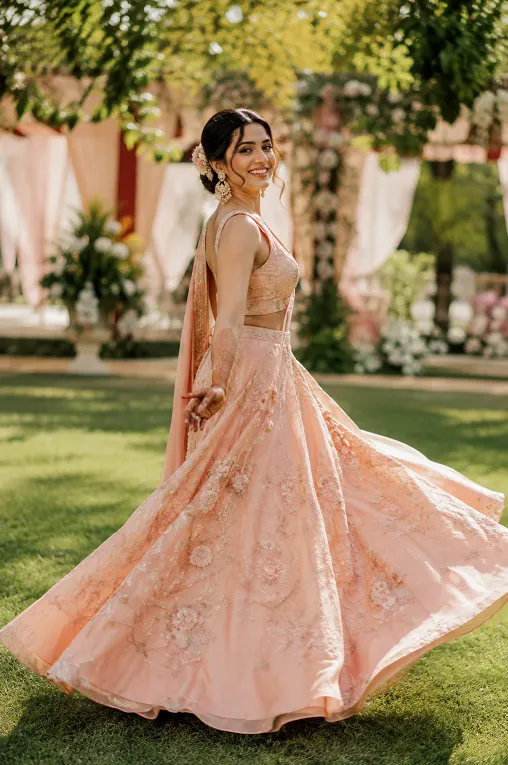
This lightweight lehenga is the middle-ground pick if you want the flare without bridal-level weight, and it still moves well through a group photo, not just a standing one.
Anarkali suit set
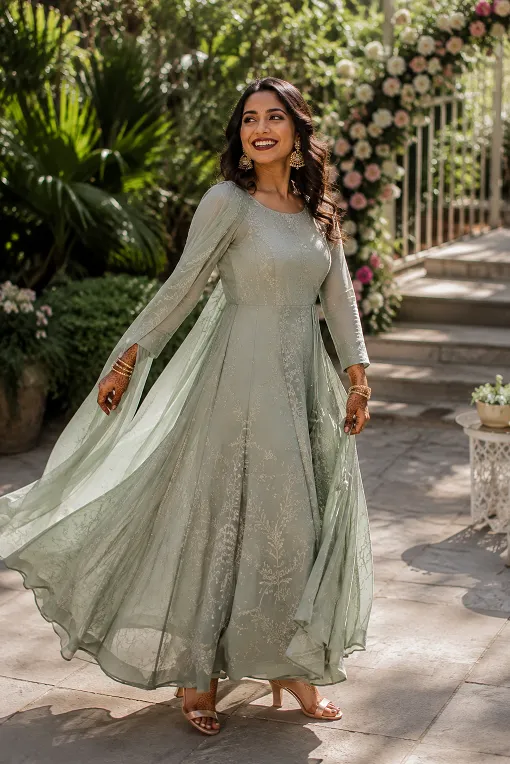
This anarkali is also the pick most brides regret not trying, since the flared cut skims the waist and hip line regardless of how your other fittings have gone that month.
Indo-western gown
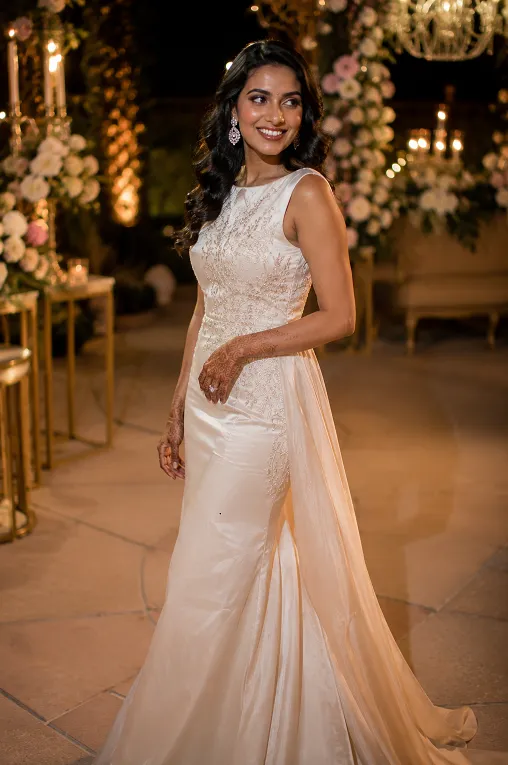
This gown pairs best with fewer, bolder accessories rather than a full traditional set, since its own structure is already doing most of the styling work.
Sharara or palazzo set
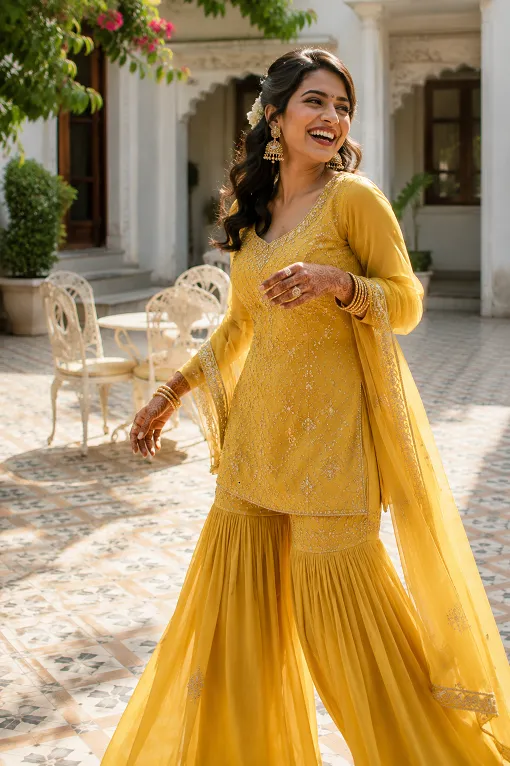
This sharara set is also the easiest of the five to eat and dance in without adjusting anything mid-function, which matters far more on the day than it sounds like it should.
If you are torn between the two most traditional choices, our saree vs lehenga for wedding comparison breaks down which one actually works better for a seated ring ceremony versus a standing reception-style one.
Once you have picked a silhouette, colour is the decision women second-guess the most. If you are unsure which shade actually suits your skin tone, Ethora’s free saree colour matching tool gives you blouse and jewellery pairing ideas in under two minutes based on what you tell it.
Why Smart Brides Save the Heaviest Outfit for the Wedding Day
Banarasi silk is heavier than most first-time brides expect. If you wear it for a full day event, the weight on your shoulder from the pallu starts to show by evening, and by hour five you are holding your dupatta instead of enjoying it.
That weight is genuinely earned, though. Banarasi weaving is part of a centuries-old craft the Ministry of Textiles recognises as one of India’s protected silk traditions, and it deserves the one day actually built around carrying it.
Everyone tells you the engagement is your big style moment before the wedding grind starts, so go all out on it. Honestly, that advice backfires for most brides. The wedding day deserves your heaviest, most expensive piece far more than a two-hour ceremony does.
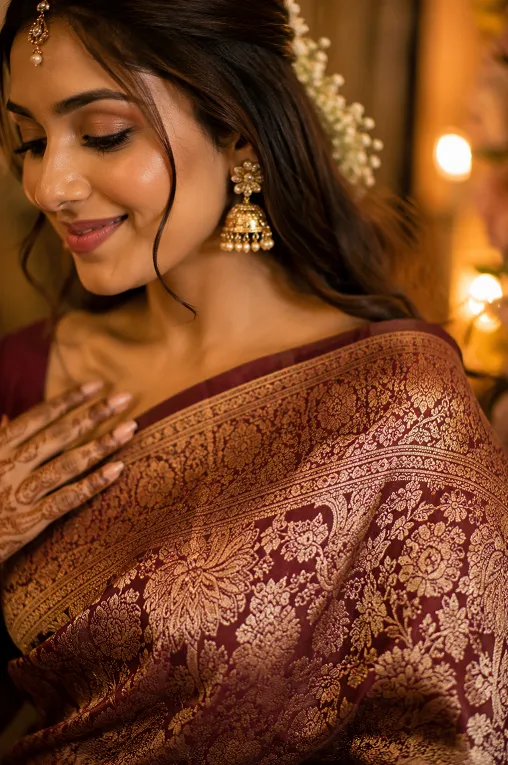
Think about it as cumulative fatigue. The wedding is the one event where both you and your guests expect and accept a heavier, less practical outfit as worth it. If you are still working out what to wear for engagement season as a whole, roka, haldi, mehendi, sangeet, comfort at each one compounds, and it pays off the most here.
What to Check Before You Finalize the Look
Before you finalize anything, try the outfit on and actually mimic the ring exchange pose: hand extended, palm up, in front of a mirror. Check whether the sleeve cuff bunches at the wrist and whether your planned bangles sit past the ring or crowd it.
This one five-minute check saves more regret than any amount of colour matching. At Ethora, we manufacture our sarees, salwar kameez, kurtas and lehenga choli directly at our Surat unit.
We also source everything outside that range straight from Surat’s local textile market, so this kind of practical, fabric-first advice comes from people who actually handle these weaves every day, not just style them.
Conclusion
If you take one thing from this: try the ring-exchange pose before you buy, not after. Everything else, colour, silhouette, sleeve length, follows from that single five-minute check.
There is more styling detail like this across the Ethora blog if you want to keep exploring before you decide. Our store is launching soon, with pieces made directly at our Surat manufacturing unit and sourced from Surat’s local textile market, so what you eventually buy comes straight from the source.
Frequently Asked Questions (FAQs)
What fabric works best for an engagement outfit for bride to be?
Georgette and organza are the two most reliable choices because they hold pleats and structure without the weight of raw silk. Modal fabric is also worth knowing about if you want something that looks similar to rayon but does not cling to the body the way rayon does in humid weather.
Can I wear a saree instead of a lehenga for my roka ceremony?
Yes, and a saree is often the more comfortable choice for a seated ring ceremony since it does not restrict how you sit or bend the way a fitted lehenga blouse sometimes does. Just make sure the pallu is pinned securely if the ritual involves any bending or standing quickly.
How do I know if a suit or blouse fabric is good quality before buying it online?
Check whether the listing specifies the exact fabric name rather than a vague term like premium fabric, and look for close-up photos of the weave, not just the finished outfit on a model.
Ethora manufactures directly at its own Surat unit and sources everything else from Surat’s local textile manufacturers, which means the fabric details listed come from people who actually handle the material, not a reseller repeating a supplier’s description.
Should my engagement outfit match the style of my wedding outfit?
No, they genuinely do not need to match, and most stylists would tell you they should not. The engagement is meant to feel lighter and more personal, while the wedding outfit carries its own weight, tradition, and colour story.
Your engagement outfit deserves the same five-minute ring-check test as it deserves the right colour. Ethora manufactures sarees, salwar kameez, kurtas and lehenga choli directly at our own unit in Surat, and everything else we carry is sourced straight from Surat’s local textile manufacturers, so what reaches you skips the usual markup layers. Our store is launching soon, built on exactly that kind of direct-from-source thinking.