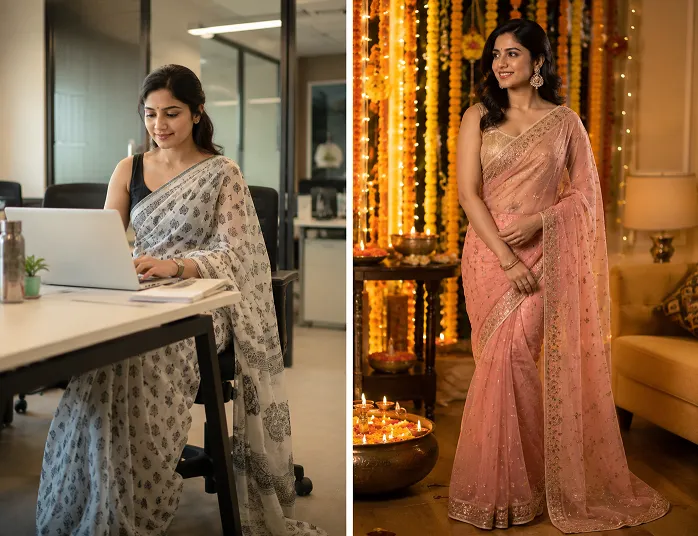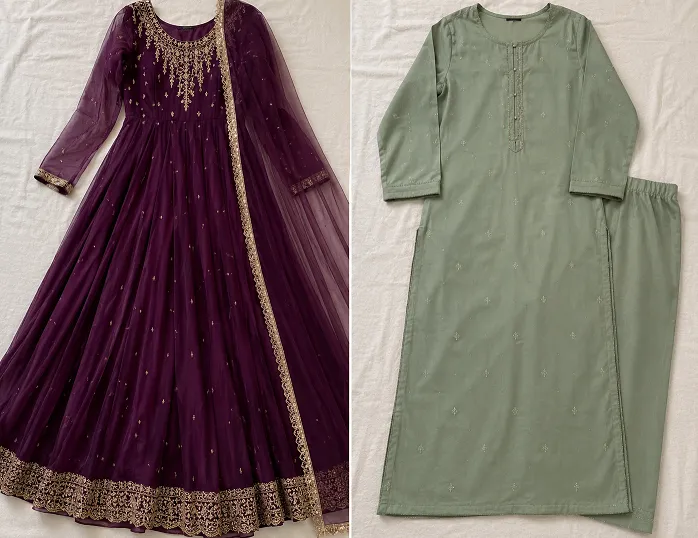
You are standing in front of the mirror twenty minutes before you need to leave for a family function, and the sleeveless blouse that looked fine on the hanger suddenly feels wrong on your arms. So you dig out a stole, wrap it around your shoulders, and hope nobody notices you keep adjusting it all evening.
If this sounds familiar, you are not alone, and the fix is not what most people tell you. Knowing how to hide arms in ethnic wear has less to do with picking the longest sleeve you own and much more to do with how that sleeve is cut and what it is made of. This article covers both, along with the three things almost nobody explains properly.

Table of Contents
Sleeve Styles That Actually Work for Ethnic Wear Arm Coverage
Before anything else, you need to know which sleeve shapes genuinely help. These five come up again and again in well-fitted, real-world ethnic wear, not just in styling mood boards.
- Bell sleeves flare out from the elbow, so the fabric moves away from the arm instead of tracing it. They work beautifully on kurtas and anarkalis.
- Cape sleeves fall from the shoulder like a soft drape rather than a fitted tube, which is why they read as elegant instead of bulky.
- Dolman or batwing sleeves are cut as one piece with the bodice, giving a relaxed silhouette that skims the arm without ever touching it closely.
- Full sleeves gathered at the wrist create volume through the middle of the arm and taper only right at the end, which keeps the eye moving.
- Elbow-length sleeves with a slight flare stop at a naturally narrower point on the arm, which we will get into properly in a bit.
Notice something. None of these are just “long sleeves.” Length alone was never really the answer, and that brings us to the part most articles skip.
Why Sleeve Looseness Matters More Than Sleeve Length
Here is an unpopular opinion. A full sleeve cut tight against your arm does less for you than a shorter sleeve that drapes loosely. Everyone assumes longer automatically means more coverage, and that assumption is wrong.
A tight full sleeve traces the exact width of your arm all the way from shoulder to wrist. It does not hide the shape, it outlines it, just in fabric instead of skin.
A shorter sleeve with soft, loose drape does the opposite. It covers the visual impression of the arm without ever tracing its actual shape, because the fabric is not clinging to it.
So the real lever here is looseness, not length. A three-quarter sleeve with generous ease can genuinely outperform a full sleeve that fits like a second skin. This is exactly why kurti sleeve tips for arms that only talk about length end up half right at best.
Why Fabric Drape Decides How Much a Sleeve Actually Reveals
This is the part nobody selling you a styling checklist will explain, because it comes from actually handling fabric, not just photographing it.
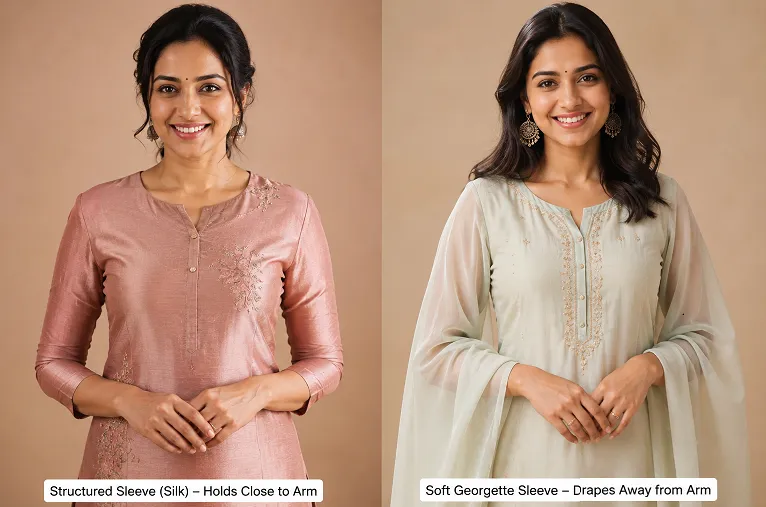
A stiffer fabric holds its shape close to the arm even when the sleeve is cut generously. Structured silks and heavier brocades do this. They stand away from the body in some places and cling in others, so a loose cut on paper still ends up tracing your arm in practice.
A soft, flowing fabric behaves completely differently in the same cut. Georgette, modal, and soft crepe drape away from the arm and keep moving as you move, which creates real visual ease instead of just the illusion of it on a hanger.
Textile engineering research on fabric drape backs this up. Fabric stiffness, not just the pattern it is cut into, is what largely decides how a garment falls against the body.
This is why the same bell sleeve pattern can look completely different in two fabrics. It is also why Mumbai’s humidity changes how a sleeve behaves through the day, softening some fabrics further while stiffer ones hold their shape and start clinging by evening.
If you are choosing between two saree or kurta fabrics for a warm month event, our guide on the best saree fabric for summer weather goes deeper into which materials actually stay comfortable and drape well once humidity sets in.
Where the Sleeve Ends Changes Everything
Most people obsess over sleeve length as a number, three-quarter versus full versus short. What actually matters more is exactly where that sleeve stops.
A sleeve that ends right at the widest part of your upper arm creates a visual stopping line at the exact point where attention naturally gets drawn. It is almost designed to highlight the widest measurement.
A sleeve that ends just below the elbow, or all the way at the wrist, moves that stopping line to a naturally narrower point on the arm. This reads as balanced even if the sleeve above it has plenty of looseness and volume.
This one detail explains why some elbow-length sleeves look more flattering than full sleeves that end at a slightly awkward mid-forearm point. It is not about the fabric used from shoulder to elbow. It is about exactly where the line falls.
If you are still unsure how sleeve choice should work with your overall proportions, Ethora’s free body type calculator gives you a personalised result in under two minutes based on your actual measurements, which pairs well with everything covered here.
Matching Sleeve Choice to the Occasion
Ethnic wear sleeves also need to survive the occasion they are worn for, not just look good in a still photograph.
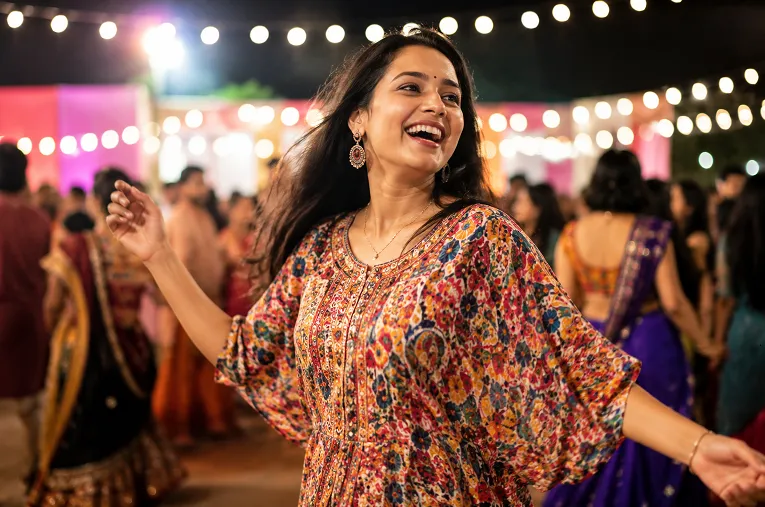
Navratri and garba nights involve constant arm movement, so a stiff, fitted sleeve will feel restrictive within the hour and start clinging with sweat. A loose dolman or bell sleeve in cotton or georgette moves with you instead of against you.
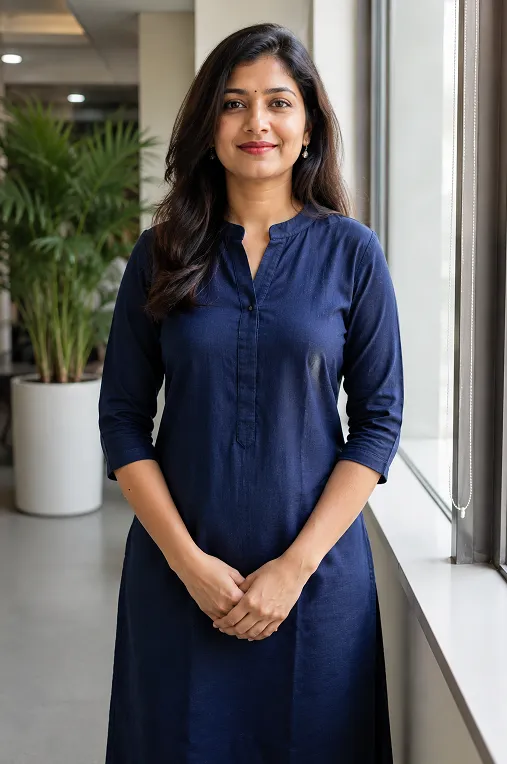
For office wear, structure matters more than drama. A slightly flared elbow-length sleeve in a crisp cotton or cotton-silk blend looks put together through a full workday without needing constant adjustment. This is where the sleeve-ending point from earlier matters most, since a 3/4 sleeve that stops right at your narrowest forearm reads as neat rather than restrictive.
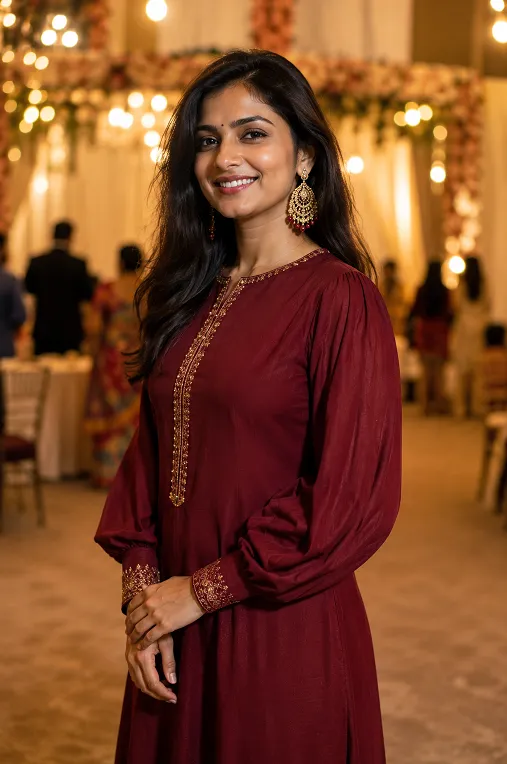
For weddings and heavier silk occasions, a cape sleeve blouse, a bishop sleeve gathered into a fitted cuff, or a jacket layered over a sleeveless kurta all work well. If you already own kurtas that could use a coverage boost for festive events, our piece on layering a jacket over a kurta covers how to match jacket structure to your kurta fabric so the pairing looks intentional, not accidental.
And honestly, dupatta management deserves a mention here too. A lot of women lean on the dupatta alone for arm coverage, constantly re-pinning it through the evening. A well-chosen sleeve does that job permanently, so your dupatta gets to just look good instead of working overtime.
What Actually Matters Before You Purchase
Before buying anything for arm coverage, do not just look at the sleeve style listed on the product page. Ask what the fabric is, because that decides how the same cut will actually behave on you.
Feel the fabric between your fingers if you can. A soft, flowing feel usually means it will drape away from the arm, while anything with real body and stiffness will hold closer to your actual arm shape.
If you are buying online, check the fabric composition listed, not just the photograph, since photographs on a mannequin rarely show how a sleeve moves on a real arm in real light.
At Ethora, we manufacture our sarees, salwar kameez, and kurtas directly at our own unit in Surat, and for everything outside that range, we source directly from Surat’s local textile market, India’s largest textile hub, so this kind of fabric guidance comes from people who handle these materials daily.
Conclusion
The single most useful thing to remember is this. Coverage in ethnic wear comes from looseness, fabric drape, and where a sleeve ends, not from chasing the longest sleeve on the rack.
Once you start checking outfits against these three things instead of just the sleeve length label, shopping and styling both get a lot faster. There is more styling guidance like this across the Ethora blog if you want to go deeper into fabric-first choices for your specific wardrobe.
Our store is launching soon, with pieces made directly at our Surat manufacturing unit and sourced from Surat’s textile market, so genuine fabric quality reaches you without the usual markup.
Frequently Asked Questions (FAQs)
Does a full sleeve always hide arms better than a half sleeve?
No. A tightly cut full sleeve can trace the arm’s shape more than a looser half or three-quarter sleeve does. Looseness and where the sleeve ends usually matter more than how far down it goes.
What is the best sleeve length to hide arms in Indian outfits?
There is no single best length, since it depends on the fabric and cut together. As a general starting point, elbow-length or wrist-length sleeves with some looseness tend to work better than mid-forearm lengths, because they end at a naturally narrower part of the arm.
Which fabric feels best against the skin for arm coverage in humid weather?
Modal and soft cotton-silk blends tend to feel cooler and less sticky against the skin than pure silk in humidity, while still holding a graceful drape. This matters as much for comfort through the day as it does for how the sleeve looks by evening.
How do I know if a kurti or blouse fabric will hide my arms well before buying it online?
Check the fabric composition and weave listed on the product, not just the photo, since a mannequin shot rarely shows real drape on a moving arm. Ethora manufactures at its own Surat unit and sources everything else directly from Surat’s textile manufacturers, which means the fabric details listed come from people who actually handle these materials, giving you factory-level quality without middleman pricing.
Can I still wear sleeveless ethnic wear and feel put together?
Absolutely, sleeveless is not the enemy here, fit and occasion matter more than the sleeve existing at all. A well-fitted sleeveless blouse paired with a structured jacket or a well-managed dupatta can look just as graceful as any sleeve.
Standing in front of the mirror second-guessing a sleeve is a familiar feeling, and it usually comes down to fabric more than fit. Ethora manufactures its sarees, salwar kameez, and kurtas directly at its own unit in Surat, and sources everything else straight from Surat’s local textile manufacturers, so every recommendation here comes from people who actually work with these fabrics every day. Our store is launching soon, bringing that same factory-level fabric knowledge straight to your wardrobe.