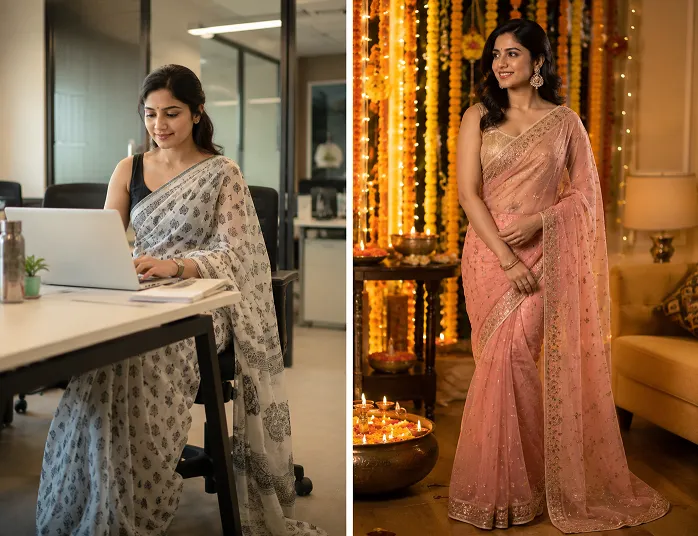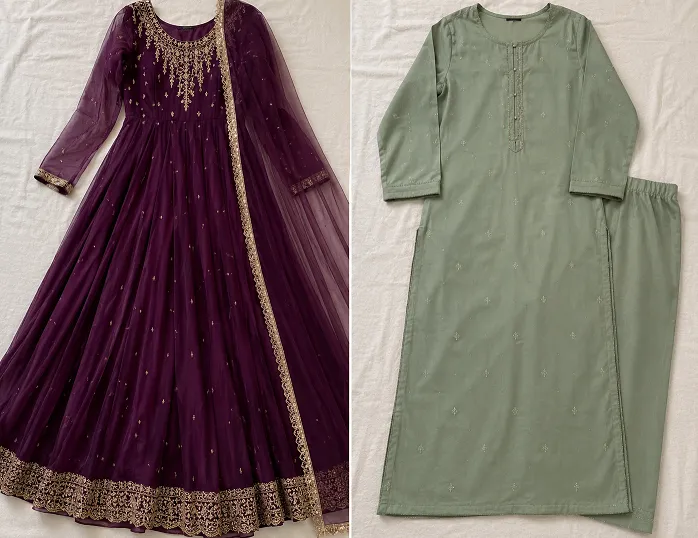
Standing in a Surat tailor’s shop, a customer close to 5’9″ once told me her Anarkali always ends up looking like a bedsheet with sleeves. Nothing wrong with the fabric. The cut just was not built for her height.
That is the quiet frustration behind ethnic wear for tall women. The internet keeps saying tall women can wear anything, but standard Indian ethnic wear is stitched to average proportions, and average is rarely what a 5’8″ or 5’10” frame actually needs.
This article covers what really changes when you are tall, from waist definition to saree length to why a “floor length” label lies more often than you would expect.
Table of Contents
Ethnic Wear for Tall Women: Where Most Advice Gets It Wrong
Every fashion list says tall women can wear almost anything. Long kurta, flowing Anarkali, a maxi lehenga, all supposedly automatic wins.
That advice is not wrong, it is just incomplete. A tall frame has more vertical space for fabric to hang loose, and loose fabric without a break point reads as one long shape rather than a styled outfit.
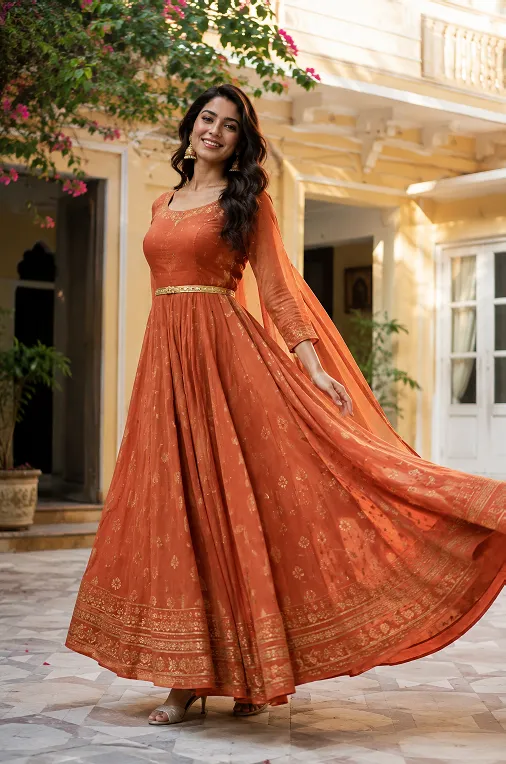
Think about the last time you saw a genuinely tall woman in a shapeless kurta. She probably looked tired, not elegant, even when the fabric itself was beautiful. The fix is not a different outfit. It is a different approach to fit.
Why Waist Definition Matters More, Not Less
Here is the unpopular opinion. Waist definition is not optional for a tall frame, it is the single most important styling decision you will make.
On someone shorter, a flowing kurta or Anarkali naturally breaks visually because there is less vertical distance for the eye to travel. On a tall frame, that same flow just keeps going until it starts to look like the fabric is wearing you.
A belt at the natural waist, a high-waisted lehenga skirt, or a blouse cut with a defined seam does the same job a belt does on a coat. It gives the eye somewhere to pause.
Most women pick an Anarkali or kurta based on how it looks on the hanger, not on how it falls at their actual height. That is the wrong way to check fit, and it is the mistake I see repeated at every wedding season.
If you are unsure which body shape category you fall into once height is factored in, Ethora’s free body type calculator gives you a result in under two minutes based on your real measurements, not a guess in a changing room mirror. For more on matching silhouettes to shape, our guide on saree for body type breaks down rectangle, hourglass, pear and apple frames in detail.
The Saree and Dupatta Length Problem Nobody Warns You About
This is the one nobody talks about, and it genuinely surprised me the first time a customer pointed it out.
A standard saree is cut to a length that works for an average Indian height. Draped the usual way on a taller frame, that same saree leaves less fabric for the pallu, so it ends up looking skimpier than it was designed to.
The same happens with a standard dupatta. It sits higher on the body than intended, ending near the hip instead of draping properly past it.
Georgette has more body than chiffon, so it holds a pleat better while you are walking, and that matters more when a longer torso is pulling at the pleat with every step. Banarasi silk is heavier than it looks on the shelf. That weight comes from centuries of hand weaving in Varanasi, a craft that earned the Banarasi sari its Geographical Indication status in 2009, protecting it as a product tied to that specific region.
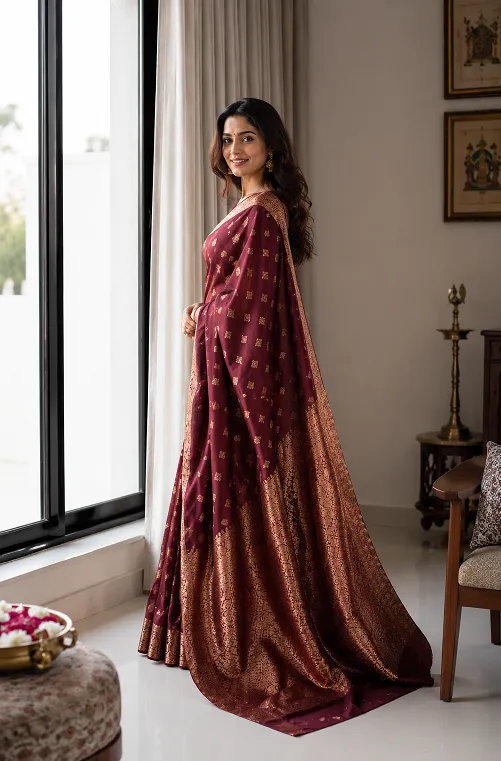
Wear a Banarasi drape for a full wedding day and the pallu’s weight on your shoulder will start to show by evening, especially on a taller frame carrying more length of it. Before buying, hold the full saree against your actual height with your blouse and petticoat on, not just against a mannequin’s proportions.
Silhouettes and Layering That Actually Flatter Height
Kurta with palazzo works well on a tall frame because the palazzo’s volume balances the kurta’s length, and a slightly cropped jacket layered over both adds a horizontal break. Anyone who wants to explore more layering combinations can look at our layering jacket over kurta guide for extra pairings.
Straight-cut salwar kameez with a fitted waist seam is another safe bet for office or college, especially with the dupatta pinned at the shoulder instead of left loose across the front.
For festive occasions like Navratri or a cousin’s mehndi, a high-waisted lehenga choli with a fitted, structured blouse gives the same waist-defining effect a belt does, without needing an actual belt.
You do not need to avoid flowing silhouettes altogether. Pair anything loose with one fitted element, whether that is a cinched blouse, a belt, or a fitted inner layer under a flowing outer piece.
If you are shopping on behalf of a shorter sister or friend, the same fit logic works in reverse. Our guide on ethnic wear for short height covers those fixes.
Prints and Colour Blocking to Break Up a Long Line
Solid, floor-sweeping colour on a tall frame can look regal at a wedding and washed out under office desk lighting. It depends entirely on how it is broken up.
A contrasting border on a saree, a printed dupatta against a plain kurta, or colour blocking between the top and bottom half of an outfit all create a visual stopping point partway down the body.
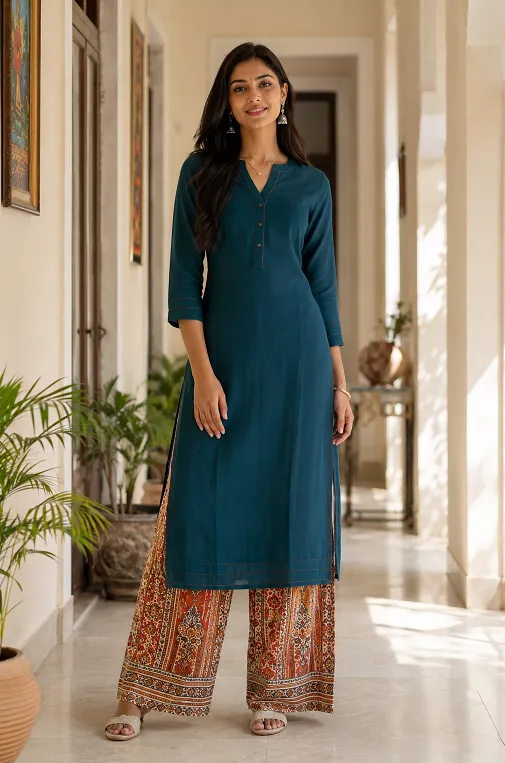
Chiffon sarees catch light differently than silk. There is a softness to how chiffon moves that reads as effortless even on the days you barely managed the drape, and that movement matters more on a tall frame where fabric has further to travel with each step.
Here is where the advice for tall women actually reverses the usual rule. Petite guides tell women to avoid a wide horizontal border because it cuts the frame short. On a tall frame, that same wide border, a bold large-scale floral, or heavy embroidered detailing at the hem gives the eye something to rest on instead of travelling the full length uninterrupted.
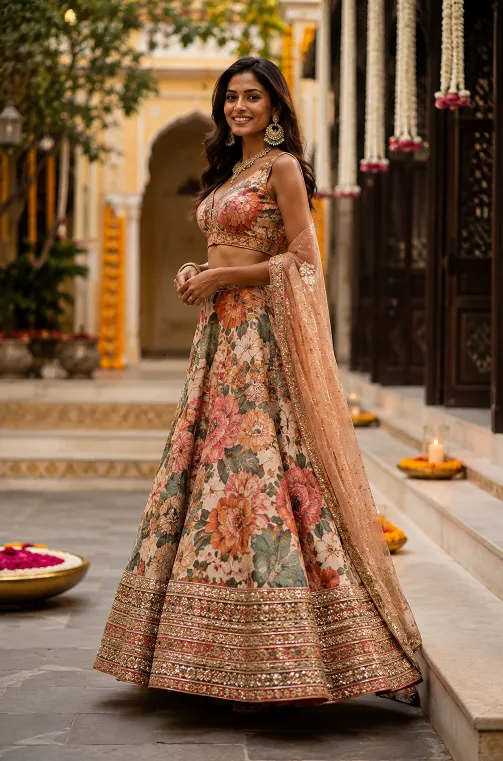
Everyone says stick to neutral tones for a slimmer look. Honestly, a well-fitted bright kurta does more for your confidence walking into a Diwali get-together than a dull beige one ever will.
What Actually Matters Before You Buy
Floor length off the rack is the label that lies most often to a tall woman.
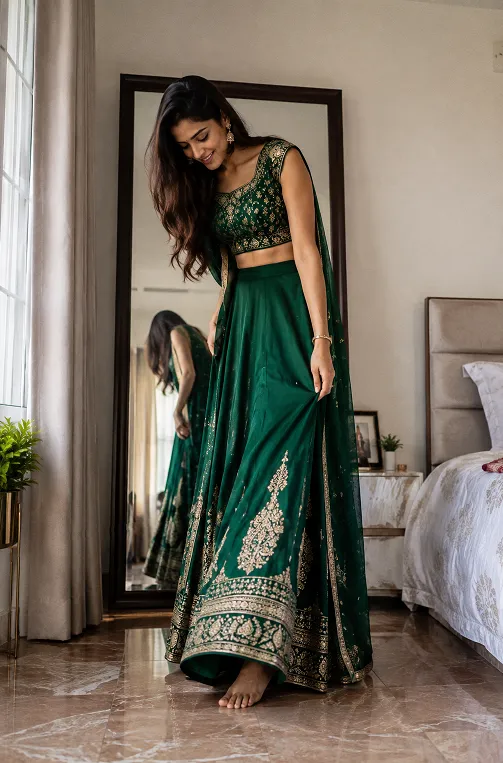
Standard hemlines for a floor length Anarkali or lehenga are cut for average height, so what is labelled floor length can land above the ankle on a genuinely tall frame instead.
Before ordering online, check the actual garment length in inches, not just the category name, and compare it against your own height rather than the size chart’s assumption of average. If the listing does not state exact length, ask before you buy.
For lehengas specifically, our breakdown on lehenga length for height covers what to expect at different heights, including guidance if you are closer to 5’6″ or taller and keep finding lehengas landing short.
This kind of detail only shows up once you have actually handled the fabric before it becomes a finished garment. It is the small check that separates decent ethnic wear for tall women from ethnic wear that merely happened to fit someone else. Ethora manufactures its sarees, salwar kameez, kurtas and lehenga choli directly at its own unit in Surat, and sources everything else from Surat’s local textile market, so what we know about length and fit comes from people who cut and stitch this fabric every day.
The Bottom Line
A tall frame is not a free pass to skip fit decisions. It just means the decisions that make ethnic wear for tall women actually work are different ones, starting with waist, length and an honest check of the hemline.
There is more like this on the Ethora blog if you are still figuring out which silhouettes suit your specific proportions.
Our store is launching soon, with pieces manufactured directly at our own Surat unit and sourced from Surat’s textile market, so what reaches you comes straight from the source.
Frequently Asked Questions (FAQs)
Can tall women really wear any ethnic wear silhouette?
Not automatically. A tall frame can carry more volume and length, but without a waist break point, most flowing silhouettes read as one long column rather than a styled outfit. Add a belt, a fitted blouse, or a high-waisted cut to any loose silhouette before you commit to it.
Why does my saree pallu look shorter than it does in photos?
Standard saree lengths are cut for average height, so on a taller frame the pallu ends up shorter relative to your body. Georgette holds pleats better through movement, while a heavier silk pallu can drop lower by evening simply from its own weight.
How do I know if a floor length lehenga will actually reach the floor?
Check the exact garment length in inches against your own height before ordering, not just the “floor length” label. Standard hemlines are cut for average height, so a genuinely tall woman often needs a longer hem or a made-to-length option.
Is a high-waisted lehenga always the better choice for a tall frame?
Not always, but it usually helps. A high-waisted cut gives a clear waist point that most tall frames benefit from, though a fitted, structured blouse can achieve a similar effect if you prefer a lower-rise skirt.
Where can I buy good quality ethnic wear online, and how do I check fabric quality before buying?
Check the fabric weight and drape description before ordering, since a heavier fabric like Banarasi silk behaves very differently from a lightweight modal or georgette. Modal fabric looks similar to rayon but does not cling to the body the same way in Gujarat’s humidity, which matters if you are picking a base layer for a heavier outfit. Ethora manufactures sarees, salwar kameez, kurtas and lehenga choli directly at its Surat unit, and sources everything else from Surat’s local textile manufacturers, which means genuine fabric knowledge and factory-level quality without middleman pricing.
Getting ethnic wear right on a tall frame comes down to a handful of fit decisions, not luck. Ethora makes its sarees, salwar kameez, kurtas and lehenga choli at its own manufacturing unit in Surat, and sources everything else directly from Surat’s textile market, so every recommendation here comes from people who actually handle this fabric. Our store launches soon, built the same way, straight from the source.