
By 2 PM, your cotton kurti is stuck to your back. You bought it because everyone said cotton breathes, and it still feels like you are wearing a blanket in June heat.
This happens more than fashion blogs admit. Picking a cotton kurti for summer is not as simple as choosing the right fibre. Weave, colour, print and even how you sit through the day change how the same fabric behaves on you. This piece covers all of it, including the parts most guides skip entirely.
Table of Contents
Why Every Cotton Kurti for Summer Doesn’t Feel the Same
Here is something most styling guides get wrong. They tell you cotton is breathable and leave it there, as if all cotton behaves the same way once summer hits.
It does not. The weave matters as much as the fibre itself. A tightly woven cotton like cambric can trap warm air close to your skin, even though it is technically 100% cotton. A looser, more open weave like mulmul or voile lets air actually pass through the fabric.
Hold two cotton kurtis up to a tubelight and you will see the difference before you even touch them. One lets light through in small dots. The other looks almost solid. REI’s guide on breathable fabrics backs this up too, tighter weaves trap more heat while looser ones let air move through.
That is the real test for a breathable kurti fabric, not the label. So the next time you are shopping for a cotton kurti for summer in Ahmedabad or Rajasthan heat, run your fingers over the weave before you check anything else. A dense, smooth cambric kurti might look elegant on the hanger and still leave you sweating by 11 AM.
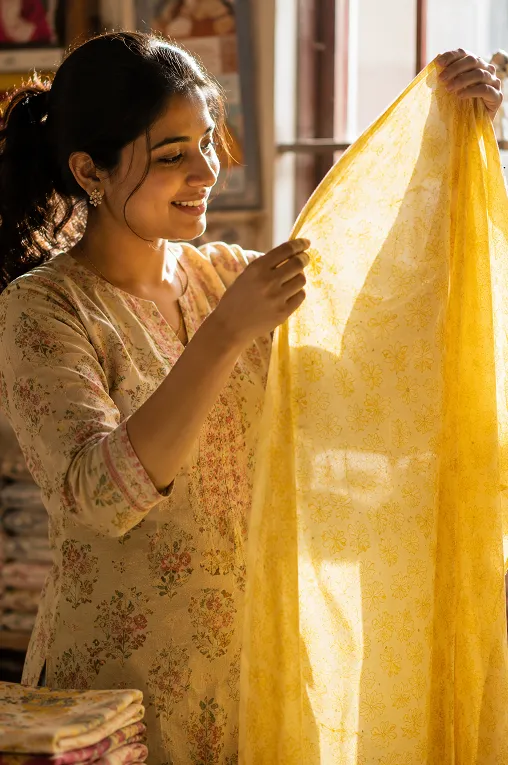
The Real Reason Cotton Shows Sweat (And How to Dress Around It)
Nobody talks about this part honestly. Cotton absorbs moisture, which is exactly why it feels comfortable, but that same absorption is why sweat shows up as dark patches under your arms or down your back.
This is the actual reason so many women avoid cotton for important days out, not because it is uncomfortable, but because it shows everything.
Here is where the popular advice fails you. Every guide pushes pastel shades because they reflect heat and photograph well. But a pale pastel is exactly where a sweat patch shows up first.
Busier prints and mid-tone colours genuinely hide dampness better than a flat pastel ever will, even though pastels look cooler in a photo. A rust, an olive, or a small block print does real work here that a solid baby pink cannot.
This is one of those honest opinions stylists rarely say out loud, but it is true. If you sweat easily, a printed cotton kurti in a warm mid-tone will serve you better through a full day than a trendy solid pastel.
What Your Kurti Actually Looks Like by the Time You Leave Office
I will be direct about something here, because most articles just say cotton is low maintenance and move on.
A cotton kurti that looks crisp at 9 AM does not look the same at 6 PM. Hours of sitting at a desk chair press creases into the back and the seat area, and the fabric visibly softens and goes a little limp by evening.
This is not a flaw in the fabric. It is just what pure cotton does under real conditions, especially in a Surat or Mumbai office where the air conditioning dries the fabric further and makes creases sit harder.
A cotton kurti with a small percentage of synthetic blend, usually cotton lycra or a cotton poly mix, holds its shape noticeably longer through a full day. This matters if you are wearing it for eight working hours and not just for a two hour outing.
Pure cotton is still the right call for weekend wear, festival mornings, or anything under three or four hours. For a full workday, a light blend is the more honest recommendation, even if pure cotton sounds like the purer choice.

5 Easy Ways to Style a Cotton Kurti This Summer
Once you have the right fabric sorted, summer kurti styling is the easier half. These five combinations work across most Indian cities and most versions of summer heat.
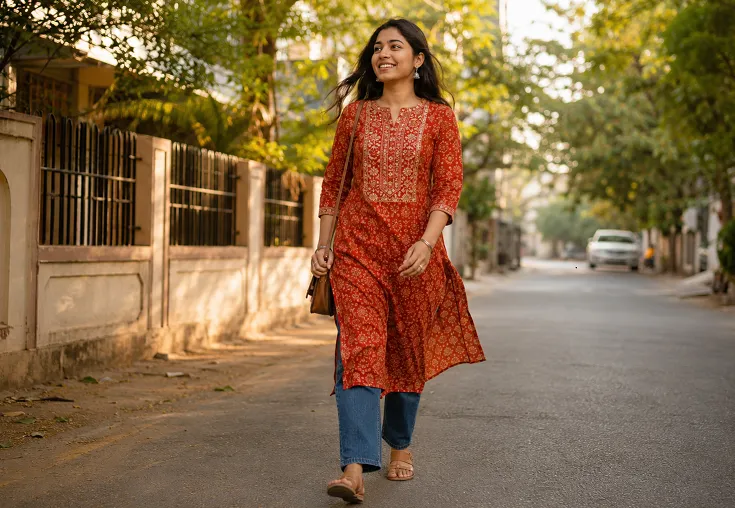
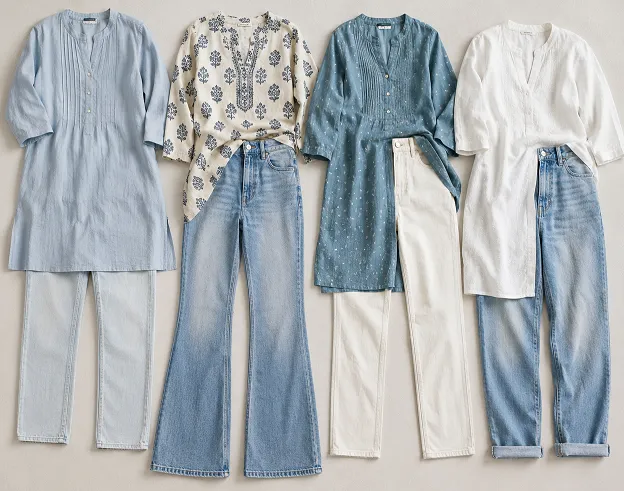
1. Straight fit jeans with a short cotton kurti. This is the easiest weekday-to-weekend switch there is. A cotton kurti with straight fit jeans works because the straight leg balances a loose kurti silhouette without adding bulk. If you want more combinations here, our guide on how to wear kurti with jeans breaks down eight ways to do this depending on kurti length.
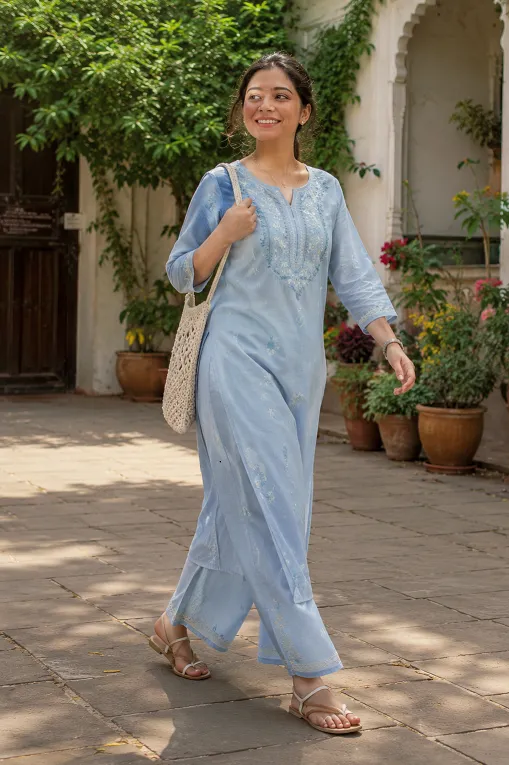
2. Flowy palazzo with a fitted or A-line kurti. Palazzo pants move air the same way an open weave does, which is why this pairing feels cooler than it looks. Save this for days when you are out longer than a few hours.
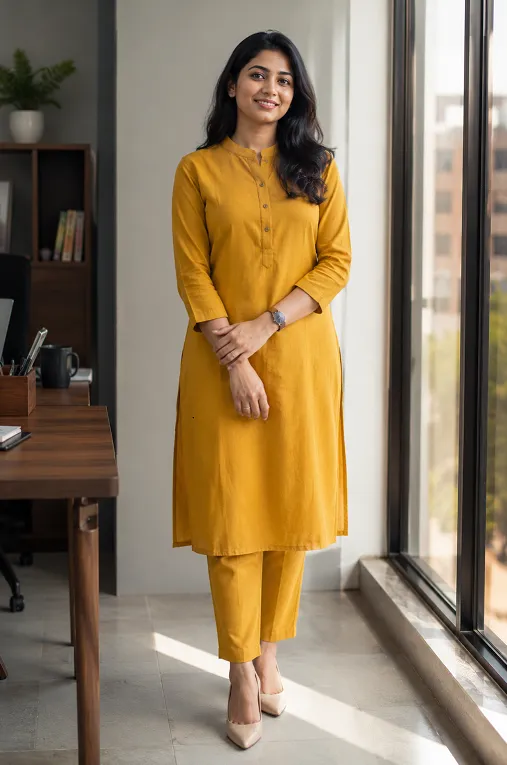
3. Cotton cigarette pants for the office. A straight, narrow bottom under a knee length kurti reads formal without trying too hard, and it survives a full desk day better than palazzo does.
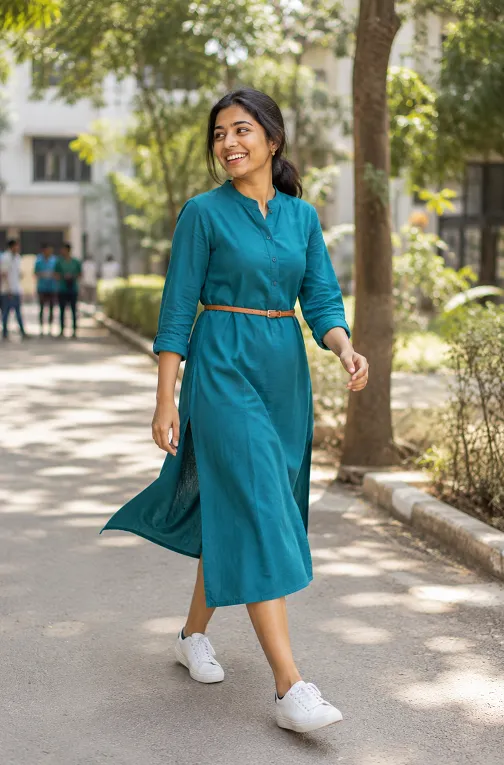
4. Kurti worn as a standalone dress with a thin belt. For college fests or casual outings, skip the bottoms entirely. A belted cotton kurti dress with sneakers feels current and needs almost no styling effort.
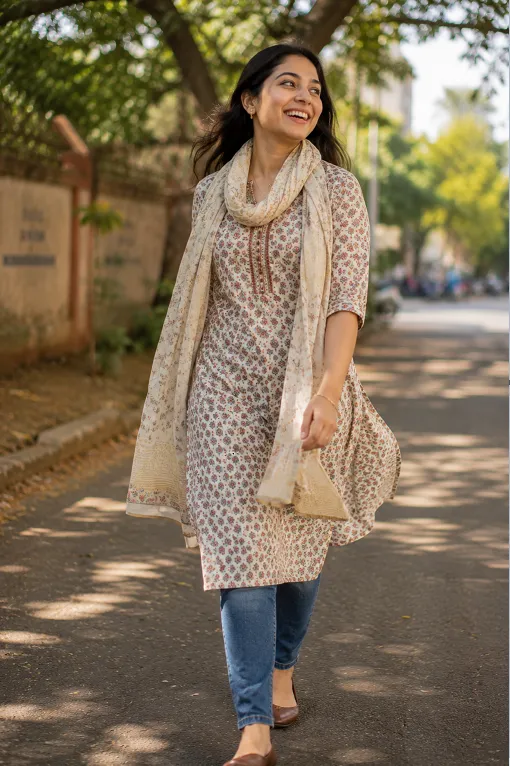
5. A light cotton dupatta draped loosely over one shoulder. This works for a college event or a casual family gathering where you want a bit of festivity without full ethnic layering. If dupatta management usually stresses you out, our guide to easy dupatta draping styles has options that do not slip off through the day.
Not every silhouette works the same way on every body, and that is worth saying plainly instead of pretending one cut suits everyone. If you are not sure which shape flatters you, Ethora’s free ethnic wear body type calculator gives you a result in under two minutes based on your actual measurements.
One of the underrated cotton kurti benefits is how easily it moves between these five looks without needing a completely different wardrobe for each one.
What Actually Matters Before You Buy
Most women check the fabric label and stop there. That is not enough information to know how a kurti will actually feel in real heat.
Before you buy, hold the fabric up to light the way we described earlier. A weave that lets light through evenly will breathe. One that looks dense and closed will trap heat regardless of what the tag says.
Check the stitching at the sleeve and side seams too. A well finished cotton kurti will not pucker after the first wash, which tells you something about the quality of the base fabric.
This one check alone separates a genuinely lightweight kurti for heat from something that only reads as lightweight on the price tag.
This is the kind of check that only makes sense once you have actually handled fabric off the loom, not just read about it. Ethora manufactures its kurtas and salwar kameez directly at our unit backed by Pahal Silk Mills in Surat, and sources everything else directly from Surat’s textile market, so this advice comes from people who handle these weaves daily.
What This Comes Down To
A cotton kurti for summer is not a single decision. It is the weave you check before buying, the colour you pick based on how much you sweat, and whether you need a blend for a full office day or pure cotton for a shorter outing.
Get those three right and the styling part looks after itself.
If you found this useful, there is more practical styling advice like this across the Ethora blog, written by people who actually work with these fabrics. Our store is launching soon, with pieces manufactured at our own Surat unit and sourced directly from Surat’s textile manufacturers, so you get the real thing without the markup.
Frequently Asked Questions (FAQs)
Is cotton kurti good for daily office wear in summer?
Yes, but pure cotton alone will crease and soften by evening, especially from sitting at a desk. A cotton kurti with a small percentage of synthetic blend holds its shape better through a full workday.
How do I stop sweat marks from showing on a cotton kurti?
Choose mid-tone colours or busier prints instead of flat pastels, since solid pale shades show dampness first. Also check the weave before buying, since a loose, open weave breathes better than a tightly woven cotton even at the same fabric weight.
What is the difference between mulmul and cambric cotton for summer?
Mulmul has an open, loosely spun weave that lets air move through easily, which makes it one of the coolest cotton options for peak summer heat. Cambric is more tightly woven, so it looks crisper and holds starch well, but it can feel warmer against the skin over a full day.
Where can I buy good quality cotton kurtis online without overpaying?
Check whether the seller actually manufactures the fabric or just resells it, since factory-direct pricing usually means better quality for the same cost. Ethora manufactures at its own unit in Surat and sources everything else directly from Surat’s local textile market, which gives access to genuine fabric quality without middleman pricing.
Sweat marks and limp fabric by evening are not something you have to just accept from a cotton kurti. Ethora manufactures its kurtas and salwar kameez directly at its own unit in Surat, backed by Pahal Silk Mills, and sources everything else directly from Surat’s local textile manufacturers. Our store is launching soon, bringing you factory-level fabric quality without the middleman markup.
Pingback: Kurti With Jeans: Straight Fit, Loose And Baggy Combinations | Ethora